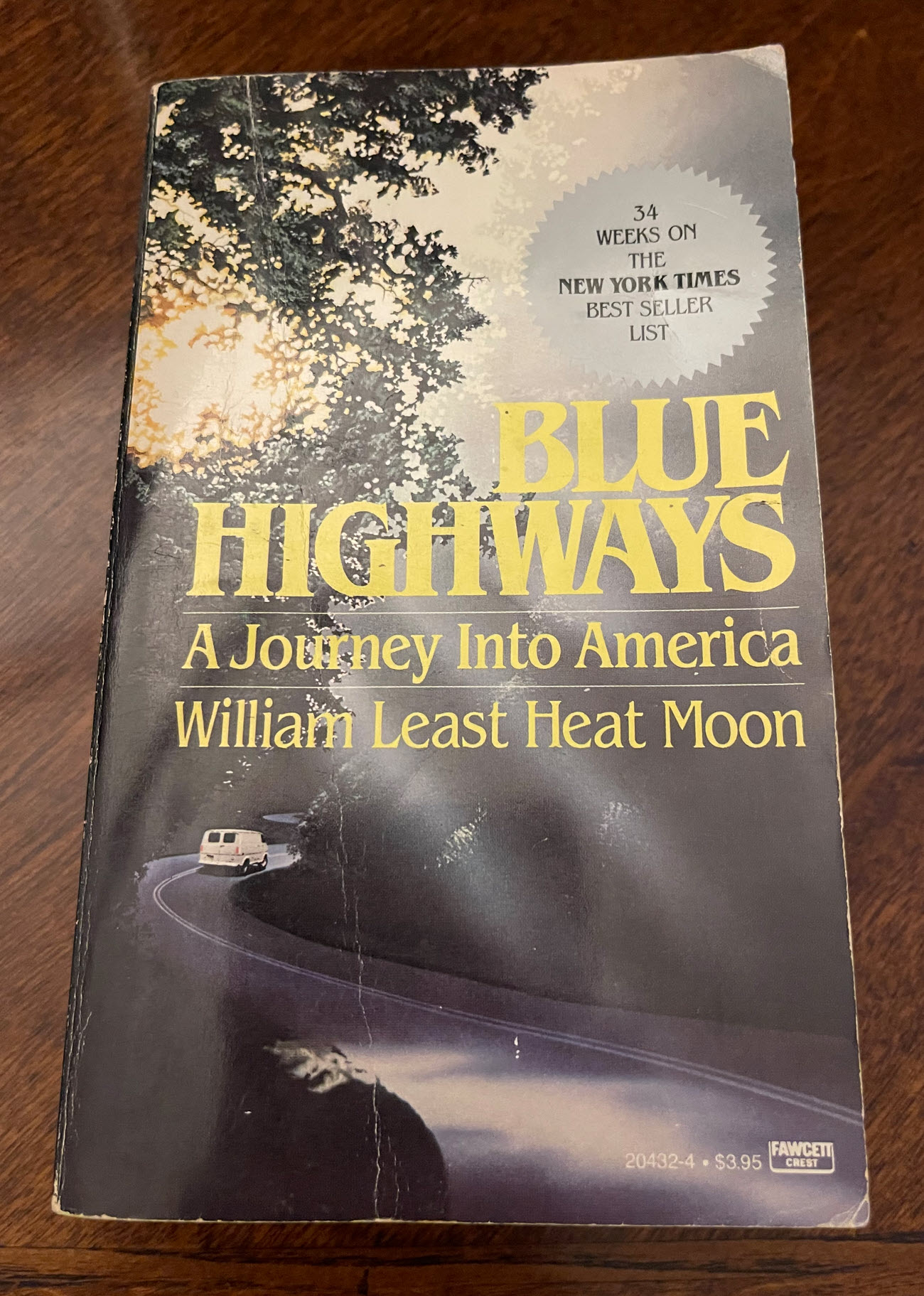
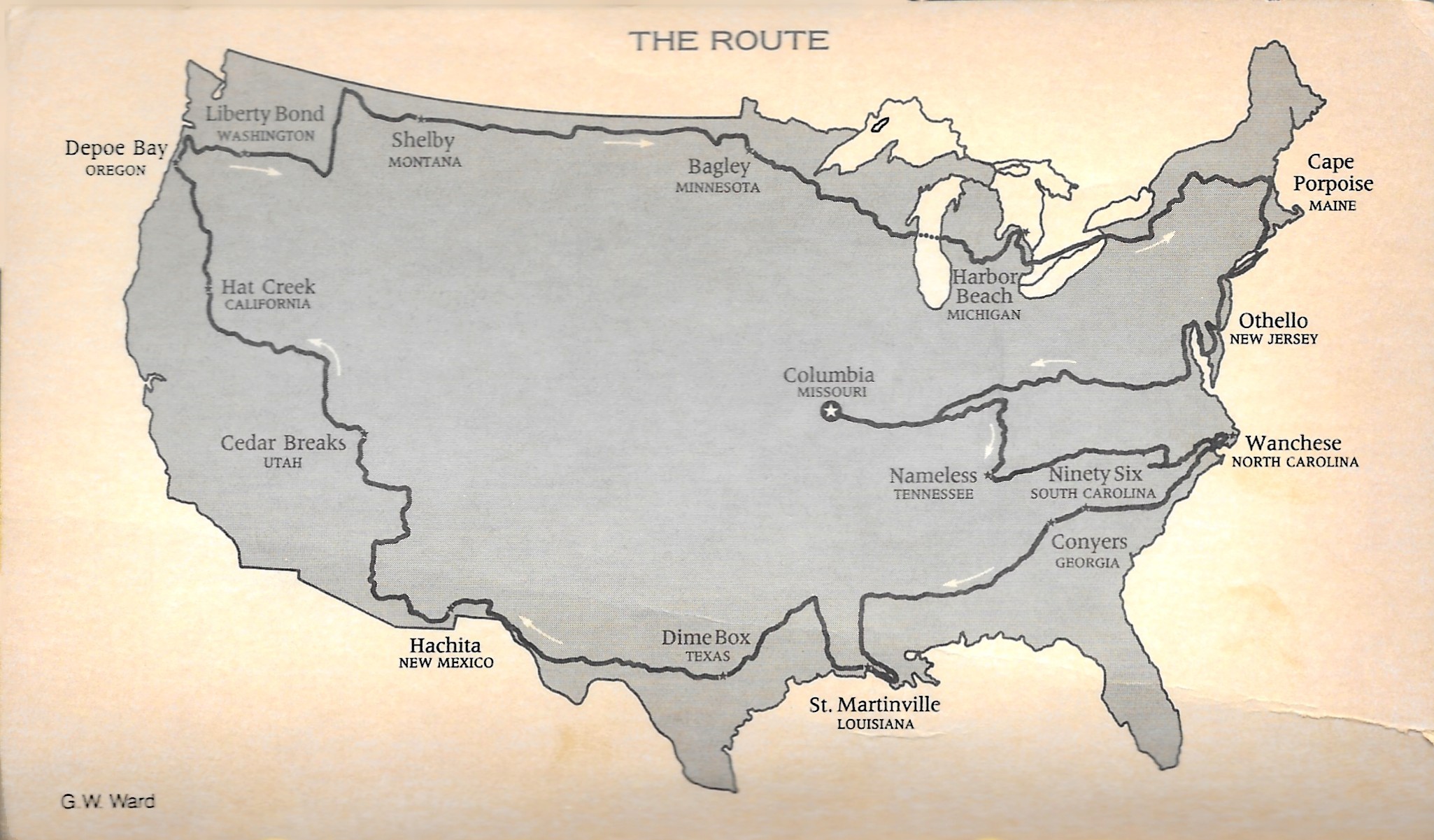
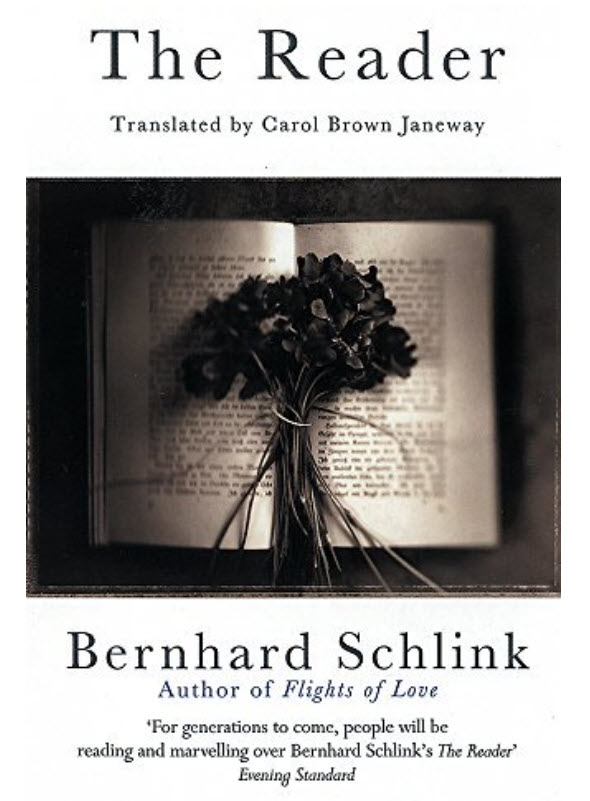
Book Review: Unshakeable – by Tony Robbins

Early in my career, when I was just a 30-year-old computer programmer, I picked up a tape program from the mail order firm Nightingale Conant, which eventually became the largest audio program publisher. The tape program was called Unlimited Power and was narrated by Tony Robbins, and it was based on the book with the same name. It came out in 1986 when he was just 26 years old.

I put the cassettes in a portable player and over lunch walked the hills behind the business park in Carlsbad where I worked, and over the weeks and months that followed, Tony Robbins changed my life. Unlimited Power taught the young me techniques and habits that over time significantly contributed to who I am today. Needless to say, I always admired Tony Robbins. I attended some of his seminars in person, and I read and listened to additional programs he produced over his long career.

When I was out browsing at Barnes and Noble recently I stumbled upon Unshakeable and picked it up without hesitation. It turns out it was a great read, and true to my history with Tony Robbins, I learned a lot. He teamed up with several exceptional people in the financial world to educate the reader about how to invest safely and profitably, including Peter Mallouk, who has been ranked the #1 financial advisor in the US for several years by Barron’s.

The book analyzes the ups and downs of the markets, and we learn that after every bull market comes a correction. It’s a great reference work if you want to find out the difference between investing in stocks directly, or in funds, what mutual funds are, the significance of index funds and how to pick a financial advisor. Unshakeable teaches you how to put together an actionable plan designed to deliver financial freedom.

No matter your income or your current stage of life, this book will provide the tools to help you achieve your financial goals more rapidly and with confidence and safely.

The only downside – Unshakeable was published in 2016, just as the first Trump administration went underway. It does not cover what happened since, and of course the entire disaster that the financial world underwent due to Covid had not happened yet. However, the message Tony Robbins delivers here is timeless. If you read this book and only benefit one tenth as much as I did from Unlimited Power almost 40 years ago, it will be well worth it.

Book Review: Reykjavík – by Ragnar Jónasson and Katrín Jakobsdóttir

The story starts in Iceland in 1956, when Lára, a fifteen-year-old girl from Reykjavík takes a job as a housekeeper for the summer at the cabin of a young professional couple on the island of Videy, off the coast of Reykjavík.

When Lára disappears one day without a trace, her employers claim innocence and say that she just quit and left. The investigation goes nowhere, but the policeman who initially investigated the disappearance remains haunted by the case for decades.

In 1986, a young journalist named Valur Robertsson takes up the case and decides to dig deeper than anyone before. This was during the summer when the city of Reykjavík celebrated its 200th anniversary, and when the famous summit of Reagan and Gorbachev in Iceland took place. Valur gets close to solving the case, when we learn that somebody is desperate to keep the truth from coming out.

Reykjavík is a Who Dunnit story in the tradition of Agatha Christie. It so turns out that one of the co-authors, Ragnar Jónasson, started his writing career when he was still a teenager translating Agatha Christie novels into Icelandic.

As in any Who Dunnit story, I kept with it, turning the pages, but I never really got into the writing. The entire novel reads like a newspaper article. The book is 95% exposition, with very little dialog and not much action. When there is action, it often does not move the story along and there are many interactions between characters that are there for no reason but to fill pages.

I kept having the feeling that the author does not really know how journalism or police investigations work. The descriptions seem very much on the surface, like my writing would be if I were to describe action in a hospital emergency room, an environment I know nothing about. It would seem very superficial, and any medical professional would know immediately that I don’t know what I am talking about.

Overall, Reykjavík is not a pleasant read. The only reason I kept going was to find out Who Dunnit and my commitment to myself to try, really try, to finish every book I start.

Having recently been in Reykjavík, I enjoyed reading about the locales as they were forty years ago. That was the primary reason for me to pick up the book in the first place.

I don’t think I’ll read any more of Jónasson’s novels.

Book Review: Heaven and Hell – by Jón Kalman Stefánsson

Heaven and Hell takes place at the turn of the twentieth century in a remote part of Iceland. The protagonist, an Icelandic boy, joins a fishing crew with his older friend Barður in a small boat on the ocean. Barður is interested in poetry and is in the process of reading Paradise Lost by John Milton in a book he has borrowed from an old sea captain. Being distracted by the book, Barður forgets to bring is waterproof (a fishing jacket) with him on the boat. The weather soon turns foul. The fishermen know that sharing is not an option, but a death sentence for both. Barður eventually dies from the cold. The boy is devastated. In his grief, he leaves the village on a quest to another fjord and village to return the borrowed book to its owner. He is determined to take his own life after returning the book, but as he gets involved with the villagers, he eventually changes his mind.

Heaven and Hell is a simple and fairly short story originally written in Icelandic. The Icelandic names for people and places use the Icelandic characters that we do not have in the English language. That gives the book an exotic feeling. My hiking guide in Iceland recommended this book and its author to me. It turns out, he actually went to elementary school with the author which the two discovered when my guide attended a book reading.

All the characters in the book, even the peripheral ones, have names, except the protagonist, who is always just referred to as “the boy.”

As I was reading Heaven and Hell, I could not push back the constant images of The Old Man and the Sea by Hemingway, which kept flashing up. It’s another novel where most of the decisive action takes place in a small fishing boat on the vast and powerful ocean.

Heaven and Hell takes you forcefully by the hand and leads you through the stark and unforgiving landscape of Iceland, and introduces you to its indomitable and resilient people.


Book Review: Woman at 1,000 Degrees – by Hallgrímur Helgason

Not too long ago I read Slaughterhouse Five, which has as one of its central themes the firebombing of Dresden during World  War II. The novel Woman at 1,000 Degrees starts with this sentence:

I live here alone in a garage, together with a laptop computer and an old hand grenade. It’s pretty cozy.

Jonas, my hiking guide in Iceland earlier this summer, recommended the author Helgason and specifically this book when I asked him about Icelandic literature. Not only did I read about life in Iceland, but I read about World War II from the view of an Icelandic girl named Herra Björnsson who, at the age of ten, through a series of events resulting from very bad luck, ended up alone in Europe during the war. The story around the firebombing of Dresden in Slaughterhouse Five painted horrific picture of what went on during that war. The experiences of Herra in Denmark, Germany and then Poland illustrate what it was like for a child, a girl, to be abandoned alone in the maelstrom of chaos. She was cast out, abused, starved and raped again and again, over years, and only through seeming miracles she found her way back home after the war. The story tells the plight of the innocent population, Germans, Poles, Russians and Danes, during the Nazi regime and its wars of aggression and racial extermination. It rang home for me, as I recalled stories my own father has told me again and again of the horrors of war he himself had to face when he was a ten-year-old child refugee from the east as the Third Reich was collapsing.

Helgason tells the story in vignettes, showing Herra as an eighty-year-old woman dying in a garage in Reykjavík, then as a young girl in Iceland, as an adolescent during the war in Germany, and as a young woman in Argentina as she had to flee Germany with her Nazi father. We follow Herra at various stages of her life, not in chronological order, but in order of increasing horror as we witness the atrocities she is forced to endure that eventually end with her on her deathbed, lonely, yet full of spunk, in a garage.

Herra narrates the story of her life. She is quite insightful, as this excerpt shows:

She was married to an Italian countertenor who was now a pilot in Mussolini’s air force. He had participated in the invasion of France, one of the most ludicrous operations in the total absurdity of the Second World War: Italians in the flower of their youth sacrificing their lives so that the word TABAC could be changed into TABACCHI on some tobacconist’s signs in a few Alpine villages.

Helgason, Hallgrímur. Woman at 1,000 Degrees (p. 96). Algonquin Books. Kindle Edition.

If you have been reading my blog you will likely know that I love languages, and Icelandic strikes me as a particularly exotic language. With that in mind, you might understand why I especially enjoyed the following page, where Herra characterizes some of the languages she knows:

We Icelanders therefore walk around with gold in our mouths, a fact that has shaped us more than anything else. At least we don’t squander words unnecessarily. The problem with Icelandic, however, is that it’s far too big a language for such a small nation. I read on the web that it contains 600,000 words and over 5 million word formations. Our tongue is therefore considerably bigger than the nation. I did get to know other languages pretty well, but few are as solemn, because they’re designed for daily use. German strikes me as the least pretentious language, and its people use it the way a carpenter uses a hammer, to build a house for thought, although it can hardly be considered attractive. Apart from Russian, Italian is the most beautiful language in the world and turns every man into an emperor. French is a tasty sauce that the French want to savor in their mouths for as long as possible, which is why they talk in circles and want to ruminate on their words, which often causes the sauce to dribble out of the corners of their mouths. Danish is a language the Danes are ashamed of. They want to be freed of it as soon as possible, which is why they spit out their words. Dutch is a guttural language that gulped down two others. Swedish thinks it’s the French of the north, and the Swedes do their utmost to relish it by smacking their lips. Norwegian is what you get when a whole nation does its best not to speak Danish. English is no longer a language but a universal phenomenon like oxygen and sunlight. Then Spanish is a peculiar perversion of Latin that came into being when a nation tried to adapt to a king’s speech impediment, and yet it is the language I learned the best. Few of these nations, however, have mastered the art of silence. The Finns are Icelanders’ greatest competitors when it comes to silence, since they are the only nation in the world that can be silent in two languages, as Brecht said. We Icelanders, on the other hand, are the only country in the world that venerated its language so much that we decided to use it as little as possible. This is why Icelandic is a chaste old maiden in her sixties who has developed a late sex drive and desires nothing more than to allow herself to be ravished by words before she dies.

Helgason, Hallgrímur. Woman at 1,000 Degrees (p. 56). Algonquin Books. Kindle Edition.

This is not a book you’re just going to pick up at Barnes and Noble as you browse through their offering. Icelandic authors are not generally prominent in the United States. Nonetheless, I recommend you find Woman at 1,000 Degrees and experience a novel of an entirely different kind.

Book Review: Hillbilly Elegy – by J.D. Vance

Published in June 2016, when Vance was just 32 years old and about three years after he graduated from Yale Law School, Hillbilly Elegy is a remarkably good book and a must read, no matter what your political bent may be. There is also a Netflix movie that I have reviewed here.

Vance wrote the book long before he had political ambitions. It is a passionate and highly descriptive narrative of his own personal life and upbringing. He is only one year older than my daughter, so I could relate to the chronology of when and how Vance grew up and what shaped him.

The odds against such a child just simply surviving the desperate fight out of drugs, poverty and despair, let alone being successful, and achieving a stellar political career, are astronomical. In the end, I took away that the United States Marines saved the boy, made him a man, and served as his springboard. Vance tells not only his and his family’s personal story, but he shows us what social and class decline feels like in huge swaths of this nation. It helps us understand the decline of the rust belt, and the impact of manufacturing leaving our country for she shores of Asia.

It is therefore no surprise to see how some of Vance’s political views were shaped. I have a hard time understanding where some of the controversies come from that he has created since he associated himself with Trump. After reading his book, the Trump-Vance alliance seems unlikely and I can’t quite figure out how it happened. It almost does not make any sense. Perhaps it’s just the next logical step for him to ascend the ladder. While he obviously disagrees with some of Obama’s policies, views and strategies, he admired Obama and modeled some of his own life to Obama’s rise. That, I speculate, might have driven him to Trump as a stepping stone to the national stage. After the Trump era is over  and Trump is gone, Vance will still be a young man and now we all know him, don’t we?

There is also nothing about any couch in this book, and nothing objectionable that might push you away from Vance as a character. On the contrary, you want to meet him and chat with him at a backyard BBQ.

I am not going to vote for Trump-Vance, but I am telling you that Hillbilly Elegy is a remarkable book. If you are at all interested in understanding the decline of America’s white middleclass, you need to read it.

Book Review: Slaughterhouse-Five – by Kurt Vonnegut


There isn’t a list of best books in the English language or best American novels that Slaughterhouse-Five is not part of. It’s a classic. It’s an anti-war novel. It was first published in 1969. As it often is with me and classics, I don’t particularly agree with the general sentiment, and so it with this book. I enjoyed reading it, not because it had me riveted from the start, but because it’s a fairly short book (190 pages), and it’s a classic, and I felt that it was time to ride it out. In the end I gave it two stars.

The story is based on autobiographical experiences of the author. He was a soldier in the United States Army in World War II and an eyewitness to the firebombing of Dresden by the Allied Forces. To put things in perspective, the Hiroshima bomb killed some 71,000 people in Japan. The bombing of Dresden killed an estimated 135,000 people, mostly civilians. The images of that event obviously haunted Vonnegut for the rest of his life, and prompted him to write this book. The anti-war message is of course what makes the book.

I found it confusing and unnecessary to include the alien abduction side story, or for that matter the time-travel segments. The author used time travel to allow him to tell the story in non-chronological order, jumping around the protagonist’s life as he felt suitable. The alien abduction segments seem to be there only to give the author a vehicle to convey speculation on the nature of time, free will and eternal life. Perhaps the pseudo-science fiction nature of the book brought readers. To me, it was distracting. It’s a good anti-war story, and it leaves you in horror, but there are many other anti-war books.

You should read Slaughterhouse-Five because it’s an American classic that everyone should have read. Then you can make up your own mind.

So it goes.


Book Review: Tropic Angel – by Nate Van Coops

Luke Angel has been a pilot all his life. He runs an airplane hangar and repair business out of an airfield in St. Petersburg, Florida. One day a friend and his plane go missing. He finds out when a police detective comes to his shop. Something does not add up in Luke’s mind, and he plays detective and vigilante at the same time.

Tropic Angel is a fast-paced thriller and very readable. Playing in Florida, and dealing with planes and bad hombres, the book reminded me of Bad Monkey by Carl Hiaasen. Van Coops is a good writer. I have read many of his books, particularly his time travel series, which he writes under the name Nathan Van Coops. Here is the list of Van Coops time travel books I have read:

Author Title Genre Category Rating Date
Nathan Van Coops Time of Death Fiction Time Travel 2.5 Jan 23, 2022
Nathan Van Coops Agent of Time Fiction Time Travel 2 Dec 13, 2020
Nathan Van Coops The Warp Clock Fiction Time Travel 3 Oct 9, 2018
Nathan Van Coops The Day after Never Fiction Time Travel 2 Jan 2, 2017
Nathan Van Coops The Chronothon Fiction Time Travel 3 Dec 3, 2016
Nathan Van Coops In Times Like These Fiction Time Travel 3 Oct 31, 2016

When I reviewed In Times Like These back in 2016, I said this:

The best time travel book of all time is Audrey Niffenegger’s The Time Traveler’s Wife. This book is the second best.

Tropic Angel is the first of a series of two books (so far). I am sure the second one will be just as readable as the first one. Van Coops books are pure entertainment and fun to read, but I am not interested enough in what happens next in Luke Angel’s life to read the next one.

Book Review: The Man Who Folded Himself – by David Gerrold

David Gerrold wrote The Man Who Folded Himself first in 1973. There are additional revisions in 2003, that mention the American Airlines flight 191 crash of May 1979 and of course, 9/11 in 2001, both events that hadn’t happened yet in 1973.

In the foreword, Robert J. Sawyer, a science fiction writer himself, praises the novel and cites it as the book that got him started as a science fiction writer. Reviewers call it the best time travel story of all time. It was definitely the first truly unique one since H.G. Wells’ novel in 1895.

Dan Eakins inherits a time machine from his uncle, who served as his guardian. It comes with instructions, and it’s truly powerful without limits. He can basically transport himself back and forth to any point in time.  This means he can change history, if that’s what he wants to do. He can get rich by betting on the horse he knows will win the race from reading tomorrow’s paper. And, most central to the plot, he can run into himself by visiting his own apartment tomorrow, where the tomorrow version of himself is living.

This creates a truly complex plot and a story line that is very difficult to follow.

In the end, there isn’t much going on, and all the alternative selves he meets are not just confusing us, the reader, but himself.

If you are into time travel stories, I say this is a must-read, not because it’s a good story or particularly well-written, but because it pioneers the genre and sets the stage for many future time travel novels that make more sense, are more entertaining and realistic, and where more is actually going on.

The book is only 130 pages long, and I read it on a single flight from Hawai’i to California.


Book Review: The Other Einstein – by Marie Benedict

The Other Einstein reads like an autobiographical journal, but it’s actually a fictionalized dramatization of the life of Mileva Maric, Albert Einstein’s first wife.

Milewa was a brilliant young Serbian woman who was admitted to study at the Swiss Federal Polytechnic, one of the world’s most prestigious scientific universities in Zürich in 1896. It was almost unheard of for women to study at universities in those days, and women scientists were even rarer. Her chosen field was Physics, and her special strength was mathematics. One of her classmates was a young physics student named Albert Einstein. Most of her peers kept their distance, but Albert seemed to like her.  She could hold her own in any scientific conversation, and she could outperform all of her classmates in math. Soon she earned the respect of her fellow students and her professors.

Albert courted Milewa, even though romance was last on her priorities. Soon his charm succeeded and they started dating, at least in secret. Eventually, though, she got pregnant out of wedlock, which at that time ruined a woman’s reputation and even caused shame for her whole family. She gave birth to her illegitimate daughter Lieserl at her parents’ house in secret. Albert never met Lieserl and he never acknowledged her existence. Lieserl died, presumably from Scarlet fever, before she was two years old.

They got married and had two more children. They collaborated on important scientific papers, including the Theory of Relativity that made Einstein famous and arguably the most recognized scientist and genius of all time.

The Other Einstein explores whether Milewa was just a sounding board for Albert, or if she did his math for him, or if she was an active participant and contributor to the famous work of Einstein without ever getting any credit.

She got lost in the enormous shadow of the famous and narcissistic Einstein, who, according to this story, cheated on her and seriously emotionally abused her. Over the years their marriage devolved and she divorced him.

I read Isaacson’s biography of Einstein in 2013. Here is my review. It is not clear whether Einstein was as abusive and self-absorbed as this novel depicts him. It certainly raises doubts about him. After reading The Other Einstein, I feel like I want to read the biography once again.


Book Review: Our Missing Hearts – by Celeste Ng

Bird Gardner is twelve years old and lives with his father, who used to be a linguist and college professor, but now works in a university library shelving books. They live in a small apartment in a dorm on campus. Bird’s mother Margaret, a Chinese-American poet, the daughter of immigrants from Hong Kong, disappeared when he was nine years old. He does not remember much about her and he resents her for abandoning them.

One day a mysterious letter arrives filled only with drawings and no words. Bird goes on a quest to find its meaning and eventually steals away to go on a trip to find his mother. When he finally finds her in New York City under mysterious circumstances, he learns of her love and her own private battle for justice and decency.

Our Missing Hearts plays in America of today, in an alternate society where there was a severe economic downturn, akin to the Great Depression, some fifteen years before the story starts. They called it The Crisis. Businesses failed, unemployment was rampant, many lost their homes, livelihoods, possessions and hope. The country needed a scapegoat, some explanation why things happened to them.

In Germany, in the 1930s, Hitler faced such a nation under such a crisis. He invented a scapegoat, somebody whose fault it was: The Jews. In the America of Our Missing Hearts, the leaders blamed the Chinese, and by association any Asian-Americans. Of course China was to blame for America’s demise. And as we reacted to Japanese-Americans in World War II, putting them into camps, so did America isolate Chinese-Americans in this story. Bird’s mother, being the daughter of Chinese immigrants, had the face that betrayed her origins. Her poetry, without being political, was misinterpreted as unpatriotic, and quickly banned.

The government started to separate children from their immigrant parents under the guise of protecting them from the unamerican influences of their parents. All this rings true. In 2018, the American government separated children and parents of immigrant families at the border. Their crimes: being children of parents desperate enough in their home countries to flee in search of better lives, safer lives and more prosperous lives. The American government told us that immigrants were taking away our jobs, they were animals, vermin, that had to be deported at a minimum. We were taking their children from them to protect the children. It’s now six years later, and there are still over 1,000 of those children who are not yet reunited with their families:

The Trump administration’s family separation policy remains a lasting and disgraceful legacy of that administration and of the United States as a nation. Under the policy, formally known as “Zero Tolerance,” the US government forcibly separated migrant children from their parents as a deliberate measure to deter others from attempting to migrate or seek asylum. Crueler still, the federal agencies that separated families failed to track which children were separated from which parents. In total, at least 5,569 children were separated from their parents or guardians under the Trump administration, a figure that includes separations during and after the formal zero tolerance policy. More than 1,000 children remain separated from their parents as of November 30, 2023. Out of these 1,000 children, the government’s Family Reunification Task Force still does not have any ability to contact 68 of the separated parents, further complicating the reunification process and prolonging families’ suffering.

ReliefWeb

Our Missing Hearts tells of the collective suffering that occurs in a society that suddenly decides that some subgroup is the reason why the society is in decline.

It happened before in many other countries, and it’s happening right now in the United States. Slowly, gradually, we are getting desensitized, and more and more of us are willing to commit atrocities in the name of our country.

…You won’t have a country anymore……

Book Review: The Wager – by David Grann

The Wager is about a shipwreck in 1741, and the desperate conditions the castaways found themselves in on a desolate island in Patagonia. It is about what happens to humans when they are deprived of everything, comfort, security, purpose, water, food and most of all, hope.

An Armada of British ships sails for the Pacific around the southern tip of South America during the war with Spain, hunting for a treasure-filled Spanish galleon. All but one of the ships perish. The Wager is one of them. This book tells the story of the castaways and their quest for survival.

The life of a sailor was rough. If they reached their objective and conquered a ship, the rewards could be huge. A sailor’s share could be worth as much as 20 years of wages, and the captain would be set for life with a fortune to retire. However, it was hard to get men to sign up for the terrible risks, and for being away from wives, children, family and home for several years at a time. To solve the problem, the navy employed “press gangs” which were militarized units that simply captured hapless men who were at the wrong place at the wrong time, bound them, and hauled them onto ships. Drunken men might wake up miles from shore, never to return. Their families would simply know that they never came home one night. Those men, if they then stood up for themselves, were mutineers, and would be hanged for the offense. And thus was the glorious life of a sailor in His Majesty’s Navy.

The Wager is a non-fiction account of the journey, through the eyes of several of the key participants, mostly recovered from their journals. It is entertaining, captivating and shocking at the same time. In a world, where we can fly from Chile to London in 14 hours, it is difficult to imagine that in 1740, it took a year – if you succeeded to get around Cape Horn – and that was a big IF.


While talking about shipwrecks and sailing, I have read several books about sailing and shipwrecks over the years and reviewed them here:

Endurance – by Alfred Lansing – I read and reviewed this book in 2016; it tells the story of the Shackleton expedition to Antarctica in 1914.

Caliban’s Shore – by Stephen Taylor – Read in 2009, this is about a shipwreck in the 1780 timeframe on the east coast of South Africa.

More about sailing: Two Years Before the Mast – by Richard Henry Dana – Read in 2017, this tells the story of a two-year journey in the 1830s to California around Cape Horn from the point of view of a sailor.

And while we’re at it, you might be interested in Empire of Blue Water – by Stephan Talty – which I reviewed in 2008. It’s a book all about pirates.

Book Review: The Object – by Joshua T. Calvert

Melody Adams works for NASA as a physicist and astronomer. One night, in Hawaii, she discovers an odd object near Pluto with attributes that don’t make any sense. She and her associate quickly come to the conclusion that the object must be coming from outside the solar system. Furthermore, it does not behave like a natural object. When she goes public with her discovery, she quickly loses credibility with the scientific community and NASA, and gets fired.

Fast forward a few years, when the object is observed again near Saturn, slowing down. All doubts are erased. Melody quickly gets back in good graces with NASA, and she eventually gets the commander post as an astronaut on a mission to rendezvous with the object. Once on the journey, things quickly go wrong, and a rift develops between the crew on the ship and Earth and its petty politics.

The book, even on its cover, is portrayed as hard science fiction. It plays in the near future, and the characters all use today’s technology. But I don’t think this is hard science fiction, like Andy Weir’s The Martian. Actually, I found it kind of hokey. Melody Adams, the protagonist, is one of those female astronaut superheroes. She is smarter than everyone else, she has a Ph.D. in physics, she is at the top of her astronaut class, and – as you would not suspect – she sleeps with Jim, the NASA administrator. That whole side plot of being in love with Jim makes no sense, does not contribute to the plot, and I could not quite figure out why it was there.

Without spoiling the book for you, I just have to add that it’s always baffling when there is a space mission where Earth selects its best and brightest to go to meet an alien vessel, and those brilliant super astronauts do really, really stupid things once they are out there on their own. Perhaps that makes for an exciting plot, but for me it’s just distracting. These people are idiots out there, and when I read the story, it does not draw me in. It loses me and I want it to just move on and be done.

Book Review: Goyhood – by Reuven Fenton

I would never have picked up Goyhood to read. I would never have come across it, had it not been for the author contacting me directly with a request to review the pre-release of the book. The one paragraph synopsis he provided sounded entertaining, so I committed to giving it a try.

Mayer and David Belkin are fraternal twins who grow up in a very small town in rural Georgia raised by a single mom, or perhaps not raised by her. She is definitely in over her head and the boys are pretty much raising each other. What could go wrong?

One day they come home to find a rabbi at their front door talking to their mother. The conversation and introduction to the boys ends up changing the life of Mayer fundamentally. Eventually he leaves the small town to go the Brooklyn, New York, study in a Jewish college and become a Talmud scholar. Through a sequence of sheer luck and being at the right place at the right time, he is invited to marry into a prominent Jewish family. Eventually he is a super-orthodox Jew and completely estranged from his twin brother and his mother.

When their mother dies unexpectedly, Mayer travels back to Georgia and meets up with his brother David. Together they find out family secrets that totally upend both of their lives. To recover, the brothers decide to go on a road trip through the south, from Georgia to New Orleans and back, performing a series of antics and adventures. For both of them, the trip reveals who they really are and what they really want to do with their lives.

This is a road trip story, a little bit like Thelma and Louise, a little bit like On the Road, and a lot like The Lincoln Highway. A group of strange characters get thrown together in a car to work out the mysteries of their lives.

The story is entertaining, but I think you need to be a Jew, or at least interested in Judaism, to really appreciate it. The complications that arose in Mayer’s life that he and his brother had to work through are all based on Jewish doctrine, which has no meaning to a non-religious person like me. I actually felt glad that I wasn’t Jewish and didn’t have what I consider contrived complications in my life.

Most religions seem to try to convert non-believers into their fold. Some have it as their central mission to proselytize and get others drawn in. I have always admired the Jewish for seemingly being the opposite. You don’t get in, and it seems like you’re never really accepted unless you’re born into it, and – as I learned in this book – unless your mother was a Jew. I respect the Jewish religion not for its teachings or its tradition, but simply because it appears to value education as one of its highest goals.

I learned a lot about the lives of orthodox Jews by reading this book, more than I ever thought I would, but I must admit that I skimmed over many sections that went too much into scripture and God just to get the story moving forward.

Book Review: The Songs of Distant Earth – by Arthur C. Clarke

Arthur C. Clarke first published The Songs of Distant Earth in 1986. It was based on a 1956 short story of the same title, and Clark had supposedly stated that it was his favorite of all his novels. I remember reading it decades ago, probably right around when it was published, but I had forgotten all about it.

It plays in a world about 2000 years in the future where Earth and the entire solar system was destroyed when the sun went nova. Humanity had almost a millennium notice of the event occurring, but as is usual with humanity, it does not always act rationally when obvious doom looms. We have seen this with what Al Gore called global warming in the last century.

The story plays on the planet Thalassa, a human outpost started by a seed ship, a robotic vessel that carried frozen human embryos and the technology and automation necessary to establish a colony on an alien planet. Thalassa is a water world with just an archipelago of three islands, similar to Hawai’i on Earth, and with no other continents. Humans have lived there in a relative paradise and stability for centuries.

When a starship arrives with millions of refugees from Earth, the balance of culture and society on Thalassa may be upset.

Clarke explores the logistics of a world where travel at relativistic speeds between stars is possible. In such a world, ships may arrive at any given populated planet only every few hundred years and the event would be marked with historical significance. The story also illustrates the cultural implications of inter-planet communications when a starship leaves one planet, scheduled to arrive at another three-hundred years later. All friends, lovers and children left behind would be centuries dead by the time the travelers arrive at their destination and are able to ship messages back.