Book Review: Clowns – by Peter Cawdron

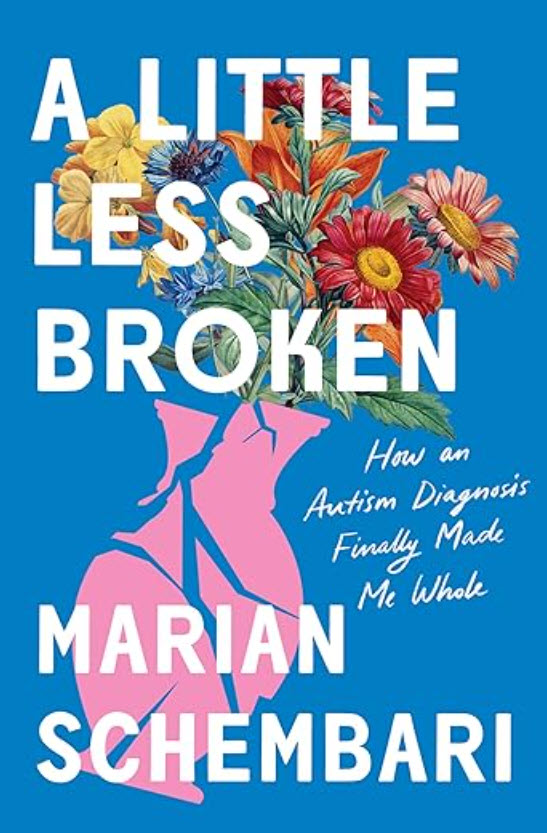
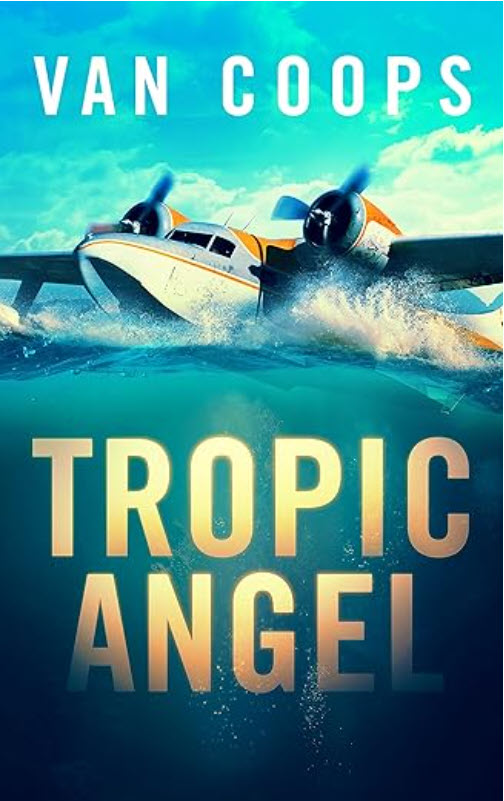
This book caught my attention because it was a “first contact” (with aliens) book. After further research I learned that Cawdron has written many independent first contact books. This one was pretty bad, so I am not sure I will bother with any of the others.

Breezy is a Secret Service agent with a fast trigger finger. Olivia is a call girl who just made a deep fake sex movie to frame an important person. Then there is Buster, a clown and a mysterious “good guy” all around who seems to have a lot of power, influence and abilities. Oh, and there are aliens, too, who have a strong interest in human psychology and the welfare of the human race.

It’s an oddly action-packed story, told in the present tense, which give it a fast pace. You get into the thinking of the protagonists, and there lies the problem. The author is basically lecturing about his political views all throughout the story, and he is in the process forgetting to tell us a story. Most of the action is short, interleaved with endless exposition about various political views. He obviously has a problem with capitalism, is worried about climate change, corruption in the highest levels of government, the America military machine, abuse of women throughout the world, and so on.

He projects an aura of moral superiority which will turn many readers off. I don’t disagree with him on many of those views, but of course half of his readers will. By being so much in our face with politics, the story gets buried, and all those opposing his views will feel insulted. I only felt lectured to.

After the book ends, there is an Epilogue, which basically tells you all you need to know. It’s a cheap way out. He seems to have realized that the book’s story is weak, so he has to button it all up in a tell-all epilogue. There is also an Afterword, where he discusses all the major concepts as well as his various political views and statements.

As a result, you don’t really need to read the book. Just read the Afterword. You’ll get everything out of the book that there is, and you don’t have to read a bad book all the way through. In a way, the author provides the Cliff Notes right in the book.

Book Review: Great Expectations – by Charles Dickens

Pip is a young orphan living in mid-Victorian England in a village in the country. He is being raised by his older sister and her husband. His sister is impatient and has a brutal temper. Joe is the village blacksmith. He is a gentle giant, simple minded, but he loves and protects young Pip like a son.

One evening Pip is passing by the local graveyard where he is assaulted by an escaped convict who forces him to steal some food for him, and a file so he can cut his leg irons. This traumatic experience haunts Pip for the rest of his childhood.

One day, as an adolescent, he is surprised by an unexpected and anonymous benefactor who leaves him money and sets him up to get educated in London to become a gentleman. Suddenly he finds himself in possession of means and “great expectations.” He spend many years trying to solve the puzzle of his fortunes when eventually it all comes together in a most unexpected fashion.

Great Expectations is my first Dickens novel. It was the last one he wrote, and it is generally praised as his best. Reading it pulls you right into the life of Victorian England. My copy was an illustrated one and I enjoyed the many ink drawings of some of the key scenes. The environment and the clothing of the characters came to life for me.

The plot is crafted masterfully. Great Expectations could easily be a play. The book is 544 pages long. One might think you’d get lost in all the characters. But people who appear in the early chapters seemingly in peripheral roles tend to come back as pivotal characters later. Every character has a deep role in the overall plot. Great Expectations would make a great textbook in a class in writing fiction – and  it probably is. (You can tell I am not a scholar of English).

I learned a lot about life in Victorian England and London in particular,  a world I only know from a distance, from movies and from books. The gulf between the classes is vast. Workers and peasants have no options and no “expectations.” It does not seem possible to work your way out of poverty and “low” birth. People with money, gentlemen, don’t seem to need to work, they just spend, even get into debt, but there seems to be no general stress. Everyone treats a “gentleman” differently. And the common folk all dream of “coming into means” by some miraculous way, through inheritance or some benefactor. I am sure I am oversimplifying matters here but this is the world of the London of Charles Dickens. ‘

If you haven’t read Dickens, like I, and you want to pick up one of his books, this is a good one.

Book Review: Guardian – by Joe Haldeman

As a young girl during the Civil War, Rosa was sent to Philadelphia, where she studied mathematics and astronomy. By chance, she was introduced to Edward, a wealthy lawyer. They were married and had a son, Daniel. The marriage was very unhappy for Rosa and she knew right away it was a mistake. But this was in the late 19th century and there were not many options for a woman. When Edward committed serious sexual abuse on her then teenage son, she saw no more options but escape.

Guardian tells of their travels and adventures to get away from the abusive husband and father while staying ahead of the private investigators he sent to catch them. Their journey took them first to Missouri, but soon on to San Francisco, Seattle and the Alaska wilderness during the gold rush.

Seemingly guiding her is a guardian which appears to her as a raven that speaks.

Guardian reads like a journal for most of the story, until the raven takes on a mystical persona that results in some time travel by Rosa which allows her to “do it over again” and change a bit of history along the way.

I enjoy Haldeman’s writing very much and I have read and reviewed a number of his books. You can find the reviews in my Book Reviews list. Haldeman is a science fiction writer, of course, with the classic The Forever War being one of my favorites. In this book he veers off into an entirely different direction and I found the alternate history portion of the story distracting.

In my real life, in late August, we were just in Alaska, and we visited Juneau and Skagway, two of the places that play a major role in the story of Guardian. Seeing how those exotic places came into existence through the Alaskan gold rush, and what they were like before modern cruise ships deposited thousands of tourists into them on an ongoing basis was fascinating to me. I enjoyed the descriptions of their ship working its way through some of the narrows between the islands that I was watching more than a hundred years later from the balcony of our cabin during our voyage. Sometimes old books and modern life connect in mysterious ways.

Book Review: The Armor of Light – by Ken Follett

The Armor of Light is the 5th book in the Pillars of the Earth series.

The story plays in England, centered around Kingsbridge, in the 1770ies and goes through the Napoleonic Wars all the way to Waterloo in 1815. That was a period in western history when a new era of manufacturing disrupted the status quo. The wool industry in England was upset first by spinning machines, then automated looms. Workers who were used to making a living spinning and weaving now found themselves displaced. The entire establishment, the legal system, and the class system of common men and aristocracy by birth was rigged against the worker.

Follett tells the story through the eyes of a handful of people who lived through that era. One of the young boys whose father died through the negligence and arrogance of the son of their landlord grows up to be a brilliant engineer. He eventually joins the army and goes to war on the continent, as an aide to the Duke of Wellington, who is most famous for defeating Napoleon in Waterloo. Right after I had finished reading The Armor of Light I went to see the movie Napoleon, and I enjoyed the scenery and graphical images of war in Waterloo that I had just read about in this book. The book and the movie complemented each other for me.

Through the experiences of the various protagonists we learn about the plight of the working class and the immense injustices inflicted upon the hapless and unfortunate during that period of history.

As with the previous books of the series, the Kingsbridge Cathedral with the pillars of the earth is still there, many centuries after is was built by John the Builder. But the people who live in Kingsbridge are all new. There really isn’t any continuity other than it’s the same town.

I don’t know why the book is called The Armor of Light. I can’t seem to remember the title and I kept having to look it up when someone asked me what book I was reading at the time. The obscure and hard to remember title notwithstanding, I loved reading every page, and as it is always with Follett books, I learned an immense amount of history of the time that I would otherwise not have known about. When I put a Follett book down I always think to myself: So much to learn, so little time.

If you have read the Pillars series, you will like The Armor of Light. If you have not read the series, I recommend you start with Pillars of the Earth and work your way through the five books.

Going to the Bookstore to Go

A long, long time ago when bookstores were still a thing, when we had B. Dalton at the malls, Waldenbooks, Book Star, Borders, Crown Books and many mom and pop stores, I used to spend a lot of time (and eventually money) at bookstores. I noticed a curious phenomenon: Whenever I was at the bookstore I got the urge to go poop. I knew where the bathrooms were. It never seemed to fail. Bookstore visits led to bowel movements.

Eventually I had kids and from time to time when they would get constipated, I would, half jokingly, tell them that they just needed to go to the bookstore.

Fast forward 30 years, and now my daughter’s two-year-old son likes to “hold it in” for some reason. When toddlers do that they get cranky and miserable, which of course is utterly frustrating to the parents. Anyone who has had kids knows that. The other day she texted me and said that it was so bad, she had to choose the nuclear option and — you guessed it — take him to the bookstore.

IT WORKED! She sent me a video of him standing at a little table with games visibly “pushing.” I wrote back and said that it proves he’s definitely my grandson.

Then she looked it up and found the “Mariko Aoki phenomenon.” IT HAS A NAME!

The Mariko Aoki phenomenon (青木まりこ現象Aoki Mariko genshō) is a Japanese expression referring to a sudden urge to defecate that is felt upon entering bookstores. The phenomenon is named after Mariko Aoki, a woman who described the effect in a magazine article published in 1985.

Wikipedia

Good old Mariko discovered the phenomenon in 1985, which was many years after it was already a certain thing in my world.

Two days after the the first success with our grandson, she went back today and recorded success within two minutes of arriving at the bookstore.

Which makes me worried: Please, let’s keep Barnes & Noble in business! We need at least one bookstore chain left standing. While I am a bookstore mooch (see my post to this effect from 2013), I resolved that I need to go to the local Barnes & Noble regularly and BUY SOMETHING every time. Our digestive health depends on it.

I told my daughter that her son would be a reader, being introduced to frequent visits to bookstores at an early age.

Book Review: Remarkably Bright Creatures – by Shelby Van Pelt

Remarkably Bright Creatures was the book my wife’s book club read a couple of months ago, and she kept saying that she thought I’d like it. “It’s about an octopus,” she said.

Indeed, one of the narrators in this book is an octopus named Marcellus. He is in captivity in an aquarium in Sowell Bay, a town in northern Washington, and he tells the story from his point of view inside a tank.

Tova Sullivan is the cleaning lady at the aquarium, a woman in her seventies whose husband recently died of cancer, and whose only son disappeared somewhat mysteriously at age 18 – thirty years ago. Tova is making arrangements for a somewhat lonely retirement.

Cameron Cassmore is a thirty-year-old misfit in Modesto, California who never knew his father, and who was raised by his aunt when his mother abandoned him as a nine-year-old.

Tova and Cameron, along with a number of other colorful characters, will eventually meet at the Sowell Bay Aquarium and learn about themselves. Each has surprises coming, all courtesy of Marcellus, the octopus.

Remarkably Bright Creatures is Van Pelt’s first novel, and it is a remarkable debut. She is a great story teller who had me turning the pages. After getting over the concept of a sentient octopus and how it interacts with humans, the rest fits together nicely and makes for an entertaining read.

Octopuses are indeed remarkably bright creatures. I am reminded of the movie My Octopus Teacher.  I also read another book about octopuses: Other Minds. I was amazed how much there was to learn. Scientists have not yet figured out how octopuses have evolved to have such incredible intelligence with a lifespan of only four years, at the high side.

If you want to learn about octopuses first in a non-fiction science book like Other Minds, or if you just want to go for an entertaining ride with Remarkably Bright Creatures, either approach is well worth your time.


3 stars

Book Review: The Trail – by Ethan Gallogly

A few weeks ago, my son and I were spending the night at the Hampton Inn in Barstow, California on the way to the Grand Canyon. We were going to hike the Grand Canyon rim to rim, starting at the north rim. Here is the first post about that. Before going to sleep, I finished my last book, the Mapmaker’s Daughter, and I was looking for the next book to read.

Checking my reading list, I just happened to spot The Trail, a novel about hiking the John Muir Trail in the California Sierra. My son had hiked that trail twice already, and I had hiked in provisions to him once. It would be so fitting to be reading a book about hiking while doing an epic hike myself. I started reading The Trail in that hotel room, and then every night in that little tent in my sleeping bag. It got dark in the Grand Canyon at 7:00pm and remained dark until almost 7:00am the next morning. Since there was no way I could just sleep for twelve hours, there was not much to do but read.

The Trail was the perfect book for that.

The John Muir Trail is a 211-mile long trail from Yosemite Valley to the top of Mt. Whitney, traversing some of this country’s greatest wilderness area.

The story is about Gil, whose father had recently died, and who had lost his job in a law firm. He accompanied this father’s friend Syd, who was dying of cancer, and wanted to do one more epic hike before he passed.

If you have read Bill Bryson’s A Walk in the Woods, you will get a sense of this story. The author is definitely an experienced hiker. He tells the main story of the two characters ruminating about the meaning of life, while in a back story, we learn the history of the John Muir Trail, and the early exploration of the Sierra Nevada mountain range, including all the early explorers, their adventures, and how the various mountains, streams and valleys got their names.

There are many maps beautifully illustrated by Jeremy Ashcroft, and the book is broken down into chapters for every day on the trail.

If you are a hiker, and particularly if you are even thinking about long distance hiking, you should definitely read The Trail and you’ll learn a lot, not just about this particular trail, but about the backpacking experience in general. I loved reading this book while backpacking – it does not get any better than that.

There was just one minor thing that I found annoying about the author’s style. For reasons I cannot grasp he kept using colloquial contractions, like wanna, gonna, coulda, etc. It’s one thing to use these expressions in quoted dialog, where it makes the dialog seem real. But he didn’t do that. He used them in exposition.

I was a champion swimmer. I coulda saved him. After that day, I could never get near deep water again.

…but I didn’t wanna press the point.

I probably shoulda spent more time shopping.

It was my fault. I shoulda been with him.

Weird, isn’t it? Not a big deal, but this happens a hundred times in the book, and every time I found it distracting. It seems completely unnecessary to me, and not doing this would not have hurt the book in any way.

I enjoyed reading The Trail. If you like to hike, you’ll enjoy it too.

Book Review: The Mapmaker’s Daughter – by Clare Marchant

The Mapmaker’s Daughter is a book of historical fiction that plays in England and partly in Holland in the 1580 time period.

Frieda Ortelius as a young girl in Holland when her parents are brutally killed by the Spanish as part of the Inquisition. The Catholics (the Spanish) were killing Protestants during that time, and one of the havens for Protestants was England, ruled then by Queen Elizabeth I.

Frieda escapes and makes a life for herself with her seafaring husband in London. She comes from a family of mapmakers, and she learns the trade and excels so much that she catches the attention of the Queen. During a time of war with the Spanish, Francis Drake was a privateer working for the English crown. Queen Elizabeth eventually commissions Frieda to create a detailed map of the south of England to help Drake in the fight against the Spanish.

This is all good historical fiction, and I learned a lot about the period and how the people suffered from the Inquisition and the tyranny of the Spanish.

However, interwoven between the chapters about Frieda’s life and story is another story in the present day: Robyn Willoughby is a thirty-six-year-old woman who works in her father’s antique map store when they find a blood-stained map they cannot identify. Robyn goes on a quest to find out. However, along with Robyn comes Robyn’s husband Nate, who vanished seven years before during a solo around the world sailing race. The Vendée Globe is the greatest sailing race round the world, solo, non-stop and without assistance, and it is also by far the most dangerous of all sailing adventures.

Throughout the entire book, Robyn pines after Nate and the pain she goes through even after seven years fills the chapters in this book. At first I thought there must be some plot twist that would explain the presence of Nate as a significant protagonist in this story, but sadly, there wasn’t any. While I am sure his death was tragic, and while I am sure his wife suffered, none of that had anything to do with this story and it simply resulted in more words on the pages that didn’t move anything along.

As a matter of my opinion, the author could have left Robyn out of the book altogether without loss of impact. Of course, the book would have only been half as long.

But as the Germans like to say: In der Kürze liegt die Würze.

All in all, an interesting historical novel with way, way, way too much fluff that did nothing but water it down and make it longer.


By the way, if you are interested in learning more about the Vendée Globe, there are several books that tell a riveting story:

Godforsaken Sea: The True Story of a Race Through the World’s Most Dangerous Waters

I read Godforsaken Sea many years ago before I had started doing my book reviews, so I can’t show you that. But it’s an amazing read about the 1996-97 race. Another book about the same race is Alone: The True Story of the Man Who Fought the Sharks, Waves, and Weather of the South Atlantic – by Michael Calvin. I have not yet read Alone.

Book Review: Trust – by Hernan Diaz

My wife’s book club has assigned themselves Trust to read as the current book. Sometimes I tag on and read their book – but I stay away from the book club. Let me take a wild guess: Nobody in her book club is going to finish reading this book. I got to 37% before I finally gave up.

Trust won the Pulitzer Prize – go figure.

This book is utterly unreadable. I have a hard time believing that anybody can possibly finish reading this book. It’s about nothing. It starts out with a story about a young financier named Benjamin Rask and his wife Helen, both socially inept but somehow financially brilliant. Benjamin inherits his father’s tobacco empire and when both of his parents die, he promptly sells it and builds his own financial empire. Then he marries Helen, a young woman without any social skills. Today they would both probably be on the autistic spectrum. It is not clear how the two are becoming tycoons and billionaires in the New York of the 1920s.

There is NO DIALOG in this book. The characters are never speaking. The entire book is exposition. There isn’t even much character description. It just tells you, on and on and on, what the characters are thinking and doing. As a result, they never become real. They have no personalities, no depth, you can’t picture them. And they never do anything. Nothing happens. Yes, the author tells you what is going on, but you have to believe him. Since nothing happens, there is no story, there is no suspense. You don’t want to turn the pages to find out what happens next.

The only reason I kept turning the pages was because I thought that sometime soon the story must start. And then, at about 34%, the first book about Benjamin and Helen just stopped almost mid-sentence. Another book started, and the author described the unbelievable life of another brat rich guy. More exposition, more of no action, no story, no suspense.

Please, let me out of this!

As always when I don’t finish reading a book, I refrain from rating it.

If you find yourself reading this book and finishing it, I’d like to hear about it. You should earn a prize.

Pulitzer anyone?

Book Review: A Farewell to Arms – by Ernest Hemingway

A Farewell to Arms is known as one of the best American novels about World War I. Hemingway wrote it when he was just thirty years old. He was in the war as an American ambulance driver on the Italian front.

The story is autobiographical. Lieutenant Frederic Henry, an American ambulance driver, falls in love with Catherine Barkley, a British nurse. Caught in the atrocities of war, the two eventually end up together in Switzerland.

A Farewell to Arms is a love story inside a war story. It depicts the brutality and senselessness of war and what it does to the people that are swept up in it.

The book was Hemingway’s first bestseller and catapulted him to the top of American literature. It is often called one of Hemingway’s best works.

As it is often the case with me and famous literary works, I don’t rank them as highly as one might expect. I like Hemingway’s terse style, his using omission as a literary device. For instance, there is no sex in the book, but it’s obvious that Frederic and Catherine have plenty of it, to the point where the book was banned from newsstands due to the presence of pornography.

I can assure you there is no pornography whatsoever in A Farewell to Arms. The sex is solely in the head and imagination of the reader.

I found Hemingway’s dialog stilted and silly, and based on their interactions, the love between the two protagonists contrived and superficial. Besides the depictions of war, most of the human interaction didn’t seem real to me. I was reading a book, or better yet, I was working my way through a book.

Book Review: A Thousand Splendid Suns – by Khaled Hosseini

If you check my Ratings Key for 4-star books here is what you find:

  • Must read
  • Inspiring
  • Classic
  • Want to read again
  • I learned profound lessons
  • Just beautiful
  • I cried

A Thousand Splendid Suns checks all these boxes.

In addition, reading it now is extremely timely, given the recent departure of the United States from Afghanistan on August 30, 2021.

We hear the story from the perspective of two young women, girls at first, in alternating chapters.

Mariam was born in 1959 in Herat in western Afghanistan, the cradle of Persian culture. She is an illegitimate child of one of the richest men in the city, Jalil. He has three wives and nine legitimate children among them. They all live in one large mansion as a happy family. Mariam and her mother, however, live in a hovel he had built for them a couple of miles out of town, up a steep hill, away from the city, and away from his “respectable” life. But he apparently loves Mariam enough to come and visit her once a week and spend quality time with her. She grows up into her teenage years loving and adoring her father, not knowing any better that life could be different. One day she walks to the city without permission, arrives at her father’s house and quickly finds that there is indeed a difference between her and her other siblings. Within just a few days, at the age of fifteen, she is married off to a middle-aged man in Kabul, Rasheed. Despite per protests, Rasheed takes her with him and her life changes drastically. Rasheed is a brute of a man who thinks nothing of beating a wife with a belt until she bleeds.

A few houses down the street from Mariam and Rasheed lives a young family with a little girl named Laila. There are two older brothers. Laila’s father is somewhat of an outsider in the neighborhood. He is an intellectual, a teacher, who loves his books and cherishes education, even for a girl. Laila grows up in a loving, albeit poor, family. Her best friend is Tariq, a neighborhood boy who is two years older than she. Laila’s older brothers go to war against the Soviets and eventually both die for the cause. Laila’s mother is so shaken, she becomes morose and sickly. Eventually, a stray rocket hits their house. Laila is the only survivor but severely wounded.

Rasheed and Mariam rescue her, and promptly, Rasheed decides to take Laila as a second wife, against Mariam’s will. This stroke of fate puts the two women, a generation apart, into the same household under the boot of a severely abusive man.

A Thousand Splendid Suns is about the devastating abuse and systemic destruction of women in a regime and society where a few theocrats have absolute power over the lives of millions of people. It is also about the history of Afghanistan, starting in the 1960s and through about 2007. It describes the years before the Soviets invaded the country in the 1980s, their eventual defeat, the rise of the Mujahideens, their devolution into bands of warlords bent on destroying their own country for personal gain and power, and finally the rise of the Taliban, pre-Osama bin Laden. It illustrates in vivid detail what the Taliban, basically a bunch of uneducated goat-herders and religious fanatics, did to their own country and most importantly, to 50% of their population – all the women. We witness the hardships of women under that regime, and then, as we all know, the post 9/11-years as the American’s supposedly liberated the Afghans from the Taliban. Things started getting better again in the country and people’s lives started to improve.

That is where A Thousand Splendid Suns ends. There was hope. There was light again for girls and women.

The bitter, brutal irony is that I read this book not in 2007 when it came out, but fifteen years later, now in 2023. I know that the Americans left the country under very adverse conditions for the Afghan people. I know that the country fell into the hands of the Taliban again within days of America leaving, and I know, from reading A Thousand Splendid Suns what happened to the Afghans – again.

It’s easy for us to make decisions about how we feel about Afghanistan being a world away. Reading A Thousand Splendid Suns is crushing, challenging, and most of all thought-provoking. We didn’t do anything new to Afghanistan. We were just another invader in the revolving door of systematic subjugation of a nation and its people, a nation that could not be defeated by two superpowers in two generations, but a nation that also hasn’t figured out how to live and prosper on its own.

The Afghan people are not to be blamed. The sick interpretation of Islam and the fact that an entire nation is willing to subjugate itself to its dogma is at the root of the problem. And that is exactly why there should never be any connection between politics, government and church, any church at all.

Reading this book, I realize that through my entire lifetime on this planet, the people of Afghanistan have suffered, badly suffered, and there is no end in sight even now.

Book Review: Yestertime – by Andew Cunningham

Ray Burton, a journalist from Florida, travels to Flagstaff, Arizona to support a good friend who is dying of cancer. After his friend dies, he drives to the outskirts of the city to visit Hollow Rock, a ghost town. By accident he stumbles into a hidden cave where he finds a trunk left by a man named Stan Hooper in 1870. Along with some old belongings, there is a note, and a camera with several memory cards. Clearly, that can’t be. So Ray picks up the trunk and drives it home to Florida. When he starts researching the name Stan Hooper online, he soon gets a visit from a couple of goons with the NSA.

This is a very poorly written book, and I am not worried about giving away some of the plot – it’s so inane anyway. There are time portals sprinkled around the world that are one-way. In other words, you can go from the cave in Flagstaff to the bustling western mining town of Hollow Rock just by walking through a passage in the cave. But you can never go back. The only way out is another portal to another time. You hope you can find your way back home, but none of the characters traveling in time ever do.

We never find out who built the portals and why, but a group of six people in the year 2105 figured it out and started traveling the portals – why? – that’s not clear. There seems to be no mission. They are not allowed to tell anyone about the portals, and they are willing to just kill one another for blabbing, but still, they all blab. That’s how Stan Hooper started traveling, and that’s how Ray got involved.

The book has no end. It just stops suddenly, and it’s an obvious setup for a sequel or a series. I won’t read the next books since there isn’t enough of a story to keep me interested.

The author does not seem to know how to tell a story. He doesn’t show the reader. He tells the reader. The book is mostly exposition, with some terrible dialog sprinkled in. The characters, including the protagonist, are all shallow and non-descript. Even their names are boring: Mitch, Herb, Max, Stan, Alan, Hal, Natalie, Jim.

He likes the characters to kiss: “…he said, smothering her in kisses…” or “…in his arms and kissed her deeply….” or “…her arms around me and kissed me hard on the lips….” All the kisses are “deep” and “hard.” Of course there is also sex, but the way it’s told is too weird:

Natalie and I were becoming closer with each day. She was as genuine a person as I could have hoped for. Being around her made me understand why she had wanted to escape the movie world. But she also seemed to genuinely have feelings for me, even though I was almost twenty years older than her. Just as she had the first night, the second night back in the cabin she had slept with me on the floor. No sex, just companionship and the need to be close. There was something more, but we’d only known each other for a few days, so I guess I’d see where it led.

Oh, well, it led to more of the same.

One strange coincidence: This book plays a lot in and around Flagstaff, Arizona, and I actually was in Flagstaff last Saturday when I read the final chapter of Yestertime. After I closed the book in my Kindle, I went over to Google Maps and searched for Hollow Rock, just in case. I might have wanted to search for the cave.

I didn’t find any Hollow Rock.

Book Review: Children of Time – by Adrian Tchaikovsky

Children of Time is a book I had known about for a long time but never decided to read. One of my – somewhat illogical – reasons was that it deals a lot with spiders. I don’t like spiders at all. You should have seen me on my walk this morning when I went out before 6:00 am, apparently the first walker in my neighborhood. I ran right into a spider web between my house and a tree that obviously was just woven over night. I did the incredible spider dance, frantically brushing my face and body to get rid of any nasty that I might have picked up. Yes, I don’t like spiders at all.

My son-in-law, also an avid science fiction reader, recently mentioned that the book Children of Time was one of his favorite science fiction stories of all time. That was enough to put me over the edge and I finally read it. It’s a big book with a print length of 608 pages, but it’s even a bigger book content-wise.

There are four main themes in this story that are woven together to create this plot.

  • Theme 1 – Earth is being destroyed and polluted by humans to the point where it becomes uninhabitable
  • Theme 2 – Humans leave in generation ships
  • Theme 3 – Terraforming technology
  • Theme 4 – Evolution and uplift

As you might imagine, every one of these themes is a complex subject for a novel, but putting four into the same book seems impossible. Yet, the author accomplished just that.

For Theme 1, this is an epic story. Humanity has achieved travel to the stars. The solar system is populated with colonies and terraforming technology. The first starships have left to explore other star systems. But at home on Earth, humans have polluted the planet to the point where is no longer livable, and various factions, including religious ones, are starting to go to war over resources. Eventually, humanity self-destructs, not only physically, but a computer virus (a little far fetched) disables all automated systems it can reach. Only the farthest-away space ships have a chance to evade the virus. Eventually, a few thousand years go by, and that world is known as the “Old Empire.” A new generation of humanity rises from the ashes and again ascends to space travel. Their level of technology is well below that of the Old Empire, and much of their frontier work is comprised of finding and salvaging Old Empire technology. Usually they find it in orbiting hulks of ancient space stations. These new humans are now spreading again to the stars in search of planets they can terraform.

For Theme 2, there is no magic technology that overcomes the speed of light, so the starships only travel at a fraction of the speed of light, making journeys take decades or even centuries. Since humans can’t live that long, they are put to sleep cryogenically and the ships operate robotically and wake  humans only when they arrive at their destinations, or when there is a problem or a decision to be made.

I love generation ship stories, enough that there is an entire category that labels them in this blog. You can select it on the Categories dropdown on the right. This is a pretty good generation ship story.

For Theme 3, it always strikes me as odd that the Earth is so polluted and destroyed, it can’t be lived on, but some dead ice planet light years away can be terraformed so human life can sustain itself. Is it really easier to terraform an alien environment than to rekindle the Old Earth? Maybe not, but it sure makes for a good foundation for a story about star travel.

For Theme 4, this is a book about evolution, and more importantly, uplift, the process where one species helps another along in evolution to develop sentience. In this story, a human-developed virus is released into nature with the intent of helping apes become intelligent and sentient. Humans intended to create a slave race. However, things did not go as planned, there were no apes for the virus. But there were spiders. Over time, as the spiders became more and more intelligent, they became sentient, rose to be the dominant species on their planet, developed civilization, technology and eventually space travel.

Imagine if spiders became as smart as humans? What would their dwellings look like? What kind of society would they build? How about their cities? What about wars and weapons? How would they communicate?

And now imagine humans landed on the planet of the spiders. What would the spiders think of them? And how would the humans view the spiders? Would they be able to communicate?

Children of Time is a good uplift story. However, it does not come close to the works of  the master of uplift, David Brin. If you are interested in this subject, I recommend you read Sundiver, Book 1 of the Uplift Saga, to get you started. I do not have a ready review of that, since it’s been too long ago that I read those books, but I found them utterly fascinating.

I am glad I read Children of Time and I made it past my fear of spiders, at least for the book. I am still killing them when I see them in the house, though.

Book Review: Bad Monkey – by Carl Hiaasen

A few weeks ago we visited Key West, Florida, for the first time. When talking about the trip with friends, someone recommended that I read Bad Monkey, since it’s a hilarious book, and a lot of the action takes place in Key West. I had also heard about the book Squeeze Me by the same author, and word was that it, too, was hilarious.

A hapless former deputy sheriff named Andrew Yancy in Key West is drawn into a murder case. A tourist out on a deep-sea fishing boat had reeled in a human arm, presumably the only remains after a fatal shark attack. But once the coroner in Miami gets a look at the arm, it quickly becomes clear that what looks like a shark attack may well be a murder case. Without official authorization, Yancy decides to solve the case with the help of a whole community of other misfits.

The story is hilarious and sometimes I had to laugh out loud. Hiaasen seems to have intimate knowledge of the souls of the people in southern Florida, the Keys, and the Bahamas. He makes fun of the people and the institutions in the self-deprecating manner of an insider of that world.

Having just spent a long weekend in Key West, I enjoyed references to local places and tourist activities. Bad Monkey was a fun, quick read that entertained me and had me turning the pages. There is a sequel to this book, and Hiaasen wrote many other crime novels, presumably along the same lines, with goofy characters, strange and unlikely events and local idiosyncrasies.

There is not any moral to the story, or any big lesson to learn. Bad Monkey is pure entertainment – that’s all.

Book Review: Single Jack – by Max Brand


We have a timeshare condo on the Island of Maui in Hawai’i and we arrived on Saturday. In the condo there is a bookshelf with a couple of dozen books of all kinds. I usually check the books and find nothing of interest. This time, for some reason, a western caught my eye. It is a tattered paperback, titled Single Jack by Max Brand, copyright 1950. The edition in my hand was printed in 1974. It’s obviously been read a few times, but it is surprisingly clean for a book that old. The cover is labeled with a price of 75 cents.

I opened it up to the first page and started reading, and promptly got drawn into it. The last western I remember reading was the Incident at Twenty-Mile by Trevanian, and that was decades ago. You might guess I am not a western reader.

Single Jack is a story about an outlaw by the name of Jack Deems who goes by the name of Single Jack. He is a young man with an uncanny gift of – you guessed it – shooting. He is faster than all the gunfighters in the west and he is more accurate. Fate puts him into the Montana town of Yeoville (fictional) where one man named Alexander Shodress has bought the town with corruption, thievery and murder. He rules the town as its overlord, he is immensely rich from ill-gotten loot, and he annihilates anyone in his way. Enter Single Jack Deems, a man unlike anyone Shodress has ever met.

There is a good rancher, his younger brother, an eager young lawyer; there is a pretty girl who everyone falls in love with, and there are bands of the west’s worst gunfighters.

The pretty girl’s name is Hester Grange, and oddly, this is the second Hester in literature I have come across in just a couple of books. The last one was Hester the Molester in A Prayer for Owen Meany by John Irving. I have never met a Hester in real life, but I have now encountered two of them in two books in close succession.

I enjoyed this book of 211 printed pages. It was harder to read since the print was too small for easy reading, and there were not many good and bright enough lamps in the condo. It’s been a while since I have read a hardcopy book. It just took me a few days between swims and hikes on the island.