Be Wary of Paramilitaries

Be Wary of Paramilitaries

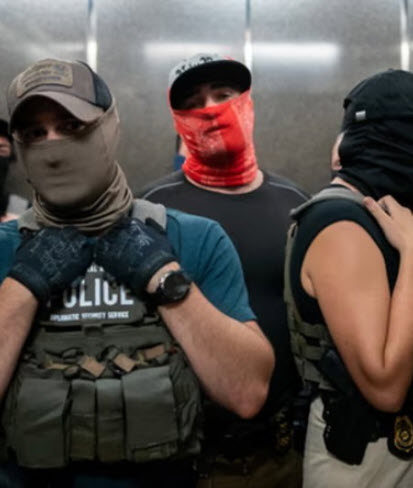
When the men with guns who have always claimed to be against the system start wearing uniforms and marching with torches and pictures of a leader, the end is nigh. When the pro-leader paramilitary and the official police and military intermingle, the end has come.

— from Chapter 6, On Tyranny – by Timothy Snyder (2017)

Are We Great Yet?

Book Review: Nobody’s Girl – by Virginia Roberts Giuffre

Here is an excerpt from pages 318 to 319:

I am making it publicly known that in no way, shape, or form am I suicidal,” I typed hastily but resolutely (making several spelling and grammatical errors that I’ve corrected here). “I have made this known to my therapist and GP—If something happens to me—for the sake of my family, do not let this go away and help me to protect them. Too many evil people want to see me quieted.

On April 25, 2025, Virginia Giuffre died of suicide at her home outside Perth, Australia. Nobody’s Girl was published posthumously on October 21, 2025. She finished writing this memoir shortly before her death. She had expressed a strong wish for the book to be published, regardless of her circumstances.

A close friend of mine is the father of one of the over 150 gymnasts who had been abused by USA Gymnastics doctor Larry Nassar. My friend has found it difficult to talk about what it is like to be a parent of a daughter who he entrusted to an academic institution for her education and training, only to be horribly betrayed, not just by the abuser, but by the entire system surrounding the abuse and allowing it to go on for such a long time. And yet, the sheer scale of Nassar’s abuse is paled by Epstein’s, as we all know now.

Virginia Giuffre has been one of Jeffrey Epstein and Ghislaine Maxwell’s most outspoken victims. Her dedication to bringing justice contributed to both Epstein and Maxwell to be convicted and put in prison. She was also the central figure who brought down Prince Andrew and eventually caused his ultimate expulsion from the monarchy.

In her own words, she describes her life, starting with her childhood, or should I say, the lack of her childhood. Her mother was a consistent drug abuser. Her father groomed her and then sexually abused her when she was a young as 7 or 8 years old. Worse, her father traded daughters with another man, so they could abuse each other’s daughters “for variety.” Her mother stood by and later claimed she didn’t know. This went on for years. As she got older, she ran away from home, only to be put into a correctional facility which – you might have guessed – also abused its teenage inmates. Her father was a handyman working at Mar-a-Lago when he got her a job as an assistant in the spa. She was 15. That’s where Maxwell first saw her.  She told her that she knew a wealthy man who would teach her to be a massage therapist and she’d get paid well while she was learning. That evening, after she got out of work, she was at Epstein’s estate in Palm Beach, thinking she was going to give a massage. During that very first meeting, Maxwell and Epstein manipulated her into sexually servicing Epstein. And that’s how several years of sexual abuse in broad daylight started. She even suspected that Epstein paid off her father, so he would let it happen. In the course of her service, Epstein forced her to perform sexual acts with hundreds of other men, billionaires, scientists, politicians, two U.S. senators, one former governor of a U.S. state, and – as we all know, Prince Andrews.

Eventually, after several years of servitude, she managed to break free of Maxwell and Epstein’s clutches, eventually get married and have a family. But for the rest of her life she was haunted by the horrors of the abuse she had endured.

Reading Nobody’s Girl illustrates how sexual abuse can first start, then proliferate, and how vulnerable minors, boys or girls, can become victims of repeat and systemic abuse by predators who are master manipulators. It also shines a powerful spotlight on our current system that protects powerful and wealthy people and shelters them from exposure. The victims are called whores, opportunists who accuse rich people just to extract settlements from them. They are accused as liars or even perjurers, when it’s the word of a powerful royal, politician or mogul against a young woman that they “rescued from the gutter.”

Nobody’s Girl is a very important book at a time when our news are flooded with “the Epstein files.” The whole rhetoric of what we are currently witnessing every day becomes all the more real and poignant after reading this book.

Now I must point you back to my introductory quote. Virginia Giuffre, after you read her book, you will find is not the kind of person who kills herself, just as she has reached some success in bringing justice to her perpetrators and helping the thousands of other victims out there whose lives have been destroyed.

Yet, the media and the government will have us believe it was a suicide.

I – for one – do not buy it.

Somebody got to her.

ICE is out of Control

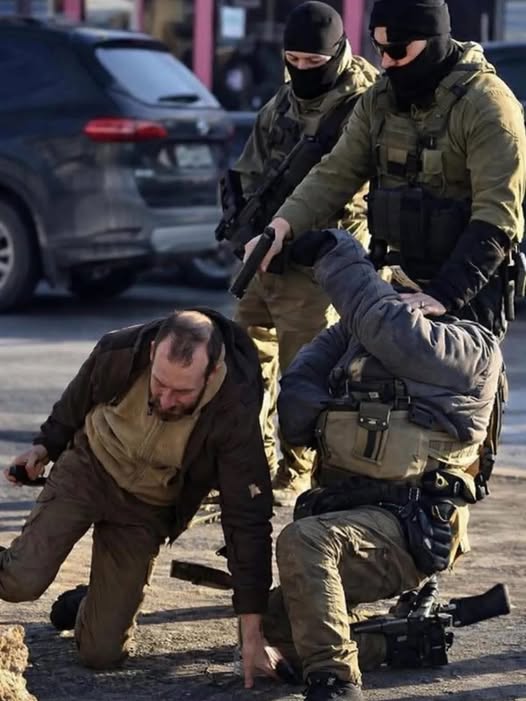
ICE  agent body slammed a 79-year-old US citizen and arrested him.

I have been very concerned about the methods ICE  uses in our country to come after American citizens without apparent due process.

First they came for the Socialists, and I did not speak out– Because I was not a Socialist.

Then they came for the Trade Unionists, and I did not speak out– Because I was not a Trade Unionist.

Then they came for the Jews, and I did not speak out– Because I was not a Jew.

Then they came for me–and there was no one left to speak for me.

— Martin Niemöller, a Nazi dissident

Now they are coming for the immigrants.

I am speaking out, because I am an immigrant.

ICE apparently attacks as groups, masked, unidentified, only with uniforms and vests labeled as ICE or Police, and armed. They take people off the streets, out of offices and factories, and throw them into unmarked vans. How do we know they are legitimate? How can any individual person defend himself? How do I know they are real? How do I call my lawyer when I am pinned to the ground by three goons with a knee on my throat?

According to the article above, when the man tried to talk with them and provide documentation, while he was pinned to the ground, they said:

“You don’t fuck with ICE. We are here.”

Suppose someone who is part of some organized crime gang (mafia, latino gang, whatever) would just buy some combat uniforms for themselves, including bulletproof vests, helmets, masks, slap ICE labels on the backs, and maraud the streets? They could pick off anyone by force. No bystander would help. We all have learned that you don’t fuck with ICE. The potential for lawlessness is vast.

The Brownshirts are already here.

Now they are coming for all of us.

I am speaking out because I am one of us.

Are we great yet?

Idiots in Federal Government

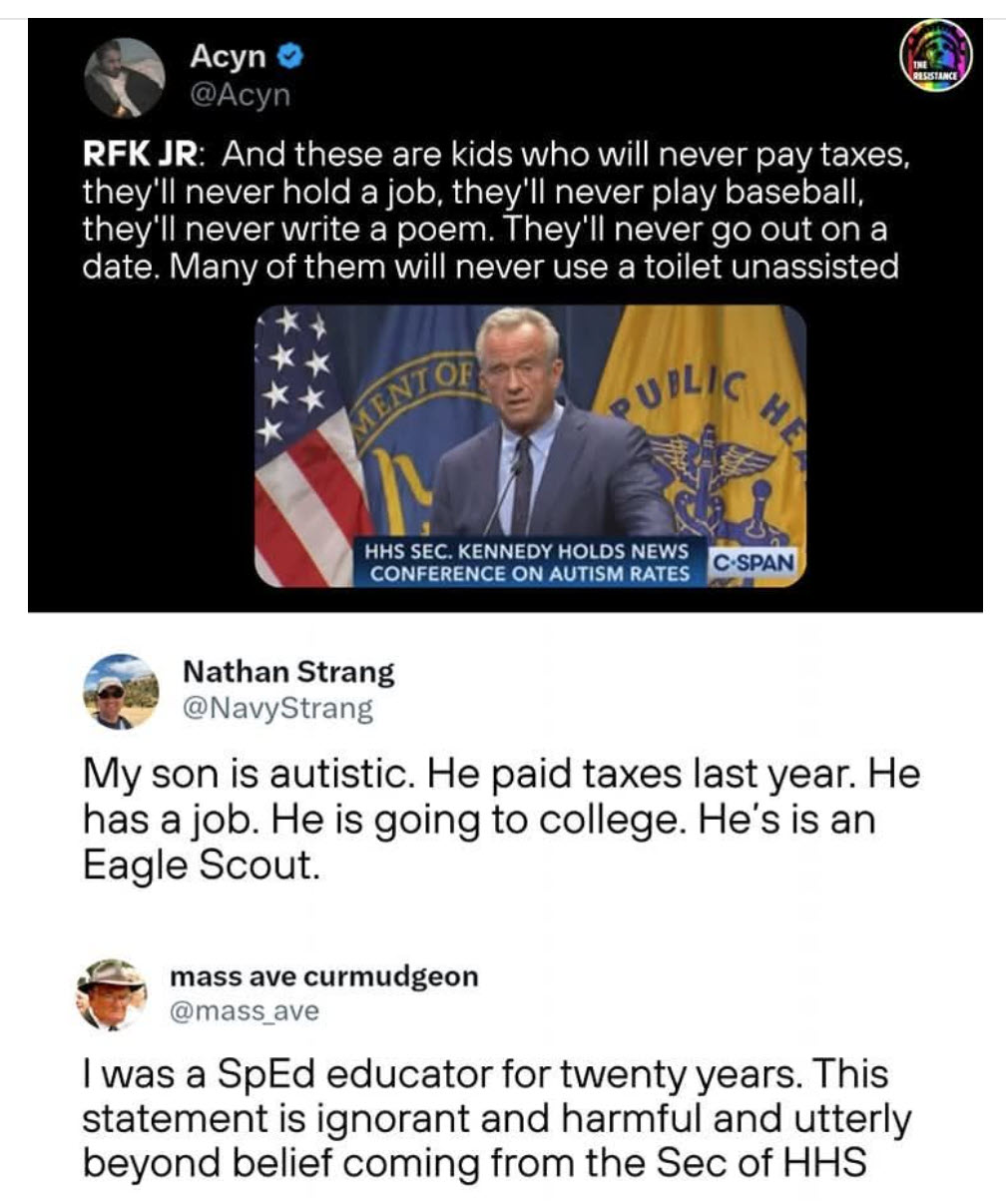
The idiocy in our current federal government is staggering. Here is our Secretary of Health and Human Services, talking about autistic children:

And these are kids who will never pay taxes, they’ll never hold a job, they’ll never play baseball, they’ll never write a poem. They’ll never go out on a date. Many of them will never use a toilet unassisted.

He has obviously never met an autistic person.

What is he going to suggest next? Maybe the best thing to do is to send them all to a camp? Let’s call it a concentration camp. Maybe we should open one in El Salvador, “the Savior,” where they’ll be well taken care of?

This is wisdom from the “Pro-Life” faction of our political landscape.

Due Process in the United States

If you violated the law, you are not entitled to due process.
– Rep. Victoria Spartz, March 2024

An elected official, sworn to uphold the Constitution, said that people, in this case illegal aliens who violated asylum laws, are not entitled to due process.

This is wrong.

Due process exists specifically to protect those accused of violating the law. The Bill of Rights contains more provisions safeguarding the rights of the accused than on any other subject. The government can deprive you of liberty through due process, but it cannot deprive you of due process itself. In the United States, due process is not a revocable privilege. It is an irrevocable right.

Due process is the mechanism by which we determine whether someone did violate the law. It’s the protection we guarantee before we investigate and convict. That’s the whole point. We’re not supposed to arrest people, skip the trial, and make them disappear. Immigrants are detained indefinitely without hearings, or sent to overseas prisons. Protesters and students are punished based on accusations, not findings. Politicians, like Spartz in this case, make accusations without basis in fact.

What if you are wrongly arrested because somebody erroneously accused you, or because you had the wrong tattoo, or because you were at the wrong place at the wrong time? It happened recently to a few cases that attracted national attention. To how many people did it happen that we’ll never hear from again?

We will never know.

It could be you or me next. Think about that.

We can’t cherry-pick the Constitution based on who we like or what someone is accused of doing. I still remember a guy I worked with back in the 1990ies. Let’s call him Rick. He was a Second Amendment enthusiast. When I simply suggested, even back then, that we should ban assault weapons, that we should have universal background checks, he would be furious because, according to him: “You are trampling on our sacred document, the Constitution!”

At the time, I was trampling, just by suggesting common sense solutions.

Are we not trampling now?

Loomer is Looming

Here is a most disconcerting app which invites citizens to snitch on citizens.

Who is Laura Loomer anyway:

former Republican congressional candidateLoomer is known for promoting conspiracy theories as well as anti-immigrant and anti-Muslim views.

While it seems like a good idea, I would like to remind you that this is the kind of thing that was done by authoritarian and fascist regimes throughout recent history. Portugal from 1948 to 1974 comes to mind. Personism in Argentina in 1943. I don’t even have to list today’s Russia, China and North Korea.

East Germany is a great example for just this kind of problem. One in 50 East German citizens was an informer to the Stasi. This kind of activity creates  distrust in the population. Everyone starts being afraid of everyone else for fear they could say something, make some statement, that would later be misinterpreted.

Right now it’s about “catching illegal aliens” per Loomer. What are we going to do if it suddenly starts being about artists whose work is considered anti-American as defined by the government? What are we going to do if it starts being about homosexual marriages? What are we going to do if it starts being about atheists?

Right now, they are coming for “them” where “them” are illegal aliens.

What are you going to do when they start coming for you?

Yes, let’s start snitching on each other!

This is some really scary shit going on!

And Then They Came for Me…

I lifted the post below from the Facebook feed of Matt Mikalados:

This is Rumeysa Ozturk, a Fulbright scholar from Turkey who is studying for her doctorate at Tufts University.
Last night, six masked men walked up to her in a residential neighborhood, grabbed her, and whisked her away in unmarked cars. Bystanders asked the men who they were and why they wore masks and they said “We’re the police.”
One of the neighbors caught it on his security camera and has shared truly chilling photos of a young woman being surrounded and bundled off into a car.
Like previous illegal ICE arrests of recent days there have been no charges filed. Her lawyer quickly filed with a judge to prevent her being moved out of state, which the judge approved, but as of today the ICE tracking tool shows her at a privately run prison in Louisiana, not in Massachusetts where she was taken. Her lawyers have not been allowed to speak to her.
Unlike other recent arrests, Ozturk was NOT heavily involved in protest actions on her campus or elsewhere.
I’ve been told that in some of the other egregious ICE actions of recent weeks that it’s “not a free speech issue” because these people are “terrorists” and “supporters of Hamas” (NONE of which has been proven *or even charged* by the US government) AND YET… the best guess right now as to why this woman’s visa was revoked and she was arrested is that she put her name on an op-ed in her school paper.
The op-ed had controversial statements like “We, as graduate students, affirm the equal dignity and humanity of all people.”
So, to recap:
– A young, intelligent woman who is studying in the US legally
– Wrote an op-ed
– Got arrested by masked men and had her visa revoked
– Was removed from the state despite a court order saying she was not to be removed
– Has not been allowed to contact her lawyers
One of Rumeysa’s friends, a professor at Northeastern, describes her as a “soft spoken, kind, and gentle soul.” He said that not only was she not antisemitic, and not racist, he said that in the ten years he’s known her she’s not spoken badly to anyone at all.
It seems like in every way, Rumeysa Ozturk is the kind of person we should want in the United States. Kind, intelligent, law-abiding. Instead we’ve violated her rights and our own values, abducted her with masked secret police, incarcerated her without any charges, kept her from her lawyers, and disobeyed court orders about where she’s to be kept.
I’ve heard some people saying lately that there’s no reason to be concerned, because immigrants don’t have the same rights as citizens, and honestly I find this more stomach-churning than some of the directly racist or xenophobic things I’ve seen people say. Why on earth are people defending the government that’s harming people instead of the vulnerable people being harmed?
I will promise you this: when a government starts violating rights of the vulnerable, it doesn’t stop with a single population of people.
This is another truly disturbing action by the US government and by ICE. If you’re an American citizen, please make some noise about this to your reps, and check in on your friends who are vulnerable to this same kind of xenophobic totalitarian rights violations.

This whole episode reminds me of a post I wrote in 2017.

First they came for the Socialists, and I did not speak out– Because I was not a Socialist.

Then they came for the Trade Unionists, and I did not speak out– Because I was not a Trade Unionist.

Then they came for the Jews, and I did not speak out– Because I was not a Jew.

Then they came for me–and there was no one left to speak for me.

— Martin Niemöller, a Nazi dissident

Today in the United States, we apparently have men in black uniforms, claiming to be police, wearing masks, arresting people and hauling them off with no due process. The victims are not allowed to talk to their lawyers, they are not charged with any crime, they are removed.

Rumeysa Ozturk may be a scholar from Turkey. She may or may not have proper papers to be here. But she does not get a chance to prove that if she is not allowed to work with her lawyer.

It does not matter what you look like, what your reality is, what your rights are, if you are a citizen or not.

I happen to be a citizen. But I don’t carry proof of that with me when I go to the grocery store. If men in black masks can grab me on the street and haul me away and send me to some prison in Louisiana because they don’t like a post I wrote on this blog, and don’t allow me to talk to my lawyer, I am toast. You might never see me again.

Then they came for me, and there was no one left to speak for me.

That started happening in Nazi Germany within just a couple of months of Hitler taking power in January 1933. It did not end well.

Apparently it started happening in the United States in January 2025.

Will they come for me?

Vietnam Trip: Visiting the Hỏa Lò Prison in Hanoi

During our recent trip to Vietnam, we visited the Hỏa Lò Prison in Hanoi. Of all the wonderful things and experiences during this trip I could, and eventually will, report about, why am I picking the visit to a prison as the first topic?

Hỏa Lò was a prison in Hanoi originally used by the French colonists for political prisoners, and later by North Vietnam for U.S. prisoners of war during the Vietnam War. In America we know it as the Hanoi Hilton. The prison is a museum today, run by the Vietnamese government. Here is my entry ticket:

The exhibits spend much time and effort on the period of the French colonial suppression of the Vietnamese people and the brutality of the colonists against dissidents. The French behaved like dictators do: they built prison camps and sent those that didn’t think like them to those camps and subjected them to terrible atrocities, including starvation, torture and eventual death. The prison also has a section about the American POWs during the Vietnam war, but it is somewhat smaller and less focused. This is not surprising. The prison was used by French against the Vietnamese, but later by the Vietnamese against the Americans. You want to focus on what they did to you, not what you did to them.

One of our first guides was a young woman in her thirties who took us past the prison on a city tour and mentioned that the prison was used to detain American pilots. She actually said that “Vietnam took good care of those prisoners during the war.” This happened early during our trip, before it had sunk in that I was in a communist country where the people could definitely not speak freely, and in particular tour guides were likely briefed on what they should say about controversial topics. I quickly realized that I needed to remember that our guides were young people, born decades after the war, in a controlled society. It was not their fault that the opinions they needed parrot didn’t always align with the reality as I knew it. Arguing or debating points of view would not make sense in that context, so I learned how to listen carefully and digest the information later.

To illustrate my point, here is a sign in the exhibit about female prisoners. Pay attention to the tone of the message:
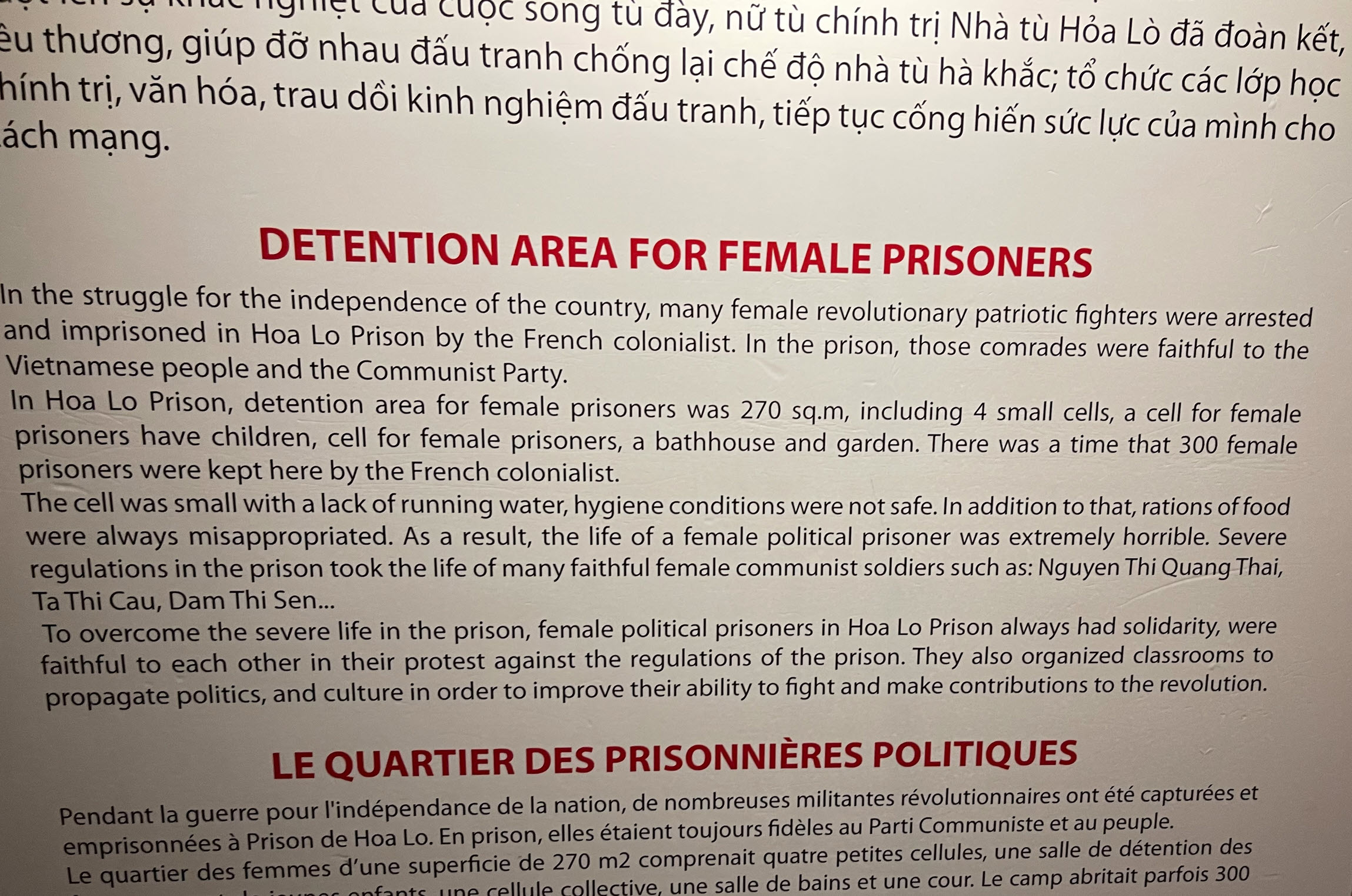
A visit to the prison was not part of the agenda of our trip. When we learned how close we were, we asked our guide to make room on the schedule, and we squeezed in a 90-minute visit to the museum. For me it was one of the highlights of a two-week visit in Vietnam, albeit a depressing one.

This is because I was always very interested in the lore of the Hanoi Hilton. Many books have been written about it, and one that stands out for me is John McCain’s autobiography Faith of my Fathers, which he wrote in 1999 when he first ran for president. I read it in 2008 when McCain ran for president (again) against Obama. Here is my review. I gave it four stars.

There is a lake in the heart of Hanoi, known as Hoan Kiem Lake. It’s also known as Sword Lake, Lake of the Returned Sword, or Tả Vọng Lake. In the book, McCain describes how he got shot down over Hanoi and as his bad luck would have it, that’s where he crashed. He almost drowned before some fishermen rescued him.

When we arrived in Hanoi, we stayed at the Pan Pacific Hotel, which you can see in the photo below,  and it happens to be right on the shores of that lake.

It was eerie for me to walk along this lake in the morning after breakfast, remembering the story of McCain’s capture.

Here is an excerpt of my book review:

With two broken arms and one broken leg, he was beaten and tortured during the first few months, without any adequate medical care and only minimal and eventually botched operations on his leg. His arms were never set properly. Several times his arms and legs were refractured when he was beaten. He spent most of his years in captivity on crutches, due to his bad right leg. Medical care was withheld as a torture method. The prisoners were tortured initially to obtain military information about the initiatives of the war, from the newly captured prisoners that would have such information. Later they were tortured to extract video taped footage to be used for propaganda. The Vietnamese wanted to show the world how injust the war was by turning public opinion globally and in the US against the war. This could be done by having American officers make anti-war and unpatriotic statements, supposedly by their own volition. This hardly ever happened. The code of honor required that the prisoners endured terrible torture without ever breaking.

Prisoners were not allowed to communicate. They were kept in solitary confinement for months and sometimes years on end. When caught communicating, they were beaten for days and punished by being thown into squalid cells of 6 foot by 3 foot and no ventilation or sanitary measures for months. Health care and nutrition was completely inadequate, and some prisoners died from disease. At one time McCain describes being punished by standing, facing a corner, for more than two days. When he finally collapsed, he was beaten again for not following the rules.

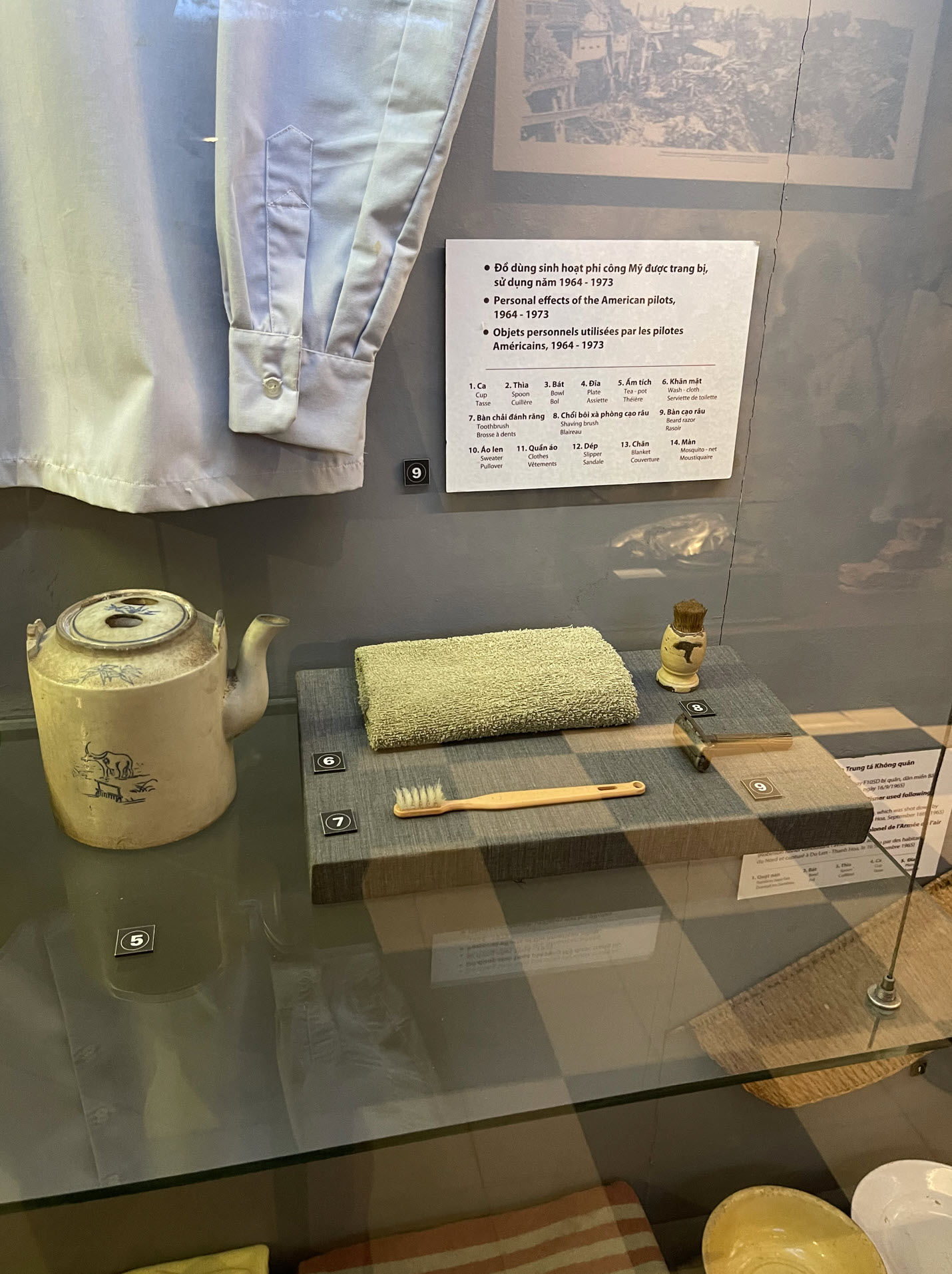
I highly recommend reading Faith of my Fathers to anyone wanting to understand the man John McCain and the experiences of a prisoner of war. If you only read one chapter, read the one about “John McCain’s Towel.” I will do that myself, now that I have been in the Hanoi Hilton, where the ghosts of the American prisoners from over 50 years ago still haunt the walls, and where I saw the infamous towel, as part of the gear issued to the prisoners, in this exhibit:
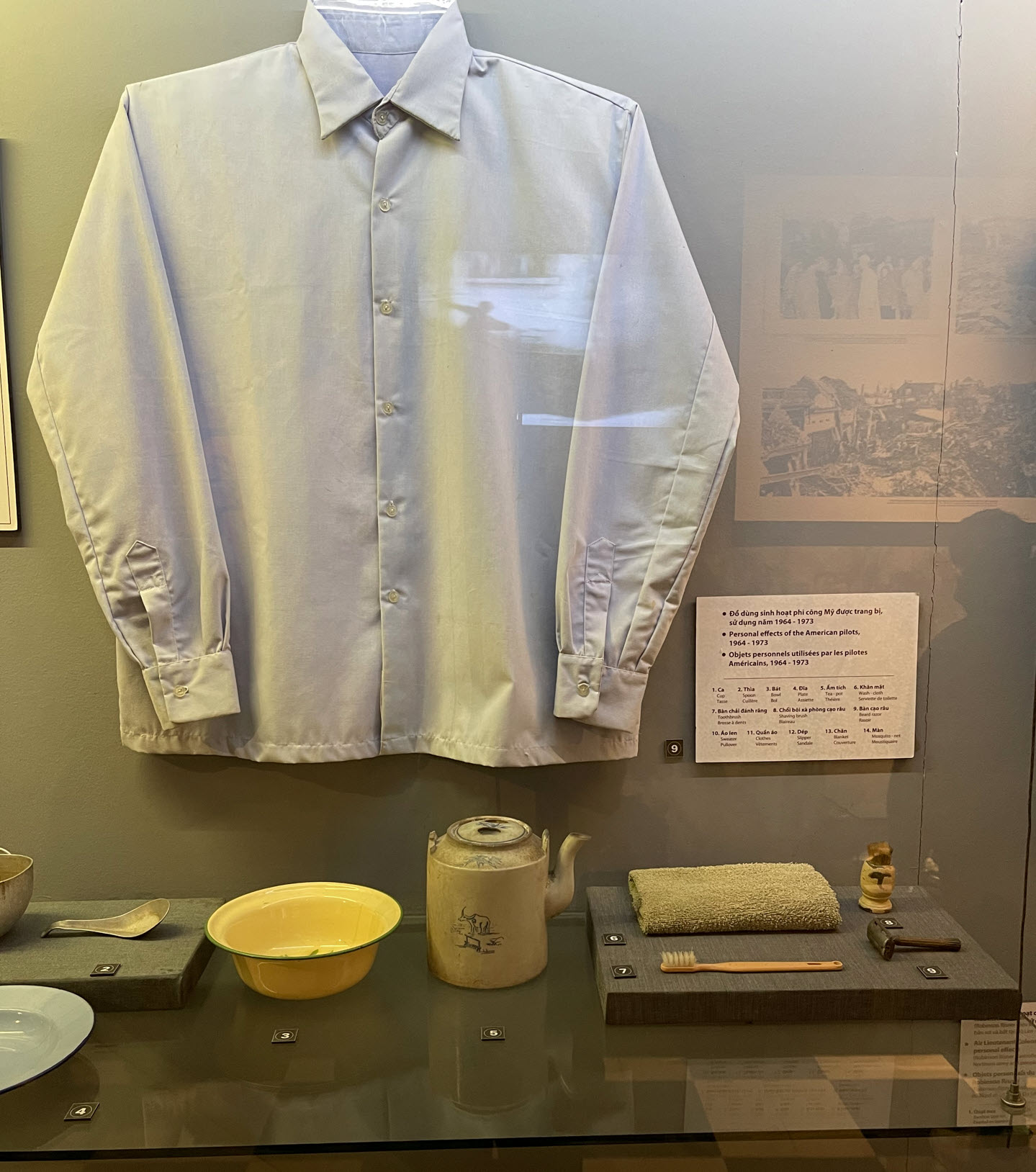
Above you see some of the gear given to the prisoners. On the right side you can see the towel. Since I knew its significance when I was there, I took a close up of that exhibit:
Here are some additional exhibits about individual prisoners. The one about McCain is a larger one, of course, due to his notoriety as a presidential candidate later in his life.

Here is a picture of McCain when we visited Vietnam in 2000 and toured the prison where he was captive and tortured for almost seven years.

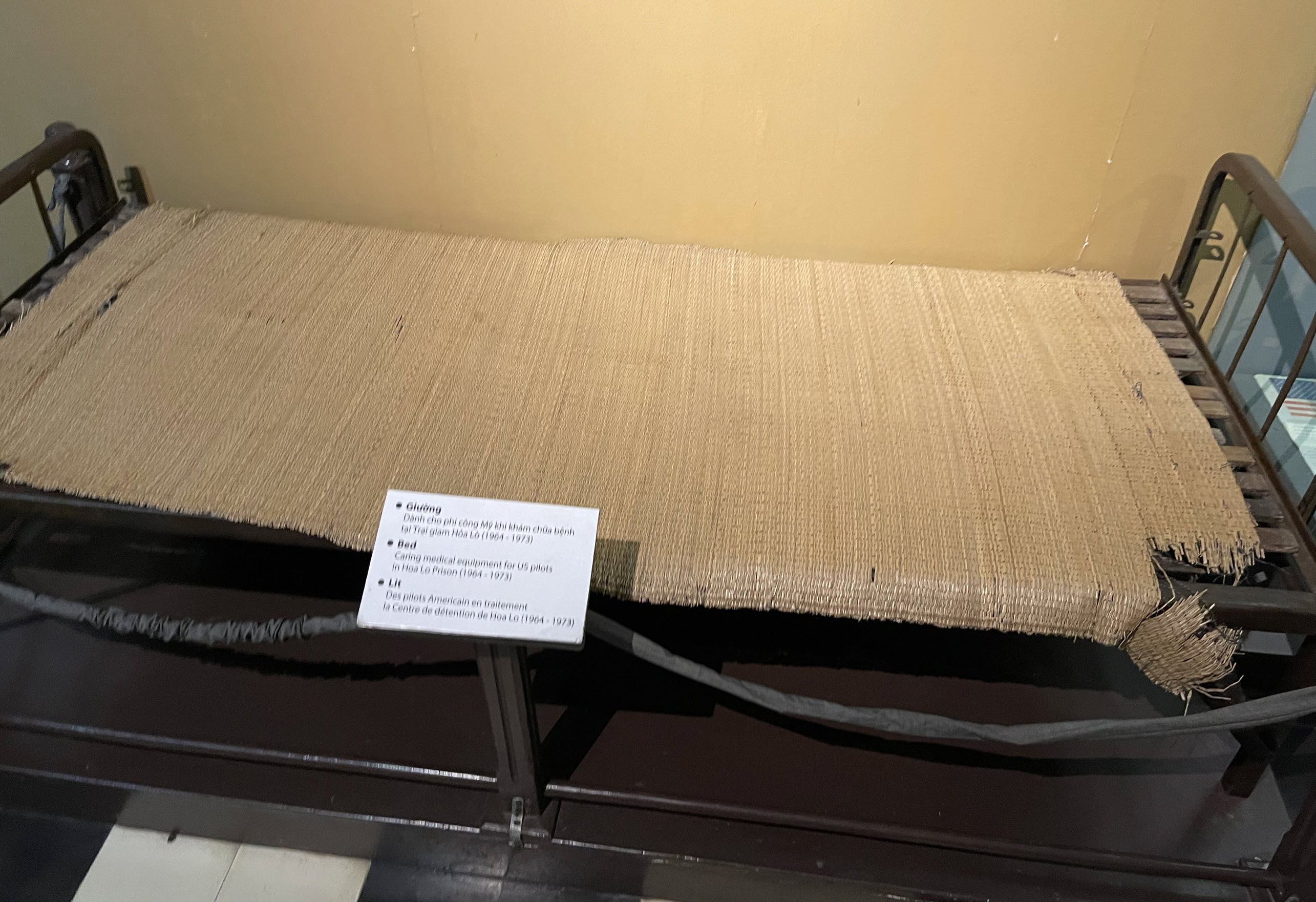
Here is a picture of the beds of the American prisoners.
In contrast, the image below shows how Vietnamese prisoners were shackled in endless rows during the colonial period. Remember, the crime of these men was that they didn’t think the Vietnamese people should be ruled by the French.

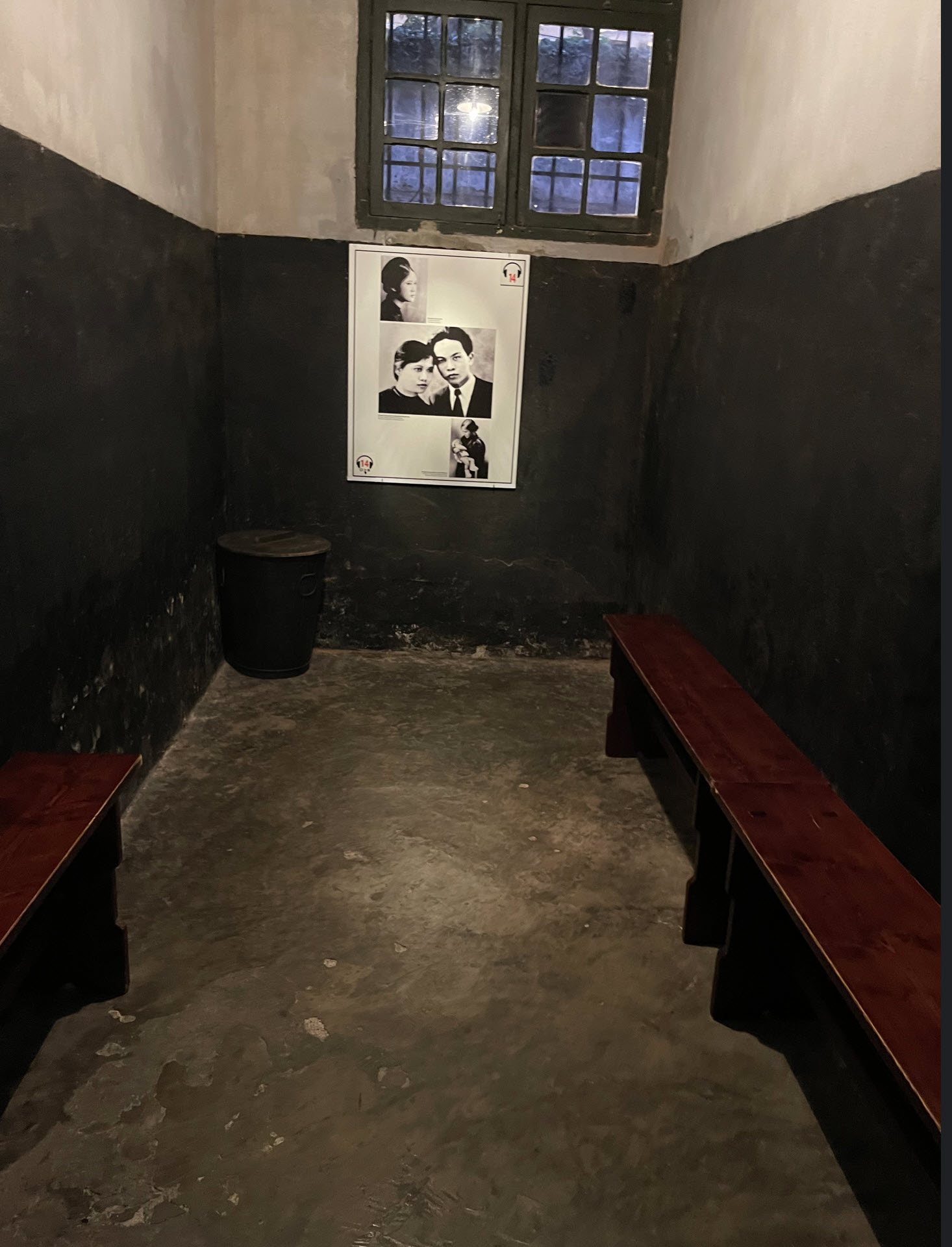
Here is a typical cell in the Hanoi Hilton.
Below is a section of the prison wall from the inside. On top there is barbed wire, sometimes electric wire, but the wall is also covered with shards of glass cemented along the top.

This is the same wall from the outside.
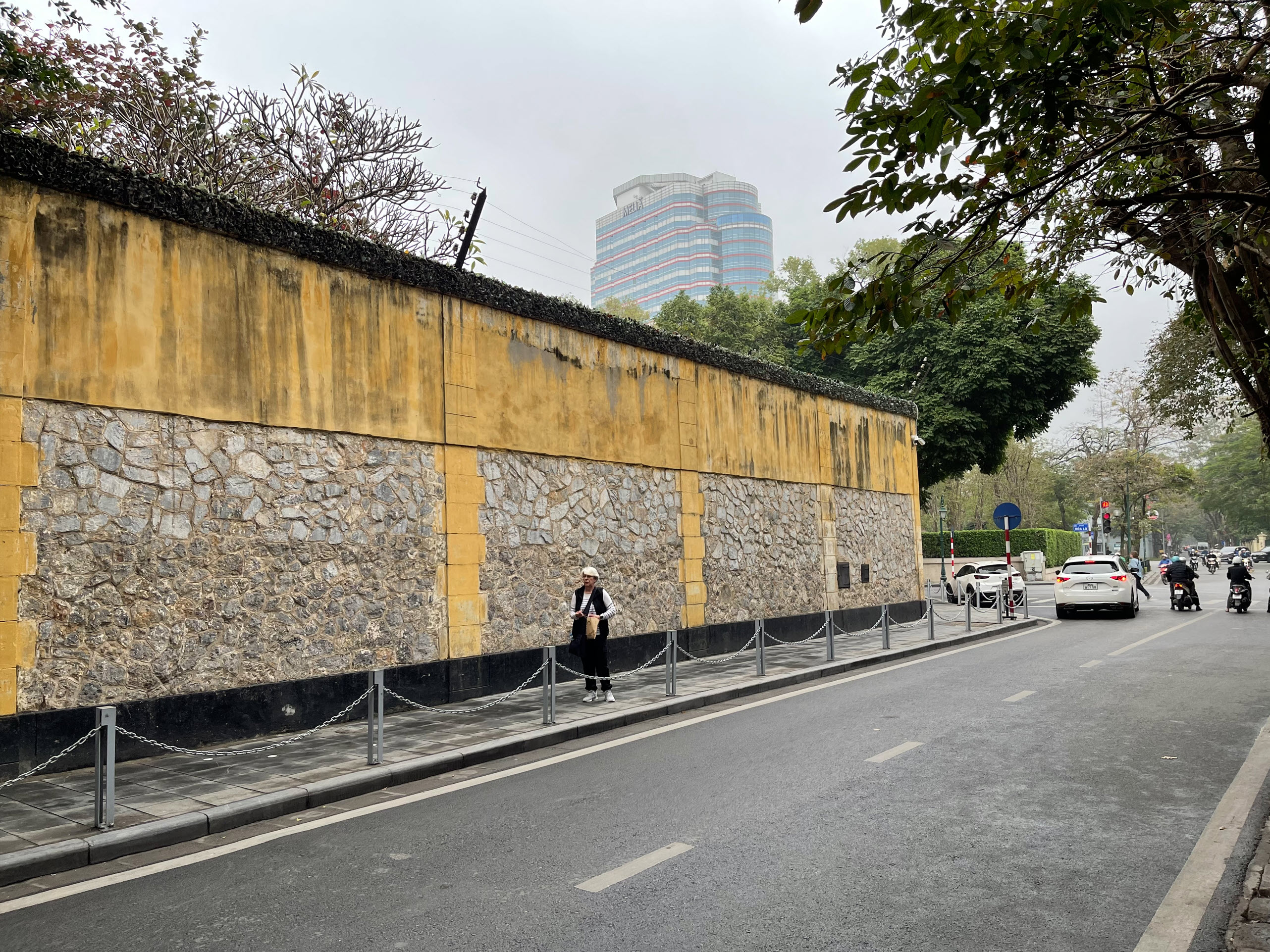
The prison is in the middle of the city, surrounded by the hustle and bustle of Hanoi. If you didn’t know what you are looking at, you would walk right past.

On the other side of the wall you find hotels, little shops, cafes and restaurants.
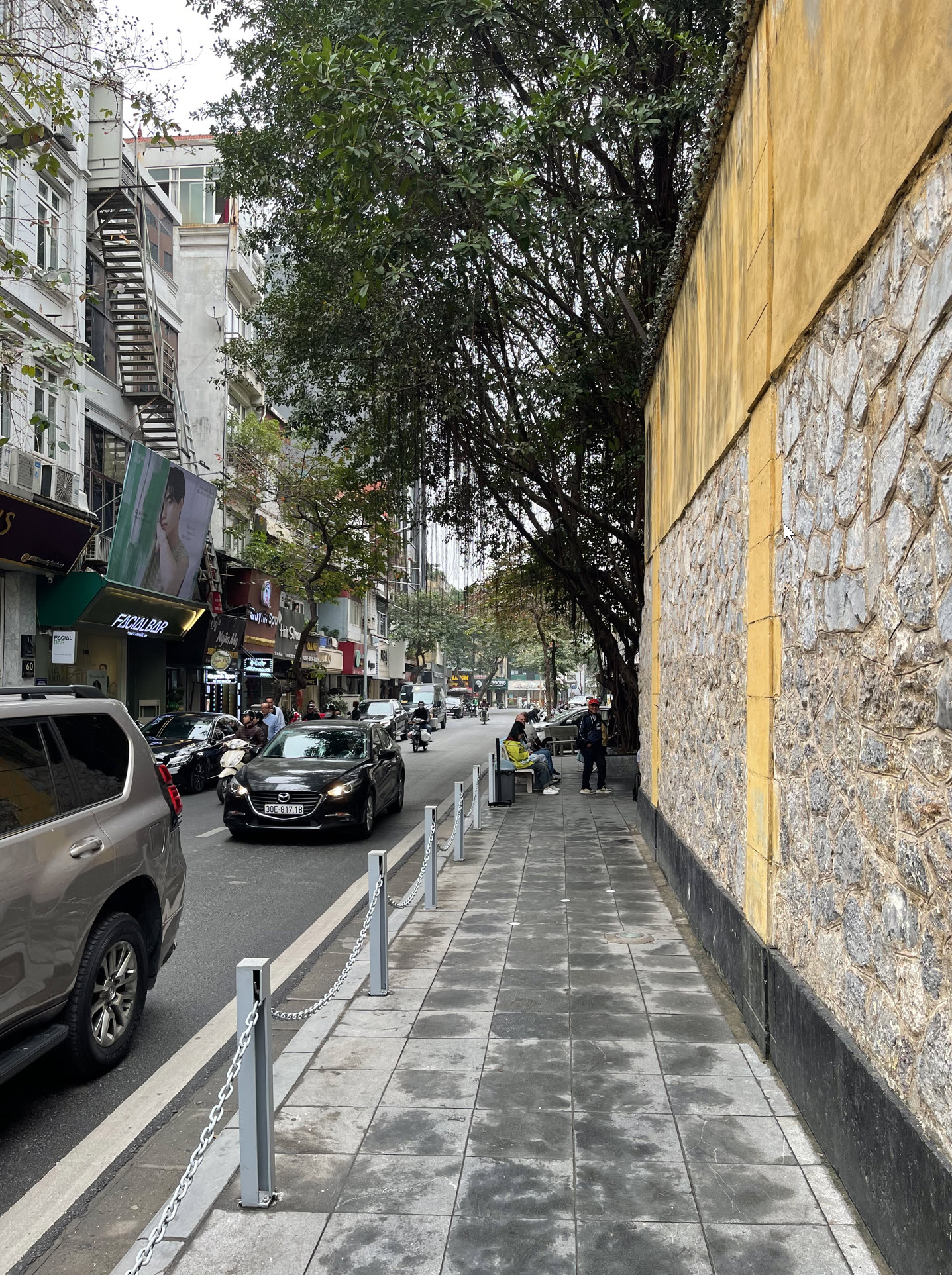
I wonder what it must have been like to be imprisoned for years behind these walls hearing and feeling the pulsating heart of the city all around you?
Modern Slavery Is Now Worse Than Ever

Many years ago, in 2013, I wrote a post titled “What’s Your Slavery Footprint” where I said:

How many leather shoes are in your closet? How many gadgets do you own? Do you use coffee? Do you have jewels? Silver or gold?

Today I should be adding:

Do you use an electric or hybrid vehicle? Do you use a battery storage device?

Today I was contacted by one of the people who found my 2013 post about slavery and she sent me a comprehensive article by Arnold Mutinda about modern slavery. The details presented are amazing and the facts put in front of us astounding. Here is the link:

What Is Modern Slavery: A Comprehensive Research

One of the gravest offenders is the Democratic Republic of Congo (DRC) and the biggest contributor to the phenomenon is the infamous cobalt mining in the country. Congo produces over 70% of the world’s cobalt. China controls around 75% of the global cobalt production and around 90% of China’s cobalt comes from the DRC.

Congolese miners are often children, abducted by militia and forced to work in the mines, digging tunnels by hand without securing them using beams. Miners sometimes get buried alive. They often work 12-hour shifts with only one break, six days in a row.

In 2016 , the provincial governor of Kolwezi confirmed that children worked in the cobalt mines but that the government was “too poor” to address the issue. Of course, conditions like this are ripe for abuse by the industrialized nations where markets and profits count above everything else, and where human rights are viewed by the prevailing governments as secondary objectives at best. This counts for China, and unfortunately also the United States.

As a consumer I am pretty powerless. I am writing this post on a set of gadgets that use many microchips and batteries, which consume rare earth minerals, lithium and cobalt from the DRC. There is a hybrid car in my garage with a lithium-based battery. By doing this, I am abusing some child in the Congo. Make no mistake about it, I am NOT providing a livelihood or income to the child miner. I am using up the child until he or she can no longer work and becomes expendable.

Living the “the first world” and listening to “America First” soundbites all day long, it is easy to forget that we are building our lifestyles on the backs of the poor of the rest of the world.

Slaves are worse off than just the poor. They are nothing but tools. I urge you to read What is Modern Slavery and make up your own mind.

Also, there is a category selector in this blog where you can select “Slavery” and it shows you a plethora of posts I wrote over the years about slavery, including book reviews, movie reviews, article references and general opinion pieces.

Muslims Protest for Sharia Law in Germany

I just read this morning that in Hamburg, Germany, thousands of Muslims were marching and demanding that Germany become part of the global Caliphate and introduce Sharia law.

Don’t they realize that the current sociopolitical landscape in Germany is leaning far, far right due to the massive influx of immigrants, legal or illegal, and the enormous costs of the social services that the immigrants require?

Something like this could easily tip the scale and turn the country into a conservative hotbed which would be a breeding ground for rampant racism and xenophobia.

The country went through a period like this 100 years ago, and we all know it didn’t end well. Could it happen again? I think so. For sure, Muslims protesting for Sharia law in Germany could serve as the spark the powder keg is waiting for.

It would not end well either this time around.

Movie Review: Lee (2023)

I must be on a Nazi grand tour. After reading Slaughterhouse Five and then Woman at 1,000 Degrees, both of which deal with Nazi atrocities and how they affected the individual lives of innocent contemporaries, I now watched Lee, a biopic about the war correspondent Lee Miller, starring Kate Winslet.

Lee Miller was an American fashion model who eventually became a photographer. Before World War II she was in France working for Vogue magazine. As Germany occupied France and Paris, she asked to be sent to the front lines as a war correspondent. As she followed the action, she came in contact with the local populations, including the innocent women and children. What she saw compelled her to tell the story in pictures, and she quickly made a name for herself. Eventually she ended up at the Dachau concentration camp at the time of the liberation by the Americans and there she witnessed the full impact of the Holocaust. Ravaged by post traumatic stress syndrome for pretty much the rest of her life, she was not a very happy or successful mother to her only son, Antony. She said she did the best she could.

Antony never knew his mother’s past and legacy. He only discovered her documents, her photographs and mementos after she had died in July 1977. He documented her life and wrote her biography, which became the basis for the movie.

Lee is not a feel-good movie. It’s hard to follow at times, especially in the beginning. But it builds, and without sensationalizing war, without explicit battle scenes, it tells a story of great suffering and immense evil. And in these times, where dictatorships seem to be in vogue again – pun intended – Lee is a good movie to watch to remind yourself about what happens when one group of people suddenly decides to give one person the power to persecute and harm entire populations of others they don’t understand and therefore they don’t like.

Book Review: Woman at 1,000 Degrees – by Hallgrímur Helgason

Not too long ago I read Slaughterhouse Five, which has as one of its central themes the firebombing of Dresden during World  War II. The novel Woman at 1,000 Degrees starts with this sentence:

I live here alone in a garage, together with a laptop computer and an old hand grenade. It’s pretty cozy.

Jonas, my hiking guide in Iceland earlier this summer, recommended the author Helgason and specifically this book when I asked him about Icelandic literature. Not only did I read about life in Iceland, but I read about World War II from the view of an Icelandic girl named Herra Björnsson who, at the age of ten, through a series of events resulting from very bad luck, ended up alone in Europe during the war. The story around the firebombing of Dresden in Slaughterhouse Five painted horrific picture of what went on during that war. The experiences of Herra in Denmark, Germany and then Poland illustrate what it was like for a child, a girl, to be abandoned alone in the maelstrom of chaos. She was cast out, abused, starved and raped again and again, over years, and only through seeming miracles she found her way back home after the war. The story tells the plight of the innocent population, Germans, Poles, Russians and Danes, during the Nazi regime and its wars of aggression and racial extermination. It rang home for me, as I recalled stories my own father has told me again and again of the horrors of war he himself had to face when he was a ten-year-old child refugee from the east as the Third Reich was collapsing.

Helgason tells the story in vignettes, showing Herra as an eighty-year-old woman dying in a garage in Reykjavík, then as a young girl in Iceland, as an adolescent during the war in Germany, and as a young woman in Argentina as she had to flee Germany with her Nazi father. We follow Herra at various stages of her life, not in chronological order, but in order of increasing horror as we witness the atrocities she is forced to endure that eventually end with her on her deathbed, lonely, yet full of spunk, in a garage.

Herra narrates the story of her life. She is quite insightful, as this excerpt shows:

She was married to an Italian countertenor who was now a pilot in Mussolini’s air force. He had participated in the invasion of France, one of the most ludicrous operations in the total absurdity of the Second World War: Italians in the flower of their youth sacrificing their lives so that the word TABAC could be changed into TABACCHI on some tobacconist’s signs in a few Alpine villages.

Helgason, Hallgrímur. Woman at 1,000 Degrees (p. 96). Algonquin Books. Kindle Edition.

If you have been reading my blog you will likely know that I love languages, and Icelandic strikes me as a particularly exotic language. With that in mind, you might understand why I especially enjoyed the following page, where Herra characterizes some of the languages she knows:

We Icelanders therefore walk around with gold in our mouths, a fact that has shaped us more than anything else. At least we don’t squander words unnecessarily. The problem with Icelandic, however, is that it’s far too big a language for such a small nation. I read on the web that it contains 600,000 words and over 5 million word formations. Our tongue is therefore considerably bigger than the nation. I did get to know other languages pretty well, but few are as solemn, because they’re designed for daily use. German strikes me as the least pretentious language, and its people use it the way a carpenter uses a hammer, to build a house for thought, although it can hardly be considered attractive. Apart from Russian, Italian is the most beautiful language in the world and turns every man into an emperor. French is a tasty sauce that the French want to savor in their mouths for as long as possible, which is why they talk in circles and want to ruminate on their words, which often causes the sauce to dribble out of the corners of their mouths. Danish is a language the Danes are ashamed of. They want to be freed of it as soon as possible, which is why they spit out their words. Dutch is a guttural language that gulped down two others. Swedish thinks it’s the French of the north, and the Swedes do their utmost to relish it by smacking their lips. Norwegian is what you get when a whole nation does its best not to speak Danish. English is no longer a language but a universal phenomenon like oxygen and sunlight. Then Spanish is a peculiar perversion of Latin that came into being when a nation tried to adapt to a king’s speech impediment, and yet it is the language I learned the best. Few of these nations, however, have mastered the art of silence. The Finns are Icelanders’ greatest competitors when it comes to silence, since they are the only nation in the world that can be silent in two languages, as Brecht said. We Icelanders, on the other hand, are the only country in the world that venerated its language so much that we decided to use it as little as possible. This is why Icelandic is a chaste old maiden in her sixties who has developed a late sex drive and desires nothing more than to allow herself to be ravished by words before she dies.

Helgason, Hallgrímur. Woman at 1,000 Degrees (p. 56). Algonquin Books. Kindle Edition.

This is not a book you’re just going to pick up at Barnes and Noble as you browse through their offering. Icelandic authors are not generally prominent in the United States. Nonetheless, I recommend you find Woman at 1,000 Degrees and experience a novel of an entirely different kind.

When the Tigers Broke Free – My Perspective of Russia

Pink Floyd released the album The Final Cut in 1983, which contained When the Tigers Broke Free. I must have heard that song hundreds of times, and I still today, every time I hear it, my eyes well up with tears. Here it is. I suggest you read along with the lyrics for better understanding.

When the Tigers Broke Free

It was just before dawn
One miserable morning in black ‘forty four
When the forward commander
Was told to sit tight

When he asked that his men be withdrawn
And the Generals gave thanks
As the other ranks held back
The enemy tanks for a while

And the Anzio bridgehead
Was held for the price
Of a few hundred ordinary lives

And kind old King George
Sent mother a note
When he heard that father was gone

It was, I recall
In the form of a scroll
With gold leaf adorned
And I found it one day
In a drawer of old photographs, hidden away

And my eyes still grow damp to remember
His Majesty signed
With his own rubber stamp

It was dark all around
There was frost in the ground
When the tigers broke free
And no one survived
From the Royal Fusiliers Company Z

They were all left behind
Most of them dead
The rest of them dying
And that’s how the High Command
Took my daddy from me

As of now, British estimates put the number of Russians killed or wounded in Ukraine since February 2022 at about 500,000. Today, every day, we estimate that about 1,000 Russian soldiers are injured or killed in Ukraine. Russia is recruiting 25,000 to 30,000 soldiers a month. I am not counting Ukrainian soldiers here who are defending their country. The Russian men and boys are sent into a meatgrinder in a far-away country that has nothing to do with their own lives, security or safety, simply at the will and ego of one man.

Throughout history, rich and powerful men have sent other people’s daddies into the line of fire, into literal meatgrinders.

Napoleon, Hitler, Stalin, Putin!

We don’t learn and we keep doing it.

When the Tigers Broke Free!

Alexei Navalny’s Death and the Credibility of the World’s Press

We all shook today when we found out that Alexei Navalny died in a Russian prison. The news reverberated throughout the world and in Russia itself.  All I know about Navalny I have learned through his portrayal in the western media. This includes statements about Navalny’s character by Ambassador Michael McFaul, who knew Navalny personally and considered him a friend.

Digging deeper, particularly in circles of Russians, Navalny does not appear to be the knight in shining armor that we all think we know. Apparently, many Russians do not support Navalny and even consider him to be further on the right than Putin.

Here is an interesting article in the Workers World, which gives an entirely different viewpoint of Navalny, his history, and his status.

Alexei Navalny: Why is Biden supporting a Russian fascist? – Workers World

I might warn you, if you have never read anything in Workers World: It is the official newspaper of the Workers World Party (WWP), a communist party in the United States. So you might take its content with a grain of salt. Even in this article they denounce capitalism as a systemic tool of abuse of workers.

I have to state and admit that I do not have more information than what I read in the western media and what sources like Workers World downplay as western liberal propaganda.

If you are interested in learning more about Russia, its propaganda machine, its disinformation engine and its brutal oppression of political opponents, pick up the book Red Notice by Bill Browder.

This experience highlights to me how little we actually know about what is really going on in the world. It does not surprise me when I hear that 70 million people, many of whom consume only information propagated by Fox News, plan on voting for candidate Trump in the next election. They can’t help it. It’s all they know.

Just like I can’t help it. I am not sure I know what Navalny really stood for in Russia, and how much of what I read in opposing articles like the one I linked to above is reality, or just another flavor of Russian propaganda.

This shows how hugely important it is to have a free press and have a choice so we can choose as unbiased a source as we can.

Book Review: A Thousand Splendid Suns – by Khaled Hosseini

If you check my Ratings Key for 4-star books here is what you find:

  • Must read
  • Inspiring
  • Classic
  • Want to read again
  • I learned profound lessons
  • Just beautiful
  • I cried

A Thousand Splendid Suns checks all these boxes.

In addition, reading it now is extremely timely, given the recent departure of the United States from Afghanistan on August 30, 2021.

We hear the story from the perspective of two young women, girls at first, in alternating chapters.

Mariam was born in 1959 in Herat in western Afghanistan, the cradle of Persian culture. She is an illegitimate child of one of the richest men in the city, Jalil. He has three wives and nine legitimate children among them. They all live in one large mansion as a happy family. Mariam and her mother, however, live in a hovel he had built for them a couple of miles out of town, up a steep hill, away from the city, and away from his “respectable” life. But he apparently loves Mariam enough to come and visit her once a week and spend quality time with her. She grows up into her teenage years loving and adoring her father, not knowing any better that life could be different. One day she walks to the city without permission, arrives at her father’s house and quickly finds that there is indeed a difference between her and her other siblings. Within just a few days, at the age of fifteen, she is married off to a middle-aged man in Kabul, Rasheed. Despite per protests, Rasheed takes her with him and her life changes drastically. Rasheed is a brute of a man who thinks nothing of beating a wife with a belt until she bleeds.

A few houses down the street from Mariam and Rasheed lives a young family with a little girl named Laila. There are two older brothers. Laila’s father is somewhat of an outsider in the neighborhood. He is an intellectual, a teacher, who loves his books and cherishes education, even for a girl. Laila grows up in a loving, albeit poor, family. Her best friend is Tariq, a neighborhood boy who is two years older than she. Laila’s older brothers go to war against the Soviets and eventually both die for the cause. Laila’s mother is so shaken, she becomes morose and sickly. Eventually, a stray rocket hits their house. Laila is the only survivor but severely wounded.

Rasheed and Mariam rescue her, and promptly, Rasheed decides to take Laila as a second wife, against Mariam’s will. This stroke of fate puts the two women, a generation apart, into the same household under the boot of a severely abusive man.

A Thousand Splendid Suns is about the devastating abuse and systemic destruction of women in a regime and society where a few theocrats have absolute power over the lives of millions of people. It is also about the history of Afghanistan, starting in the 1960s and through about 2007. It describes the years before the Soviets invaded the country in the 1980s, their eventual defeat, the rise of the Mujahideens, their devolution into bands of warlords bent on destroying their own country for personal gain and power, and finally the rise of the Taliban, pre-Osama bin Laden. It illustrates in vivid detail what the Taliban, basically a bunch of uneducated goat-herders and religious fanatics, did to their own country and most importantly, to 50% of their population – all the women. We witness the hardships of women under that regime, and then, as we all know, the post 9/11-years as the American’s supposedly liberated the Afghans from the Taliban. Things started getting better again in the country and people’s lives started to improve.

That is where A Thousand Splendid Suns ends. There was hope. There was light again for girls and women.

The bitter, brutal irony is that I read this book not in 2007 when it came out, but fifteen years later, now in 2023. I know that the Americans left the country under very adverse conditions for the Afghan people. I know that the country fell into the hands of the Taliban again within days of America leaving, and I know, from reading A Thousand Splendid Suns what happened to the Afghans – again.

It’s easy for us to make decisions about how we feel about Afghanistan being a world away. Reading A Thousand Splendid Suns is crushing, challenging, and most of all thought-provoking. We didn’t do anything new to Afghanistan. We were just another invader in the revolving door of systematic subjugation of a nation and its people, a nation that could not be defeated by two superpowers in two generations, but a nation that also hasn’t figured out how to live and prosper on its own.

The Afghan people are not to be blamed. The sick interpretation of Islam and the fact that an entire nation is willing to subjugate itself to its dogma is at the root of the problem. And that is exactly why there should never be any connection between politics, government and church, any church at all.

Reading this book, I realize that through my entire lifetime on this planet, the people of Afghanistan have suffered, badly suffered, and there is no end in sight even now.