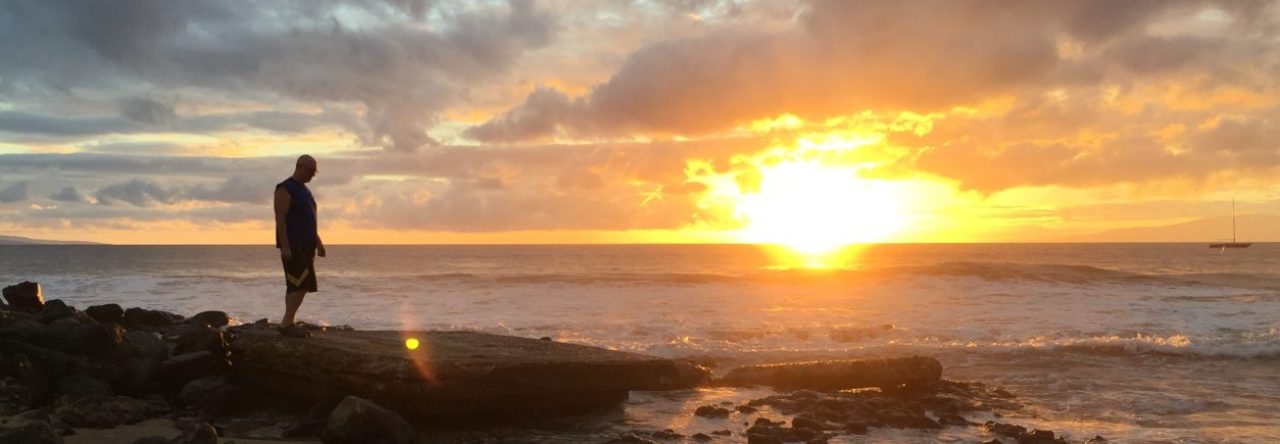
Vietnam Trip: Visiting the Hỏa Lò Prison in Hanoi

During our recent trip to Vietnam, we visited the Hỏa Lò Prison in Hanoi. Of all the wonderful things and experiences during this trip I could, and eventually will, report about, why am I picking the visit to a prison as the first topic?

Hỏa Lò was a prison in Hanoi originally used by the French colonists for political prisoners, and later by North Vietnam for U.S. prisoners of war during the Vietnam War. In America we know it as the Hanoi Hilton. The prison is a museum today, run by the Vietnamese government. Here is my entry ticket:

The exhibits spend much time and effort on the period of the French colonial suppression of the Vietnamese people and the brutality of the colonists against dissidents. The French behaved like dictators do: they built prison camps and sent those that didn’t think like them to those camps and subjected them to terrible atrocities, including starvation, torture and eventual death. The prison also has a section about the American POWs during the Vietnam war, but it is somewhat smaller and less focused. This is not surprising. The prison was used by French against the Vietnamese, but later by the Vietnamese against the Americans. You want to focus on what they did to you, not what you did to them.

One of our first guides was a young woman in her thirties who took us past the prison on a city tour and mentioned that the prison was used to detain American pilots. She actually said that “Vietnam took good care of those prisoners during the war.” This happened early during our trip, before it had sunk in that I was in a communist country where the people could definitely not speak freely, and in particular tour guides were likely briefed on what they should say about controversial topics. I quickly realized that I needed to remember that our guides were young people, born decades after the war, in a controlled society. It was not their fault that the opinions they needed parrot didn’t always align with the reality as I knew it. Arguing or debating points of view would not make sense in that context, so I learned how to listen carefully and digest the information later.

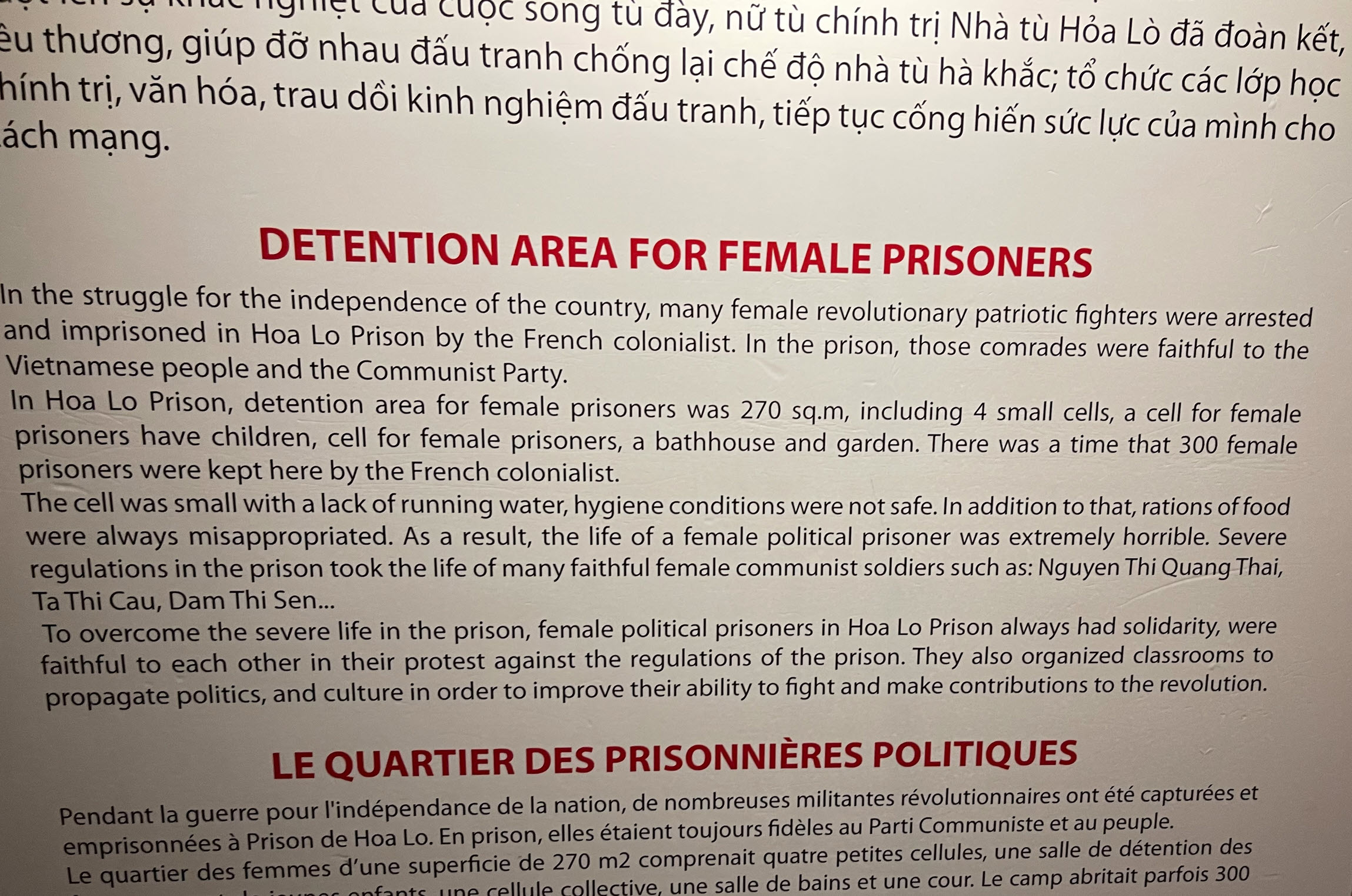
To illustrate my point, here is a sign in the exhibit about female prisoners. Pay attention to the tone of the message:
A visit to the prison was not part of the agenda of our trip. When we learned how close we were, we asked our guide to make room on the schedule, and we squeezed in a 90-minute visit to the museum. For me it was one of the highlights of a two-week visit in Vietnam, albeit a depressing one.

This is because I was always very interested in the lore of the Hanoi Hilton. Many books have been written about it, and one that stands out for me is John McCain’s autobiography Faith of my Fathers, which he wrote in 1999 when he first ran for president. I read it in 2008 when McCain ran for president (again) against Obama. Here is my review. I gave it four stars.

There is a lake in the heart of Hanoi, known as Hoan Kiem Lake. It’s also known as Sword Lake, Lake of the Returned Sword, or Tả Vọng Lake. In the book, McCain describes how he got shot down over Hanoi and as his bad luck would have it, that’s where he crashed. He almost drowned before some fishermen rescued him.

When we arrived in Hanoi, we stayed at the Pan Pacific Hotel, which you can see in the photo below,  and it happens to be right on the shores of that lake.

It was eerie for me to walk along this lake in the morning after breakfast, remembering the story of McCain’s capture.

Here is an excerpt of my book review:

With two broken arms and one broken leg, he was beaten and tortured during the first few months, without any adequate medical care and only minimal and eventually botched operations on his leg. His arms were never set properly. Several times his arms and legs were refractured when he was beaten. He spent most of his years in captivity on crutches, due to his bad right leg. Medical care was withheld as a torture method. The prisoners were tortured initially to obtain military information about the initiatives of the war, from the newly captured prisoners that would have such information. Later they were tortured to extract video taped footage to be used for propaganda. The Vietnamese wanted to show the world how injust the war was by turning public opinion globally and in the US against the war. This could be done by having American officers make anti-war and unpatriotic statements, supposedly by their own volition. This hardly ever happened. The code of honor required that the prisoners endured terrible torture without ever breaking.

Prisoners were not allowed to communicate. They were kept in solitary confinement for months and sometimes years on end. When caught communicating, they were beaten for days and punished by being thown into squalid cells of 6 foot by 3 foot and no ventilation or sanitary measures for months. Health care and nutrition was completely inadequate, and some prisoners died from disease. At one time McCain describes being punished by standing, facing a corner, for more than two days. When he finally collapsed, he was beaten again for not following the rules.

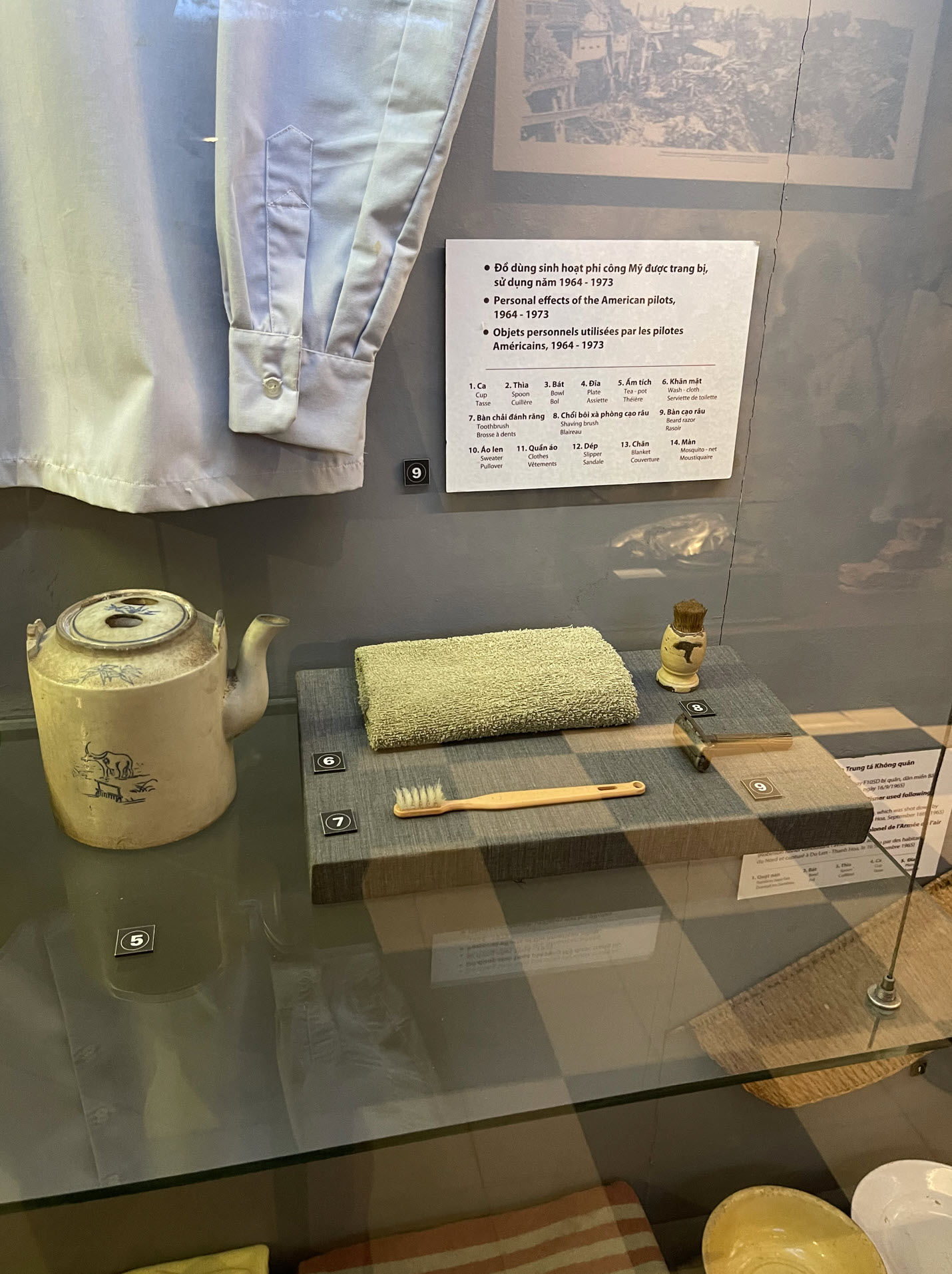
I highly recommend reading Faith of my Fathers to anyone wanting to understand the man John McCain and the experiences of a prisoner of war. If you only read one chapter, read the one about “John McCain’s Towel.” I will do that myself, now that I have been in the Hanoi Hilton, where the ghosts of the American prisoners from over 50 years ago still haunt the walls, and where I saw the infamous towel, as part of the gear issued to the prisoners, in this exhibit:
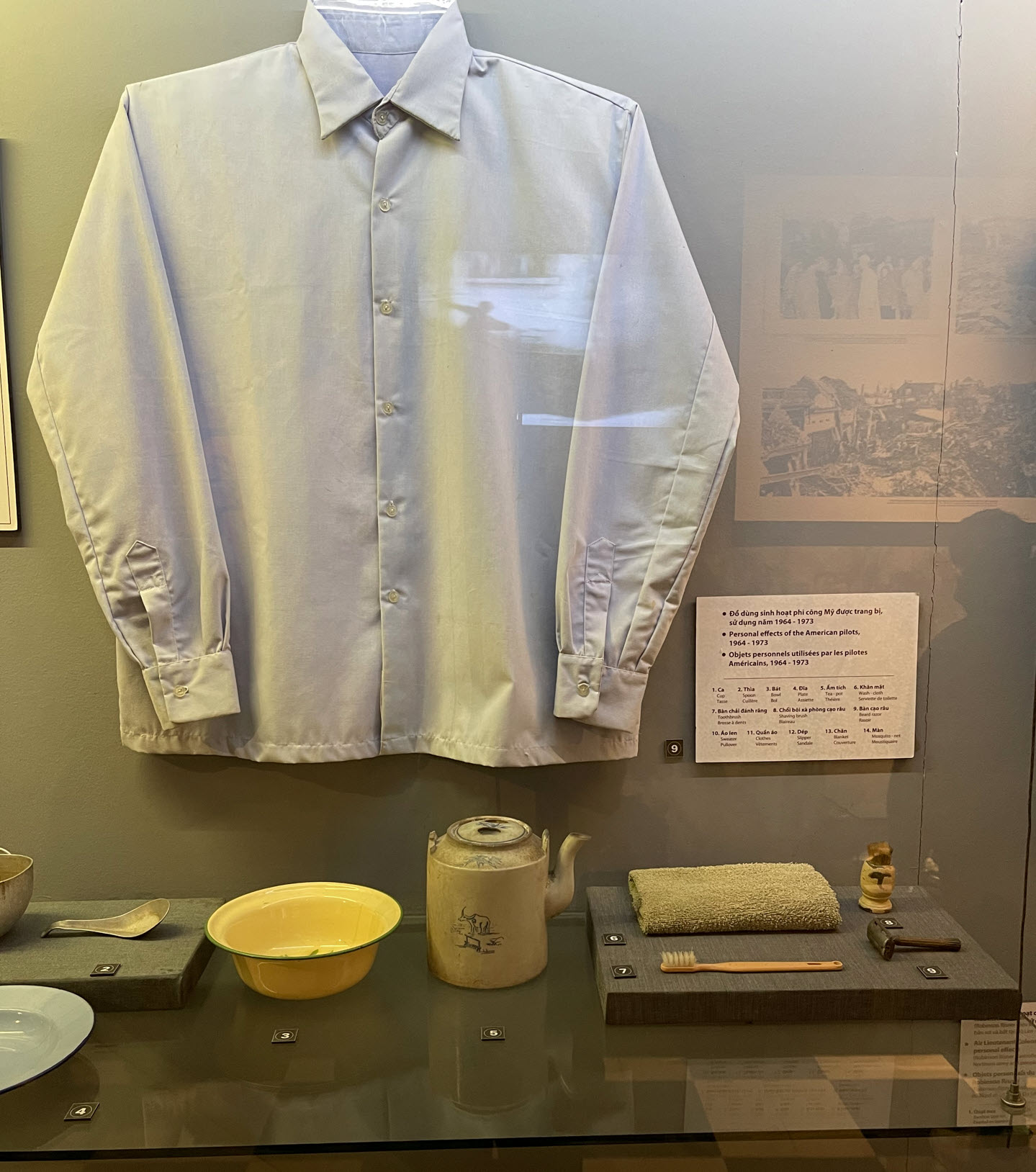
Above you see some of the gear given to the prisoners. On the right side you can see the towel. Since I knew its significance when I was there, I took a close up of that exhibit:
Here are some additional exhibits about individual prisoners. The one about McCain is a larger one, of course, due to his notoriety as a presidential candidate later in his life.

Here is a picture of McCain when we visited Vietnam in 2000 and toured the prison where he was captive and tortured for almost seven years.

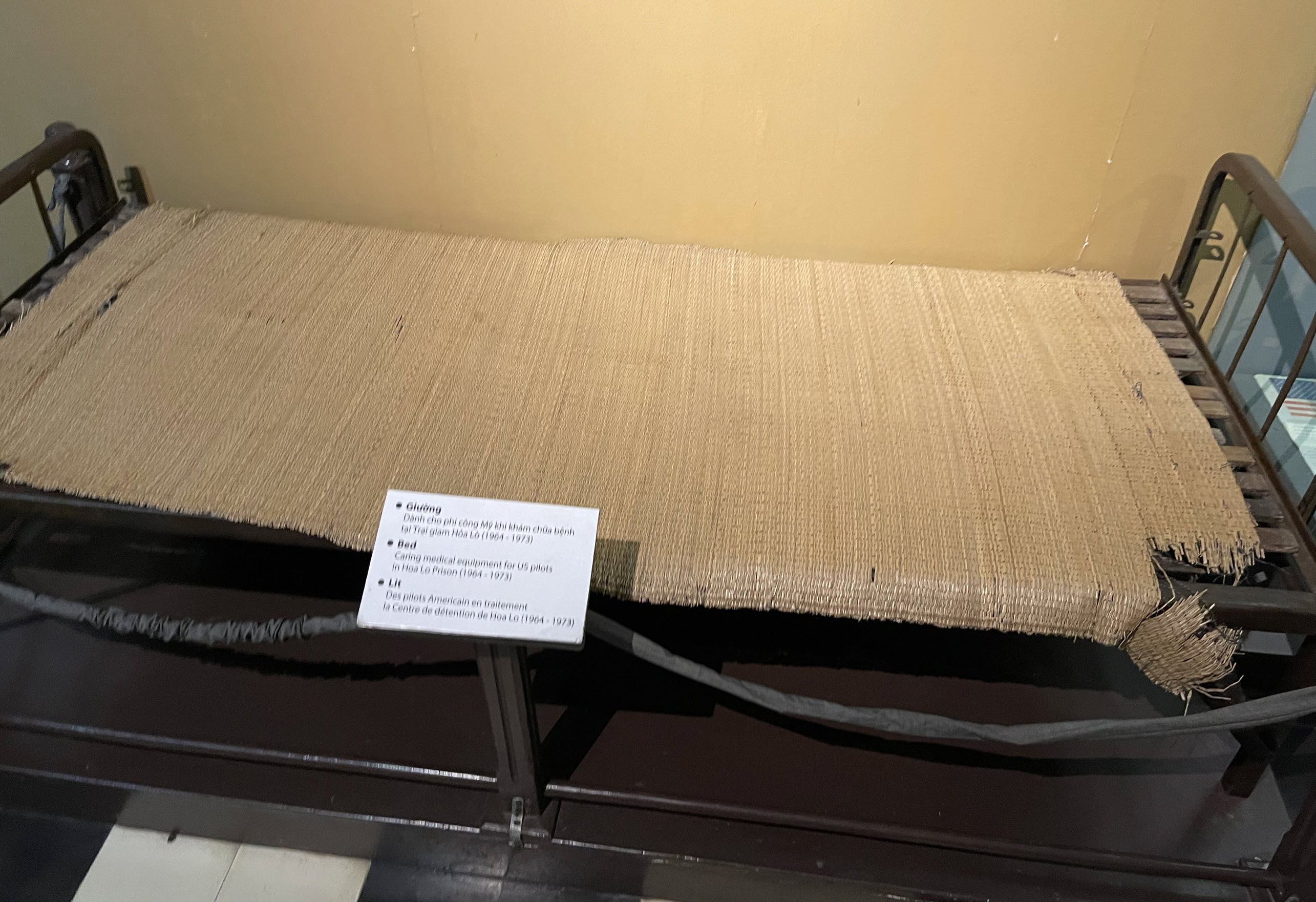
Here is a picture of the beds of the American prisoners.
In contrast, the image below shows how Vietnamese prisoners were shackled in endless rows during the colonial period. Remember, the crime of these men was that they didn’t think the Vietnamese people should be ruled by the French.

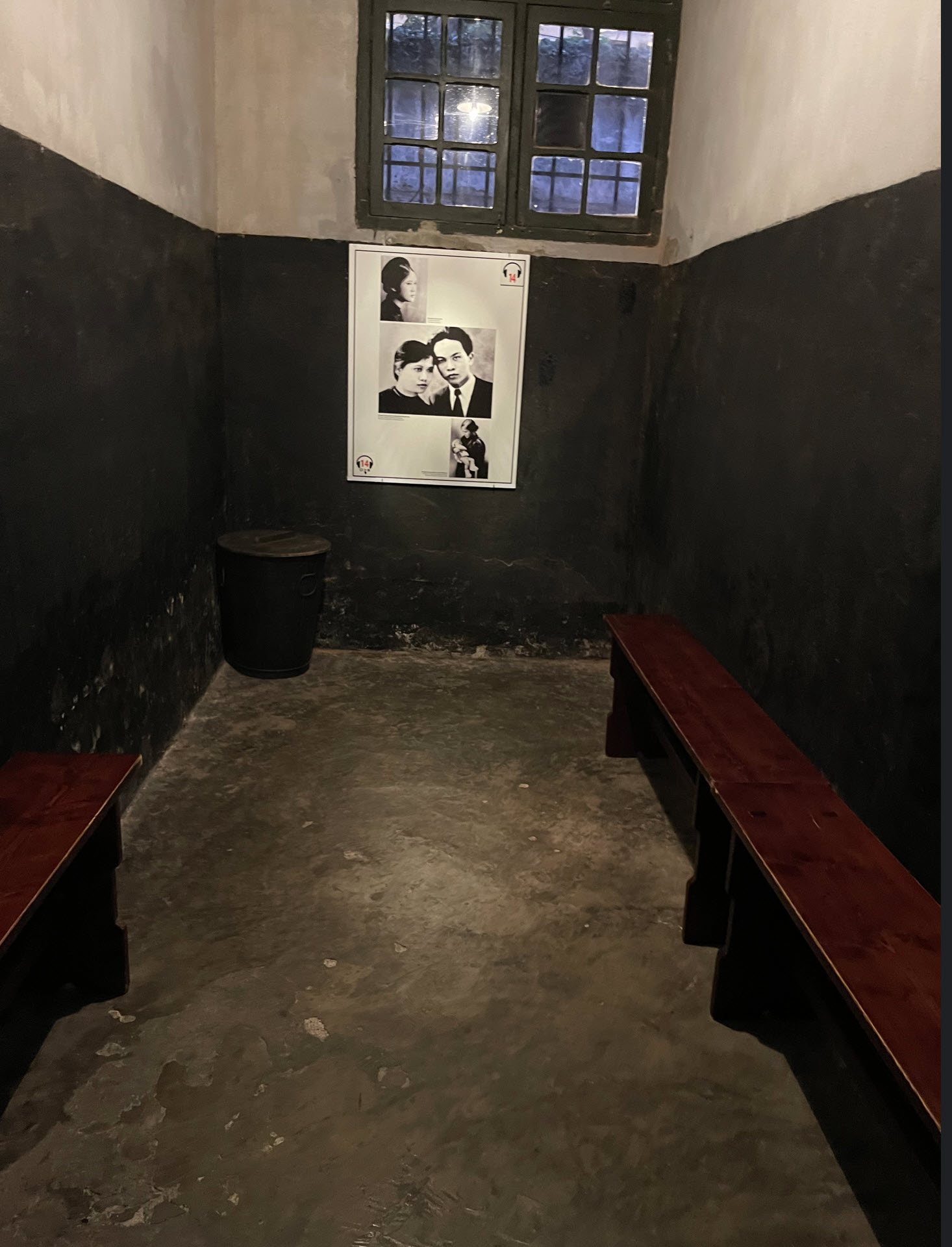
Here is a typical cell in the Hanoi Hilton.
Below is a section of the prison wall from the inside. On top there is barbed wire, sometimes electric wire, but the wall is also covered with shards of glass cemented along the top.
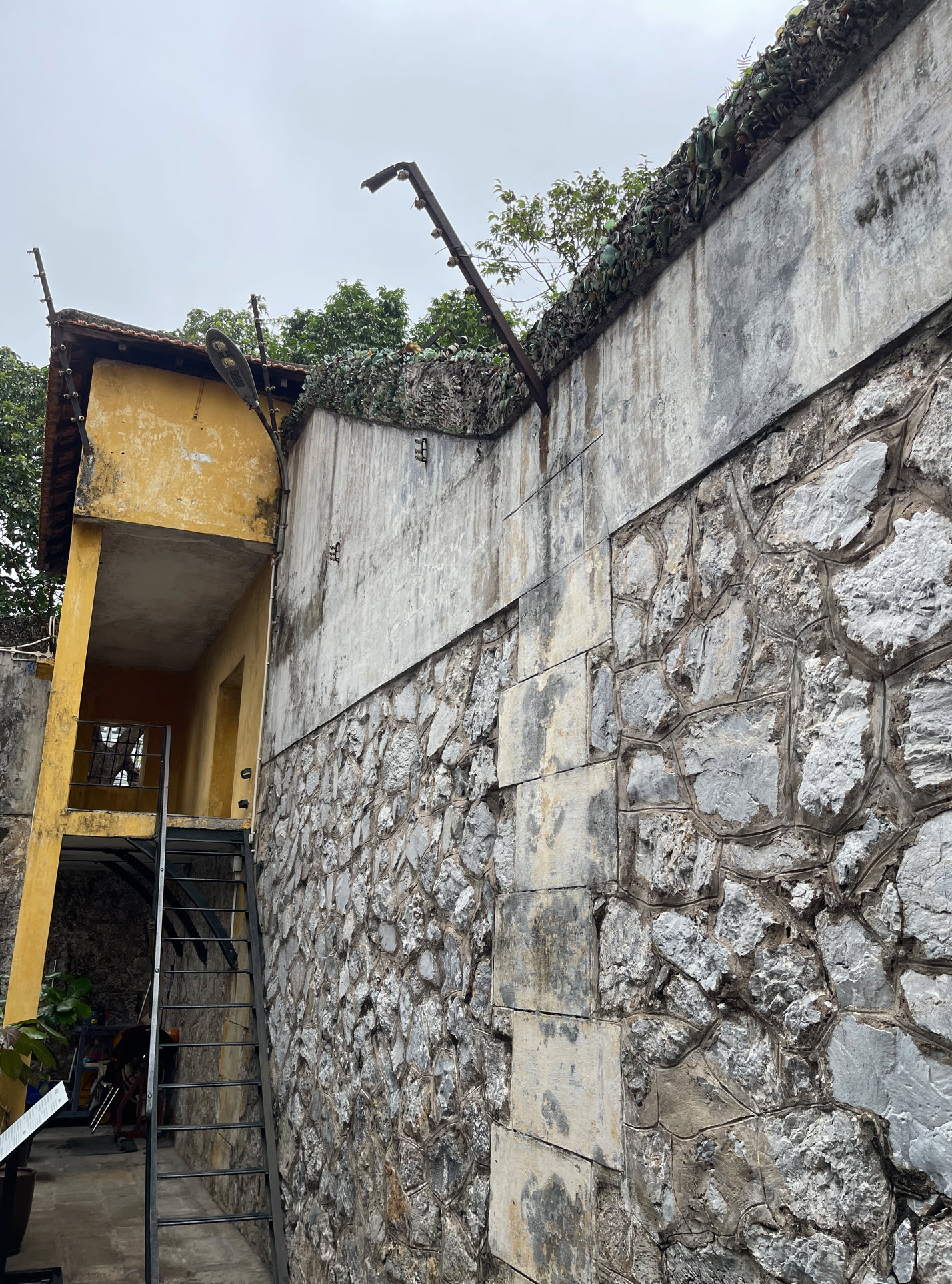
This is the same wall from the outside.
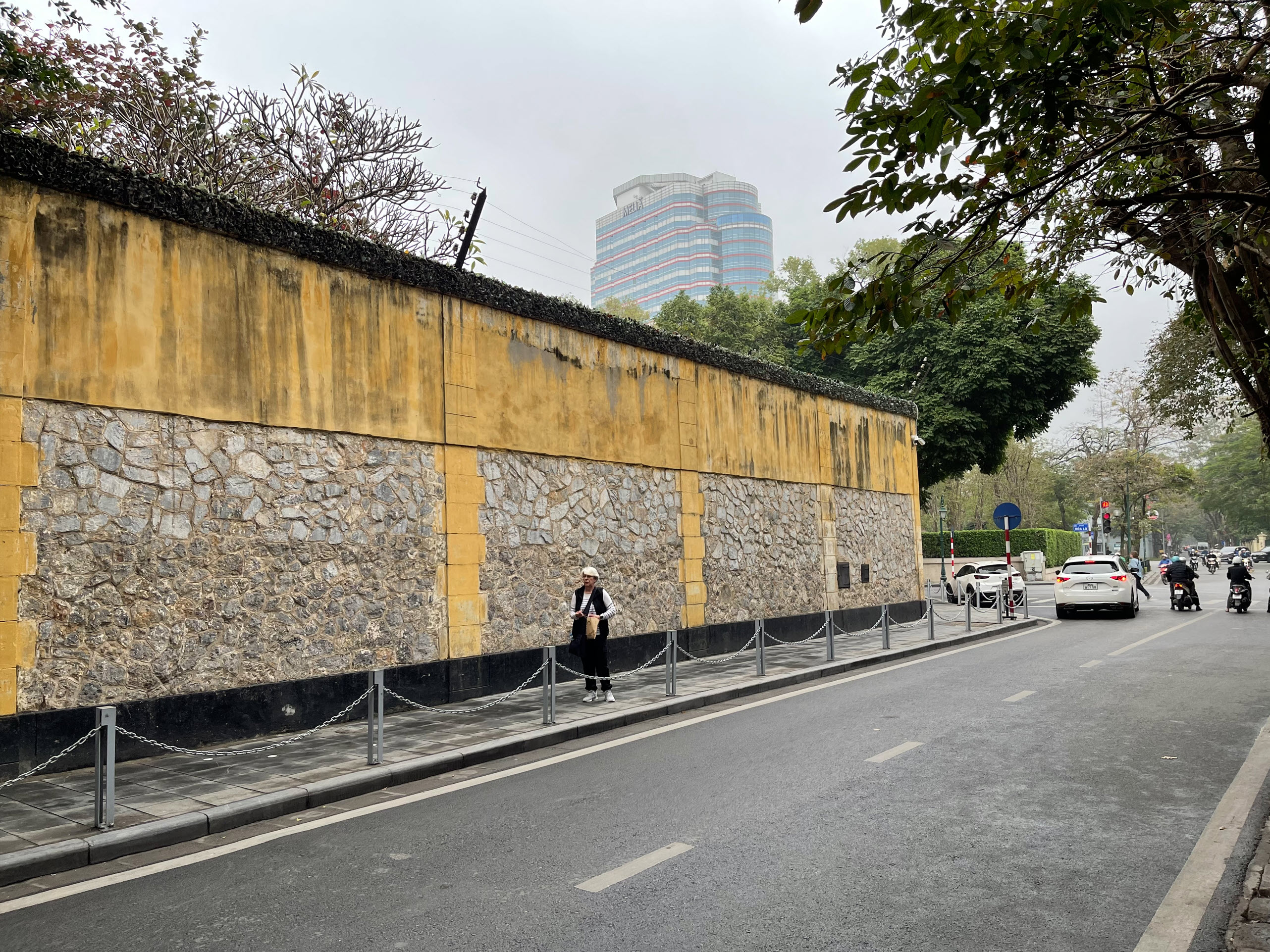
The prison is in the middle of the city, surrounded by the hustle and bustle of Hanoi. If you didn’t know what you are looking at, you would walk right past.

On the other side of the wall you find hotels, little shops, cafes and restaurants.
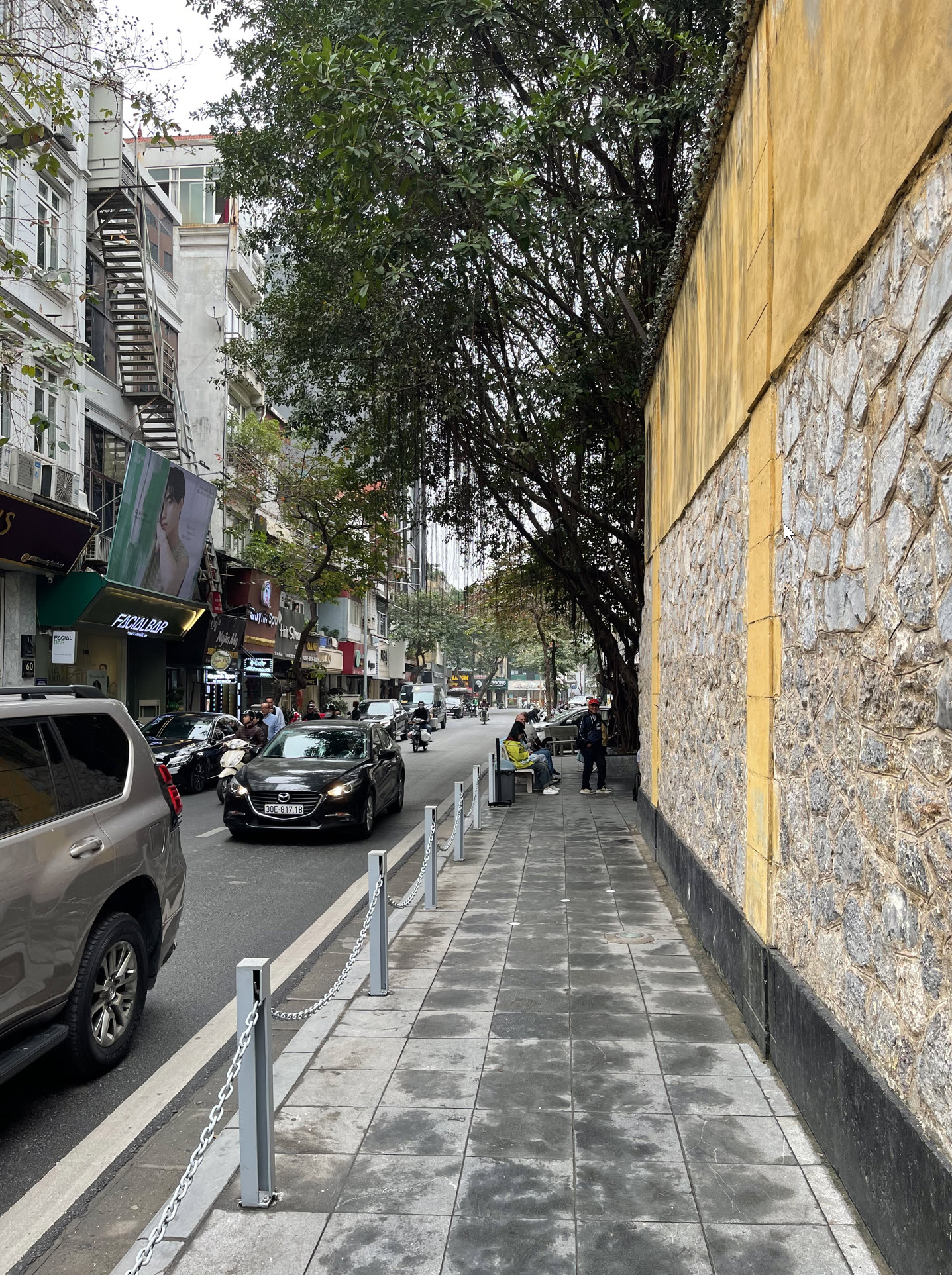
I wonder what it must have been like to be imprisoned for years behind these walls hearing and feeling the pulsating heart of the city all around you?

Movie Review: The Six Triple Eight (2024)

During World War II in Europe, mail delivery from and to the troops in the war became spotty at first and eventually was completely halted. Entire aircraft hangers filled up with undelivered bags of mail with no hope in sight. This demoralized the soldiers, who did not get any mail from home, and also created horrific anxiety when parents and relatives at home didn’t hear from their sons and daughters overseas in the war.

The 6888th Battalion was an all-black Woman’s Army Corps, with 855 female soldiers, commanded by Major Adams. The military brass didn’t believe women, let alone black woman, could meaningfully serve in the war. The soldiers faced open racial discrimination and abuse not only from common soldiers, but all the way from the general corps. When the 6888th was mobilized to Europe to sort and deliver the mail, nobody believed it was possible and they were set up to fail.

They were given six months to do the job, and Major Adams agreed to get it done. Little did she know that there were 17 million pieces of mail involved,  entire mountains of letters.

The Six Triple Eight is a historical drama with appearances of a few major actors in minor roles, including Dean Norris, who we know as Hank in Breaking Bad, as General Halt, Susan Sarandon as Eleonor Roosevelt and Sam Waterston as President Roosevelt. Also notable is Oprah Winfrey as Mary McLeod Bethune, the famous civil rights activist and member of the inner circle of Roosevelt. Kerry Washington does a remarkable job playing Major Adams.

This movie is about racial discrimination and the challenges black woman faced in the mid 20th century. There are a lot of heroes in the story, and eventually the underdogs succeed against all odds. It’s a bit of a tear jerker and overall a quite satisfying movie.

When the Tigers Broke Free – My Perspective of Russia

Pink Floyd released the album The Final Cut in 1983, which contained When the Tigers Broke Free. I must have heard that song hundreds of times, and I still today, every time I hear it, my eyes well up with tears. Here it is. I suggest you read along with the lyrics for better understanding.

When the Tigers Broke Free

It was just before dawn
One miserable morning in black ‘forty four
When the forward commander
Was told to sit tight

When he asked that his men be withdrawn
And the Generals gave thanks
As the other ranks held back
The enemy tanks for a while

And the Anzio bridgehead
Was held for the price
Of a few hundred ordinary lives

And kind old King George
Sent mother a note
When he heard that father was gone

It was, I recall
In the form of a scroll
With gold leaf adorned
And I found it one day
In a drawer of old photographs, hidden away

And my eyes still grow damp to remember
His Majesty signed
With his own rubber stamp

It was dark all around
There was frost in the ground
When the tigers broke free
And no one survived
From the Royal Fusiliers Company Z

They were all left behind
Most of them dead
The rest of them dying
And that’s how the High Command
Took my daddy from me

As of now, British estimates put the number of Russians killed or wounded in Ukraine since February 2022 at about 500,000. Today, every day, we estimate that about 1,000 Russian soldiers are injured or killed in Ukraine. Russia is recruiting 25,000 to 30,000 soldiers a month. I am not counting Ukrainian soldiers here who are defending their country. The Russian men and boys are sent into a meatgrinder in a far-away country that has nothing to do with their own lives, security or safety, simply at the will and ego of one man.

Throughout history, rich and powerful men have sent other people’s daddies into the line of fire, into literal meatgrinders.

Napoleon, Hitler, Stalin, Putin!

We don’t learn and we keep doing it.

When the Tigers Broke Free!

German Foreign Minister Speaks at United Nations

A powerful speech at the United Nations by Germany’s Foreign Minister (the equivalent of the U.S. Secretary of State).

VIDEO: Baerbock auf Englisch zu Ukraine: “Es geht um Mia und die Zukunft unserer Kinder” | Euronews

Her Car is Parked in our Lot

Here is a picture of U.S. Marine Nicole Gee In Kabul just days before she was killed in the suicide attack.

Image and Article at Redditt [click image for article original article]
Her good friend and a fellow Marine wrote this for her:

Her car is parked in our lot.

It’s so mundane. Simple. But it’s there.

My very best friend, my person, my sister forever. My other half. We were boots together, Corporals together, & then Sergeants together. Roommates for over 3 years now, from the barracks at MOS school to our house here. We’ve been attached at the hip from the beginning. I can’t quite describe the feeling I get when I force myself to come back to reality & think about how I’m never going to see her again. How her last breath was taken doing what she loved—helping people—at HKIA in Afghanistan. Then there was an explosion. And just like that, she’s gone.

Our generation of Marines has been listening to the Iraq/Afghan vets tell their war stories for years. It’s easy to feel distant when you’re listening to those conversations, it’s easy for that war & those stories to sound like something so distant—something that you feel like you’re never going to experience since you joined the Marine Corps during peacetime. The stories are powerful and moving. Motivating. You know it can happen. And you train to be ready if/when it does. You’re ready. Gung-Ho. You raise your hand for all of the deployments, you put in the work. But it’s hard to truly relate to those stories when most of the deployments nowadays involve a trip to Oki or a boring 6 months on ship.

Then bad people do bad things, and all of a sudden, the peaceful float you were on turns into you going to Afghanistan & for some, never coming back. It turns into your friends never coming home.

Her car is parked in our lot.

For a month now, it’s been parked in our little lot on Camp Lejeune at the Comm Shop where I work. I used it while my car was getting fixed & I just haven’t gotten around to bringing it back to our house. I drove it around the parking lot every once in a while to make sure it would be good for when she came home. So many Marines have walked past it, most of them the newer generations of Marines, our generation of Marines. The same Marines who often feel so distant from the war stories their bosses tell them about. I’m sure they thought nothing of it—just a car parked in a parking spot. Some of them knew her. Some of them didn’t. But they all saw her car. They all walked past it. The war stories, the losses, the flag-draped coffins, the KIA bracelets & the heartbreak. It’s not so distant anymore.

Her car is still there, & she’s gone forever.

I love the first photo. We climbed to the top of sugar cookie in 29 one Saturday morning a few years ago to pay our respects. I snapped the picture on my camera. I never would’ve thought her name would be on a cross like those one day. There’s no way to adequately prepare for that feeling. No PowerPoint training, no class from the chaps, nothing. Nothing can prepare you.

My best friend. 23 years old. Gone. I find peace knowing that she left this world doing what she loved. She was a Marine’s Marine. She cared about people. She loved fiercely. She was a light in this dark world. She was my person.

Til Valhalla, Sergeant Nicole Gee. I can’t wait to see you & your Momma up there. I love you forever & ever.

Movie Review: War Machine

General McMahon (Brad Pitt) is a four-star general in the U.S. Army. He is a badass, he has the reputation of a tough soldier, his men admire him, and his country sends him to Afghanistan with a mission to …. do exactly what?

He is supposed to clean up the mess left after eight years of war and no strategic plan to win. But he can do it! There is no political will or support at any level to help him get the job done. His soldiers are tired and disillusioned. None of them believe in the mission they were sent to accomplish.

But yes, if they want him to liberate the country, he is going to liberate the shit out of the country, no matter what. So he forges ahead.

War Machine is a comedy, albeit a tragic one. It tells the story we have seen since 2001 on TV, night after night, starting with Bush, continuing with Obama, and on with Trump. We’re building a nation in Afghanistan, right!

I chuckled, I laughed, and I was sad and disheartened, because what I watched was satire.

Satire as real as life itself.

American Government Terrorism

We Americans have always chastised China for Tiananmen Square.

We Americans have ridden into Syria and bashed Assad for using chemical weapons on his own people.

These are pictures of Americans attacked by their own government in July 2020.

Their crimes: protesting against police brutality.

The American government is shooting its own people.

Let us never again have the audacity and accuse other countries for human rights violations. We lost the right to lecture anyone. We have no moral foundation. We’re turning against our own people!

150,000 Americans are dead from an infectious disease, and 1,000 more are dying every day.

Black Americans are getting killed by our own police in broad daylight on camera.

Young Americans are getting shot in their own streets for protesting situations that they can’t stand anymore.

Is this our Great Again America?

Is all that winning worth it?


Movie Review: Da 5 Bloods

Five decades after the Vietnam war we still have riveting movies about that war, or that conflict, as it was called back then. Spike Lee tells the story of Da 5 Bloods, the nickname for a group of all black Vietnam veterans, Paul (Delroy Lindo), Otis (Clarke Peters), Eddie (Norm Lewis), and Melvin (Isiah Whitlock Jr.), who go back to find and exhume their fallen leader, Stormin’ Norman (Chadwick Boseman), and bring him home, and to find the massive cache of gold bars they buried there in 1971. To help them, Paul has brought along his adult son, David (Jonathan Majors).

They find Norman, and they find the gold. The problem is, you can’t just carry out that much gold in backpacks without attracting the wrong kind of attention, and the ensuing conflicts during the retreat brings out the worst in each of them, all deeply damaged from post-traumatic stress and ruined lives. Today’s Vietnam is not the Vietnam of the 1960s, but it’s also not Kansas. There are still plenty of landmines that can kill, and demons that can drive you insane.

In today’s age, where black Americans are once again the targets of hate, injustice and suppression fueled by nascent resurgence of racism let loose in our society, a movie about the fates of black soldiers in a war that wasn’t theirs hits the mark. Beware that this movie has some very horrid imagery that once seen, will stay with you for a long time. Some pictures cannot be unseen. I have warned you.

Movie Review: Rambo: First Blood

I have mentioned the movie Rambo: First Blood many times in this blog over the years. Just search for the keyword and you can find the various posts. The first time was all the way back in 2008, when I listed it as one of Three Timeless Movies. But I never gave it the honor of a review in all that time.

Rambo came out in 1982. It was based on the 1972 novel First Blood by David Morrell. John Rambo (Sylvester Stallone) is a returned Vietnam veteran who is drifting in the Pacific Northwest while looking for a buddy from he war. When he finally finds his home he learns that he had died of cancer a year before. Rambo learns he is the last survivor of his group of Green Berets, and he is devastated. He walks into the nearest town when the local Sheriff picks him up and immediately starts pushing him around. He eventually gets wrongfully arrested and abused by the small-town police force. Triggered by flashbacks of torture, his instincts take over, he overwhelms the untrained cops, and escapes the jail with nothing but the clothes on his back and a knife. As they chase him into the woods they quickly realize that they are not hunting him, he is hunting them.

Consistent with the cliché of what we’re expecting Rambo to be, we find a one-man army with nothing but a knife facing hundreds of local cops, state police, national guard and military all trying to contain him. One of the famous quotes of the movie is “Don’t push it or I’ll give you a war you won’t believe.” And exactly that he does.

There is a lot of shooting and brutal attacks in the story, but despite his notorious reputation, Rambo doesn’t actually kill anyone in First Blood. He just severely wounds and disables many people trying to hunt him down.

After Rambo: First Blood in 1982, there were many sequels. Rambo does a lot of killing in those. The franchise went on with Rambo: First Blook Part II, which Reagan saw and was famously recorded saying “Boy, after seeing ‘Rambo’ last night, I know what to do the next time this happens,” which was picked up by microphones placed in his office for a television and radio speech in 1985 but not carried in the broadcast.

Rambo: First Blood, in my opionion, is a surprisingly good movie. It’s a good innocent hero versus very bad cops story, where the hero kicks ass, gets justice, but eventually goes out with a whimper and the audience gets to feel good.

All other Rambo movies that followed it are no comparison at all, not even in the same league.

I watched Rambo: Last Blood a couple of days ago, and that prompted me watch Rambo: First Blood again and finally write the review it deserves, 38 years after it first came out.


Here is a good summary and review on Reddit with some excellent comments.

Anniversary of the Start of the Rise of Hitler – May 11, 1920

Just a couple of days ago was the 75th anniversary of VE Day in Europe, the day the Nazis surrendered about a week after Hitler killed himself. What most people do not realize is how short the tenure of power of the Nazis actually was. Hitler didn’t come to power until March 1933 and his Third Reich (which he called the 1000-year-empire) lasted only 12 years.

Today, May 11, 2020 is the 100th anniversary of a milestone speech Hitler gave at the Hofbräuhaus in Munich at 7:30pm, titled “Was wir wollen?” (what we want?). Below is a poster proclaiming the event. This was the time when the fledging Nationalsozialistische Deutsche Arbeiter Partei (the Nazi party) recognized Hitler’s oratory and propaganda skills and he started to rise within the party. He proclaimed he fought for the worker class, he called the people Genossen (comrade) and his mantra was to Make Germany Great Again after its humiliation by the allied powers after “the World War” which we now know as World War I.

Germany didn’t know it at the time, but the dark period started that day. The name of Hitler on the poster was still in very small font.

[May 11th, 1920] First NSDAP advertising posters in Munich. Call for the public party rally on May 11, 1920. Speaker: Adolf Hitler
byu/michaelnoir in100yearsago

Movie Review: 1917

World War I was one of the deadliest conflict in human history. Almost 40 million people died in that war. We generally think of WW I as the war of trench warfare. Soldiers lived in trenches on both sides of the front.

In April of 1917, two young British soldiers, Shofield (George MacKay) and Blake (Dean-Charles Chapman), are sent on an impossible mission: cross into German-held territory in northern France and warn the commander of a British unit of about 1,600 soldiers about a deadly trap they don’t know about. Without any means of communications, the two soldiers are hand-carrying a letter. Blake was picked because his brother is a lieutenant in the endangered unit and the commanding general assumes that will give Blake the necessary motivation.

They only have one day and one night for the mission, since the unit is scheduled to attack in the morning and run into the ambush.

The movie follows the two hapless soldiers on their journey. The entire picture is filmed in one continuous shot, not in individual scenes. This gives the action some urgency and fluency. As they progress through the war-torn wasteland, they come across an endless stream of corpses in trenches, ditches, bunkers, on fields and in streams. The brutality and horror of war comes to life in 1917, and the senselessness of it all is ever present.

Some people just want to fight.

And therefore, many others have to die.

As I watched 1917, I realized that Adolph Hitler was a common German soldier in that war, and the experience of the conflict, and the aftermath and subsequent humiliation of the German people, was one of the driving forces that shaped his world-view and fueled his eventual rise to power – just to repeat the whole atrocity again.

Everyone should watch 1917 for the political and humanitarian message it sends, not just because it’s going to win many awards.

Threatening Iran

Many Americans don’t realize how big Iran is. Iran is about four times as large as California or just about the size of Alaska. Geographically, it is the 17th largest country in the world. With 82 million people, it’s the 18th largest country by population and about the size of Germany, the largest country by population in Europe.

Here is a map showing Iran. It’s almost as large as Saudi Arabia, and it dominates the Middle East. It is a neighbor to almost all Middle Eastern countries.

It’s funny to see the country as it is surrounded by United States military bases. When you look at that map, it makes you wonder who is threatening whom?

What would we Americans think if there were Iranian military bases by the dozens all along the border in Canada and Mexico, as well as in Cuba, all over the Pacific, and in Greenland and Iceland? Would we feel threatened?

I am not a friend of the Iranian regime. It’s a terrible, oppressive, murderous country. But I know Iranian people, and I have a lot of respect for them.

Looking at this map makes me think:

What the hell are we doing messing with a country of this size, so far away, with no chance of making any difference, other than spending a lot of money and risking a lot of American lives (again)?

Can we please leave Iran alone?

An Airport is an Airport

…or is it?

Recently I had a layover at Washington, DC’s Ronald Reagan Airport (DCA). Remember, this is the airport of our nation’s capital city. When you land at DCA, try to sit in a window seat on the left side of the plane. Almost all the time, the landing approach is to the south, and you get a wonderful glimpse of the Mall, the Capitol building at the end, the Washington Monument in the front, and the White House to the left, all in plain view, seemingly close enough to reach out and touch. Capital glory at its best.

…until you get off the plane and enter the DCA airport terminal. Quite often, if you land in a small commuter plane, you don’t even get a jet bridge. You walk on rickety metal stairs and ramps, outside, then enter a bus, wait until the entire plane is empty and all the people are in the bus, all the while breathing fumes of jet engines and bus exhaust all around.

The terminals are dilapidated, musty and crowded. The facilities are in want. It feels like you are in a third world county airport. It does not seem like you are in our proud nation’s capital. It is embarrassing.

Take, for example, a modern Asian airport, like Singapore Changi Airport, which has received the title of “World’s Best Airport” for seven years in a row.

This is an example of an airport of a thriving country which does not spend trillions of dollars on overseas wars in all corners of the world. It’s a country that invests in its infrastructure.

Jimmy Carter recently took a call from Donald Trump to talk about China. Carter’s main point reportedly was that China hasn’t spent a single dollar on war in many years. It has built an infrastructure of roads, it has more than half of the entire world’s high-speed train tracks, it has some of the world’s greatest and most modern airports, and it loans the United States money.

We need to rebuild our country’s roads – all of them. We need to fix our crumbling bridges. We need to improve our airport infrastructure.

When I watched the video above about Changi, I could not help but think of the book King Rat by James Clavell. The prison camp the entire story plays in is located near the premises of the Changi airport. Read King Rat, a 4-star book (in my rating) and marvel about the difference 75 years can make, from the bed-bug infested prison camp to the Jewel at Changi airport.

Putting the Special Olympics into Perspective

You can judge the character of a person by what the person spends his or her money on.

You can judge the character of a nation the same way.

Our military budget is larger than that of the next 10 nations COMBINED.

The U.S. military is planning on buying a total 2,443 F-35 jets. Since the pricing of each jet is not clear, because they are sold in “batches” where the costs of development are sometimes wrapped into the planes, I find it difficult to figure out how much individual planes actually cost. I have come up with up to $200 million each, but on the low end around $100 million each (source).

Let’s say we’re on the low end at $100 million for each plane.

Trump and DeVos just suggested we cut the entire budget of the Special Olympics – about $17 million a year. We know Trump caved after the public outrage that announcement created. Two billionaires, two kleptocrats, trying to take the Special Olympics out of the government’s budget – in our name!

Let me suggest the following:

I don’t think we need 2,443 F-35 jets. I think 2,442 will do just fine. And we’ll take the $100 million we saved and fund the Special Olympics for about six years straight.

We can live with one less F-35, right?