
Movie Review: Pressure (2026)

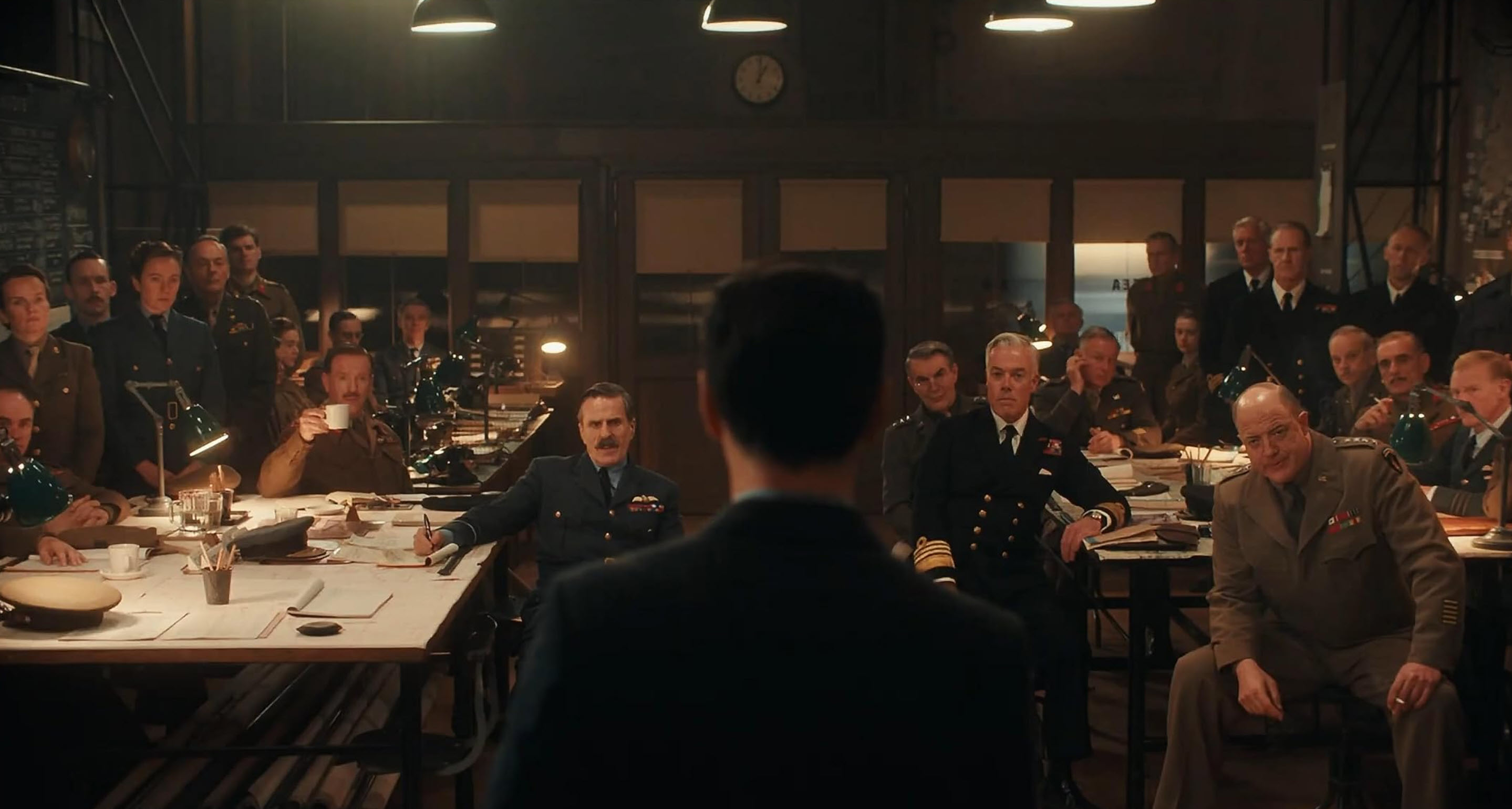
One of the most important and most consequential days in the history of the 20th century was D-Day, the day the Allied forces invaded France by landing on the beaches of Normandy. Pressure tells the true and mostly untold story of one of the contributing elements to the decision to invade on that day: The British weather.

In the last 72 hours before the invasion, Britain’s chief meteorological officer, Dr. James Stagg (Andrew Scott), is called in to evaluate the weather and advise the Allied Commander, Dwight Eisenhower (Brendan Frazer) on the weather and if it was suitable for the mission. As it turned out, there was a huge weather front coming in and Stagg could simply not allow the mission to proceed, even though the entire high command, and most of his own subordinates, were pressuring him to go along. Too much was at stake.

You can’t watch too many war movies. After I walked out of the theater, I had to tell myself that I had just witnessed one crucial aspect of one of the most consequential battles in history. Yet, all I could think of was: Here was another example of our leaders sending other people’s sons and daughters into harm’s way. Eisenhower surely learned, but our president today plays with this awesome responsibility like it’s a reality show – you “get killed” and it means you’re voted off the island. Well – no – you get killed and you’re dead!

Dead!

Pressure is a movie I definitely recommend you watch. It made me think I should pick up a biography of Eisenhower so I could learn what stuff real presidents are made of.

Movie Review: The Town (2010)

There is a neighborhood in Boston named Charlestown, which is famous for having an unusual high number of armed robberies. For generations, crime families have arisen and their children stay in town, live lives of crime and robbery.

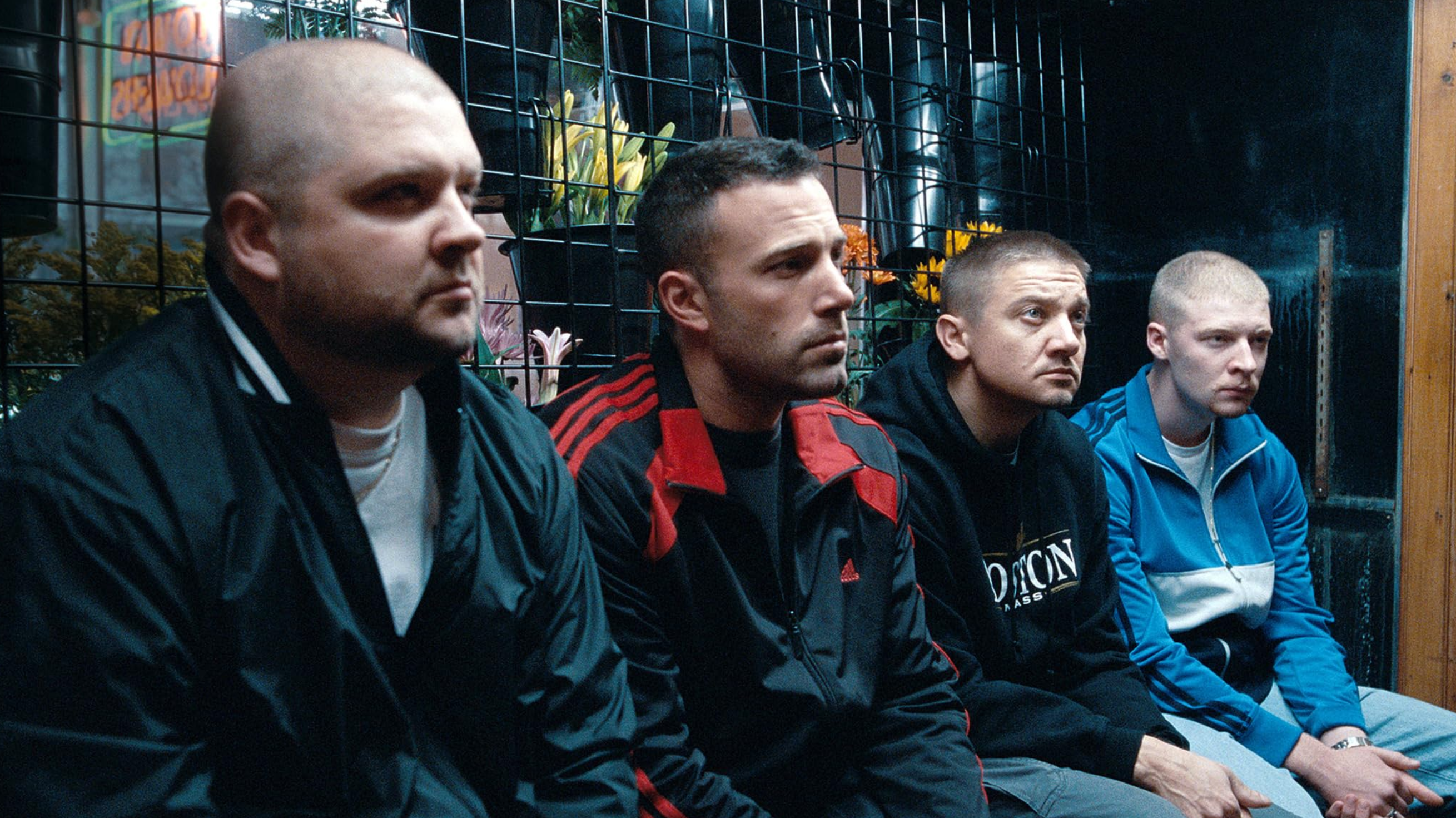
A group of friends are particularly good at it. They wear masks, enter banks, rob them at gunpoint, and hope nothing goes wrong before they can escape with the loot. Due to an unexpected twist, they end up kidnapping a young female bank manager, and they have to let her go later, hoping she didn’t recognize any of them and pick up any clues.

The gang leader Doug (Ben Affleck) ends up falling for her. They develop a relationship that is based on some massive lies. She cannot ever find out he was her kidnapper, and his gang friends cannot know he is dating her.

As you might suspect, things don’t go well.

This movie is well-done, fast-paced and full of tense moments. A great crime story.

Movie Review: Train Dreams (2025)


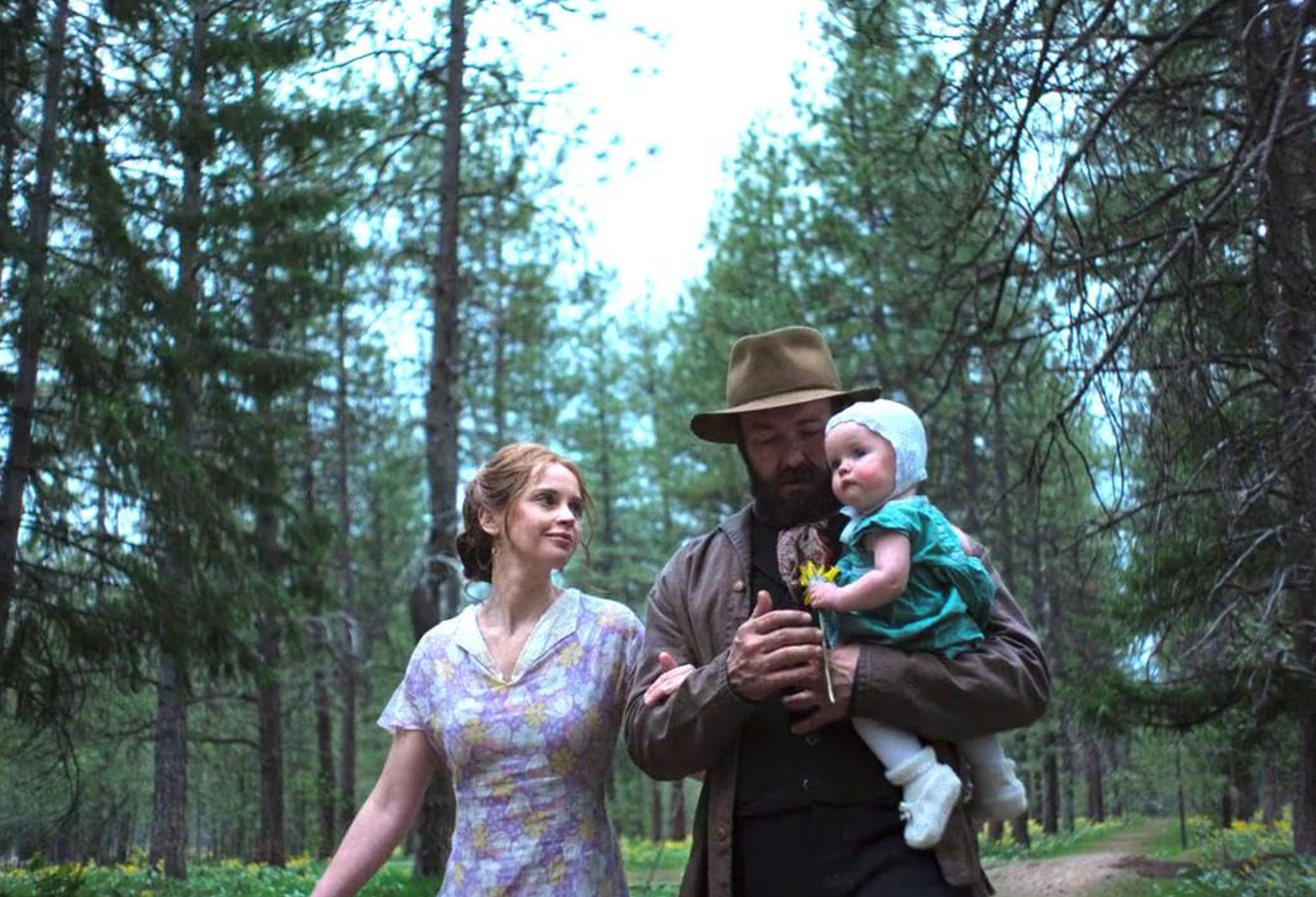
Robert Grainier (Joel Edgerton) is born in the early 20th century somewhere in the woods of northern Washington State, not far from Spokane. In those years, before World War 1, Washington was frontier country. Robert does not know who his parents were, whether he is an orphan, or an abandoned child. He grows up to be a reflective boy, trying to understand the world around him from observing it.

As a young man, his life changes and becomes happier when he meets Gladys (Felicity Jones) in church. Soon they are inseparable, get married and have a child. They build a cabin on an acre of land in the woods, near a creek and they have a daughter.

Being a logger and a railroad builder are the only jobs Robert can find, and unfortunately the seasonal work separates him from his young family for months at a time. It makes for a stressful life for both of them. They dream of saving some money, starting a sawmill and grow vegetables for the market, which would enable the family to live together year-round.

But tragedy overwhelms the family when a wildfire sweeps through their area while Robert is not home.

Train Dreams is based on a Novella by Denis Johnson. Joel Edgerton delivers an Oscar-worthy performance and the cinematography is incredible. It is a quiet and very slow movie. There is little action, just lots of contemplation and observation. Once I realized this was a pensive film, I settled in and let it take me with it. A few tears rolled down my cheeks when I was overwhelmed by the hardness of life those frontier people had to endure, and the brutal realities that literally struck people dead in the middle of the day, completely unexpectedly. They were helpless. Somehow they had to survive. Somehow they had to live their lives, even if there was no joy other than knowing they were one with the world.

And thus Train Dreams follows the life of Robert Grainier from beginning to end. When the credits rolled, I just sat there, listening to the music, while my mind sorted out why life is beautiful even when it is sometimes really, really hard.


Book Review: Artemis – by Andy Weir

I just read Artemis, by Andy Weir, now, a few days after the NASA mission to the moon, Artemis II, safely returned to earth. Andy Weir catapulted to fame with his first book, The Martian, in 2011,  which I reviewed here. Artemis is his second book, released in 2017, before NASA officially named its new lunar program Artemis in 2019. So Weir didn’t copy the mission name. Both drew the name from Greek mythology. Artemis is the goddess of the moon and the twin sister of Apollo.

Jasmine Bashara goes by the name of Jazz. She is a very smart young woman, the daughter of a Saudi welder who raised her as a single father. She lived her childhood and adult life in Artemis, the only city on the moon.

She is poor and works as a porter. Think of it as a DoorDash person, picking up and delivering packages. She lives in a coffin-sized apartment and subsists on what all poor Artemisians live on, gunk, which is flavored algae. She wants to get wealthy enough to afford her own apartment, with a private bathroom and enough room to stand up and stretch.

Through her connections, a score comes her way that could make her rich and end her worries. She goes for it. Little does she know that the heist quickly draws her into a global conspiracy and a war between the mob, billionaires, and the city’s elite. At the end, she not just fighting for her own life, but the survival of the city of Artemis itself.

There is a lot of science in this book, particular chemistry. I happen to be a scientific person, I know my math, biology and physics, but somehow I was able to escape chemistry all my life. It’s the big educational gap is my background. In this book I learned a lot about chemistry.

True to his style, just like in The Martian, Weir stays very close to the science. We get to know how pressure equalization and airlocks work. We learn about smelters, and how to turn lunar regolith into aluminum and oxygen, two of the essential elements needed if you want to build a city on the moon and survive in it.

It only took me a few days to finish this book. I kept turning the pages. I now have read all three of Weir’s books,  and I am sure I will read the fourth – whenever that comes out.

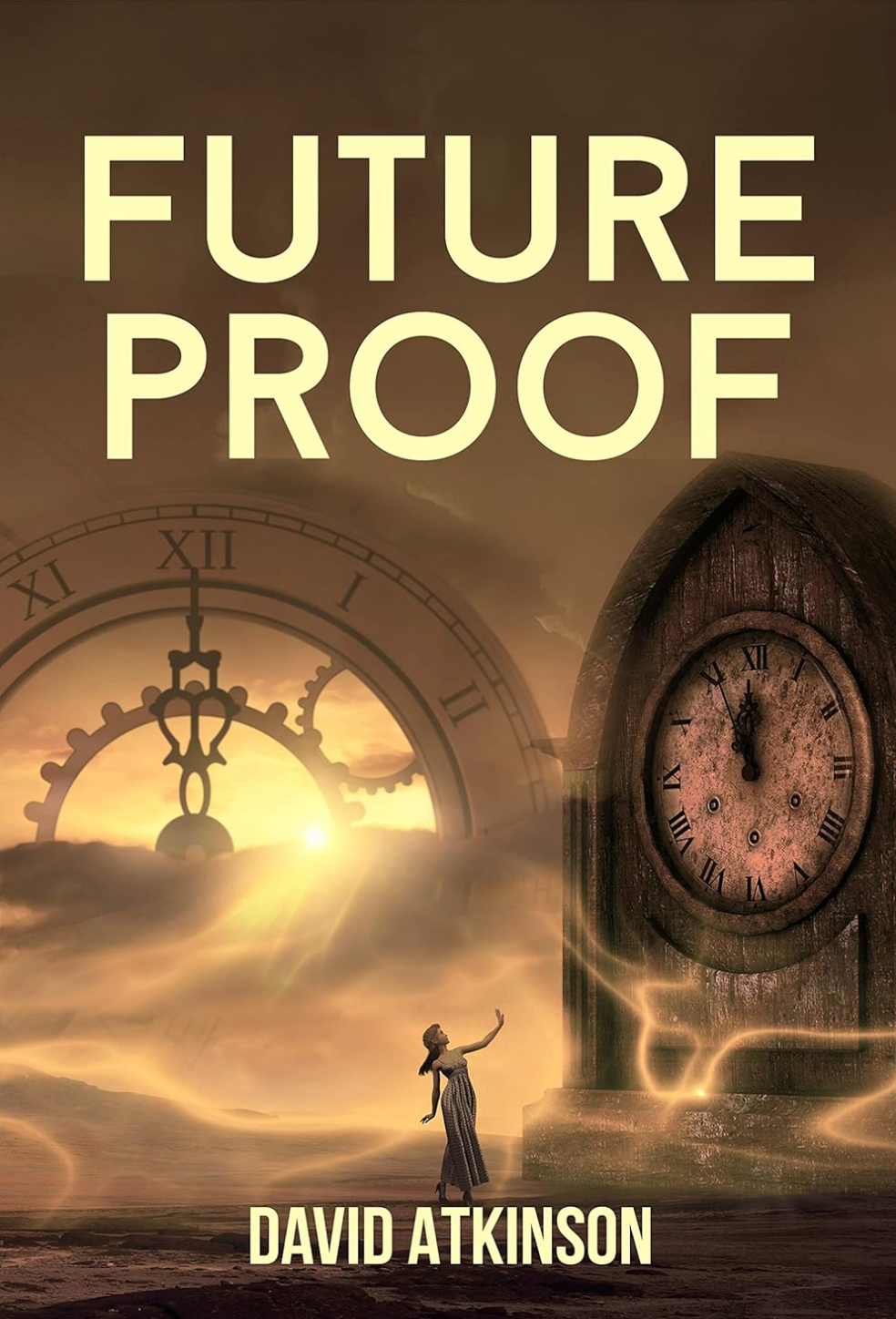
Book Review: Future Proof – by David Atkinson

Sam Harris is a washed-up loser. He is unhealthy and grossly overweight, living in a trashed apartment, from which he is getting evicted. His assigned social worker transfers him to an experimental counseling program. All he has to do is to agree with the treatments, and in exchange he get a clean bed, three meals a day and – counseling. Since he does not have any other options, he agrees.

We learn that is childhood was not a happy one. He was severely bullied in school and never really recovered. None of his relationships worked out for him.

During the first medical treatment, he gets an injection which puts him to sleep. He has an ultra-vivid dream, placing him back into the elementary school, right into a situation where we was abused by several bullies. With his adult brain, memories and experiences in place, his 6-year-old self defends himself against the bullies. Eventually, when that fateful day is over and he goes to sleep, he wakes up again on the treatment bed in the facility.

He quickly discovers that things are different. First and foremost, he is no longer fat. He has a trim and fit body, and the memories of being bullied are gone. Everyone else, however, does not notice any changes. The therapists never knew him as overweight. They don’t recognize the changes. Over the next few days he realizes that he actually time-traveled into his childhood for a day and the changes he made at that pivotal time, like standing up to the bullies, made him a different person and changed the timeline of the rest of the world around him.

Figuring  that nobody will believe him, he keeps the secret to himself, with further plans for more changes during his next therapy trip.

But how much can he change without severely affecting world history?

Future Proof is a unique time travel story where time travel occurs in an unusual way. That gives it a unique spice. The author’s writing is easy to read and cleverly narrated. It’s overall a well-crafted novel and one of the better time travel stories I have read.

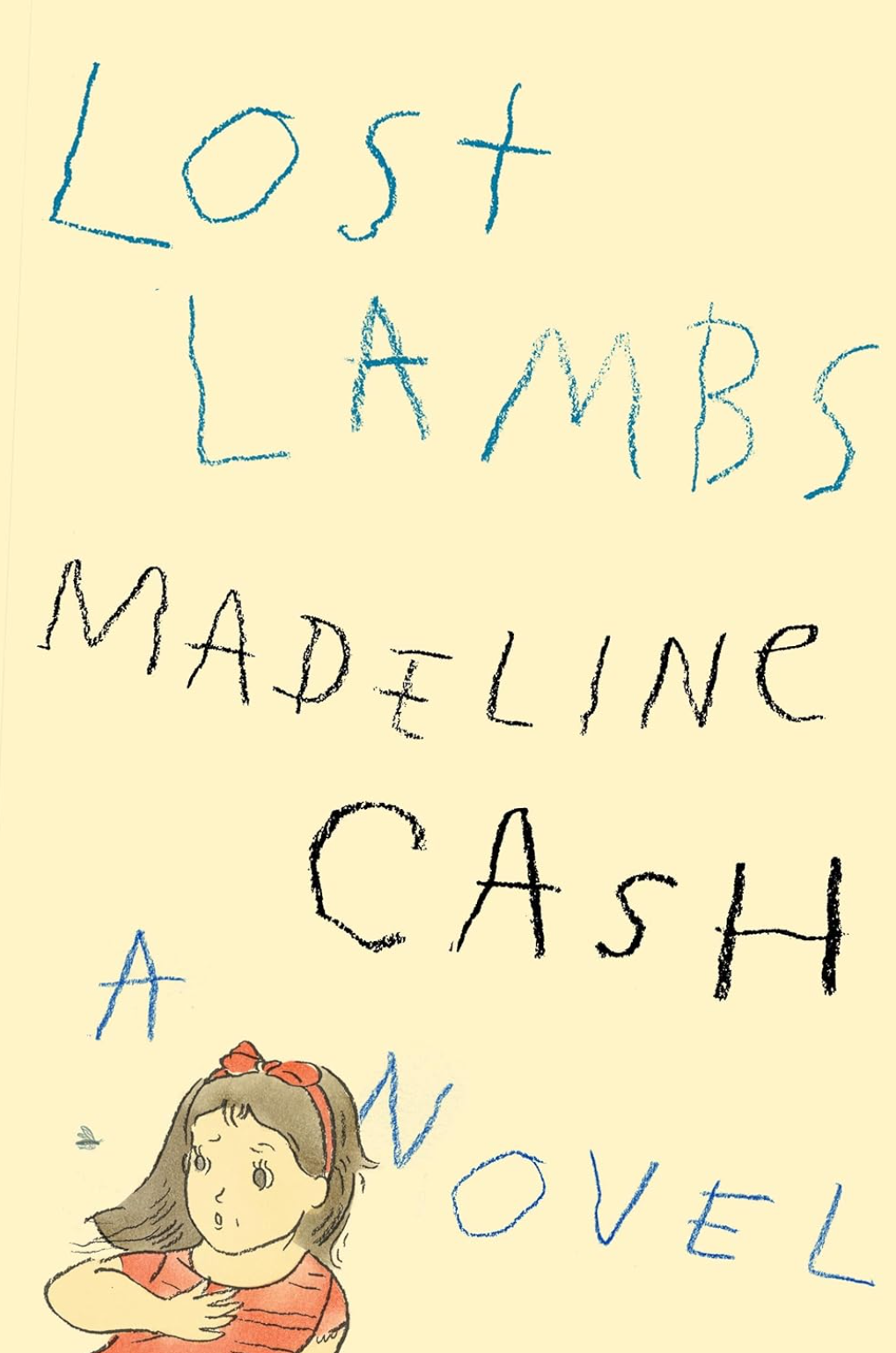
Book Review: Lost Lambs- by Madeline Cash

Lost Lambs is the story of the dysfunctional Flynn family. The father Bud is an accountant who thinks of his job as boring and dead-end. But he is dedicated to his family. The mother Catherine is an artist at heart, but an artist who has not created anything in years. She was consumed raising her three daughters, but even that she did not do very well. Abigail is the oldest daughter, a senior in high school and stunningly beautiful. She is the most sought-after girl in school. Louise is 15, quiet and somewhat mousy. She has an online boyfriend named yourstruly whom she has never met. Finally, Harper, at 12 years old the youngest, is a child prodigy. She can learn a new language in a few weeks, if she decides she wants to. She outsmarts everyone in her family.

Catherine one day gets enamored with their neighbor, Jim Doherty. They hang out, talk art, and eventually develop romantic feelings for each other. Catherine suggests to Bud that they open up their marriage to freshen up their lives and relationship. Bud objects, saying that fucking the neighbor isn’t going to make their marriage work, but he does not get much say in the matter. This sets of a chain of events that involves everyone in the family, and their circle of friends, as well as their church.

When Harper uncovers a vast and possibly criminal conspiracy involving the tech billionaire shipping magnate who lives in their town, things quickly spiral out of control and threaten to tear the family apart.

Lost Lambs is Madeline Cash’s debut novel. She has a witty writing style, accentuated with a lot of humor, some satire, and an unusual angle from which to look at the world.

She is about 29 years old. Her actual birthdate is not published. She is one of the most talked-about debut authors of 2026. I came across the book because my wife’s book club is currently reading it. Sometimes I pick up their recommendations. I did this one, and it just kept me turning the pages with delight.

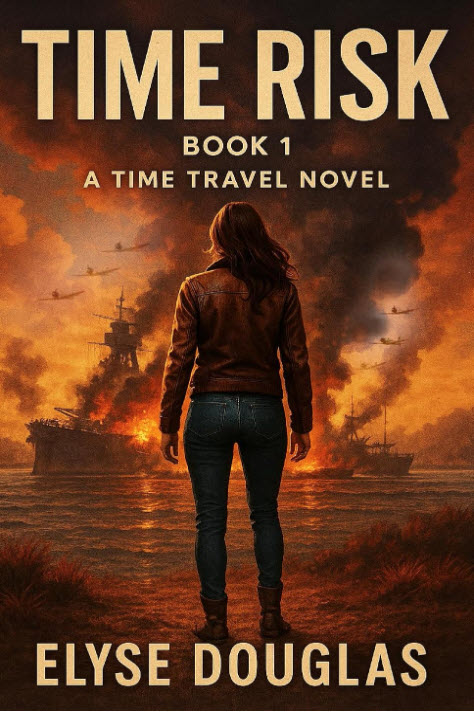
Book Review: Time Risk – by Elyse Douglas

Time Risk is a suspenseful time travel novel.

Andrew Whitlock’s father died during the Japanese attack on Pearl Harbor. He was one of the few pilots who made it off the ground, but he was shot down nonetheless. Andrew was an infant. His mother died soon after, and Andrew grew up in an orphanage. Despite his unfortunate early childhood, Andrew grew up to be a technology billionaire. He spent his life and career building a time travel machine.

Rachel Hunt is a former police homicide detective who is looking for work when Andrew’s men come knocking. They recruit her to travel back in time to Honolulu, arriving days before the Japanese attack. Her mission is to save Andrew’s father by keeping him from flying that morning.

When she arrives in Oahu, things immediately do not go according to plan, and soon Navel Intelligence and the local police are looking for her. She is hunted by the authorities as well as local thugs who are trying to make a few bucks. Things escalate quickly, and Rachel has to decide whether she is going to stick with her mission and save Andrew’s father, or whether she should just try to prevent the attack on Pearl Harbor altogether, and in the process change the history of the world.

The author’s name “Elyse Douglas” is the pen name for the married writing team Elyse Parmentier and Douglas Pennington. They specialize in time travel romance, women’s fiction and mystery. This is the first book of Elyse Douglas I have read.

Time Risk is a fast paced action thriller and a clever time travel story. I was ambivalent about it in the beginning, but it grew on me as it progressed, to the point where I am now considering reading some of the other books in the series, all time travel assignments of Rachel Hunt.

Book Review: The End Of The World As We Know It – edited by Christopher Golden and Brian Keene

Stephen King’s book The Stand is one of my all-time favorite novels. It first came out almost 50 years ago and I have read it several times. The book tells the story of a pandemic that wipes out over 99.9% of mankind. The world of The Stand plays in the aftermath of that pandemic. There are people who read this book once a year just for good measure. I believe it’s King’s grand opus and it’s 1,200 pages long.

I don’t usually like short stories or anthologies. When I came across The End Of The World As We Know It, I was skeptical. But once I started reading, I realized that the 34 stories by 34 different authors all play in the universe of The Stand. Some of them at the same time, as the disease ravages the world, others years later, and others yet decades and several generations later. They don’t all play in the United States either. Some are in other countries and continents. The anthology is over 800 pages long and it took me a while to read it – like about one story per session.

Stephen King has fully authorized this work about the harrowing world of The Stand. The stories are presented by award-winning authors and editors Christopher Golden and Brian Keene.

It features an introduction by Stephen King himself, followed by a foreword by Christopher Golden, and an afterword by Brian Keene. Contributors include Wayne Brady and Maurice Broaddus, Poppy Z. Brite, Somer Canon, C. Robert Cargill, Nat Cassidy, V. Castro, Richard Chizmar, S. A. Cosby, Tananarive Due and Steven Barnes, Meg Gardiner, Gabino Iglesias, Jonathan Janz, Alma Katsu, Caroline Kepnes, Michael Koryta, Sarah Langan, Joe R. Lansdale, Tim Lebbon, Josh Malerman, Ronald Malfi, Usman T. Malik, Premee Mohamed, Cynthia Pelayo, Hailey Piper, David J. Schow, Alex Segura, Bryan Smith, Paul Tremblay, Catherynne M. Valente, Bev Vincent, Catriona Ward, Chuck Wendig, Wrath James White, and Rio Youers.

I will go and find some of the works by these authors after reading their stories here.

Warning: If you have NOT yet read The Stand, this will not make sense to you. Read The Stand first, then this book. I highly recommend both.


Movie Review: The Rocky Horror Picture Show (1975)

The Rocky Horror Picture Show was first released over 50 years ago in 1975. It first was a box office flop, but by 1977, alternative movie theaters started midnight showings and it quickly created a cult following. I am aging myself when I tell you that I must have seen the movie at least 20 times in the years of 1978 and 1979, always at midnight, in Phoenix, Arizona. It was a great event to bring our friends and guests to.

While visiting my son and his girlfriend for Thanksgiving, we looked for cult movies to watch, and we talked about The Room, which my son had made us watch ten years ago. I will reassert here that The Room is the worst movie all all time. But speaking of cult movies, I remembered The Rocky Horror Picture Show, and so we watched it together. For me it was the first time after many decades, and while I had remembered many vignettes, much of it I had forgotten about. For instance, the singing lips through the initial scrolling of the credits was such an iconic feature – how could I possibly forget it?

The Rocky Horror Picture Show is a rock musical that crossed many cultural threshold in its time. It was also one of the first audience participation movies. People came to the theater dressed up like the characters, they recited key lines of dialog before they came up in the movie, and there was much audience participation, like throwing rice during the wedding scene, throwing toast and lighting cigarette lighters (we didn’t have smartphones with flashlights then). Going to see The Rocky Horror Picture Show was much more than just going to a movie, it was an experience that you took your friends to.

The film opened up the world for the LGBTQ+ community. It celebrated gender fluidity, queerness, cross dressing, sexual liberation and bisexuality in an unapologetic manner at a time when such images or concepts were rarely dealt with in mainstream society or media. It provided visibility and a sense of community for people who had few opportunities for public expression of queerness.

The music is pop rock and original to the movie. The songs stayed with me over the decades. In particular the “let’s do the time warp again” song is the one I think about when I think about The Rocky Horror Picture Show.

Susan Sarandon has a lead role as Janet, and it was one of her earlier movies at the beginning of her career. Also, notable is Meat Loaf’s role as Eddie in the film. Tim Curry, who plays the lead character of Dr. Frank-N-Furter, was already a Broadway actor when he appeared in the movie. He rose to prominence with this role.

The Rocky Horror Picture Show was a sanctuary where outsiders, misfits, and young people exploring identity could gather without judgment. I was proud to be part of that world as a 20-year-old, just coming of age and looking forward in wonder to the world awaiting me. Life was just getting started. “Don’t dream it—be it” became a catch-phrase for me, and I still fondly remember those days.

Watching The Rocky Horror Picture Show with my family felt a bit like passing a torch. It was nostalgia all the way.

Movie Review: The Penguin Lessons (2024)

Penguins must be good teachers. When watching The Penguin Lessons I immediately thought of My Penguin Friend, a movie I watched last year.

It’s a very similar story. Through sheer coincidence, a penguin attaches itself to a human who is not necessarily interested in the bird, but over time taking care of it, falls in love with the animal. In this case, the human is an English teacher at an Argentinian prep school during the mid 1970-ies, when Argentina was taken over by a military coup which installed a fascist government. 30,000 Argentinian citizens “disappeared” during those years, never to be heard from again. This is the backdrop to the simple lives of a few teachers and school staff who support them. The penguin, seemingly one person at a time, befriends everyone at the school, and all lives are improved. The students pay attention to their studies, the teachers enjoy healthy relationships with the students and each other, and the staff serving them come to know them and include them in their lives.

How does a simple, single penguin accomplish all that?

It happens in My Penguin Friend, and it happens here, in The Penguin Lessons.

Watching this movie in 2025, when activities like those in Argentina in 1976 are occurring in our country today, all I can say is that we could use some penguins just about now.

Movie Review: One Battle After Another (2025)

On a quiet, almost dreamy Sunday morning in Kahului, Maui, my wife and I walked into the Regal theater in the downtown mall to watch One Battle After Another. We would not have been interested in this movie just from watching the trailers. It looks like a bang bang shoot me up action thriller that we’re usually not interested in. But we had a trusted recommendation that it was one of the best movies in a long time, so we decided to give it a chance.

The Regal in Maui has a weird setup with huge screens and, in this case, only less than 30 seats in three rows. The back row was taken, so we sat in the middle row, where we literally had to recline the seats all the way back and look up at a 45 degree angle to the huge screen looming over us. Not a comfortable way to watch a movie, and I would not want to go back to that theater.

The weird surroundings and the strange seating position were both jarring, so when the movie started with its first act, its extremely fast-paced opening, the rapid-fire succession of many scenes, the relentless and very loud music, it just helped transport both of us into another world, not one we particularly liked. I had my doubts at that time.

But minute after minute built the story, and once the second act came along, the deep suspense and the gripping story just took over.

America is more divided now than it ever was in my lifetime in this country. Today our ideological differences are huge, we have camps where immigrants are detained without due process, we are watching a militarization of our cities, and outright physical aggression is commonplace, at least if we can trust what our media feeds us. This is the backdrop for this story, and I have to refrain from taking sides and making any political statements or voice opinions. The timing of this film is impeccable, and it will make millions of us think about what we’re doing to our country.

The story starts when we are introduced to the French 75, a fictional radical left-wing terrorist group that frees detained immigrants with force, blows up military installations, robs banks, all as part of a left-wing ideology.  They wage One Battle After Another in their war against the government. The first act of the movie tells a story of radical politics, violence, repression and generational legacy.

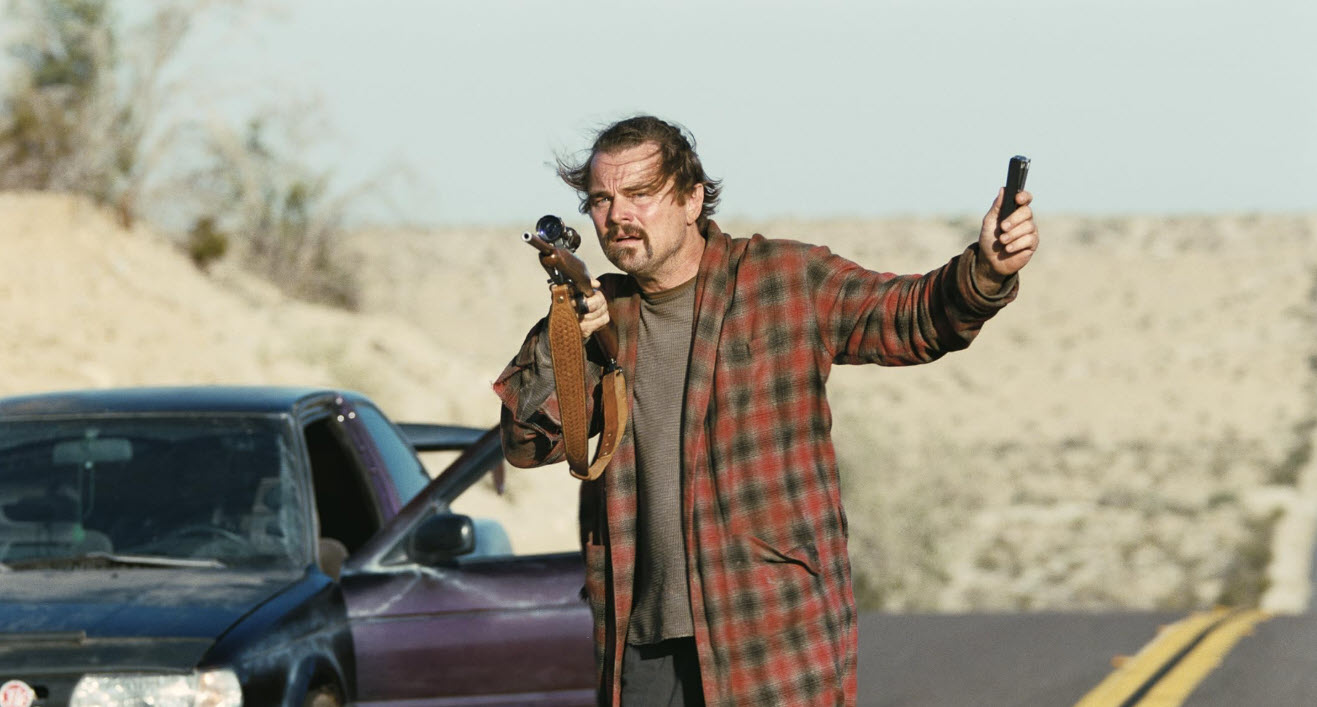
There is Bob (Leonardo DiCaprio), which is not his real name, who is a bomb expert and there is Perfidia (Teyana Taylor), a black firebrand who clearly gets off sexually on physical violence and a mission of revolution. The two are a couple within the larger terrorist group, doing battle, until their child is born and they have to take very different turns in life. This is where the bang bang first act stops and the second act begins, following the life of Bob raising his daughter as a single parent in a makeshift, quiet life.

One of their military nemesis, Col. Steven Lockjaw, decides to come after them 16 years later with the full force of the US government to settle old scores. He hunts them down, and in a flurry of escapes, father and daughter are separated. Lockjaw is a ferocious soldier with a twisted, sick psyche who will stop at nothing to get his way.

Here is the strange part: Lockjaw is played masterfully by Sean Penn. For the first half of the movie I didn’t even realize it was Sean Penn. I had to look it up online during the movie and then I saw this character in a whole different light. Both DiCaprio and Penn are playing their roles like absolute professionals. They carry the movie. The sound track, if you call it that, is intense. Heavy piano scores speed the action and somehow my heartrate went along with it.

At the end of the 2 hour and 42 minute movie I sat there spent. It was difficult to watch. It made me think. Going back out into the afternoon Maui sunshine seemed surreal. It has made me think all day.

I am still thinking.

Book Review: Der Fuchs im Hühnerstall – by Ephraim Kishon

It’s been a long time since I have read a book in German. Der Fuchs im Hühnerstall, or translated The Fox in the Chicken-Coop, is a biting satirical novel of the government machinations and bureaucracy of Israel. I first read it when I was in my teens after it first came out in 1969.  I remembered it fondly. But I lost that copy over the years. I could not find a Kindle version, so I bought a hardcover anthology of Kishon’s three novels, this being his first one.

Amitz Dulnikker is a cabinet-level politician in the Israeli government in his late sixties, at the sunset of his political career. Due to health reasons he decides to take a long vacation, incognito, in a remote village in the north of Israel, near the Lebanese border. The farm village of Kimmelquell specializes in growing caraway seeds as their product. It’s an idyllic place, with no electricity, where many inhabitants are illiterate, and where no outsiders are ever accepted. When Dulnikker and his young aide arrive they are quickly overwhelmed by the backwardness of the villagers and their dull lives. Dulnikker, ever the statesman, starts fomenting competition in the villages, primarily for his own amusement and to bring “civilization” to the poor farmers. Pretty soon, the events that he sets in motion take on a life of their own and control slips away. Eventually, he and his aide are finding themselves victims of their own instigations.

Kishon wrote originally in Hebrew, but I was not able to find any copy. The German edition was first published in 1969 by Langen Müller Verlag in Munich, translated into German by Emi Ehm.

The book has also been translated from Hebrew into English by Jacques Namiel and it appears under the title The Fox in the Chicken-Coop, published by Bronfman Publications in Tel-Aviv in 1971. However, a little research shows that while the books have the same (translated) title, they tell completely different stories. The English version is not a translation, but a completely different novel, with different characters, albeit also about political absurdities in Israel. This has confused many readers. As a result, unfortunately, it seems that there is no way to read this story in English.

Hebrew or German it must be.

Book Review: Tell Me How It Ends – by Valeria Luiselli

Valeria Luiselli is an immigrant from Mexico. She lives in New York with her husband and daughter. Early in her career as a writer, while she was still in the process of seeking her own Green Card, she was hired by the federal immigration court in New York to translate for child asylum seekers. The book was written in the 2014 – 2016 timeframe, before Trump came to office, while the Obama administration was still dealing with the refuge crisis at the southern border of the United States. There is also a postscript dated 2017, just as the book was published, and Trump’s first administration had taken over.

She illustrates, in the words of children as young as three or four years old, up to teenagers, how the American court system handles the crisis. Why are thousands of unaccompanied children arriving at the border, where they are giving themselves up to the immigration authorities? What are their motivations? Why are they here, and what is their fate when they are here?

Tell Me How It Ends is a powerful indictment of the American immigration policy. The children are the victims. Yet, they are  the ones whose lives are destroyed before they ever have a chance to grow up. It deals with the source of the problem in the first place, the utter violence and lawlessness in the Central American countries where the children come from, and it all traces right back to American drug use and consumption of drugs coming from Central America, and the thriving arms trade of American weapons back to those countries.

It is ironic to read this book now, eight years after it was first published, while the Trump Administration is applying a radial approach to solving the problem, deporting the most vulnerable and innocent victims of the whole malaise that causes this problem in the first place, demonizing the victims.

As I see it, particularly after reading Tell Me How It Ends, what they are doing now is not going to fix the problem whatsoever. It will just cause immense harm to those families and children affected directly. History will not judge us favorably for these years and these actions under our watch.

The book is only 99 pages long. I read it in hardcopy. I don’t have solutions. But I have a better understanding of why, and I can only fathom the immense damage that is being inflicted on a whole generation of Latin American children.

Tell me how it ends, because I do not know!

Book Review: The Reader – by Bernhard Schlink

Hanna is a 37-year-old woman who lives alone in a German city after World War II. Michael is a 15-year-old school boy. Chance and fate brings the two together. Teenage hormones and puppy love drive the boy, and an erotic affair quickly evolves between the two. They spend a year or so meeting up at her apartment, after her work, and after his school. He reads classic novels out loud for her, then they shower, then they have sex, then they snooze, and then he goes home to his unsuspecting parents and siblings.

One day Hanna disappears without a trace. Michael at first has a difficult time dealing with that, but in time he gets over it. He goes on and eventually becomes a lawyer. Then, suddenly and unexpectedly, he sees Hanna as a defendant in a trial that he and his classmates are observing. The trial reveals to Michael that Hanna was a guard in a Nazi concentration camp during the war.

The Reader deals with the issue of government atrocities, and to me it was a very timely read. We are at a point in American history where the government seems to trample on its own Constitution, and for the sake of soundbites and news clips arrests its own citizens, apparently without due process, and sends them to offshore hellhole prisons. This situation remind me of what happened in Germany in the 1930 and through 1945. Germany killed over 6 million prisoners, mostly Jews, many of them were German citizens. I’d venture to say that Hitler himself didn’t kill a single person. Somehow he convinced an entire population to do his bidding, and his killing, and thousands of soldiers, guards, and SS troops thought it was okay to commit unspeakable atrocities against their own countrymen. I never understood how this was possible. Yet now, while we’re not killing people, we’re sending innocent people, children who are citizens of our country by birthright, and foreign students with legal visas, to prison camps. Is this a first step?

The Reader tackles this problem. What happens to the emotional life of a person who knows she has committed atrocities and has to live with it? It is a well-crafted novel, a love story of sorts, but difficult and emotional read.

Movie Review: Conclave (2024)

I went to see the movie Conclave not expecting to enjoy it much. Its subject matter does not personally appeal to me.  The word conclave comes from the Latin word clavis (key) and the prefix con, which means a place that can be locked up.

Based on ancient church custom, the cardinals that elect the next pope are sequestered in the Sistine Chapel until a pope is chosen. It’s a very political process. Back through the ages, they just had to be locked in, but in today’s world of communication devices, mobile phones, and “bugs” this is a little more challenging. As everything related to the old Catholic religion, the process is terribly ritualized.

After the previous pope dies unexpectedly, his good friend, Cardinal Lawrence (Ralph Fiennes) is assigned the task of running the conclave. What he didn’t expect  was that he’d discover a trail of secrets and intrigues that could upset the politics of the church.

There are some tremendous plot twists along the way that make the movie not only an educational experience, teaching about this obscure process in the church, but give it the feel of a thriller.