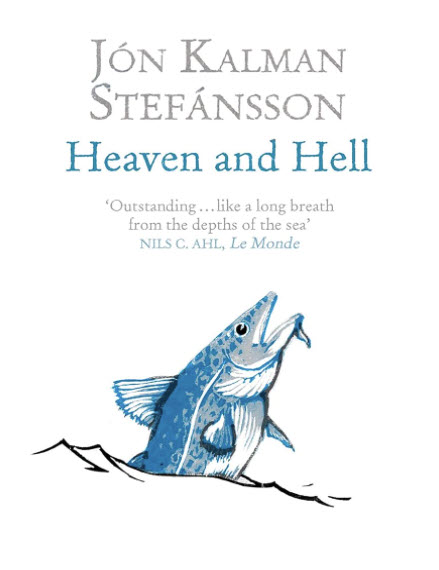
Heaven and Hell takes place at the turn of the twentieth century in a remote part of Iceland. The protagonist, an Icelandic boy, joins a fishing crew with his older friend Barður in a small boat on the ocean. Barður is interested in poetry and is in the process of reading Paradise Lost by John Milton in a book he has borrowed from an old sea captain. Being distracted by the book, Barður forgets to bring is waterproof (a fishing jacket) with him on the boat. The weather soon turns foul. The fishermen know that sharing is not an option, but a death sentence for both. Barður eventually dies from the cold. The boy is devastated. In his grief, he leaves the village on a quest to another fjord and village to return the borrowed book to its owner. He is determined to take his own life after returning the book, but as he gets involved with the villagers, he eventually changes his mind.
Heaven and Hell is a simple and fairly short story originally written in Icelandic. The Icelandic names for people and places use the Icelandic characters that we do not have in the English language. That gives the book an exotic feeling. My hiking guide in Iceland recommended this book and its author to me. It turns out, he actually went to elementary school with the author which the two discovered when my guide attended a book reading.
All the characters in the book, even the peripheral ones, have names, except the protagonist, who is always just referred to as “the boy.”
As I was reading Heaven and Hell, I could not push back the constant images of The Old Man and the Sea by Hemingway, which kept flashing up. It’s another novel where most of the decisive action takes place in a small fishing boat on the vast and powerful ocean.
Heaven and Hell takes you forcefully by the hand and leads you through the stark and unforgiving landscape of Iceland, and introduces you to its indomitable and resilient people.
