Wild Daisies, April 2013, oil on canvas, 36″ x 36″
A month ago I went on a bike ride in the neighborhood wetlands, spotted a little stand of red in the corner of my eye, turned around, climbed down the embankment and took a snapshot. I am not really sure if they are “wild daisies” but that’s good enough for me. Please correct me if you can identify the flower and I will retitle it.
The diameter of the Earth is 7,918 miles or 12,742 kilometers. To be completely accurate I must state that the Earth is not exactly round. It’s about 25 miles wider at the equator than from pole to pole.
The highest mountain on earth is Mt. Everest. It is 29,029 feet or 8,848 meters high.
Mt Everest – [click for credit]Now imagine the earth being a big blue marble ball about the diameter of the height of an average sized American man, about 1.8 meters or 1800 millimeters. Picture yourself in a museum, in front of a ball as large as that. Touch that ball, feel how cold and hard it is. And above all, feel how smooth it is.
How high would Mt. Everest be on that ball, if its height were exactly to scale? It would be 1.2 millimeters high. Can you picture 1.2 millimeters?
The left red line is about 1.2 millimeters wide. This is actually a little tricky, because the width and resolution of your screen can change this somewhat. But you get the idea. Pull out a metric ruler and you can see the smallest units are millimeters.
Anyway, it’s very small on that big blue man-high marble ball in front of you. If you rubbed your hand over Mt. Everest, since it is not an abrupt mountain, but a gradual increase over the width of the Himalayas, you might not even feel Mt. Everest.
You definitely would not feel the indentation of the Grand Canyon, since its depth is only about a fifth of the height of Mt. Everest. It would depend on the sensitivity of your hand.
The highest mountain in Earth is negligible when viewed from the scale of the entire globe.
After watching this I remember that it took Voyager 1 and 2 33 years just to leave our solar system, traveling at a speed of 35,000 miles per hour. To get just to the nearest star – the single very nearest star – it will take them 80,000 years at that speed. This shows the enormity of the speed at which the “viewer” travels in this video, billions of times the speed of light.
On a walk around our neighborhood in Escondido on Bear Valley Parkway, we came across some badass trees in the median separating the lanes. They have thick, bulging trunks, and huge, 1- 3 inch long, hard, sharp thorns. You would not want to have one of these in your backyard, because if you ever stumbled during a game of catch and ran into this tree, you’d die of loss of blood long before you could be taken to the emergency room. Here is a section of trunk:
Another view from the other side:
Looking up along the trunk:
They are nestled between other ordinary trees.
There it is, in the middle. There are cotton pods (from last year) in the crown. In March, they don’t have any leaves yet. I’ll have to document it later, when they bloom and have leaves.
Here is a closer view of the pods.
Here are some pods that are still closed up, the cotton hasn’t popped yet.
Here is what the stuff looks like close-up at home.
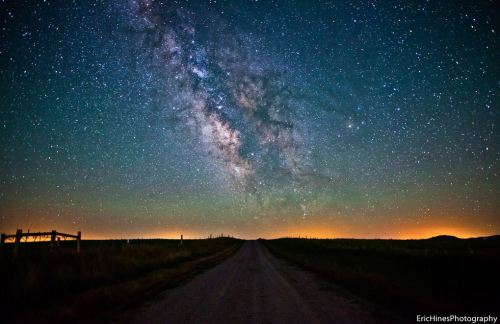
On a clear night, in a dark place, out in the desert, we can see the brilliant night sky. We estimate that we can see about 6,000 stars in the night sky with the naked eye. The nearest star, Alpha Centauri, is about four light years away. This means its light took four years to get here. Whatever we see now happened four years ago.
There are about 100 billion stars in the average galaxy. It is estimated that there are about 200 billion stars and 50 billion planets in our own Milky Way galaxy.
How much is 200 billion? The average life expectancy of Americans is 78.2 years. That means there are about 2.5 billion seconds in a life. If you spent your entire life counting to 200 billion, you’d have to count to 80 every second of your life.
The next significant galaxy, the Andromeda Galaxy, is about 2 million light years away from us.
There are about 100 billion galaxies in the universe.
After hiking the South Clevenger Trail last year on July 6, it was time for North Clevenger yesterday afternoon. I hiked alone.
Here is the map posted at the trailhead:
Here is the actual trail I hiked:
First I might note that you can see the South Clevenger hike of July 6 on the bottom of the map (red arrow). The trailhead for the north section is off Highway 78, just a quarter-mile past the well-marked turnout by the south trailhead. There is good, safe parking for about 8 to 10 vehicles with plenty of overflow parking along the highway.
When comparing the map posted (top image) and my own trail, you can see that I didn’t go all the way. When I got to the end of my trail, I took a waypoint to make sure I’d find my way back, because the trail was lost to me at that point. It has completely fizzled out. The map shows it going on for another mile or two, but if it was there, I didn’t find it.
Going off trail was somewhat hazardous, because I noticed ticks. Sure enough, there was one crawling on my leg already. I decided to call it a hike and turn around at that point. But before I did, I took off boots and socks and examined my legs all the way up and down to make sure I had no nasty stow-aways.
As you can see from the chart, the trail starts at an elevation of about 700 feet and descends steeply into the bed of the Santa Ysabel Creek, before rising on the other side. The picture below shows a section of trail right next to the creek at about 500 feet elevation.
From there, the climb is steady and consistent, with steep switchbacks at times, up to the top of the ridge seen in the picture below.
Once I crossed over the ridge I hiked on the level for a while before the trail fizzled out at about 1880 feet elevation.
Above is a typical view of the trail. Highway 78 is visible in the far distance below. The peak just left of the center of the picture is Cuyamaca, the (almost) highest peak in San Diego County.
Massive boulders spot the hillside, waiting for that inevitable earthquake to shake them loose and give them a few frantic seconds of tumbling before another rest of millennia.
Here is a look from a little ways up, down to the parking lot from where I came. The red arrow points to my car.
The whole round trip took two hours and 45 minutes. It was sunny but not too hot, with a great cool breeze coming in from the distant ocean.
Hiking yesterday in the hills of Southern California, I saw murders of crows (see below for definition of term) surfing the updrafts and thought about the term “as the crow flies.” Why do we use that term? The crows I saw were circling like hawks. But I remembered seeing crows, hundreds, thousands of them, flying in straight lines over our house, every evening in winter and early spring, always in the same direction, straight as arrows, seemingly from one point to another, as if commuting to work.
American crows commonly sleep overnight in a tree in large dense flocks (they are called murders for some reason) during winter. Sometimes there are thousands of crows packed into just a few trees. This is called communal roosting. Crows fly to the roosts at nightfall. Most large cities have just a few large communal roost sites. Since they have to get to the roost site before dark, crows all across the city all fly in the same direction with their classic steady, purposeful straight-line flight that gave rise to the phrase “as the crow flies.”
There is speculation that hungry crows notice who ate well that day, and the next morning the hungry crows follow the well-fed crows to try to find better feeding sites.
I have taken to hiking Palm Canyon in the Anza Borrego Desert every year right after New Year. I skipped 2011, and in 2013 I didn’t go in January, but on March 10.
On January 3, 2010, I noticed a brand new stand of palm trees developing. I took a picture and marked the spot (click to enlarge):
New Palm Grove 2010
When I came back on January 7, 2012, here is the identical view:
New Palm Grove 2012
Then I came back on March 10, 2013. Here is the view now:
I’ve seen this documentary, they are beautiful and astonishing videos, everyone should see how glaciers calve in time-lapse. These videos document how glaciers calve but they are not evidence that CO2 is the cause. Suggesting that they are calving faster than ever before, or that they will never regrow, or that this has never happened before is pure bunk.
Still, everyone should see these videos, they are compelling.
The comment is complimentary enough, but it appears to discredit the content of my post entirely. Several things have happened here that warrant some contemplation:
The movie Chasing Ice simply documents facts, in this case receding of glaciers. The movie does not imply this is man-made, nor it is trying to be proof of such. The movie is a documentary showing the years of relentless, dangerous, painstaking work by a dedicated leader and an entire team of assistants.
In my post reviewing the movie I also didn’t offer it up as proof, but I did make insinuations appealing to the reader’s common sense. The commenter, I hope, was trying to discount me, not the creators of the movie.
I must have been provocative enough to elicit that response, and I take that as a positive outcome.
It occurred to me that it is very easy to discredit the hard, sometimes life-long work of dedicated people with very simple, general statements. This happens a lot when an “expert” gets on television and debunks some study, outcome, book, opinion or sometimes life-work.
In this particular case, the commenter is right. The movies showing glaciers receding at a rapid rate are not evidence that CO2 is the cause. Suggesting that they are calving faster than ever before, or that they will never regrow, or that this has never happened before, is not quite pure bunk in my opinion, but the commenter is right.
We know that only approximately 11,000 years ago there was so much ice bound over land in the northern hemisphere that glaciers reached down to Minnesota and Montana in the United States, and the Bering Straight was dry so people could walk from Asia to America. Yes, these glaciers are not here today, and the oceans are high again, so it certainly has happened before (we don’t know quite exactly how fast).
However, we do know that the amount of CO2 in the atmosphere is now higher than it has been for 80,000 years, with the possible exception of very short spikes during major volcano eruptions.
The vast majority of climate scientists do agree that humans are the cause of the high CO2 levels in the atmosphere. I am too old now to go back to school for five more years for a Ph.D. in a climate science so I can personally contribute scientifically to this debate. I also don’t personally know anyone who actually has such an education. Therefore I must rely on what I can read about both sides of the argument, discuss the topic with as many people as possible, and come to a conclusion based on all this personal analysis.
Can a climate scientist then pick up my post that results from this study and burn a huge hole in it in just a few sentences? Yes, sure, and there is nothing I can do about it.
However, there are some interesting and telling voices out there:
Socialism collapsed because it did not allow the market to tell the economic truth. Capitalism may collapse because it does not allow the market to tell the ecological truth.
— Øystein Dahle, former Vice President of Exxon for Norway
Fly over any part of the world today and look down. Or check out a YouTube made from the international space station using time-lapse photography:
Do you see the massive scars humans left on the planet? Do you think that humans could make those scars and not leave the equivalent scars in the atmosphere?
The burning of fossil fuels on this planet started in earnest about 100 years ago and is now happening on such a massive scale that we’re predicting that we’ll run out of oil and gas in 20 years, 50 years, 100 years, 200 years? Whatever. We’ll run out very soon, on a geological time scale.
Do I have personal experience as a climate scientist? No.
Do I have evidence that man is causing global warming? No.
Do I have proof that the high levels of CO2 in the atmosphere come from our burning of fossil fuels? No.
Do I have proof that there is no god? No.
Do I have proof that there is a god? No.
Let me just bring in the philosophical concept of Occam’s Razor, which speculates that if there is a problem, the simplest solution or answer is the most likely one to be right:
If it walks like a duck, if it looks like a duck, it if quacks like a duck, it’s probably a duck.
I’ll go with that for a moment, and starting with January 1, 2013, let me turn the tables:
Prove to me that the high levels of CO2 in the atmosphere does not come from human activities.
Prove to me that human activities are not the major cause why our glaciers are melting at an unprecedented speed.
Prove to me that we could not stop this process and turn things around to get the balance back into the atmosphere that was there in 1800, by simple changes on how we live and travel.
Those on the high horse of “it’s immoral to leave this debt to our children” ought to join me in the conviction that it is more than immoral to leave a broken planet to our children, it’s criminal. Quite frankly, if we break the planet enough, the debt simply won’t matter.
When the Icelandic volcano Eyjafjallajokull erupted in March 2010, I received this mass email:
VOLCANOES – MAKING LIBERALS LOOK STUPID…NATURALLY! *FOOD FOR THOUGHT ….. this was sent to me by a friend, thought I would pass it along. *
*Are you sitting down? *Okay, here’s the bombshell. The current volcanic eruption going on in Iceland, since it first started spewing volcanic ash a week ago, has, to this point, NEGATED EVERY SINGLE EFFORT you have made in the past five years to control CO2 emissions on our planet. Not only that, this single act of God has added emissions to the earth estimated to be 42 times more than can be corrected by the extreme human regulations proposed for annual reductions.
I know, I know…. (have a group hug)…it’s very disheartening to realize that all of the carbon emission savings you have accomplished while suffering the inconvenience and expense of driving Prius hybrids, buying fabric grocery bags, sitting up til midnight to finish your kid’s “The Green Revolution” science project, throwing out all of your non-green cleaning supplies, using only two squares of toilet paper, putting a brick in your toilet tank reservoir, selling your SUV and speedboat, going on vacation to a city park instead of Yosemite, nearly getting hit every day on your bicycle, replacing all of your $1 light bulbs with $10 light bulbs …well, all of those things you have done have all gone down the tubes in just the past week. The volcanic ash emitted into the Earth’s atmosphere in the past week has totally erased every single effort you have made to reduce the evil beast, carbon. And, those hundreds of thousands of American jobs you helped move to Asia with expensive emissions demands on businesses… you know, the ones that are creating even more emissions than when they were creating American jobs, well that must seem really worthwhile now. I’m so sorry. And I do wish that there was some kind of a silver lining to this volcanic ash cloud but the fact of the matter is that the brush fire season across the western U.S.A. will start in about two months and those fires will negate your efforts to reduce carbon emissions in our world for the next two years.
So, grab a Coke, give the world a hug, and have a nice day!
AND JUST THINK HOW RICH AL GORE HAS GOTTEN OFF THIS HOAX !
It’s true that erupting volcanoes do emit some carbon dioxide, one of the “greenhouse gases” that contributes to global climate change. But according to USGS, human activities release at least a hundred times more CO2 every year than all the world’s volcanoes combined. Published estimates of the gas emissions from all volcanoes in the world range from 123 million to 378 million metric tons of carbon dioxide per year. Humans haven’t produced that little since the 19th century.
The problem is that when a denier tells you the content of the email above at a cocktail party, and you don’t just happen to be a climatologist who specializes in the study of the atmosphere, you probably don’t have the facts at your fingertips and can’t successfully argue against this outrageous, completely made-up, claim.
Fact check goes on documenting that the standstill of European air travel during that time, due to ash in the atmosphere, provided a significant offset of the CO2 emissions by the volcano:
Carbon dioxide isn’t a major output of volcanic eruptions. In the case of Iceland’s Eyjafjallajokull volcano, which began erupting in March 2010 and entered an explosive phase in April 2010, one study found that less than 15 percent of the gas given off in the pre-explosive phase was CO2 – the majority was water vapor. For some other volcanoes, the proportion of CO2 is even lower.
Still, that accounted for 150,000 to 300,000 tons of CO2 per day at the height of the Eyjafjallajokull eruption, according to wire reports. But the European Union’s air travel, which was shut down for days during the eruption, accounts for 3 percent of the EU’s total CO2 emissions, which according to the European Environment Agency was about 4,089 billion tons in 2008. That means air travel in Europe gives off about 340,000 tons of CO2 per day. The shutdown of air travel in much of Europe during the first week of the explosive eruption would have offset, if not greatly outpaced, the CO2 Eyjafjallajokull produced during that time.
The amount of misinformation spewed on the American public, driven by purposeful and targeted campaigns to dumb us down, is alarming.
Insinuating, after sprewing this volcano of garbage, that Al Gore somehow made up this “hoax” to get rich, is unforgivable. I would like to get a chance to compare the life-work of the writer of that email, who in cowardice wrote anonymously, to that of Al Gore. Then let’s have this argument again.
Now for the most important question: Who can pronounce Eyjafjallajokull?
Remember when you were in college and you read a text-book. You started with a highlighter and marked the sections that were important, that you would need to or want to remember, either for the test, or better, for your life? If you did this with World on the Edge, the whole book would be yellow. You’d realize that there isn’t a sentence that you didn’t want to highlight, and double highlight.
Every now and then a powerful non-fiction book comes along that slaps you in the face and completely wakes you up.
World on the Edge is such a book.
Lester Brown takes on all our global challenges at once in this succinct and easy to read book. He covers falling water tables and shrinking harvests, world desertification, climate change, hunger, disease, overpopulation, financial demise of nations, failing states and sustainable energy supply.
The first seven chapters state the problem, the last five chapters provide a workable solution, which he calls Plan B.
Not only is the book a wake-up call for the reader, but it represents a great reference work. Full of statistics, details, references to studies, other books and general information, World on the Edge is very useful as a study guide to the problems of the world. Pick any of the topics discussed, and be careful which you pick, because you can make a life-time career out of studying any one of those in-depth.
The challenges we face in our world on a global scale are staggering. Rather than doomsday trumpeting, the author presents workable solutions with funding requirements that could be put underway right now, to make a change within years, not generations.
Despite popular belief that turkey has a particularly high amount of tryptophan, the amount of tryptophan in turkey is typical of most poultry. There is also a myth that plant protein lacks tryptophan; in fact, tryptophan is present in significant amounts in almost all forms of plant protein, and abundant in some.
Tryptophan is a routine constituent of most protein-based foods or dietary proteins. It is particularly plentiful in chocolate, oats, dried dates, milk, yogurt, cottage cheese, red meat, eggs, fish, poultry, sesame, chickpeas, sunflower seeds, pumpkin seeds, spirulina, bananas, and peanuts.