Opinion of Global Warming by Congressional District

Below is the map of how people responded to the question: “Is global warming a threat to the environment?”

The deeper the red, the more the answer was Yes. The deeper the blue and purple, the more No.

What I take away from that is:

In the cities, in the large metropolitan areas and where most of the universities are, we are leaning to the red, to the Yes. In the coal and oil states we’re in the deep No. And then there is Texas and the South.

Global Warming by Congressional District
Global Warming by Congressional District [click to enlarge]
This link gets you to the actual map, where you can search for your own zip code, and scan for results by county, zip code, congressional district, senatorial district and other filters. You can zoom in and out, and pan the map around.

The most important point I took away from this poll is this: The question was not: “Do you think that global warming is man-made?” Whether it is man-made or not is not part of the question. It was: “Is global warming a threat to the environment?”

It’s pretty hard for me to come up with a scenario where an educated person will say “Well, no, cranking up the Earth’s temperature by 2 degrees Celsius is not a problem at all. Let’s go and melt to Antarctic ice sheet and flood Los Angeles, Miami and New York. Go right ahead.”

That would be the essence of saying No as an answer to this question.


California Water Use Restrictions

We received this flyer in our water bill this month:

Water Use RestrictionsI passionately believe in conservation and preservation of our environment.

But I find this flyer ridiculous.

“Serve water to restaurant patrons only upon request” must be the most ludicrous suggestion of water conservation man has ever come up with. I agree, it’s not the first time we hear this. I agree, it’s not just the glass of water we drink or do not drink, but it’s the dishwashing that is also saved (presumably). Somebody show me how a restaurant that does not serve up water actually saves measurable amounts of dish washing water by not washing those glasses.

But the whole thing misses the point. Six months ago I wrote about California, Water and Rice. There I observed that in California, we use 85% of our water for agriculture, 5% for industry and only 10% for residential consumption – what is addressed in this flyer.

We grow some of the most water-intensive crops in California. Check out this article for stunning details. 99% of all U.S. almonds are grown in California, and it takes 1.1 gallons of water to grow a single almond. Let me say this again:

It takes 1.1 gallons of water to grow a single almond.

I like almonds. But given a choice between drinking an extra gallon of water a day and eating ONE ALMOND, I’ll take the water any day.

How do you reconcile these water use regulations for residents when you live in a state that has 124 desert golf courses?

I would have been more accepting of this pamphlet if it had given information about measures on agricultural use – where conservation initiatives actually would make a measurable difference.

If a farmer has statistics he can share, I’d appreciate it. I couldn’t find much data online, on the contrary. I found rationalizations why we can’t touch Californian agriculture.

“California’s agriculture is critical to the world’s food supply,” said assemblywoman Kristin Olsen, who represents part of the San Joaquin Valley, who had lobbied hard against the restrictions. “An inability to produce that food would clearly be devastating to health and human safety not only in California but around the globe.”

Reuters

Hmm, all this talk gave me the munchies. I’ll have a handful of healthy almonds and a tumbler of ice water.

Scars Upon the Land

Scars upon the Land
[click to enlarge]
The hill in the background is in San Marcos, California. It used to be all covered by brush. The peak on the far left is Double Peak, the highest point in San Diego North County. Now somebody built a house on it (green arrow), and cleared his property all around it. The gap is visible for miles from many directions. It will be there for a very long time.

Scars upon the land.

The Folly of Low-Flush Toilets

Flush Facts

Recent advancements have allowed toilets to use 1.28 gallons per flush or less while still providing equal or superior performance. This is 20 percent less water than the current federal standard of 1.6 gallons per flush. The WaterSense label is used on toilets that are independently certified to meet rigorous criteria for both performance and efficiency. Only water–saving toilets that complete the certification process can earn the WaterSense label.

— WaterSense – an EPA Partnership Program

The current drought in California – and the west – is sure to spawn calls by our government to conserve water. I expect that this year we won’t be able to wash our cars and water our lawns anymore. I was curious about the general usage of water in our homes and found this chart on the EPA website:

water-use-pie-chartThis makes sense to me. The toilet is definitely the largest user of water in our homes – inside. This is not considering irrigation of our yards, which is a huge contributor to residential water usage in the west.

Of course this will motivate people to install more efficient toilets. After all, according to the quote above, you can flush a toilet with 1.28 gallons of water, or you can choose to use an old, conventional toilet which can use six gallons or more.

In our house, we have one toilet in the guest bathroom downstairs and another one in the master bathroom upstairs.

Warning – toilet humor coming up – read at your own risk

The toilet downstairs is a conventional one, which has an air-pressure flusher. This literally shoots water into the toilet and sounds like a jet engine when it goes off. It scares unexpecting flushers the first time they use it, and it announces throughout the house to everyone: the downstairs toilet just flushed!

I don’t know how much water it uses, but I’d guess about three gallons. Here is the important point: I have never once seen this toilet clog up. Not one time.

The upstairs one is a classic water saver. Upon flushing, a much smaller amount of water gurgles down. This toilet clogs up just about every time. We would never permit a guest alone with this toilet, since it would embarrass the guest. For our own use, it’s acceptable, as long as we handle it right. I have come up with a routine that is fairly safe:

Normal Transaction

Pre Flush – before using the toilet, since I can never tell if it’s “kind of” clogged already, I do a preflush. If the preflush succeeds, all is clear and it’s safe to proceed to the next step. If not, go to Recovery Transaction.

Post Business Flush – after conducting business, it’s safe to flush before the use of paper, since the odds of successful flushing goes way up when including this step.

Paper Flush – this is a fairly benign operation, in most cases, depending on judicious use of paper. Generally, a “folder” might be more successful than a “cruncher,” but overall there should be no surprises.

Good Measure Flush – after the paper flush, I am sometimes not sure if there isn’t a clog in the making, so a good measure flush, especially after a larger deposit, may be advisable.

Recovery Transaction

Of course, if any of the Normal Transaction flushes fail, which happens about 50% of the time, expert use of the plunger and copious further flushing, administered only when water levels are safe, will usually clear up the situation. There is no description for the various additional flushes required to administer recovery, and it is a process, perhaps an art, we have learned over the years. Needless to say, a Recovery Transaction usually adds countless additional flushes to the four Normal Transaction flushes.

Summary

We have a water saving toilet, and I am convinced that is uses way, way more water than our conventional jet-engine toilet just to accomplish the basic task a toilet is built for. How about yours? Are you ready to run to Home Depot now?

Edit March 1, 2021 – Fixing Leaking Faucets

A reader of this post forwarded to me an article on fixing leaking faucets. Here is that article, and it will definitely be useful.
Icebreakers and News Post Comments

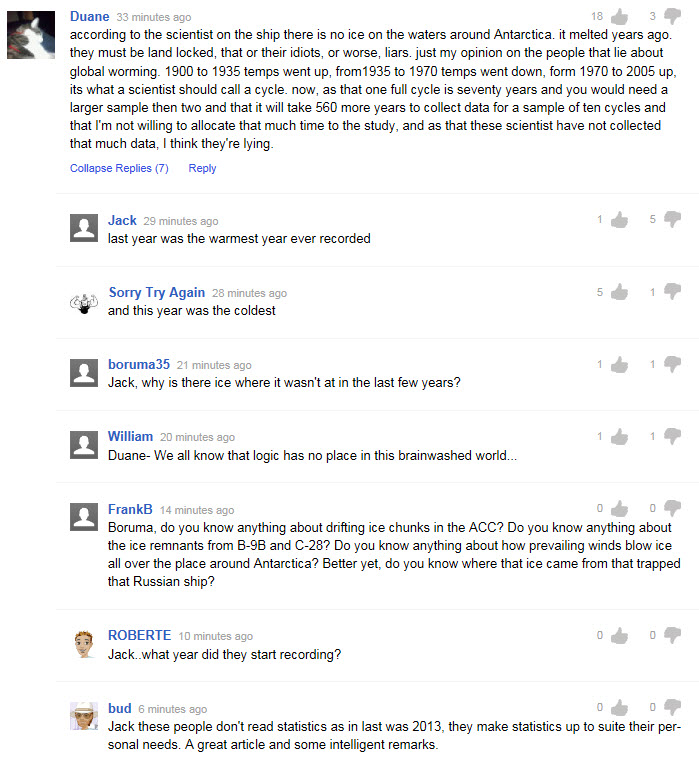
Every time I venture down into the comments area of a news post or YouTube video I soon regret it. Everyone has an opinion. Sometimes I learn, but most of the time I am just amazed.

New Year’s Resolution: Never read the comments to a news post.

Here is a sample of comments to this article in Yahoo News:

Icebreaker Story
[click to enlarge]

Nuclear Explosions Around the World 1944 – 1998

I had no idea there were 2053 nuclear explosions around the world between 1944 and 1998. I had always thought of the two deadly ones in 1945 in Japan. And I knew that the Russians and the Americans were doing their nuclear testing, but I didn’t realize the scale of it. I cannot imagine the environmental devastation and pollution scars that this has brought on our world. I live only five hours from Las Vegas. That spot of desert must be aglow at night for the next five million years.

The Japanese artist Isao Hashimoto has created a time-lapse map of the 2053 nuclear explosions. I watched it all the way through and I am now truly shaken and astonished. This all went on while I was happily growing up, raising a family, and growing older.

Goblin Toppler Glen Taylor Possibly Prosecuted

A few men toppled a Goblin and bragged about it by posting a video on Facebook. To top it off, they were supposedly boy scout leaders. Now there are further headlines about the Utah government possibly prosecuting the perpetrators criminally.

In their defense, they are claiming that this rock would have fallen anyway and could have injured somebody. Hmmm.

Does that mean we should put a concrete wall around the Grand Canyon because somebody could accidentally fall into it? Does that mean we should cut down and haul every dead tree out of the woods because when it finally falls over, somebody might be standing there and get killed?

The argument is ludicrous and sounds like an excuse of a person embarrassed about doing something very stupid.

One boulder isn’t going to make a difference. If it was really close to falling, it would have fallen during the next storm anyway. The chances, however, that it would have fallen on a person are probably millions to one.

The most damaging aspect is that it invites copycats. What if thousands of visitors invaded the park to find rocks they could topple. Next thing we know, they come with 2x4s to use as levers.

Here is a powerful argument why the Park Service SHOULD be closing parks and facilities during a government shutdown.

There are just too many morons walking free.


Japanese Radioactive Water Leaking into Pacific

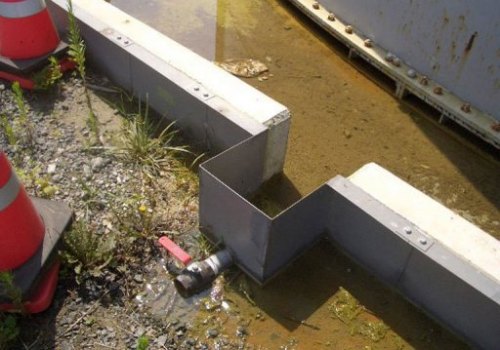
The news seems to be ominously quiet about the fact that the Japanese government recently admitted that about 300 tons of highly radioactive water has been leaking into the Pacific every day. They are not specifying since when.

fukushima leak1
Photo by StarAfrica.com

When I look at the above picture I am in disbelief. If water like this leaked in my yard I’d get to work on it. If this type of stuff leaked out of a storage tank containing highly radioactive water, I’d call 911 and run like hell. But the Japanese didn’t notice this?

fukushima leak2
Photo by Engineering and Technology Magazine

Each tank holds about 1000 tons of water. That’s about a quarter of an Olympic size pool. There are about 350 such tanks at the plant right now, all full of radioactive water. The tanks are made of steel plates connected with bolts, rather than being welded. Engineers suspect that the ground is sinking, causing the tanks to shift and start leaking. Several tanks have started leaking.

At this time the Japanese government admits that it estimates that about 300 tons of water are leaking into the ocean every day. 300 tons is about 1/12th of an Olympic size pool – every day.

Imagine the disaster if the ground shifts again at Fukushima, perhaps as a result of another earthquake, and the steel-plate-bolted tanks all start leaking? What would the Tokyo Electric Power Company do then?

To me this is evidence that no one company can be trusted to do the right thing when some massive disaster hits it. We saw that with BP and the gulf oil spill. We now see it with Fukushima.

They’re acting like a teenager who just crashed his dad’s car on a joy ride.

Yet, when it concerns radioactive material, the results are deadly, for decades.

Radioactive Poisoning of the Pacific Ocean

It now appears that anywhere from 300 to possibly over 450 tons of contaminated water that contains radioactive iodone, cesium, and strontium-89 and 90, is flooding into the Pacific Ocean from the Fukushima Daichi site everyday. This has been going on since the disaster, but only recently the truth has surfaced.

I do not understand why we are not outraged. See the video map of the contamination disaster, how  the radioactivity spreads over the next 10 years and settles down along the Pacific Coast of North and South America.

This may ruin or modify life in the ocean, the fishing industry and tourism across the Pacific.

Does nuclear power seem such a good idea now?

Eat your sushi while the poison hasn’t reached us yet.


Not Pumping Gas in Oregon

In the State of Oregon (and New Jersey) drivers are not allowed to pump their own gas. Drivers just sit in their cars and wait for an attendant to come out and pump. The reason or rationale? Legislation. Here is the actual text pertaining to pumping gas:

480.315 Policy. The Legislative Assembly declares that, except as provided in ORS 480.345 to 480.385, it is in the public interest to maintain a prohibition on the self-service dispensing of Class 1 flammable liquids at retail. The Legislative Assembly finds and declares that:

(1) The dispensing of Class 1 flammable liquids by dispensers properly trained in appropriate safety procedures reduces fire hazards directly associated with the dispensing of Class 1 flammable liquids;

(2) Appropriate safety standards often are unenforceable at retail self-service stations in other states because cashiers are often unable to maintain a clear view of and give undivided attention to the dispensing of Class 1 flammable liquids by customers;

(3) Higher liability insurance rates charged to retail self-service stations reflect the dangers posed to customers when they leave their vehicles to dispense Class 1 flammable liquids, such as the increased risk of crime and the increased risk of personal injury resulting from slipping on slick surfaces;

(4) The dangers of crime and slick surfaces described in subsection (3) of this section are enhanced because Oregon’s weather is uniquely adverse, causing wet pavement and reduced visibility;

(5) The dangers described in subsection (3) of this section are heightened when the customer is a senior citizen or has a disability, especially if the customer uses a mobility aid, such as a wheelchair, walker, cane or crutches;

(6) Attempts by other states to require the providing of aid to senior citizens and persons with disabilities in the self-service dispensing of Class 1 flammable liquids at retail have failed, and therefore, senior citizens and persons with disabilities must pay the higher costs of full service;

(7) Exposure to toxic fumes represents a health hazard to customers dispensing Class 1 flammable liquids;

(8) The hazard described in subsection (7) of this section is heightened when the customer is pregnant;

(9) The exposure to Class 1 flammable liquids through dispensing should, in general, be limited to as few individuals as possible, such as gasoline station owners and their employees or other trained and certified dispensers;

(10) The typical practice of charging significantly higher prices for full-service fuel dispensing in states where self-service is permitted at retail:

(a) Discriminates against customers with lower incomes, who are under greater economic pressure to subject themselves to the inconvenience and hazards of self-service;

(b) Discriminates against customers who are elderly or have disabilities who are unable to serve themselves and so must pay the significantly higher prices; and

(c) Increases self-service dispensing and thereby decreases maintenance checks by attendants, which results in neglect of maintenance, endangering both the customer and other motorists and resulting in unnecessary and costly repairs;

(11) The increased use of self-service at retail in other states has contributed to diminishing the availability of automotive repair facilities at gasoline stations;

(12) Self-service dispensing at retail in other states does not provide a sustained reduction in fuel prices charged to customers;

(13) A general prohibition of self-service dispensing of Class 1 flammable liquids by the general public promotes public welfare by providing increased safety and convenience without causing economic harm to the public in general;

(14) Self-service dispensing at retail contributes to unemployment, particularly among young people;

(15) Self-service dispensing at retail presents a health hazard and unreasonable discomfort to persons with disabilities, elderly persons, small children and those susceptible to respiratory diseases;

(16) The federal Americans with Disabilities Act, Public Law 101-336, requires that equal access be provided to persons with disabilities at retail gasoline stations; and

(17) Small children left unattended when customers leave to make payment at retail self-service stations creates a dangerous situation. [1991 c.863 §49a; 1999 c.59 §160; 2007 c.70 §276]

Oh, my, now what does all this mean?

Pumping gas is really dangerous, and just because other states poison their consumers, elderly, people with disabilities, pregnant women and children, we in Oregon will not. Just because those people should not be pumping their own gas, we prohibit it for all people.

How many gas stations have I seen blow up in California because people don’t know how to pump gas? Lots in the movies.

None in real life.

Smokey Joe Barton and our Friends at BP

220px-Joe_Barton_OfficialA son of Waco, Texas, Joe Barton was elected to the U.S. Congress in 1985 and has been reelected ever since, never with a majority of less than 60%. His nickname is “Smokey Joe” because of his environmental record.

This is the man who publicly apologized to BP because the U.S. government had asked BP to contribute to pay for the cleanup. This was when the Gulf oil spill was still pumping into the ocean. Even his fellow Republicans were dumbfounded when he did that.

Barton does not seem to have much of a grasp of science, but that does not stop him from putting in his opinions. For instance, at a hearing on renewable power, he raised the question of whether expanding wind power might actually cause the planet to heat up:

Wind is God’s way of balancing heat. Wind is the way you shift heat from areas where it’s hotter to areas where it’s cooler. That’s what wind is. Wouldn’t it be ironic if in the interest of global warming we mandated massive switches to energy, which is a finite resource, which slows the winds down, which causes the temperature to go up? Now, I’m not saying that’s going to happen, Mr. Chairman, but that is definitely something on the massive scale. I mean, it does make some sense. You stop something, you can’t transfer that heat, and the heat goes up. It’s just something to think about.

Here is something I would like you to think about, Mr. Barton: The BP oil spill was far worse than we knew. Here are some facts they don’t want us to know.

Three years after the disaster in the Gulf, BP’s horrifying cover-up is finally being exposed. The company pleaded guilty to 14 felonies, one of which included lying to Congress. They were fined $4.5 billion, more than anyone in history for an environmental disaster. 210 million gallons of Louisiana sweet crude gushed into the Gulf during the 87 days it took to plug the well. Check this report to find out how a ‘miracle dispersant’ not only damaged the Gulf ecosystem, but poisoned the cleanup workers as well.

With minds like Joe Barton watching out for us in the United States Congress, what’s there to worry about when large companies try to mess with us?

CO2 Emissions due to Electric Vehicles

We cannot argue with the fact that Tesla has been in the headlines lately for several reasons. First, they announced that the company would be profitable this year and was on track paying back government loans earlier than planned. Second, they got the 2013 MotorTrend Car of the Year award.

Tesla
Tesla Model S

Opponents argue that electric vehicles, since they are powered by the public grid which is largely fueled by coal, emit twice the amount of CO2 that gasoline vehicles spew over their lifetime.

It turns out that this claim is incorrect, yet I admit that it is definitely not a simple calculation, and depending on the outcome one likes, one could come up with different results.

An electric vehicle in 2008, charged from the public grid, emitted indirectly 115 grams of CO2 per kilometer driven whereas a conventional U.S. gas-powered car emitted 250 grams of CO2 per kilometer, mostly out the tailpipe.

As the U.S. power grid is converted away from coal to wind, solar and other alternative and renewable power sources, this ratio got better with every year that has gone by since 2008 and it will continue to do so in the future.

In addition, Tesla is installing supercharging stations on major highways, where their cars can be re-charged halfway in 30 minutes – for free – giving a range of another 150 miles. The stations are completely solar-powered. Zero emissions when going to the superchargers.

30 minutes is a long time on a road trip, but the strategy of locating the stations near restaurants, shopping centers and other attractions allows customers to plug in their cars, go to lunch, get coffee and come back for another 2 hours of driving.

This Will Make You Sick: Ohio Dairy Farm Brutality

Here is a video that will make you sick to your stomach. If you don’t an hour to watch, just wind forward to 1:00 minutes, watch the video and you will be crushed by the brutality of these – I can’t come up with another word: BRUTES.

One of the Most Brutal Things You Have Seen.

wind forward to 1:00:00

Go ahead now, have a steak.

.

Horses in New York City

Before the automobile came around early in the 20th century, all urban traffic was horse-drawn. In the book Time and Again by Jack Finney, the protagonist travels back in time to New York City in 1882. It provides an idyllic view of the city without motor cars – every vehicle is horse-drawn.

We all know what the New York City street picture looks like with the automobile. We have even seen pictures of the Model T time, when the streets were choked. Here is an interesting video, supposedly the world’s oldest dash cam from 1926, to illustrate my point.

But most of us have not thought about what the city streets were like with all those horses.

Estimates are that there were 170,000 horses in the city at any time. The horses were worked in 12-hour shifts. Horses defecate every 2 hours and urinate every 3-4 hours. All this went onto the city streets. There were workers called “dirt carters” that picked up the manure from the streets and hauled it to specially designated “manure blocks.” Imagine the flies and vermin this attracted.

In the winter, the frozen waste was covered by layers of ice and snow, and the streets sometimes rose up by several feet, as this built up. Imagine the stench and mess when the spring thaw came around.

When horses died, as all living things do eventually, they were often left on the streets until they were rotted sufficiently so they could be taken away in pieces. While they were there, children played with the carcasses.

Dead Horse

[Photocredit: Byron]

When I think about this, all these cars in the streets of our cities today do not seem so bad. We have come a long way, and I am sure we’re healthier now because of it.

Now we need to go through a similarly disruptive change and convert our transportation systems to use renewable, clean energy. That way, in 2113, we can look at pictures of 2013 in New York City and marvel how we ever lived with all these gasoline-burning cars.