The food discarded by consumers and retailers in just the most developed nations would be more than enough to sustain all the world’s 870 million hungry people if effective distribution methods were available.
As with most civilization technologies, the solution to this waste is infrastructure. None of us want to waste food. Nobody decides to take more food at Souplantation than they can eat, just to leave it for the busboy to take away, okay, almost nobody. I have seen violators!
Here is a post I wrote about food waste at the Hampton Inn a couple of years ago. In that article I pointed out the eggs I noticed in the trash can after they cleared the breakfast buffet at 10:00 am.

I pointed out in that post, if they simply didn’t peel the eggs before they put them on display, they would not have to throw them out every day. And sure enough, soon after that all the Hampton Inns started serving unpeeled eggs and have done so ever since. My post was probably a coincidence and perhaps aligned with consumer complaints from many people to cause them to change this.
If there were a way to get the extra four-inches of the Subway foot-long that I can’t quite eat to some starving child in Somalia, that child would get calories for several days out of that sandwich. But there is no way.
If there were a way to let supermarkets transport the food they are forced to throw into the dumpsters to a country where there is a food shortage, many mouths would be fed.
Since transporting our waste is not practical and possible, the ultimate solution is to figure out less expensive ways to produce the food where it is needed. We’re right back at sustainable agriculture, and the infrastructure required to support it. Solving the world hunger problem is a project of decades, not years, and requires continuous commitment from individuals and governments.
Since governments by nature only care for their own problems and needs, the misaligned distribution of infrastructure and wealth cuts out the poorest nations. We need to find a profit incentive. Some entrepreneur must find a way to make distribution of food technologies and food itself to developing nations profitable, and then things will start rolling.
Here is a need. Does anyone have an idea how to fill it?
If you would like to learn more about world hunger, key facts and statistics, here is a valuable link.
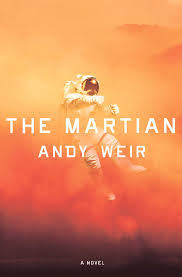 I went on a business trip to Seattle with several colleagues. At the airport in San Diego, one of them mentioned he had just finished a book he really liked: The Martian – by Andy Weir. It was about an astronaut stranded on Mars by himself, and his fight to survive.
I downloaded the book before I boarded the plane and started reading it on the way. I was in Washington for 3 nights. During the days I worked, and at night I read the book. I finished it on the plane back. I could not put this book down.
Mark Watney is one of a crew of six astronauts on a mission to Mars. They are planning on staying for a month. On the sixth day on the planet, a severe storm hits and they are forced to abort the mission and leave in an emergency takeoff. On the way to the ship, Mark gets injured by a flying antenna that punctures his space suit. The bio computer indicates flatlines. His crew mates think him dead and leave in a hurry because they are worried that the ship will be toppled.
But Mark is not dead. When he comes to and assesses the situation, he realizes that nobody knows he is alive, he has no way of communicating with Earth, the next mission to Mars, to a completely different location, is not scheduled for several years, even a rescue mission would take a year to reach him, if there could be one, and the habitat has food and supplies for six people for one month, or enough for one person for six months – not enough for him to survive.
But Mark is an astronaut, and he is resourceful. In MacGyver style he removes the antenna that has impaled him, and he realizes that he was lucky not to be injured seriously. Then he gets to work on a plan of survival.
The story switches between Mark’s log files as he tells the story, and the NASA team that tries to rescue him, as well as his crew mates on their way home. The action never stops.
This is an extremely technical novel. If you love stories about space travel, NASA, exploration and human ingenuity under extreme conditions, like I do, this is an amazingly entertaining and riveting story. If you don’t have an interest in learning what happens when a human breathes in oxygen and exhales carbon dioxide in a closed environment, then this might be over your head and possibly even boring.
For the techies among us, this is an absolute must read. As I said, I could not put this book down.
I learned that there is a movie on the way – with Matt Damon playing Mark Watney. I can’t wait.


Looking at this chart, it’s obvious why we’re starting wars all the time.
What a phenomenal success J.K. Rowling is. Born in 1965, a single mother in the 1980s, she wanted to make a living for herself and her children. So she started writing a story about a boy wizard. Now she is listed together with Shakespeare, Dickens, Joyce and Dostoevsky. It’s almost like the story of a little black boy born to a white college student mom in Hawaii in 1961, who is now and forever on the same list with Washington, Jefferson, Lincoln and Roosevelt (as they look down from Mt. Rushmore.

McCall (Denzel Washington) is a mysterious loner. He lives a quiet, simple life of a working man. He works at Home Mart (which looks exactly like a Home Depot), spends his free time reading classics and frequents a diner when he can’t sleep at night, which seems every night.
But occasionally skills show through that are far from the ordinary. McCall helps underdogs and he stands up against predators. In the picture above, the guy with the hoodie (did it have to be a hoodie?) is holding up a cashier at Home Mart and after he gets the money from the cash register, he asks for her diamond heirloom ring. McCall happens to witness the event, assesses the situation, and advises the cashier to give up the ring. Not long after, Hoodie finds out that this time he has messed with the wrong guy.
Teri (Chloë Grace Moretz) is a hapless prostitute that keeps showing up at the diner night after night. McCall doesn’t see the prostitute, but a helpless, lost and very young girl. When he finds out she is under the control of ruthless Russian gangsters, he takes his savings and decides to buy her freedom. With an envelope of cash, he walks alone and unarmed into the gangster den. When the Russians don’t take the offer, they also find out that they have messed with the wrong guy.
This starts an all-out war between one man (it’s like Rambo) and the entire Russian mafia, reaching from New York all the way to Moscow.
I don’t know too much about the Russian mafia, thank goodness, but the way it is portrayed in this movie scares me. It is organized in a military fashion, supported by the highest levels in Russia, utterly brutal, and with complete disregard for the rights we Americans take for granted. Seeing entire warehouses full of American cash on pallets ready to be shipped to Russia, money from drugs, prostitution, and extortion of all types illustrates the magnitude of the operations. I don’t know if this is really going on, but if it is – it’s staggering.
I happened to read the article Killer Business – An investor turned activist outfoxes the oligarchs in Russia in Time Magazine of March 2, 2015, page 100, just a few days after watching The Equalizer, and that article confirmed my assumptions.
Russia appears to be a completely corrupt nation, all the way to Putin, its president, who many assume to be the “richest man in the world” simply because the oligarchs all pay him off so he props up their criminal activities, at home in Russia, sucking the Russian people dry, and in the west, sponsoring the activities of the Russian mafia.
This is a topic for another post someday. Back to The Equalizer.
Highly entertaining, this is a Rambo-like movie with more subtle sentiment but plenty of action and violence, stacked with really bad villains and a flawless hero to root for.
And finally, I’ll never see a Home Depot in exactly the same way again. Now I see all the weapons.

What does it mean when grab my iPad about 20 minutes into the movie, put it on pause, and pull up Wikipedia to figure out what it is I am watching?
It means the movie sucks.
We watched this today because it was nominated for and won so many awards. 93% on the Tomatometer doesn’t hurt, either.
But all the hoopla didn’t help me any. I just didn’t get it.
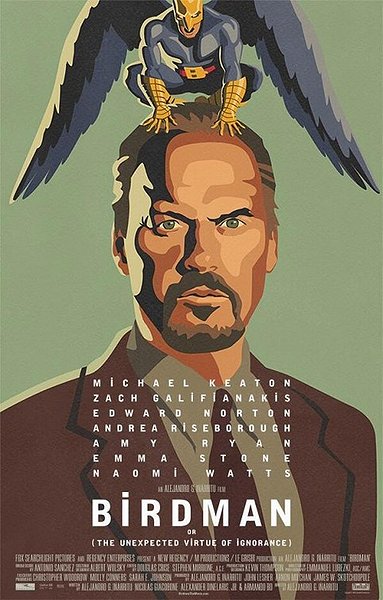
Birdman is a black comedy that tells the story of Riggan Thompson (Michael Keaton) a movie actor who was famous for portraying an iconic superhero, the Birdman. Now jaded and lost, he struggles to produce and direct a Broadway play, in which he also has a major role. He brings in Mike (Edward Norton), a brilliant yet volatile character actor. The struggle to make the play work almost destroys him. And yes, he has superpowers. He can telekineticly move objects and levitate himself. You go figure it out.
While the main characters did tremendous acting – thank goodness – the story, the premise and the plot were flat-out stupid. Why did he have superpowers? This added nothing to the plot and simply confused me. I kept waiting for when this would get good, but it simply never did, up to the last frame.
I would give this one star only, but the acting was just too good. So two stars it is.
Don’t waste your time and money.
Boring.

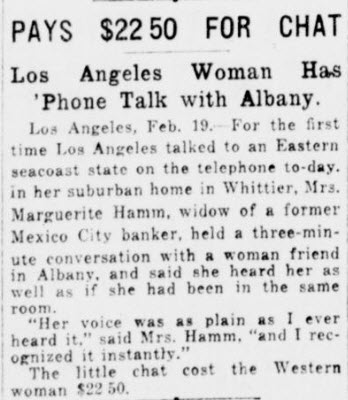
Exactly 100 years ago today, a woman in Whittier, California made a three-minute telephone call with a friend in Albany, New York. The call cost $2,250. It must have seemed like magic.
Apple is the most profitable company in the history of the world. Last quarter, Apple made $18 billion profit. The most ever done before was Exxon with $16 billion for a quarter. Ever.
Apple’s market cap right now is around $750 billion, that’s about twice that of Exxon/Mobil, the company that was the largest and most valuable company in the world for decades.
I predict Apple will be the first “trillion dollar company” in the not too distant future.
Here is why:

I needed an adaptor to show my new iPad Mini on a projector for a demonstration. So plug it into an HDMI cable, I needed the “Lightning Digital AV Adaptor shown above.
I paid an outrageous $49 plus tax for this tiny piece of plastic and cable.
It made me sick, but I needed it.
And that’s how you build a profitable company.
I believe that over the next 20 years, self-driving cars are going to revolutionize they way our world works unlike any technology we have seen in a long time, since, maybe, cars themselves a hundred and twenty years ago.
I recently read that Google’s self-driving cars have already logged 700,000 miles on California roads without driver intervention. But there are many challenges ahead for them.
Here is an article about simple things Google’s self-driving cars can’t handle yet, including bad weather, potholes, roads that haven’t been googled yet and handling road construction.
Elsewhere I read that there are three challenges that may seem innocuous at first that really get in the way. First is dealing with an empty parking lot. Picture a shopping mall after hours. There are no reference points, just faded marks in the pavement. The cars supposedly don’t know what to do with that.
Another problem is driving into multi-level parking garages. I am not surprised. I know many humans that hate driving in parking garages. They are often very tight, usually poorly lit, and traffic rules don’t apply. It is never clear which way is up or down, and whether a path is one-way or two-way. How would a self-driving car be able to deal with that?
Finally, handling traffic lights with the rising or setting sun right behind them. I must admit, I also have problems with that. I remember times when only careful management of the visor, quick glances at the lights, and following the lead of other cars around me was able to get me across the intersections and hopefully out of the blast-zone of the setting sun. A camera alone on top of a self-driving car would not have a chance.
All these examples are formidable challenges for self-driving cars. But they all can be overcome, not necessarily by software and algorithms, but by infrastructure.
When the telephone was first invented, many skeptics predicted that it would never work. After all, you’d have to run a wire to every house you want to call. That’s certainly never going to happen. Well, we all know that it actually did happen. Not only that, we have already leapfrogged that stage, and nowadays you don’t need to run a wire to a house anymore and still get telephone reception. The trick with making the telephone successful was not the technology of the phone itself, but the infrastructure around it: a wire to every house and every office in the country.
Before cars, when our only method of transportation was walking, riding a horse or a horse and buggy, the stage-coach concept revolutionized long-distance travel. The passengers rode in a comparatively comfortable closed cabin on cushioned seats, the cabin on strong springs, while a team of horses pulled the coach. The distance from station to station was just long enough for a team of horses to handle. The passengers reached the station, got refreshments while the horses were changed, and then traveled right on for the next station, and so on. Long distance travel in the horse and buggy age was not possible because of super horses, but because of the infrastructure of the properly spaced stations, and the people who serviced them.
When motor cars came about, critics said they would never work. You’d have to pave roads to everywhere you want to go. Besides, they’d break down in the middle of nowhere leaving you stranded all the time. And you’d have to put gasoline into them. You’d need filling stations all over the place. We all know that faster than anyone would have believed it, we built paved roads, interstate highways, gas stations are everywhere, and cars can go coast to coast without ever breaking down.
As traffic increased, the traffic policeman in the middle of the intersection directing the flow could no longer handle it and we invented traffic lights. Now traffic lights are everywhere, making mass automobile traffic possible.
It’s not the car that made the automobile society, it was the infrastructure built around the car.
A self-driving car is a robot, before it is a car. Robots don’t need traffic lights. Robots don’t need white lines on the side of the road and double yellow ones in the middle. Robots don’t pass other robots in dangerous areas.
While we are currently in a transition period, and our robots need cameras to look at green and red traffic lights, sometimes outshone by the sun, this will not be the solution for the long-term.
Roads will be outfitted with electronic markers that give direction to cars. The robots will sense the edges of the roads by using such markers they can pick up at high speed, rather than having cameras try to find while lines or other obstacles.
The robots will have inter-robot communication. Cars next to each other will communicate with each other. This means that they will be able to drive 70 miles per hour bumper to bumper without jeopardizing anyone. They won’t need traffic lights in intersections. All the cars approaching from all directions will “negotiate” who goes first. Nobody will need to stop. Cars will simply zoom through in all directions, making sure that there is enough spacing for cross traffic. Stopping at red lights will become obsolete.
Freeways will not have two directions anymore. The cars will figure out how many lanes in each direction they need and just take them. Traffic will self-regulate.
Then, when a car gets to a point where it doesn’t know how to go on, it will simply pull over and issue the “take over, human” command. A joystick will pop out of the dashboard that will allow the human passenger in the car to guide the car up that dirt driveway, around the old oak tree, to grandmother’s house and safely park it in the grass without running over the flower beds.
When our cars can handle themselves like this, we really don’t need parking lots anymore at airports, train stations, shopping malls or restaurants downtown. We will simply have our cars drop us off at the front door wherever we are going. Then the car will drive away to a parking garage that’s designed just for cars. The cars will stack themselves up like sardines. No humans will have to enter those garages, the doors of the cars don’t have to swing open, and the cars can simply sit in total darkness and wait until their humans are done with dinner, or shopping, or work, and call them back using their apps on their smart watches – or brain implants.
Cities will be clean again. The only cars on city streets will be those that are on their way to drop off or pick up their passengers. They will park in peripheral facilities away from the human activity.
If cars just come and pick us up and drop us off, why would we even need to own cars anymore? Cars could become just pods that pick us up at our houses or apartments and take us to the nearest mass transit station, or airport. On the other end of the mass-transit, we’d get off and another car would pick us up and take us where we’re going.
If we’re not going anywhere, we don’t need a car. So we won’t own any.
Cars will then likely just be electric. For longer road trips, it will work like the stage coaches. The car will take us as far as its charge allows it to go. It will find the nearest charging station. We’ll transfer to another car and on we’ll go.
Our future with self-driving cars won’t be in Toyota Priuses with fancy software and camera and radar hood on top of the car. Our future won’t be flying cars like we all saw them with the Jetsons. Our future will be a different mass transit system altogether. And it won’t be the self-driving cars that make it all possible. It will be the infrastructure designed specifically for the robots.
After decades of being out of print, iconic sixties image Little Girl on the Beach by John Pearson is finally available again as a 21 1/4″ x 18″ black & white poster, distributed exclusively through Amoeba Music. The subject of the photograph is actually one of Amoeba Music’s owners, Karen Pearson, who was four years of age when her father snapped the iconic image on a Bay Area beach in 1965. Not planned or staged/posed in any way, the casually taken photo began its ubiquitous life almost by accident when, upon the suggestion of  others in the Bay Area Photographers Association, it was entered as part of a children’s alphabet themed exhibit in the San Francisco Art Festival that year. The photo, chosen to represent “J for Joy” in the festival, would go on to become globally popular, and would also become Pearson’s best known photograph.
Train up a child in the way he should go; even when he is old he will not depart from it.
— Proverbs 22:6
And there lies the rub: Teach him self-delusion, teach him bigotry, and teach him nothing much at all, and he will not depart from it either.
Teach your children well.
 Yesterday I talked with a friend in Albany, NY who told me that it was 20 below zero with the wind chill factor. Today Trisha and I went for a walk on the Santa Rosa Plateau (in Riverside County just north of Murrieta) and it was 86. If I had gotten on an airplane and traveled there, it would have been 100 degrees difference from takeoff to landing. A great day for a picnic, and three and a half mile hike and a few pictures in Southern California. Here I am with the snow-covered peaks of San Gorgonio behind me, more than 70 miles away. I love those mountains. If you haven’t been there, the Santa Rosa Plateau is a great nature preserve in the rolling hills of Southern California, with wildflowers, lots of live oak, sporting a historic Adobe ranch and also vernal pools. The hikes are easy with no great elevation changes, and range from just a mile or two to larger circles of 10 to 12 miles. The best time to go is in winter and spring – right now.
I remember 1977 and then the early 1980s very vividly. Those were the years when I came of age. There were other men that are close to me in age that grew up then, also. Each of them changed the world, and I am sure each of them, at the time when these pictures were taken, had no idea who they would become and certainly they would not have expected that every person in the world would eventually know them.
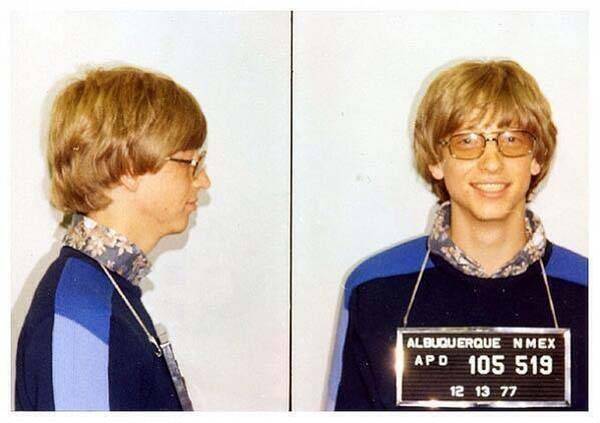
Above is Bill Gates in a mug shot after he was arrested for a driving violation in New Mexico on December 13, 1977. If somebody had told him then that he would be the richest man in the world for at least half his life I am sure he would not have believed it then. Microsoft was just a couple of years old, with less than 10 people in a small shop in Albuquerque.

I am a martial artist, and so was bin Laden in the early 1980s, when he was in his mid twenties. Martial artists usually exhibit discipline, a strong sense of honor, and deep respect for their fellow man. That’s what martial arts is all about. If somebody had told the Black Belt on the right that he would end up being one of the most recognized and iconic terrorists of all time, I am sure he would not have possibly believed it then.
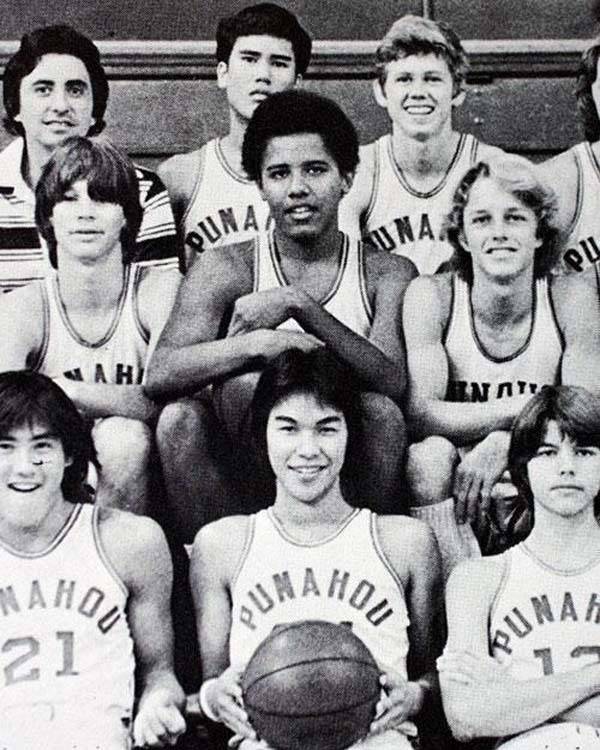
Barack Obama was a teenager when this picture was taken, I estimate around 1977. He was a black boy in a white basketball team. I am sure he was probably the most unlikely person to become President of the United States in his entire high school. He had no idea where he was going to go in his life.
All three of these men are contemporaries to each other and to me. The circle of life took them into very different directions. Looking at these photos, and thinking about my own journey in parallel to theirs, I cannot help but realize that life is not what we are born as, and who we are when we are young.
Life is what we do with our time. We become what we think about.
Let’s choose our thoughts well.