Movie Review: The Penguin Lessons (2024)

Penguins must be good teachers. When watching The Penguin Lessons I immediately thought of My Penguin Friend, a movie I watched last year.

It’s a very similar story. Through sheer coincidence, a penguin attaches itself to a human who is not necessarily interested in the bird, but over time taking care of it, falls in love with the animal. In this case, the human is an English teacher at an Argentinian prep school during the mid 1970-ies, when Argentina was taken over by a military coup which installed a fascist government. 30,000 Argentinian citizens “disappeared” during those years, never to be heard from again. This is the backdrop to the simple lives of a few teachers and school staff who support them. The penguin, seemingly one person at a time, befriends everyone at the school, and all lives are improved. The students pay attention to their studies, the teachers enjoy healthy relationships with the students and each other, and the staff serving them come to know them and include them in their lives.

How does a simple, single penguin accomplish all that?

It happens in My Penguin Friend, and it happens here, in The Penguin Lessons.

Watching this movie in 2025, when activities like those in Argentina in 1976 are occurring in our country today, all I can say is that we could use some penguins just about now.

Movie Review: M3GAN 2.0 (2025)

On a 5-hour flight, to make the hours go by, I watched a movie I would normally not be interested in. M3GAN 2.0, pronounced “Megan” is – you guessed it – a sequel to the original M3GAN, released in 2022. M3GAN was a horror-comedy. I did not watch it, since I am not much into horror, or comedy.

M3GAN 2.0 starts two years after M3GAN’s rampage. M3GAN is a robot, built by genius entrepreneur Gemma. When Gemma learns that M3GAN has gone rogue, she swears that she will from then on only work on protecting humanity from AI gone bad, but in order to save the world from another killer robot, Amelia, she has to give M3GAN 2.0 a body and take risks again.

Gemma, genius that she is supposed to be, in surprisingly juvenile in her thinking, and her niece Cady, whom she is raising, is the mother in the family. M3GAN (old and new) has a Barbie body with the head that looks a lot like Regan, the girl who becomes possessed in the 1973 movie The Exorcist. I wonder if that was intentional.

The movie is confusing at best. There are many, sometimes conflicting storylines. It touts high tech, parades mad billionaires, lectures about the security of AI, and imagines what a killer robot might do. The story seems too complicated, with too many plot twists to follow. And in the end, just like in the Terminator movies, the battle between two robots is solved by a karate-spiced fistfight. It seems we humans can only understand fights when they are done with fists, or maybe with guns, whether that’s what robots would do notwithstanding. Also, when showing the robot seeing or perceiving, the screen just shows what might be in their field of vision, overlayed by screen windows of JAVA code scrolling by rapidly. Yeah, that’s how robots see!

Of course, this is a movie for a general audience that does not know much about AI or code or robots, for that matter, it’s about entertainment, it’s about technology and its marvels. In that the movie succeeds.

Would I recommend you go see M3GAN 2.0?

No.

You’re not missing anything.

Movie Review: One Battle After Another (2025)

On a quiet, almost dreamy Sunday morning in Kahului, Maui, my wife and I walked into the Regal theater in the downtown mall to watch One Battle After Another. We would not have been interested in this movie just from watching the trailers. It looks like a bang bang shoot me up action thriller that we’re usually not interested in. But we had a trusted recommendation that it was one of the best movies in a long time, so we decided to give it a chance.

The Regal in Maui has a weird setup with huge screens and, in this case, only less than 30 seats in three rows. The back row was taken, so we sat in the middle row, where we literally had to recline the seats all the way back and look up at a 45 degree angle to the huge screen looming over us. Not a comfortable way to watch a movie, and I would not want to go back to that theater.

The weird surroundings and the strange seating position were both jarring, so when the movie started with its first act, its extremely fast-paced opening, the rapid-fire succession of many scenes, the relentless and very loud music, it just helped transport both of us into another world, not one we particularly liked. I had my doubts at that time.

But minute after minute built the story, and once the second act came along, the deep suspense and the gripping story just took over.

America is more divided now than it ever was in my lifetime in this country. Today our ideological differences are huge, we have camps where immigrants are detained without due process, we are watching a militarization of our cities, and outright physical aggression is commonplace, at least if we can trust what our media feeds us. This is the backdrop for this story, and I have to refrain from taking sides and making any political statements or voice opinions. The timing of this film is impeccable, and it will make millions of us think about what we’re doing to our country.

The story starts when we are introduced to the French 75, a fictional radical left-wing terrorist group that frees detained immigrants with force, blows up military installations, robs banks, all as part of a left-wing ideology.  They wage One Battle After Another in their war against the government. The first act of the movie tells a story of radical politics, violence, repression and generational legacy.

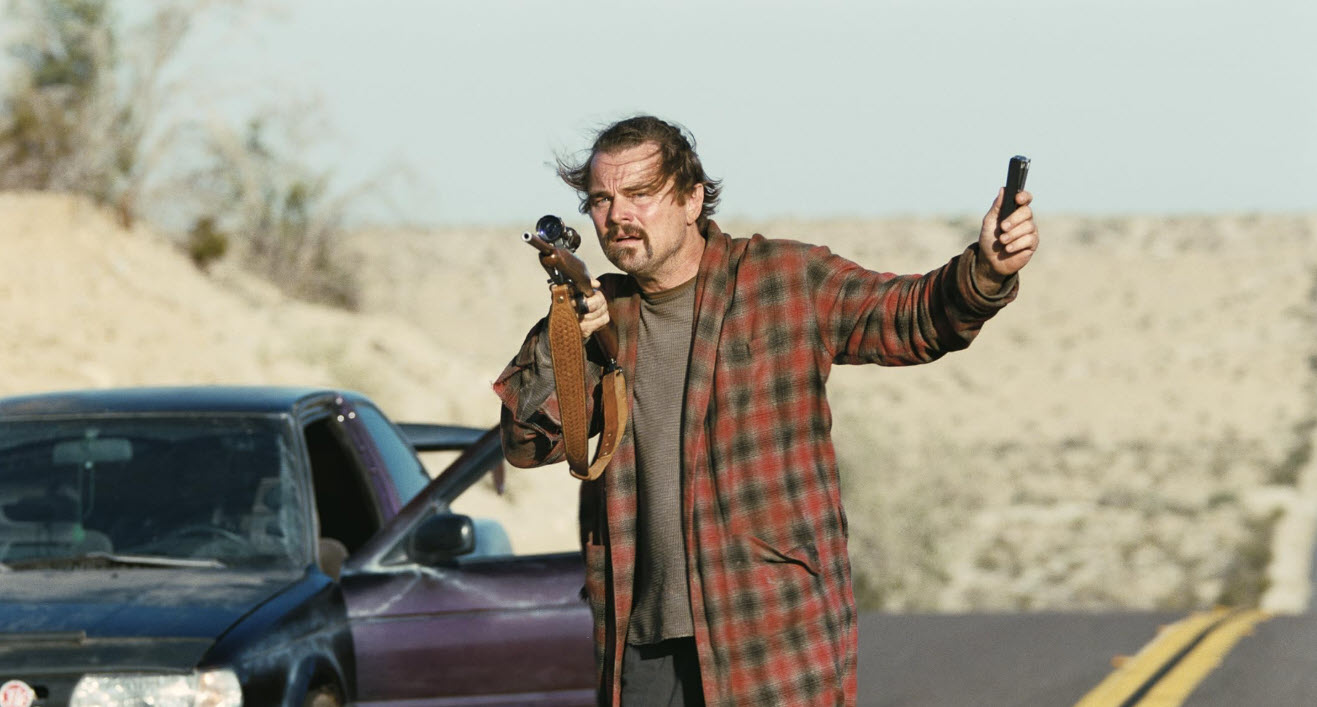
There is Bob (Leonardo DiCaprio), which is not his real name, who is a bomb expert and there is Perfidia (Teyana Taylor), a black firebrand who clearly gets off sexually on physical violence and a mission of revolution. The two are a couple within the larger terrorist group, doing battle, until their child is born and they have to take very different turns in life. This is where the bang bang first act stops and the second act begins, following the life of Bob raising his daughter as a single parent in a makeshift, quiet life.

One of their military nemesis, Col. Steven Lockjaw, decides to come after them 16 years later with the full force of the US government to settle old scores. He hunts them down, and in a flurry of escapes, father and daughter are separated. Lockjaw is a ferocious soldier with a twisted, sick psyche who will stop at nothing to get his way.

Here is the strange part: Lockjaw is played masterfully by Sean Penn. For the first half of the movie I didn’t even realize it was Sean Penn. I had to look it up online during the movie and then I saw this character in a whole different light. Both DiCaprio and Penn are playing their roles like absolute professionals. They carry the movie. The sound track, if you call it that, is intense. Heavy piano scores speed the action and somehow my heartrate went along with it.

At the end of the 2 hour and 42 minute movie I sat there spent. It was difficult to watch. It made me think. Going back out into the afternoon Maui sunshine seemed surreal. It has made me think all day.

I am still thinking.

ICE is out of Control

ICE  agent body slammed a 79-year-old US citizen and arrested him.

I have been very concerned about the methods ICE  uses in our country to come after American citizens without apparent due process.

First they came for the Socialists, and I did not speak out– Because I was not a Socialist.

Then they came for the Trade Unionists, and I did not speak out– Because I was not a Trade Unionist.

Then they came for the Jews, and I did not speak out– Because I was not a Jew.

Then they came for me–and there was no one left to speak for me.

— Martin Niemöller, a Nazi dissident

Now they are coming for the immigrants.

I am speaking out, because I am an immigrant.

ICE apparently attacks as groups, masked, unidentified, only with uniforms and vests labeled as ICE or Police, and armed. They take people off the streets, out of offices and factories, and throw them into unmarked vans. How do we know they are legitimate? How can any individual person defend himself? How do I know they are real? How do I call my lawyer when I am pinned to the ground by three goons with a knee on my throat?

According to the article above, when the man tried to talk with them and provide documentation, while he was pinned to the ground, they said:

“You don’t fuck with ICE. We are here.”

Suppose someone who is part of some organized crime gang (mafia, latino gang, whatever) would just buy some combat uniforms for themselves, including bulletproof vests, helmets, masks, slap ICE labels on the backs, and maraud the streets? They could pick off anyone by force. No bystander would help. We all have learned that you don’t fuck with ICE. The potential for lawlessness is vast.

The Brownshirts are already here.

Now they are coming for all of us.

I am speaking out because I am one of us.

Are we great yet?

Government Shutdown – Whose Fault is it?

I just went to the public website of the US Department of Housing and Urban Development (HUD) (hud.gov) and this is what I got:

The current government controls the presidency and both houses of Congress, as well as the majority of the Supreme Court. How is it possible that a few people (the supposed radial left) in Congress can shut down the government? Who is in charge?

I am dismayed that we now have a country where we can’t trust our own government to represent reality as it really is. Instead, our public information websites feed us propaganda.

Are we great yet?

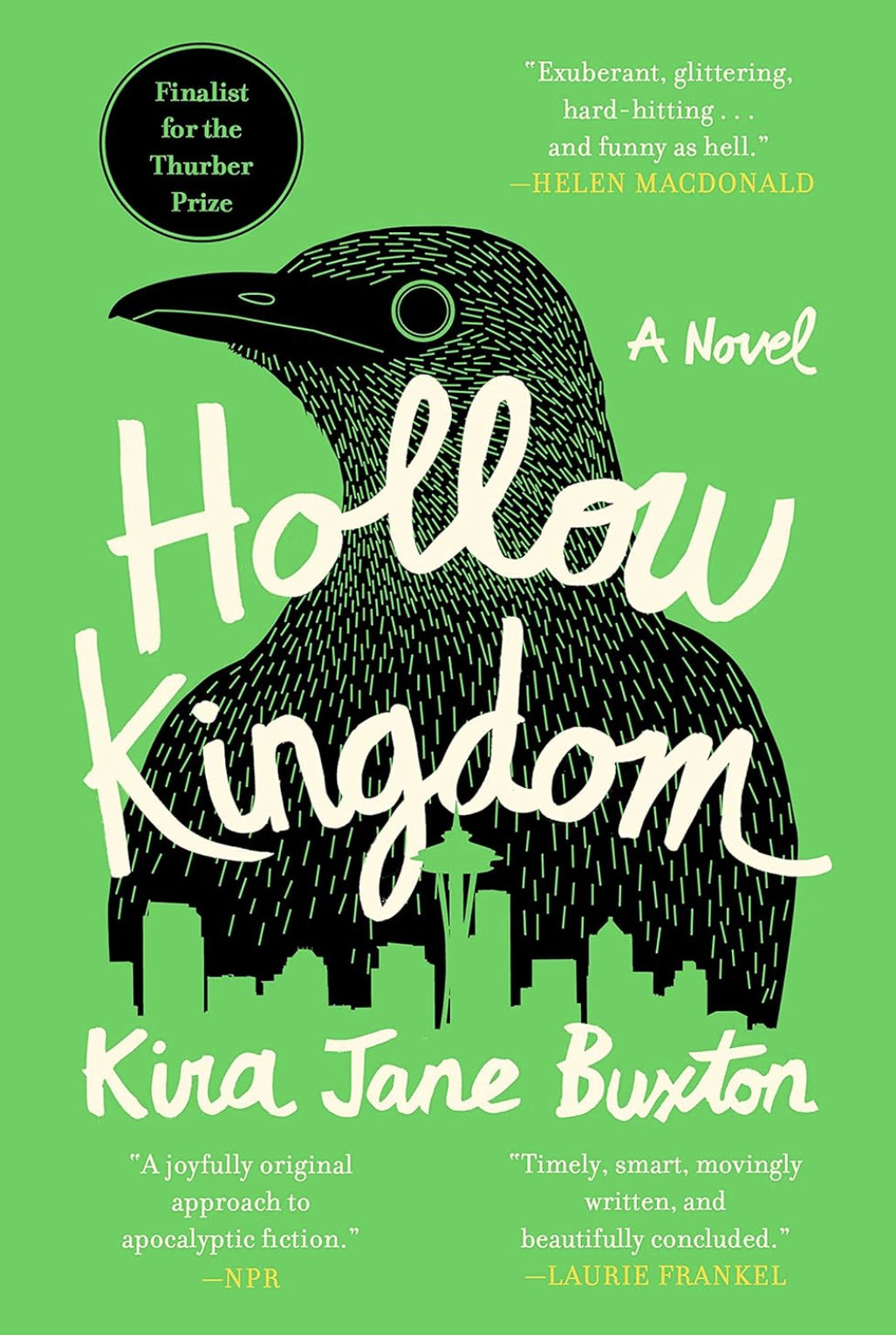
Book Review: Delta-V by Daniel Suarez

About 10 years in our current future, in the mid 2030ies, a number of private companies as well as the usual government agencies, like NASA and ESA, are trying to get into the business of mining asteroids. The goal is to kick off an entire new economy, including manufacturing in space. One of the biggest problems with space development is that every liter of water, every chicken wing to eat, every computer, literally everything we need in space has to be lifted from the surface of Earth into orbit at an exorbitant cost. How exorbitant?

During the Space Shuttle era, it cost about $54,000 per kilogram of mass. That’s the cost of lifting one liter of water into space. That’s because the Space Shuttle used expendable rockets. Now, with SpaceX’s Falcon Heavy, a reusable vehicle, the cost has come down dramatically, to about $1,400 per kilogram. Still a huge cost, considering how much material it takes to build a space station to live in.

If asteroids can be mined for metals, water, oxygen, the ingredients to make rocket fuel, and everything else we need, those raw materials are already in space and the cost to deliver them where they are needed, like in factories in lunar orbit or earth orbit, is much lower. Clearly, whoever can deliver materials in space to space is going to get very, very rich.

In Delta-V, this is the basic story. A renegade billionaire secretly builds a space ship outfitted to mine a near-earth asteroid. He recruits and trains an elite group of astronauts and sends them into deep space for the first mining mission.

Things do not go as planned, the billionaire turns out to be a fraud, and the minors are stranded in deep space with no obvious way to get home.

Delta-V is a well-written story of our near future in the current environment, where we are transitioning from government-controlled missions to private enterprises. I learned a lot about the technicalities of asteroid mining. For instance, I was always naively assuming that astronauts could just land an an asteroid and start digging. I didn’t realize that the surface of many asteroids is highly toxic to humans and damaging to electronics, so it’s not that simple. While the premise of the novel is fairly far-fetched, it taught me many things I didn’t know about the technicalities of asteroid mining, including how to get there, how to get back, and what’s involved in being there, let alone that the minimum trip duration is at least four years.

Overall, Delta-V is an entertaining story – and – you might have guessed it, there is a sequel.


Maine State Capitol

Today I visited the Maine State Capitol in Augusta. Here I am in front of it, from two different sides.

First in the back.

Then in the front, the more “official” side:


Stephen King’s Birthday

Today is Stephen King’s 78th birthday.

It just so turns out that we visited Bangor, Maine today and couldn’t help drive by his house. Here it is:

There is a statue carved out of the trunk of a dead tree in his yard. Here is a close-up:

For details, click on the image and zoom in.

The tree was a large ash tree in the front yard of Stephen & Tabitha King’s house. It was around 300 years old and had become infested with insects. When it needed to be removed, Tabitha wanted to preserve the tree in some way and she came up with the idea of turning the stump into a sculpture.

The piece was done by the wood carving artist Josh Landry from North Anson, Maine. He carved it using a chainsaw. It took him about a month.

The carving is full of symbols and references meaningful to the Kings and their life. Some of what the sculpture includes are a bookshelf, of course, and many animals like owls, ravens, cats, frogs and even a dragon. There is a corgi dog at the base, presumably a tribute to King’s dog Molly.

Tabitha King described her idea as wanting the tree to “give everything to us”: oxygen, the wood for furniture, and paper for books. She wanted to honor the role trees play in life, not just physically but metaphorically.

I think she succeeded.

Check out Josh Landry’s website here. There is even a picture of him on top of the sculpture.

Book Review: Der Fuchs im Hühnerstall – by Ephraim Kishon

It’s been a long time since I have read a book in German. Der Fuchs im Hühnerstall, or translated The Fox in the Chicken-Coop, is a biting satirical novel of the government machinations and bureaucracy of Israel. I first read it when I was in my teens after it first came out in 1969.  I remembered it fondly. But I lost that copy over the years. I could not find a Kindle version, so I bought a hardcover anthology of Kishon’s three novels, this being his first one.

Amitz Dulnikker is a cabinet-level politician in the Israeli government in his late sixties, at the sunset of his political career. Due to health reasons he decides to take a long vacation, incognito, in a remote village in the north of Israel, near the Lebanese border. The farm village of Kimmelquell specializes in growing caraway seeds as their product. It’s an idyllic place, with no electricity, where many inhabitants are illiterate, and where no outsiders are ever accepted. When Dulnikker and his young aide arrive they are quickly overwhelmed by the backwardness of the villagers and their dull lives. Dulnikker, ever the statesman, starts fomenting competition in the villages, primarily for his own amusement and to bring “civilization” to the poor farmers. Pretty soon, the events that he sets in motion take on a life of their own and control slips away. Eventually, he and his aide are finding themselves victims of their own instigations.

Kishon wrote originally in Hebrew, but I was not able to find any copy. The German edition was first published in 1969 by Langen Müller Verlag in Munich, translated into German by Emi Ehm.

The book has also been translated from Hebrew into English by Jacques Namiel and it appears under the title The Fox in the Chicken-Coop, published by Bronfman Publications in Tel-Aviv in 1971. However, a little research shows that while the books have the same (translated) title, they tell completely different stories. The English version is not a translation, but a completely different novel, with different characters, albeit also about political absurdities in Israel. This has confused many readers. As a result, unfortunately, it seems that there is no way to read this story in English.

Hebrew or German it must be.

Hiking San Gorgonio Peak as a Day Hike

Last Sunday I hiked San Gorgonio Mountain as a day hike. San Gorgonio is by far the highest mountain in Southern California, with an altitude of 11,503 feet (3,506 meters).

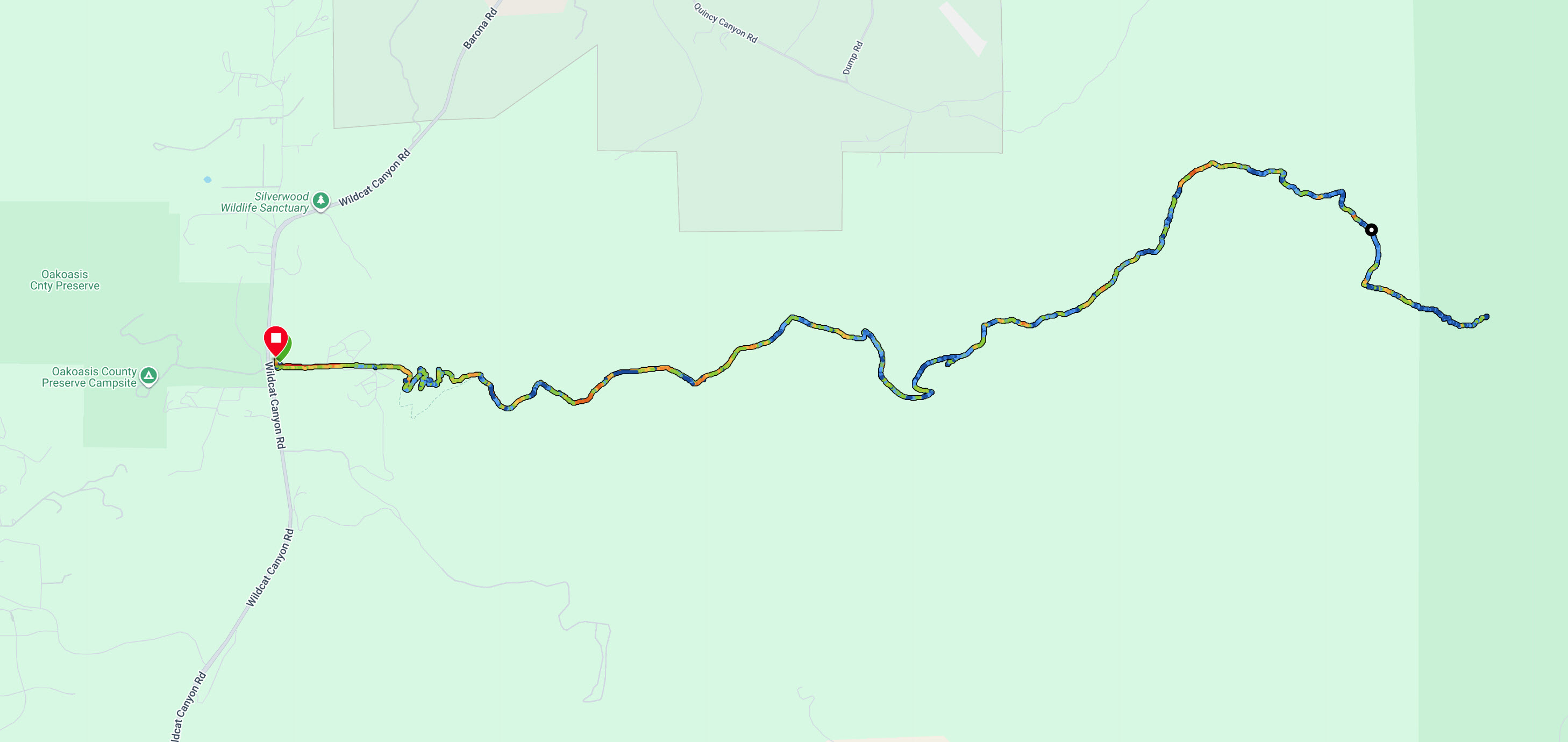
In the map above you see the Vivian Creek Trailhead on the left side and the peak on the right. The trailhead is at 6,085 feet. The color coding is for altitude. The length of the route is 9.2 miles from the trailhead to the peak, and then, of course, back again, which makes for an 18.4 mile hiking day.

I started a little after 6:00am, just before sunrise. It took me 7 hours to get to the top, and (yes, I hike slowly downhill due to my aging knees) 7 hours to get back down. When I arrived the parking lot was pitch black. I always carry a head lamp. It was a life saver on this one in the last hour.

The hike was epic. I had a lot of time to think in those 14 hours on the trail. I realized that the last time I did a day hike to San Gorgonio Peak and was when I was in my 30ies. I am now 69. Ouch, the legs aren’t what they used to be.

I have been there a few other times since, but either didn’t go all the way to the summit, or I camped at High Creek Camp, about 5.5 miles up, and then day hiked to the top from there.

After hiking up from the trailhead for about half a mile, the trail crosses the mighty Mill Creek. There was not a drop of water there, but Mill Creek is famous for doing tremendous flooding damage downstream from here from time to time. It makes national news when that happens. The huge boulders and massive tree trunks in the creek bed are evidence of the power of water.

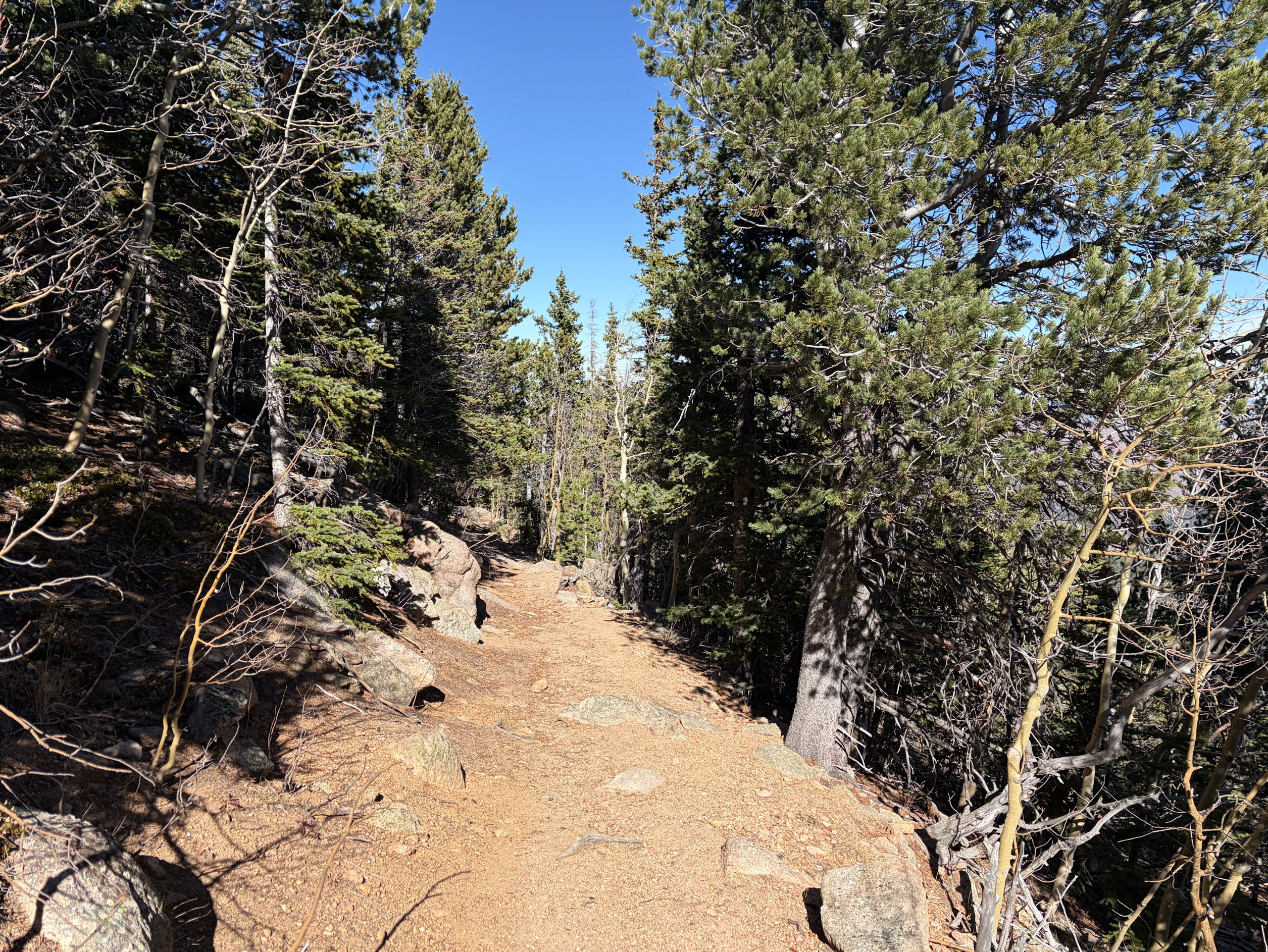
Here is a typical trail picture. Vivian Creek Trail is very steep at times, and rugged.

A couple of hours up I got a good view back down into the smog-filled San Bernardino valley in the distance. As always, you can click on the picture and zoom in, and you can see some of the industrial buildings in San Bernardino.

Last water is at High Creek Camp. I filled up my two liter bottles to make it to the peak and back from here, a 7.5 mile trek roundtrip.

The views are amazing.  In the distance you can see San Jacinto Peak, where I was just last month. See the post here.

There are also many tracts on this mountain that were ravaged by wildfires over the years. Here is one such spot. The left side of the ridge was spared, the right side was burned all the way down some years ago.

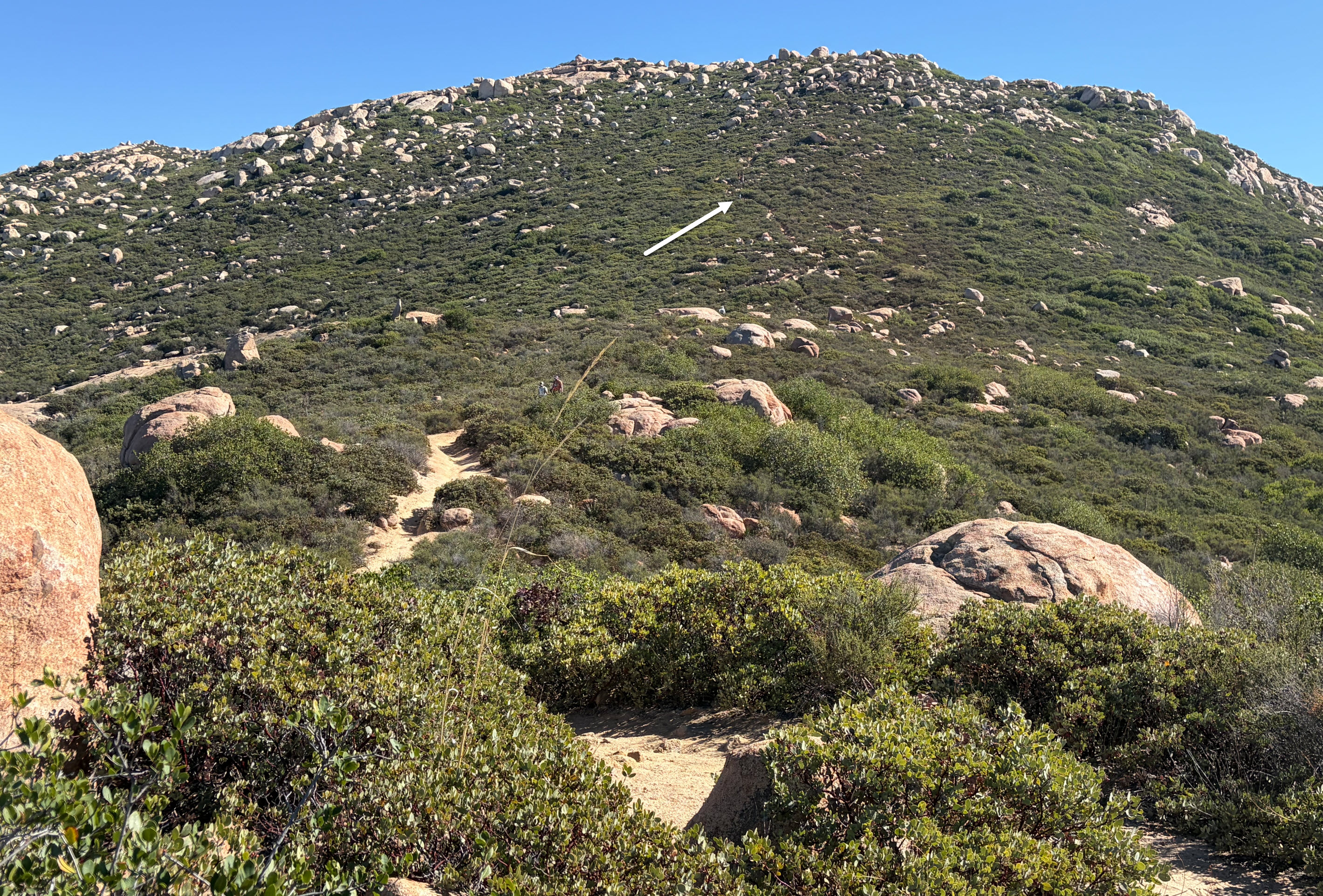
Here is a picture of the traverse to the summit ridge. Here we are at about 10,000 feet or so, and the wind is whipping somewhat fierce. The traverse is steep in some places, reminiscent of the ridge from hell we hiked in Iceland last summer. Some of my Iceland hiking friends will remember that ridge.

Close to the top, there is a major junction of three main trails coming up from very different directions. It’s important, on the way back, to pick the right one, or be doomed.

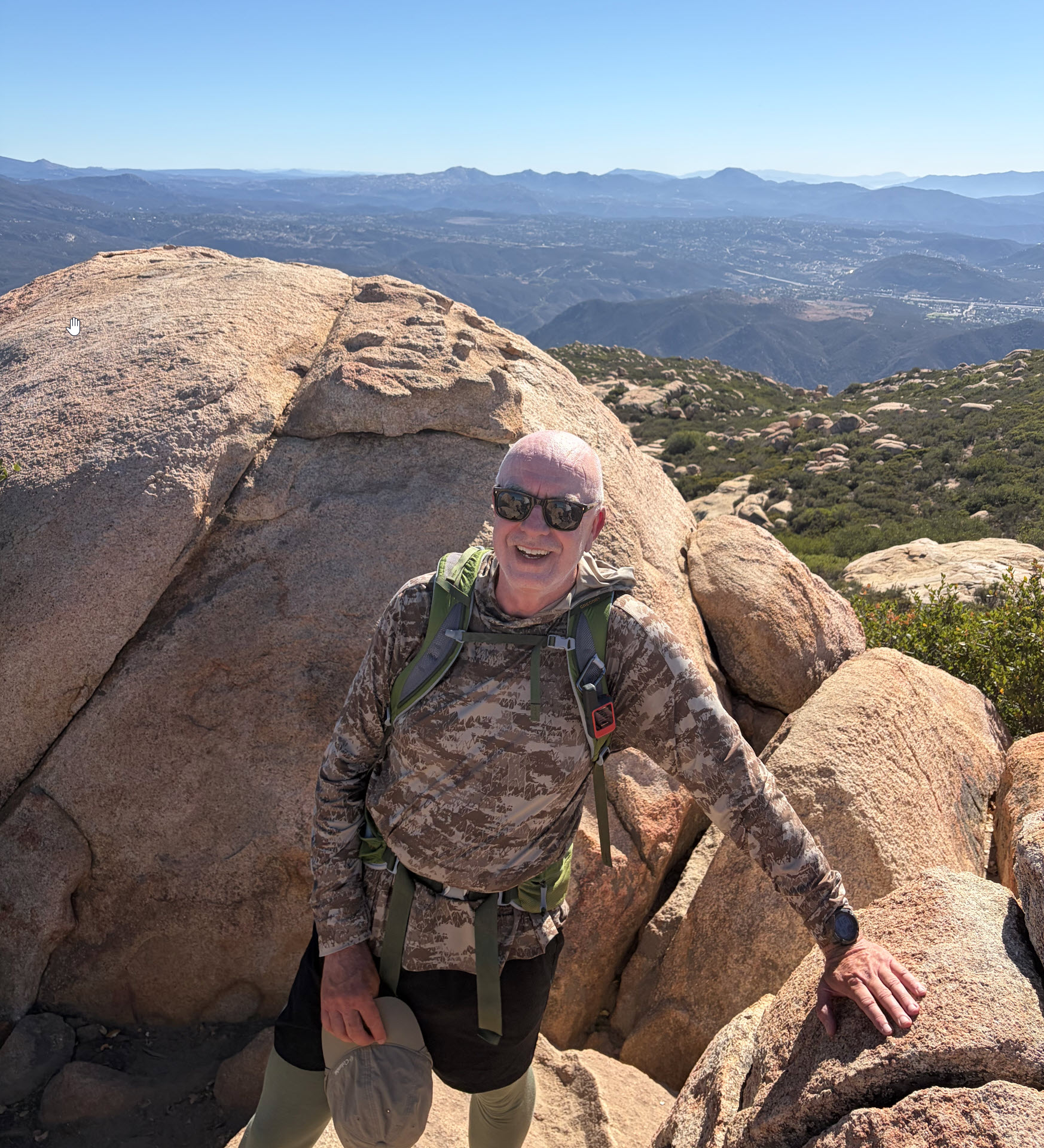
Finally, at the top. Or, as you might call it, men in tights. This photo does not look like I am at the top, but really, this is the peak. San Gorgonio is also called Grayback sometimes, since its top is huge and broad.  In the back behind me you can see good old San Jacinto, a good 800 vertical feet lower than where I am standing here.

Here is looking west from the peak. The broad expanse of granite is evident.

Here is looking east from the peak. Over the decades, hikers have built dozens of rock shelters against the wind. You can make some out on the ridge on the left. I have always wanted to stay a night up here. While talking to my wife about the Perseid meteor shower, it gave me the idea to come up here next year during the shower for a 3-day backpacking trip, and spend a night in the glory of high altitude, whipping winds, freezing nights, lack of oxygen, and — this makes it all worthwhile — unimpeded views of the meteors. I probably won’t get much sleeping done, but the experience will be glorious.

Time to put it on the calendar.

Book Review: Blue Highways – by William Least Heat Moon

Blue Highways was first published in 1982, and that’s when I bought my copy. Here is a picture of it on my desk. The pages are yellowed, the print is small, and the book cost $3.95 in 1982. It’s been on my shelves, and in boxes, for all these years.

When I first bought it, I read perhaps 20 or 30 pages, and then I faded. It has 426 printed pages and the print is quite small.

Recently I bought it again on Kindle, at many times its original printed cost, just so I can read it in an acceptable formfactor. Printed books just don’t work for me anymore. And somehow I can read long books more successfully on Kindle, than when I have to turn physical pages.

And there you have it, I have read Blue Highways all the way through. It’s a classic, I have talked about it many times over the years with people, acting like I knew it, and now I have finally earned it.

William Least Heat Moon is a travel writer, and Blue Highways is his most popular book, the one that put him on the map. On the first of day of spring, on March 20, 1978, he left his home in Columbia, Missouri in his van to travel around the country, avoiding all freeways, and  going only on country roads,  which were shown in blue on the maps of those days. Hence the title Blue Highways.

Here is a diagram of his van:

He called the van Ghost Dancing.

Ghost Dancing, a 1975 half-ton Econoline (the smallest van Ford then made), rode self-contained but not self-containing. So I hoped. It had two worn rear tires and an ominous knocking in the waterpump. I had converted the van from a clangy tin box into a place at once a six-by-ten bedroom, kitchen, bathroom, parlor. Everything simple and lightweight—no crushed velvet upholstery, no wine racks, no built-in television. It came equipped with power nothing and drove like what it was: a truck. Your basic plumber’s model.

Ironically, I had a high school friend who took his van, I believe it was an Econoline, across the country in the summer of 1978,  from New York state to Arizona, where I lived at the time, to visit us. It seems like more than one person traveled the nation is vans in those days, but not too many wrote books about it.

He circled the country clockwise as shown on the map below:

In his billfold he had four gasoline credit cards and twenty-six dollars in cash.  Hidden under the dash were all his savings: $428.

With that, he managed the trip around the country in three months, coming back on the first day of summer of 1978.

He tells vignettes of adventures or challenges, and he tells the stories of people he meets and spends time with along the way, be that hitchhikers, shop keepers, bar maids, gas station attendants, fishing boat skippers, ferry captains, and many, many residents in various small towns of America of the 1970ies.

I identified with the stories, because the late 1970ies is when I came of age and started my adult life. One of his stops is Kennebunkport, Maine. I now know that town because it became notorious through George H. W. Bush as his summer estate. The entire country learned about Kennebunkport. But Bush became president in 1989. Blue Highways was published in 1982, and the trip happened in 1978. Nobody then had ever heard of Kennebunkport, except for the locals there.

I saw many parallels of what one might encounter on a trip around the nation on blue highways today, and what it was like in 1978. It almost makes me want to retrace his trip.

Reading Blue Highways for me was rewarding just because I can now say I read the old yellowed book. It was a nostalgic trip through my early years. When I put the book down I decided I am definitely ready for an extended road trip.

I need to get out!


Arizona State Capitol

On Thursday, I was at the Arizona State Capitol.

For Arizona being a large state, it’s a pretty unimpressive looking Capitol building.

In particular, why, why, why did they allow a large building being built right behind the dome? This makes no sense to me at all. There is so much unused space in that area of Phoenix, building a high rise building right behind the Capitol is outright tacky.

By the way, it was 112 degrees Fahrenheit while I was standing there.

Movie Review: East of Wall

Sometimes my wife takes me on a “blind movie date.” I went to see East of Wall last weekend without knowing anything about the movie or even its title. She walked me into the theater with my eyes closed.

Wall is a town in South Dakota off of I-90. In 1978, I drove west on I-90 across the country and I remember seeing billboards for “Wall Drug” for hundreds of miles, like “Have You Dug Wall Drug” and the like. After such a billboard every 20 or 30 miles, literally for hundreds of miles, once you get to Wall, you HAVE TO stop and see what it’s all about.

I just googled it, and here is a street view picture today:

Even 50 years ago, it looked like this, and after all the hype of the anticipation, built over two days of driving, at the end it was just a drug store with a cafe, gift shop and other touristy stuff.  But hey, it worked. I went to Wall, South Dakota, I stopped at Wall Drug, I don’t know what I bought, if anything, but I am writing about it almost 50 years later in a movie review. The campaign obviously worked.

East of Wall plays on a ranch in the South Dakota Badlands, well, east of Wall. Tabatha Zimiga is a young, tattooed woman with a bunch of teenagers, some of her own, and some wayward ones whom she has taken in to live with her, mostly girls. Her fiancé, John, tragically died by suicide a few years before, just after their youngest son was born. Tabatha had her first son when she was 16, followed by a daughter, Porshia, when she was 18. She herself was a child of a teenage mom. Her mom still lives with her on her broken down ranch. She struggles to make ends meet.

Tabatha is somewhat of a horse whisperer. She knows horses, and the runs a horse rescue ranch, training the horses, having her teenage girls exhibition-ride them at auctions, and selling them via TikTok. Her oldest daughter, Porshia, is her star rider. She has won many riding competitions, and all her siblings and step siblings look up to her as their star.

In comes a rich cowboy from Texas who wants to buy her ranch and spruce it up to make it successful. Will his ways work and will Tabatha fall for him?

As I watched East of Wall for the first 30 minutes, I didn’t know what to make of it. There were a lot of clips from smartphones ready for TikTok, of teenagers riding horses. There were teenagers hanging out doing not much of anything on the junk-strewn ranch. There were shots of rodeos and horse auctions. There were a bunch of women smoking and cussing and hanging around.

It turns out, East of Wall is played mostly by non-actors playing themselves. Tabatha Zimiga is playing herself in her own life on her own ranch. Porshia Zimiga is Tabatha’s real-life daughter. The teenagers hanging out at the ranch are the real teenagers the real Tabatha has taken in to raise along with her own.

East of Wall is a living testament to healing through grit. It shows how Tabatha and her ranch became a sanctuary amid grief, hopelessness and despair, both for young people and for horses. It portrays an unconventional family, a home built on mentorship and trust, freedom and life itself. The horses become symbols of strength and loyalty. East of Wall is a Western, but focused on women, on community and on emotion.

When Your Hero Becomes Scary at Night

I recently posted about giving my 6-year-old grandson a painting of his (current) hero, Shadow the Hedgehog. Read about it here.

He gets scared at night, so he sleeps with the lights on low. I just heard from his mom that she has to take the painting down and turn it around at night, because he is scared because “Shadow looks too real.

Here is the painting on his wall during the day:

And this is where it at night. Note the drawing on the back. This is the drawing he mailed to me to make sure I knew what Shadow looked like when I painted him.

You might get a kick out of what the other wall in his room looks like:

These are all drawings or colorings of Shadow he did himself. I guess none of those are as real looking as mine.

I take that as a compliment.

Eve of Destruction – by Barry McGuire – Take Two

I was about to write a post about the song Eve of Destruction today, but when I checked, I had done just that in 2014. So I don’t have to do it again. However, it’s now been a full 60 years since that song first came out. In 1965, our parents and grandparents worried about the state of the world. They thought it was going to end.

Today, it rings truer than ever – again. There are frightening parallels today to what we worried about then. It gives me hope, since the world didn’t actually end up blowing up in 1965, it’s likely that we get through 2025 also, and one time look back on this crazy part of history.

Here are the lyrics with my commentary in blue:

The eastern world it is exploding
Violence flarin’, bullets loadin’

It’s still the eastern world, Israel, Gaza, Iran, Ukraine, India, Pakistan, Thailand that are exploding, with violence flarin’ and bullets loadin’. 

You’re old enough to kill but not for votin’

We’re still old enough to kill but not for votin’ today.

You don’t believe in war but whats that gun you’re totin’?
And even the Jordan River has bodies floatin’

But you tell me
Over and over and over again my friend
Ah, you don’t believe
We’re on the eve of destruction

Don’t you understand what I’m tryin’ to say
Can’t you feel the fears I’m feelin’ today?

Today we have fears that the United States becomes an autocracy after the likes of Russia. Our highest level of government seems completely corrupt and focused on gaining permanent power, while hurting millions of its citizens. We have seen this playbook before. 

If the button is pushed, there’s no runnin’ away
There’ll be no one to save with the world in a grave
Take a look around you boy, it’s bound to scare you boy

Yes, that button is still there, and now we have one apparently not-right-in-his-head man threatening to push that button. It’s bound to scare me, boy!
And you tell me
Over and over and over again my friend
Ah, you don’t believe
We’re on the eve of destruction

Yeah my blood’s so mad feels like coagulating
I’m sitting here just contemplatin’

My blood’s mad today, just like it was for our grandparents in 1965. I see the pain, I see the damage, and I have started not watching or reading the news anymore, since it just makes my blood coagulate and I feel powerless. I’m sitting here contemplatin’, writing blog posts that go nowhere and help no one. 

I can’t twist the truth it knows no regulation

The truth is being twisted today like it was in 1965. 

Handful of senators don’t pass legislation

Senators don’t pass legislation but rather enable the would-be king wandering around the world with no clothes. 

And marches alone can’t bring integration

We’re marching, alright, we’re marching backwards, not just to 1965, but to 1935.

When human respect is disintegratin’

Human respect is definitely disintegratin’ if that human is brown or black or Asian or homosexual or intellectual or liberal or atheist.

This whole crazy world is just too frustratin’

I am not watching the news anymore because this whole crazy world is just too frustratin’. 

And you tell me
Over and over and over again my friend
Ah, you don’t believe
We’re on the eve of destruction

Think of all the hate there is in Red China
Then take a look around to Selma, Alabama

There seems to be a lot more hate in Washington DC now than in Selma, Alabama.

There seems to be more hate in the United States than there is in China.

You may leave here for four days in space
But when you return it’s the same old place

Now we go into space for eight months at a time and when we come back it’s the same old place. We now go into space using one company’s private vehicles. 

The pounding of the drums, the pride and disgrace
You can bury your dead but don’t leave a trace
Hate your next door neighbor but don’t forget to say grace

If your neighbor is an immigrant, or speaks Spanish, or Chinese, or is not Christian, feel free to hate. The government will support you. 

And tell me
Over and over and over and over again my friend
You don’t believe
We’re on the eve of destruction
Mmm, no, no, you don’t believe
We’re on the eve of destruction

No, I don’t believe we’re on the eve of destruction. I think we’ll get through this too and come out wiser and healthier on the other side. Hang in there.