Painting: Shadow the Hedgehog

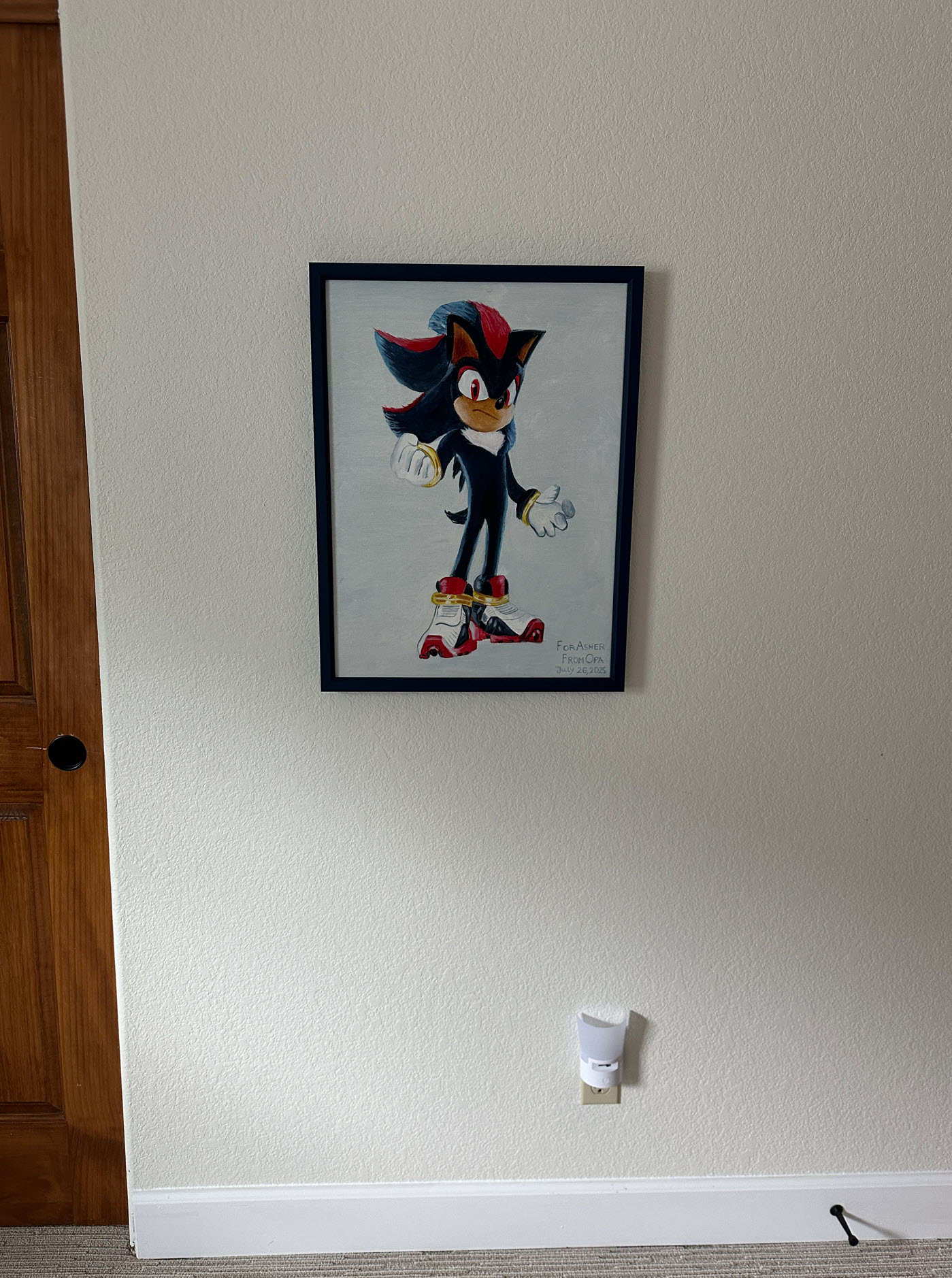
What do I do when my grandson asks for a painting for his sixth birthday?

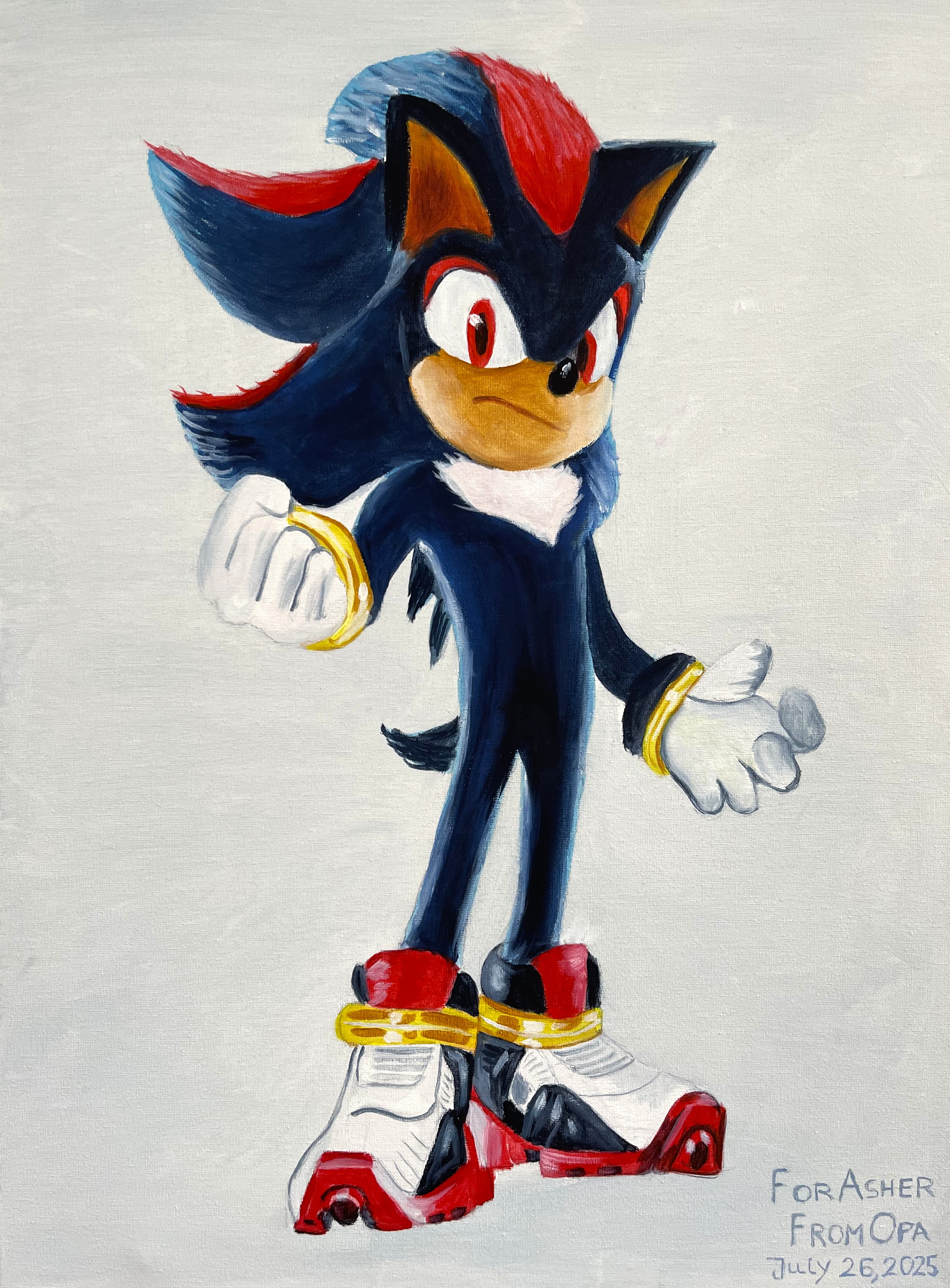
You might ask, why does a 6-year-old American boy ask for a painting for his birthday? That would be because that boy has about every toy in the world, and he knows his grandfather is a painter, and his favorite character right now is Shadow the Hedgehog.

Voilà, here is Shadow the Hedgehog, my first painting of a cartoon or game character.

Colorado State Capitol

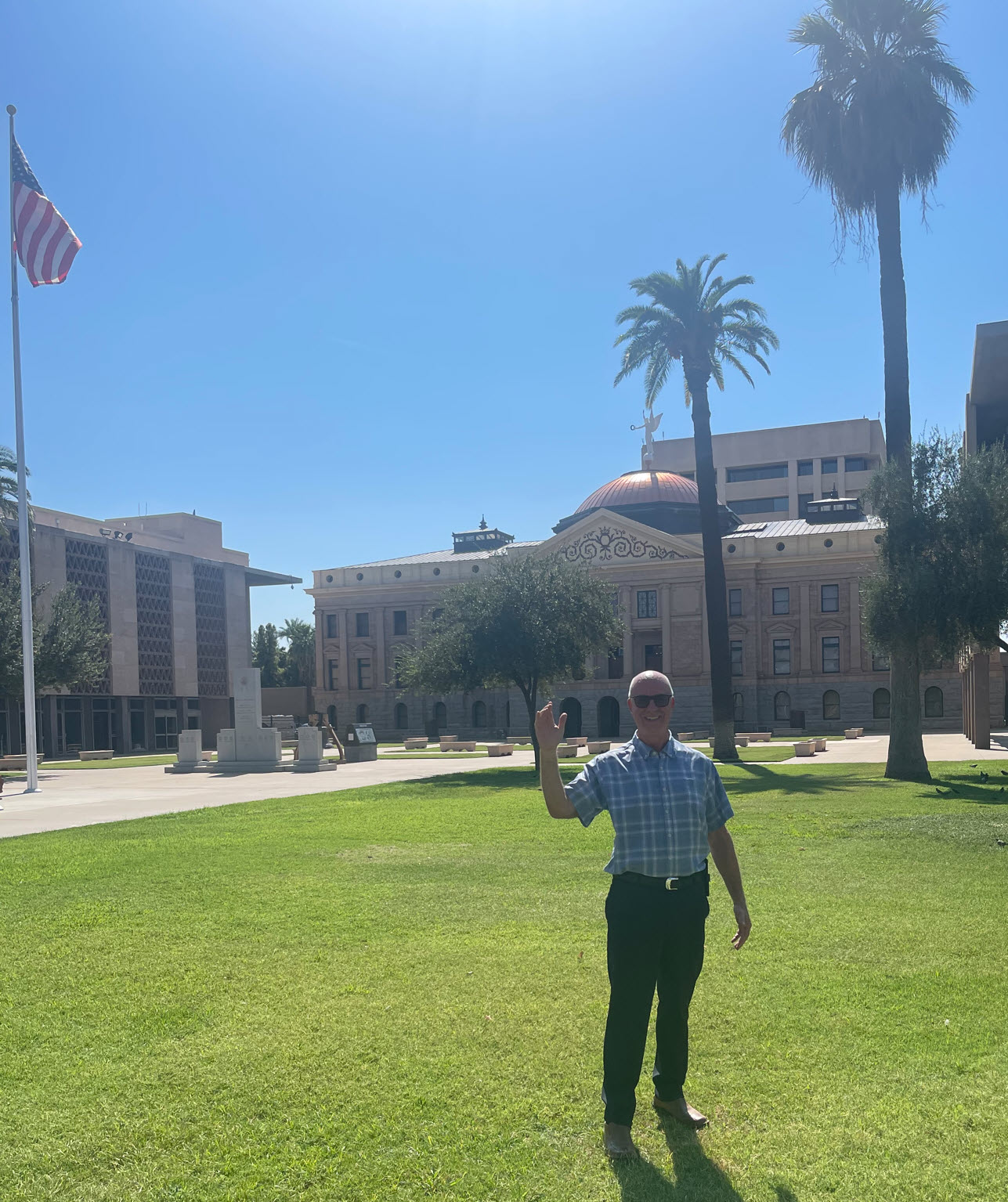
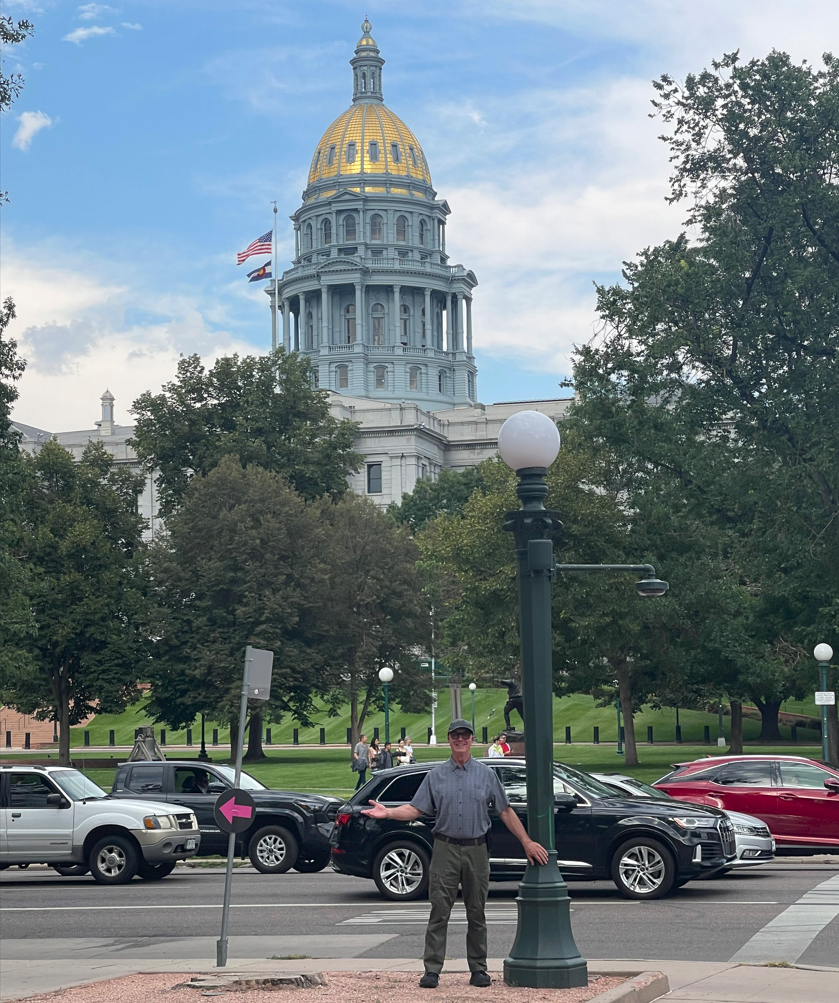
Last week I was in Denver, and made sure I got my picture taken in front of the State Capitol.

Below is a better shot of the building, taking from within the Denver Art Museum, through one of the windows.

By the way, the Denver Art Museum is amazing and a must see. Their Native American section is phenomenal. The architecture and design are breathtaking.

Painting: Plumeria

A friend wanted me to make a painting of Plumeria. I made her wait many years for that while I was “not in the groove.” Getting back in now.

Here it is. 24 by 24 inches. Oil on canvas.

Some Fresh Air at Woodstock

Today we visited Woodstock. Took a walk along the main street, had some ice cream, and did some window shopping. Here is the town hall:

Then I turned around and saw this sign on the other side of the street above a store:

I smiled and I felt comfortable about my country – at least for the moment.

Book Review: Shroud – by Adrian Tchaikovsky

A generation starship has arrived at a star with a moon around a gas giant planet. The moon is tidally locked to the planet and has a very thick atmosphere, so thick that no light makes it to the surface. That’s why the people call the moon Shroud. The surface air pressure is twenty times that of Earth normal and since the moon is larger than Earth, the gravity on the surface is twice that of Earth. To top it off, it’s an ice-bound moon, it’s extremely cold and the atmosphere is mostly ammonia. The ship also discovered that the moon screams with electromagnetic energy to a point where all signals are completely drowned out.

So why are they interested in the moon? To harvest its natural resources. When they send down the first probes, they survive just minutes before the are destroyed. Eventually they send drones with cameras and searchlights to see what might be going on, and they discover that there is life on Shroud.

The surface is truly an alien hell for humans. Yet, they are building a lander suitable for the environment with plans to send down explorers. During an unexpected accident on the ship, two women are using the lander as a lifeboat and end up stranded, you guessed it, on the surface of Shroud, in that truly hellish environment.

Shroud is about humanity meeting an unexpected alien intelligence, so alien, that it they can’t figure out any way to communicate with them. I have often complained in these pages that the aliens in science fiction novels are too hokey, too much like  humans, or perhaps little green men, to be believable. The Shrouded, as they call them, are believable, and their utter alienness makes them the best part of this book. The story is mostly slow, boring, and the humans seem bland and their politics is trite. But the illustration of the complexities of trying to communicate with something that does not even recognize you as a being, that has no concept of something even as fundamental to us as light, and sight, and eyes, and individual minds, makes the story interesting.

It kept me reading.


Nuclear Waste at the Decommissioned San Onofre Power Plant

Anyone ever driving north on I-5 would have noticed that domes of the San Onofre nuclear power plant. Here is a quick snapshot out the moving car window.

It is now decommissioned, but there are still approximately 4,000 tons (nearly 3.6 million pounds) of spent nuclear fuel, over 3,963 fuel assemblies, stored at the site. These assemblies are used uranium fuel rods, which is high-level radioactive waste, that remains extremely hazardous even years after removal. Exposure without shielding can be fatal in a short time.

The waste is stored in thin-walled steel canisters, which are ½–⅝ inches thick, which is about the size of the diameter of a dime. The containers are vulnerable to chloride-induced stress-corrosion cracks due to salt air, and the cracks can’t be repaired or inspected effectively after the drums are stored. They are located about 100 feet from the Pacific Ocean, on a coastal bluff. The risk from sea-level rise, just regular normal erosion, tsunamis, and seismic activity, is high. If you ever lived near the Pacific and you had a barbeque unit on your porch, you will have noticed that the salty air reclaims those back to the earth in just a few years. They basically dissolve. Steel drums are not the same thing as barbeque units, but you get my idea.

Coastal permits allow up to approximately 136 canisters; the site received a 13-year permit extension through 2035, with annual reviews of structural and environmental health.

Regulatory agencies have repeatedly extended storage as there is no federal repository for high‑level waste. Nuclear Waste Policy Act (1982) mandated creation of a permanent site at Yucca Mountain, but that project was defunded in 2010. There is currently no plan for a permanent solution for nuclear waste in the United States.

Ultimately, high-level waste requires a deep geological repository, meaning it must be buried hundreds of meters underground in stable rock formations, with multiple natural and engineered barriers, and designed for containment over tens of thousands to a million years. No such U.S. facility exists yet. There is currently no plan for a permanent solution for nuclear waste in the United States.

Nine million people live within 50 miles of the San Onofre site. I am one of them. If just a single canister were to rupture, depending on the wind and weather conditions, and assuming our illustrious government were to take responsibility and actually warn us, 9 million people would potentially have to be evacuated – permanently.

Now that I made your day, let’s go back to focusing on what really matters in this country, like ostracizing transsexual people, cutting Medicaid, pardoning convicted criminals, and arresting and deporting non-white people.

Hiking San Jacinto Mountain

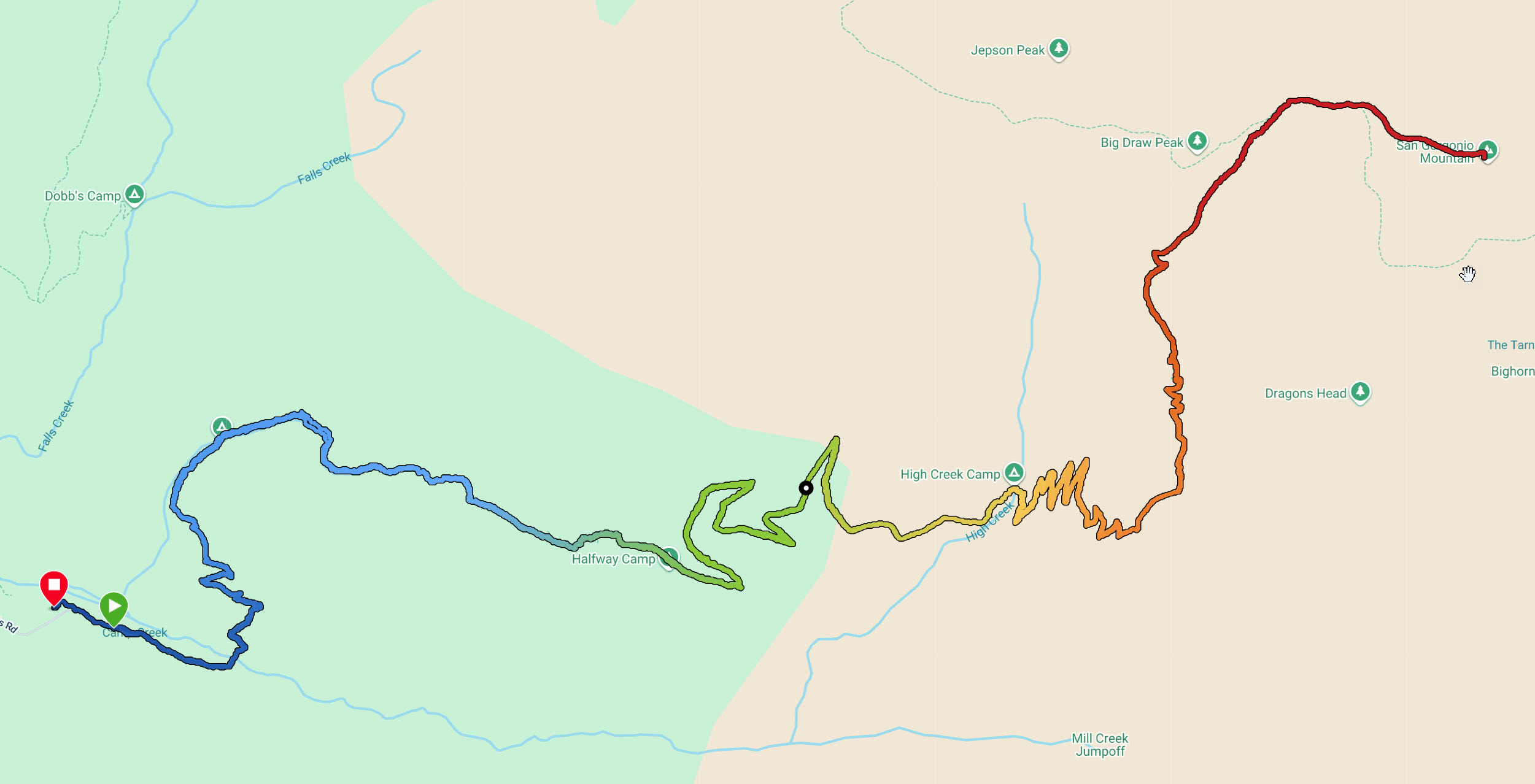
I have hiked San Jacinto Mountain many times before, but the last time I remember reaching the peak must be over 10 years ago. I tried a couple of times in 2024, but didn’t make it for various reasons. One was too much snow. Here is the report of that trip.

This time I went later in the year, June 29, and I made it. I took the San Jacinto Aerial Tram to the mountain station, at about 8,600 feet elevation.

First the obligatory departure picture at the ranger station. My wife took that picture. She hiked the loop trail, about three miles, and then went back down to Palm Springs while she waited for me, before she picked me up at the valley station of the tram, seven hours later.

Here I am still fresh.

The first major milestone is Wellman Divide, about 3.5 miles up the mountain. It is a major junction of several trails, some coming from the south side from Idyllwild, and others coming from the north, where I started.

From that point, there are fantastic views south, east and west. Looking south, in the distance, you can see the ridge of Palomar Mountain. On a clear day, like this day, I was able to see the white dome of the Palomar Observatory (red arrow). You can click on the picture to zoom in.

From some of the higher sections of the trail past Wellman Divide, there are great views to the east. The tram station is visible in the distance (this picture is greatly zoomed in, so it looks close). The station is actually four trail miles from where I stand.

Finally, the main trail junction 0.3 miles from the peak. Almost there.

Just before the peak, there is a stone hut with a few bunks.

The final ascent to the peak requires scrambling over major boulders. There is no more discernible trail.

Almost at at the peak. I needed to use hands and feet to make it up those slabs of granite.

Looking southwest from the peak, I can see Diamond Valley Lake (red arrow) in the distance. This where where I sometimes go mountain bike riding. From that trail, I remember looking at San Jacinto, looming majestically in the distance.

Finally, here I am, at the peak. I was really there.

The round trip hike of 11 miles took me 7 hours and I ascended 2,500 feet. All good.


Saturday Morning Bike Ride

This morning I did the familiar 10 mile mountain ride in Daley Ranch. Here is a shot from all of Escondido from about 1,600 feet elevation. The city is at about 700 feet. This is where I came up from.

There are some very tranquil spots to sit and reflect. This is one of my favorite, way in  the back of the park, overlooking a large pond. Ducks and other wild life abound. I feel very fortunate that I can literally hike or bike from my front door to this spot in the wilderness in just an hour.

Here is a section of the trail. It’s not this smooth everywhere. There are some very steep rocky portions, where I didn’t take any photo. I was too busy pedaling and staying balanced.

And that was my Saturday morning in Southern California.

Book Review: Never Flinch – by Stephen King

When you pick up a Stephen King novel you know you will be entertained. King is an excellent story-teller, and his characters always come out clear and real. The amount of detail is almost overwhelming, like watching an IMAX film in a high-resolution theater. You are right in the middle of it.

In Never Flinch, King tells the intertwining story of one serial killer with daddy issues, and one vigilante religious nut who is out to silence a woman’s rights activist by trying to kill her. The plot lines are intricate and carefully crafted. The story takes place in Iowa (mostly) in today’s world.

King has always been good about weaving in current events. Trump is in the story, so is JD Vance, the characters use the latest technologies, iPhones, social media and web sites. You can tell on every page that this plays right now. It becomes real.

The story itself is a crime thriller. He narrates it in the present tense, switching between the different characters and going deep into their psyches. King highlights the issues of religious zealous activism, people damaged by their  incompetent and outright abusive parents and the matter of abortion rights in the age of post-Dobbs.

I gave it only 2.5 stars for several reasons: The story itself, while it gave me some insight, didn’t really teach me anything. It’s just a thriller. I found no redeeming literary value. But this is Stephen King. He wrote many books that were much better overall, and this one was okay, but definitely not even in his top five, in my opinion.

In summary, Never Flinch is superb, vivid and masterfully told entertainment, and entertainment only.

Priorities of the Veterans Administration

Today I received an email from the Veterans Administration (VA) about two things:

It invited me to celebrate the Army’s 250th Birthday by attending a free festival and parade in Washington, D.C.

In the same email, it advised me of facts about erectile dysfunction and how to treat it.

I am not sure which one caught my eye first.

Oh, Chicago!

I have been to Chicago hundreds of times over the last twenty years, but always just for layovers in O’Hare. The last time I remember walking the city streets was perhaps in 2004 or 2005, a very long time ago — until today.

I had a little extra time in my schedule this afternoon and I decided to check out the Art Institute of Chicago, which was just a couple of blocks away from my hotel. Here is the main entrance on South Michigan Avenue:

I was very impressed. The Institute is a very nice museum, not at all crowded or tight. And the art was amazing. Mind you, I was just at the Louvre last summer, and I am not comparing the two museums in terms of scale. But I loved the museum itself, and the variety and quality of the art. There were many famous pieces that I had only seen in books before, and there were more works from van Gogh than one usually sees in an American museum. With van Gogh, I always want to take photos of them all, but I had to hold myself back, and only show this one here:

The Poet’s Garden.

After several hours and thousands of steps, when my eyes were full and my feet hurt, I left and sat down on the stairs in front of the main entrance. When I looked up, I saw the Willis Tower, formerly the Sears Tower until it was sold in 2009.

With a height to the roof of 1,450 feet and 1,729 feet including the antenna, this was the highest building in the world from 1973, when it was completed, until 1998, when the Petronas Towers were built in Malaysia. It is still the tallest building in Chicago today.

Here is a better view from a different angle, a few blocks away:

A block in the other direction is the Millennium Park. One of the attractions there is the Jay Pritzker Pavillion:

It is an outdoor theater. There are seats in the front area (the red row) that looks small from where I took the picture, but it actually contains 4,000 fixed seats down there. In addition, there is a 95,000 square foot lawn that can accommodate an additional 7,000 people. 
Here is another photo of the great lawn from further back. This venue reminds me a bit of the Rady Shell in San Diego. We were just there last week for a concert of Hauser (which deserves a post of its own). The Rady Shell has 4,516 fixed seats, with the possibility of increasing to 6,000 for certain events and standing-room-only shows accommodating 8,500. So the two venues are quite similar. 

Another attraction at the Millennium Park is Cloud Gate, which is affectionally called “the Bean.”

This iconic sculpture was created by British-Indian artist Anish Kapoor and has become one of Chicago’s most photographed landmarks. The sculpture measures approximately 66 feet long, 42 feet wide, and 33 feet high, weighing around 110 tons. It is made of 168 stainless steel plates welded together.

I took the above picture and you can see me in the reflection at the red arrow. Due to the distortion, I look much farther away than I actually am. I was no more than 30 feet from the object.

The above photo shows the Bean from another angle. You can see you can go under it, and it’s just as shiny and reflective there, and it really dazzles the eyes, resulting in some disorientation walking under it. Incidentally, above in the distance (red arrow) you see another view of the top of the Willis Tower.

Finally, on my walk back to the hotel, I could not help but noticing the ubiquitous name we can’t seem to get away from nowadays:

The Trump International Hotel and Tower is a skyscraper condo-hotel. The building is a 100-story structure, which reaches a height of 1,388 feet including its spire, its roof topping out at 1,169 feet.

I can’t quite end a post about Chicago with a paragraph about a Trump property, so I will revisit one more painting from the Art Institute: American Gothic by Grant Wood, 1930.

This painting was the inspiration for my own version, titled Pitchfork, which I painted in 2014, featuring my daughter and son-in-law:

This will make for a happy ending of this post.


A Message from a Fellow AFSer

I was an AFS exchange student in 1974/75. Christine Lagarde, President of the European Central Bank, was an AFSer in 1973/74. Here is a message from her congratulating AFS to its 75th anniversary.

I would not be the person I am today, not even close, if I had not had the AFS experience, studying one year in an American High School as a teenager. The AFS year was by far the most pivotal experience of my life.

The Marks on Our Potatoes

In the winter, some of our red potatoes in the pantry got old and started sprouting, so we planted them in one of our planters. Last month, we had a harvest. It felt great digging with our bare hands into the soft soil and finding the potatoes, one at a time.

Here is a picture of the planter, after we had reseeded it with carrots this time.

The harvest was amazing. We got at least 30 potatoes, a few of them small, but some of them full sized. Here are some of the larger ones:

Then I noticed that each potato had a mark on it. I can’t figure out how this happened. They were not smashed against the planter, and its walls are smooth. There are no features that would cause these repeatable marks. If you don’t see it, look at  this one closeup:

The marks are not the result of some tool that we used to get them out of the ground. We used our bare hands for every one of them.

I looked at red potatoes at the store and found no marks on any of them.

Does anyone have any idea what might be causing these marks?

Book Review: Colony One Mars – by Gerald M. Kilby

The first human colony on Mars consisted of a number of habitats and 54 colonists. An intense, 6-month-long dust storm covered all the solar panels and destroyed much of the facility. After all contact was lost, and satellite imagery showed much of the facility destroyed, it took several years before a new mission could be launched to investigate what might have happened.

Six astronauts eventually landed nearby and started investigating. What they found was not quite what they expected. In particular, apparently there were survivors. Quickly, however, some of the crew members started getting ill, experienced psychotic episodes and started turning against each other.

Colony One Mars is the first book of a series of six books. I knew that when I picked it up. After reading, I now realize that it’s not really a book, but the first chapter of a long book of six chapters. There is no real resolution, no end, many questions remain unanswered, and yes, you want to pick up the next book. And I guess that is the point.

However, it is just not good enough a story that I want to spend more time on it. This book reminded me of The Object by Joshua T. Calvert, which I reviewed about a year ago, where I said this verbatim:

Without spoiling the book for you, I just have to add that it’s always baffling when there is a space mission where Earth selects its best and brightest to go to meet an alien vessel, and those brilliant super astronauts do really, really stupid things once they are out there on their own. Perhaps that makes for an exciting plot, but for me it’s just distracting. These people are idiots out there, and when I read the story, it does not draw me in. It loses me and I want it to just move on and be done.

The only difference is that the mission does not visit an alien vessel, it visits a derelict colony on Mars, but the mission participants are for the most part cardboard characters with no real personalities. There is a female Ph.D. biologist who is the protagonist. The mission commander and the first officer are both one-dimensional humans who seem to be built just for the simple plot of this book. The author really does not bother to build characters for the entire crew. They are just there to move things along.

There is a commercial faction on Earth who pulls the financial strings of the mission, called COM, which stands for “Colony One Mars.” There are board members who are pure evil, motivated only by money, who are the actual culprits and who use people as expendable pawns in their game of riches.

Interestingly, there is a character named Leon Maximus, who is introduced here:

Leon Maximus, on the other hand, Peter admired. He was motivated by a seemingly sincere desire to advance human civilization. To make it an interplanetary species. To establish a Planet B, as he liked to call it. He was a rare breed indeed. None of this would have been possible if it were not for him and his genius. His company had developed the rocket technology to get the first colonists to Mars. Still, it was a slow tedious process. It was an eight month trip and, with the way the planets orbited each other, a tight two year launch window.

Kilby, Gerald M.. Colony One Mars: Fast Paced Scifi Thriller (Colony Mars Series Book 1) (pp. 80-81). Outer Planet Media. Kindle Edition.

You can move the letters of Leon around and match them to a real person in our time who is obsessed with colonizing Mars.

There are a lot of raving reviews out there about this hard science fiction book and it being a page-turner. Well, I turned the pages all the way through, but it’s really a story that is very contrived and just not all that interesting. If you want a real Mars story, you need to read The Martian, by Andy Weir.

Colony One Mars is the first book of a series, but I won’t read the other five.


Book Review: Tell Me How It Ends – by Valeria Luiselli

Valeria Luiselli is an immigrant from Mexico. She lives in New York with her husband and daughter. Early in her career as a writer, while she was still in the process of seeking her own Green Card, she was hired by the federal immigration court in New York to translate for child asylum seekers. The book was written in the 2014 – 2016 timeframe, before Trump came to office, while the Obama administration was still dealing with the refuge crisis at the southern border of the United States. There is also a postscript dated 2017, just as the book was published, and Trump’s first administration had taken over.

She illustrates, in the words of children as young as three or four years old, up to teenagers, how the American court system handles the crisis. Why are thousands of unaccompanied children arriving at the border, where they are giving themselves up to the immigration authorities? What are their motivations? Why are they here, and what is their fate when they are here?

Tell Me How It Ends is a powerful indictment of the American immigration policy. The children are the victims. Yet, they are  the ones whose lives are destroyed before they ever have a chance to grow up. It deals with the source of the problem in the first place, the utter violence and lawlessness in the Central American countries where the children come from, and it all traces right back to American drug use and consumption of drugs coming from Central America, and the thriving arms trade of American weapons back to those countries.

It is ironic to read this book now, eight years after it was first published, while the Trump Administration is applying a radial approach to solving the problem, deporting the most vulnerable and innocent victims of the whole malaise that causes this problem in the first place, demonizing the victims.

As I see it, particularly after reading Tell Me How It Ends, what they are doing now is not going to fix the problem whatsoever. It will just cause immense harm to those families and children affected directly. History will not judge us favorably for these years and these actions under our watch.

The book is only 99 pages long. I read it in hardcopy. I don’t have solutions. But I have a better understanding of why, and I can only fathom the immense damage that is being inflicted on a whole generation of Latin American children.

Tell me how it ends, because I do not know!