Eve of Destruction – by Barry McGuire – Take Two

I was about to write a post about the song Eve of Destruction today, but when I checked, I had done just that in 2014. So I don’t have to do it again. However, it’s now been a full 60 years since that song first came out. In 1965, our parents and grandparents worried about the state of the world. They thought it was going to end.

Today, it rings truer than ever – again. There are frightening parallels today to what we worried about then. It gives me hope, since the world didn’t actually end up blowing up in 1965, it’s likely that we get through 2025 also, and one time look back on this crazy part of history.

Here are the lyrics with my commentary in blue:

The eastern world it is exploding
Violence flarin’, bullets loadin’

It’s still the eastern world, Israel, Gaza, Iran, Ukraine, India, Pakistan, Thailand that are exploding, with violence flarin’ and bullets loadin’. 

You’re old enough to kill but not for votin’

We’re still old enough to kill but not for votin’ today.

You don’t believe in war but whats that gun you’re totin’?
And even the Jordan River has bodies floatin’

But you tell me
Over and over and over again my friend
Ah, you don’t believe
We’re on the eve of destruction

Don’t you understand what I’m tryin’ to say
Can’t you feel the fears I’m feelin’ today?

Today we have fears that the United States becomes an autocracy after the likes of Russia. Our highest level of government seems completely corrupt and focused on gaining permanent power, while hurting millions of its citizens. We have seen this playbook before. 

If the button is pushed, there’s no runnin’ away
There’ll be no one to save with the world in a grave
Take a look around you boy, it’s bound to scare you boy

Yes, that button is still there, and now we have one apparently not-right-in-his-head man threatening to push that button. It’s bound to scare me, boy!

And you tell me
Over and over and over again my friend
Ah, you don’t believe
We’re on the eve of destruction

Yeah my blood’s so mad feels like coagulating
I’m sitting here just contemplatin’

My blood’s mad today, just like it was for our grandparents in 1965. I see the pain, I see the damage, and I have started not watching or reading the news anymore, since it just makes my blood coagulate and I feel powerless. I’m sitting here contemplatin’, writing blog posts that go nowhere and help no one. 

I can’t twist the truth it knows no regulation

The truth is being twisted today like it was in 1965. 

Handful of senators don’t pass legislation

Senators don’t pass legislation but rather enable the would-be king wandering around the world with no clothes. 

And marches alone can’t bring integration

We’re marching, alright, we’re marching backwards, not just to 1965, but to 1935.

When human respect is disintegratin’

Human respect is definitely disintegratin’ if that human is brown or black or Asian or homosexual or intellectual or liberal or atheist.

This whole crazy world is just too frustratin’

I am not watching the news anymore because this whole crazy world is just too frustratin’. 

And you tell me
Over and over and over again my friend
Ah, you don’t believe
We’re on the eve of destruction

Think of all the hate there is in Red China
Then take a look around to Selma, Alabama

There seems to be a lot more hate in Washington DC now than in Selma, Alabama.

There seems to be more hate in the United States than there is in China.

You may leave here for four days in space
But when you return it’s the same old place

Now we go into space for eight months at a time and when we come back it’s the same old place. We now go into space using one company’s private vehicles. 

The pounding of the drums, the pride and disgrace
You can bury your dead but don’t leave a trace
Hate your next door neighbor but don’t forget to say grace

If your neighbor is an immigrant, or speaks Spanish, or Chinese, or is not Christian, feel free to hate. The government will support you. 

And tell me
Over and over and over and over again my friend
You don’t believe
We’re on the eve of destruction
Mmm, no, no, you don’t believe
We’re on the eve of destruction

No, I don’t believe we’re on the eve of destruction. I think we’ll get through this too and come out wiser and healthier on the other side. Hang in there. 

Saturday Morning Bike Ride

This morning I did the familiar 10 mile mountain ride in Daley Ranch. Here is a shot from all of Escondido from about 1,600 feet elevation. The city is at about 700 feet. This is where I came up from.

There are some very tranquil spots to sit and reflect. This is one of my favorite, way in  the back of the park, overlooking a large pond. Ducks and other wild life abound. I feel very fortunate that I can literally hike or bike from my front door to this spot in the wilderness in just an hour.

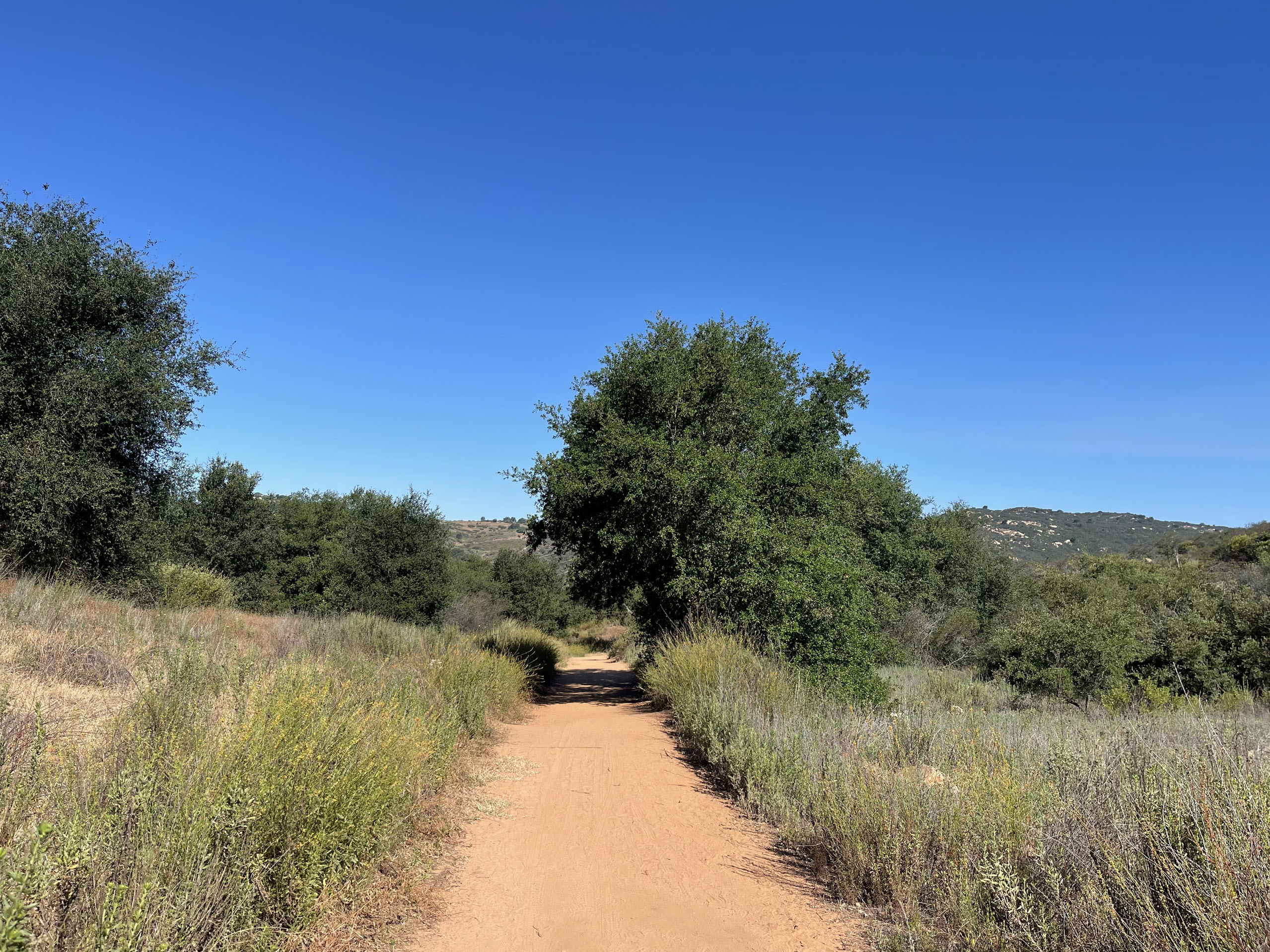
Here is a section of the trail. It’s not this smooth everywhere. There are some very steep rocky portions, where I didn’t take any photo. I was too busy pedaling and staying balanced.

And that was my Saturday morning in Southern California.

A Message from a Fellow AFSer

I was an AFS exchange student in 1974/75. Christine Lagarde, President of the European Central Bank, was an AFSer in 1973/74. Here is a message from her congratulating AFS to its 75th anniversary.

I would not be the person I am today, not even close, if I had not had the AFS experience, studying one year in an American High School as a teenager. The AFS year was by far the most pivotal experience of my life.

Idiots in Federal Government

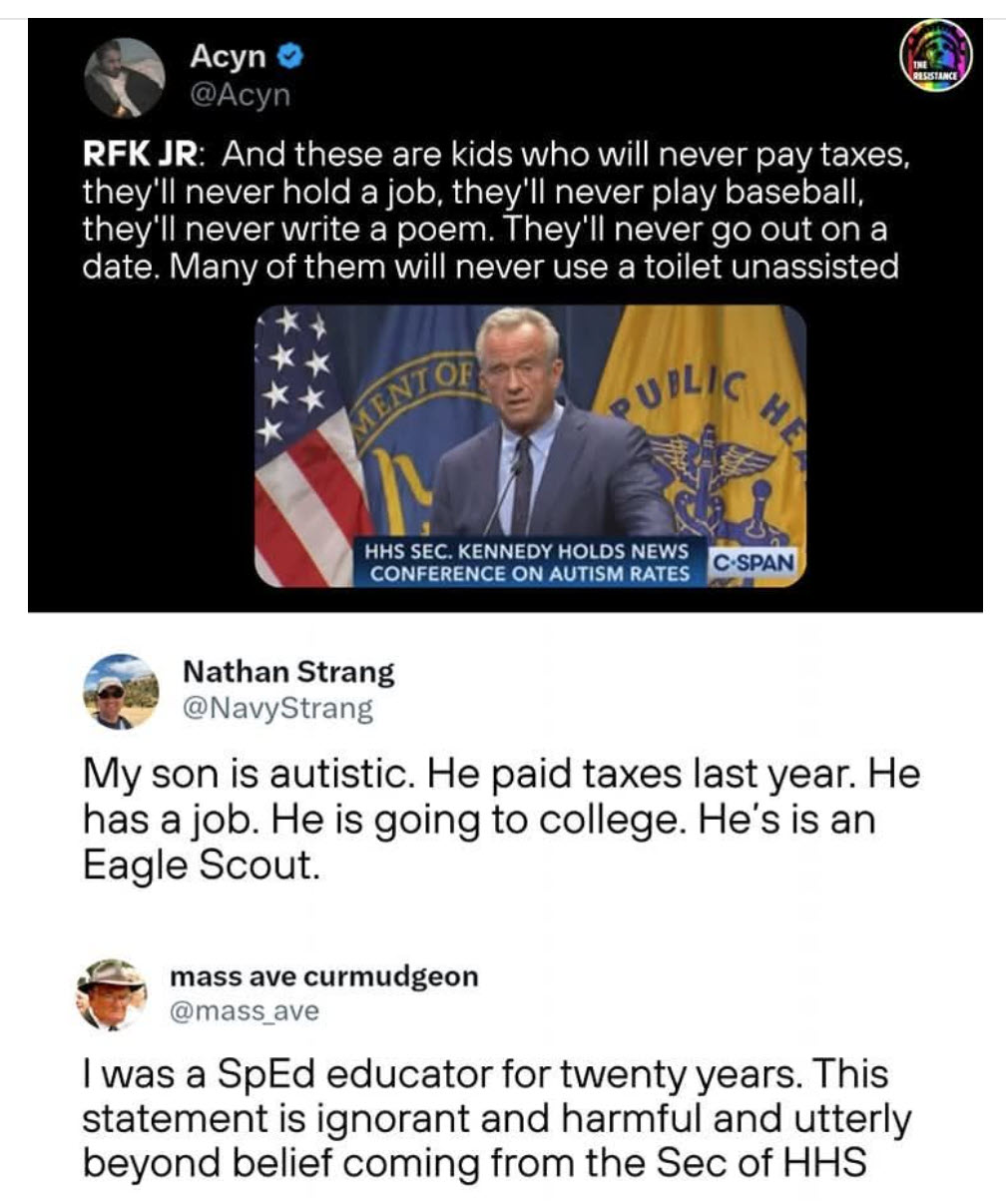
The idiocy in our current federal government is staggering. Here is our Secretary of Health and Human Services, talking about autistic children:

And these are kids who will never pay taxes, they’ll never hold a job, they’ll never play baseball, they’ll never write a poem. They’ll never go out on a date. Many of them will never use a toilet unassisted.

He has obviously never met an autistic person.

What is he going to suggest next? Maybe the best thing to do is to send them all to a camp? Let’s call it a concentration camp. Maybe we should open one in El Salvador, “the Savior,” where they’ll be well taken care of?

This is wisdom from the “Pro-Life” faction of our political landscape.

Nostalgia on a River Boat

On August 19, 1974 I left my home village for a year abroad in the United States. Before then I had hardly left a 150 mile radius around my little village of Illkofen in Bavaria, which at the time had about 250 inhabitants. It may have a couple hundred more now.

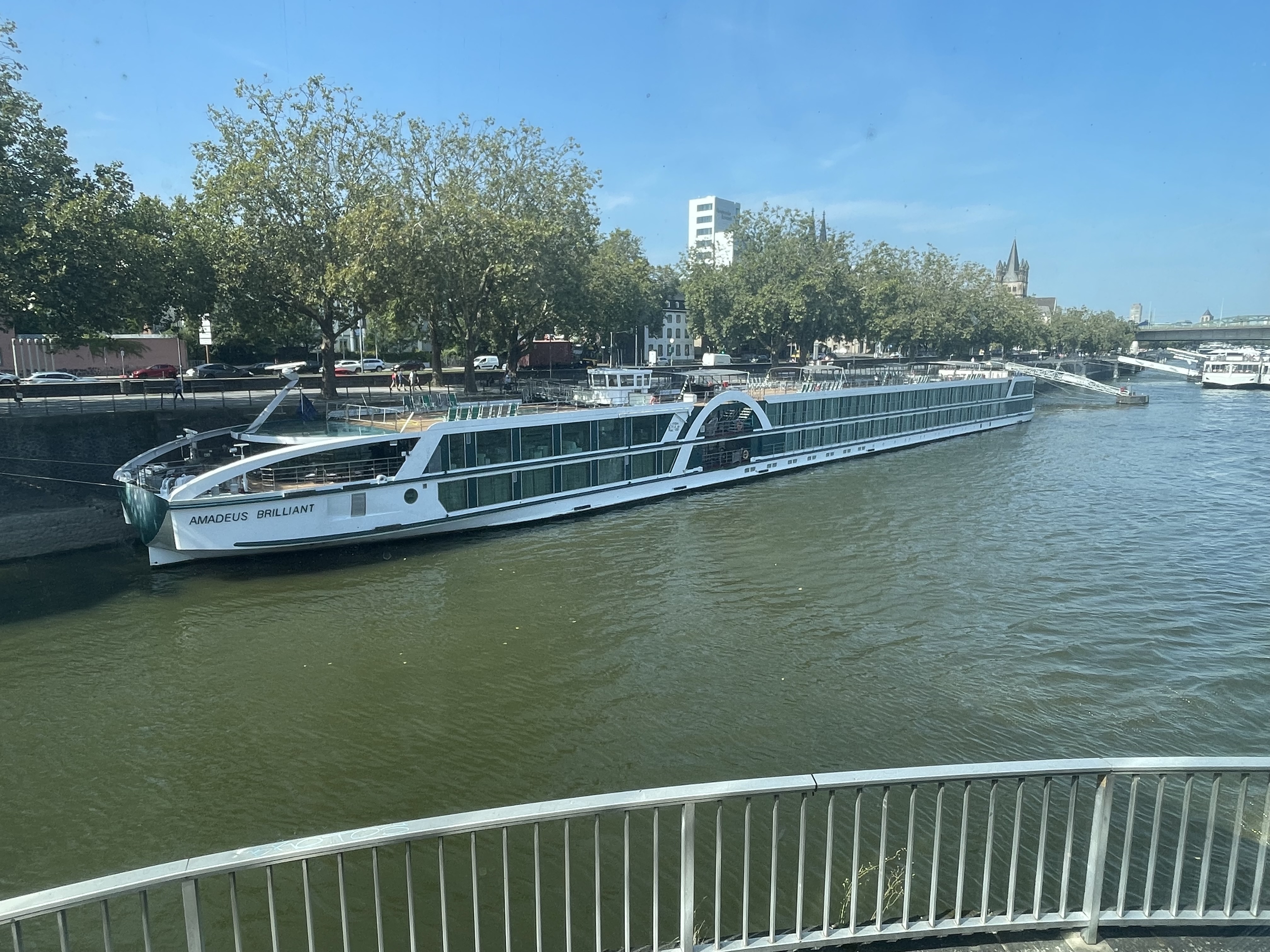
Exactly 50 years and three days later I boarded this river boat, the Amadeus Brilliant, in Passau with a group of international friends from all over the world for a reunion. We were going to cruise to from Passau in the south of Germany to Cologne over a seven-day period. I was one of the few Germans in the group, and it was a complete coincidence that the route would take us right by Illkofen, my home town.

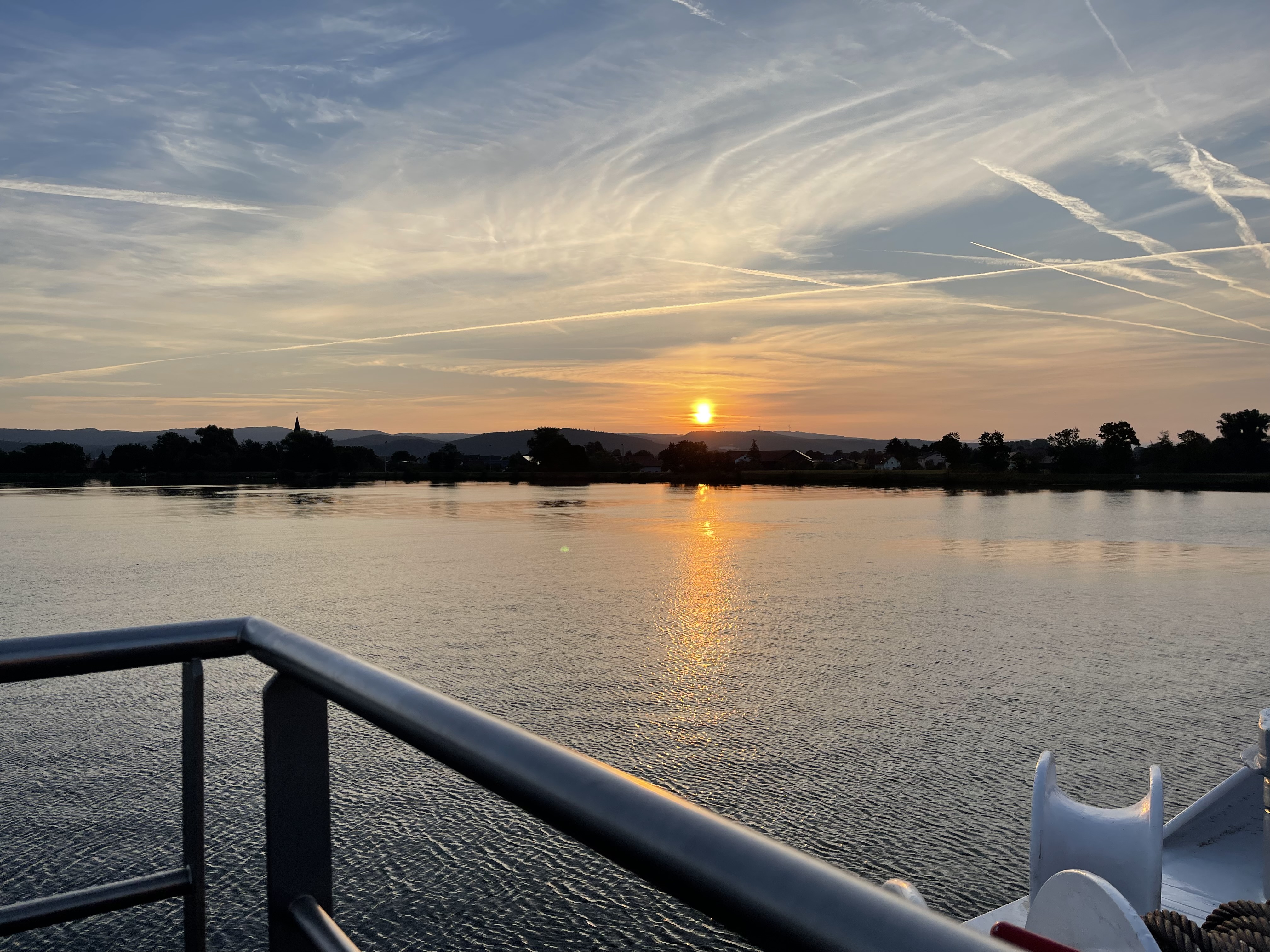
The river boat traveled mostly at night, and anchored during the day to give us a chance to have shore excursions in exotic places. I woke up around 5:00 am and went outside on the bow of the boat. Nobody else was up. The boat was gently gliding up the Danube and getting close to the old home. I was able to get this sunrise picture about half an hour before we got there.

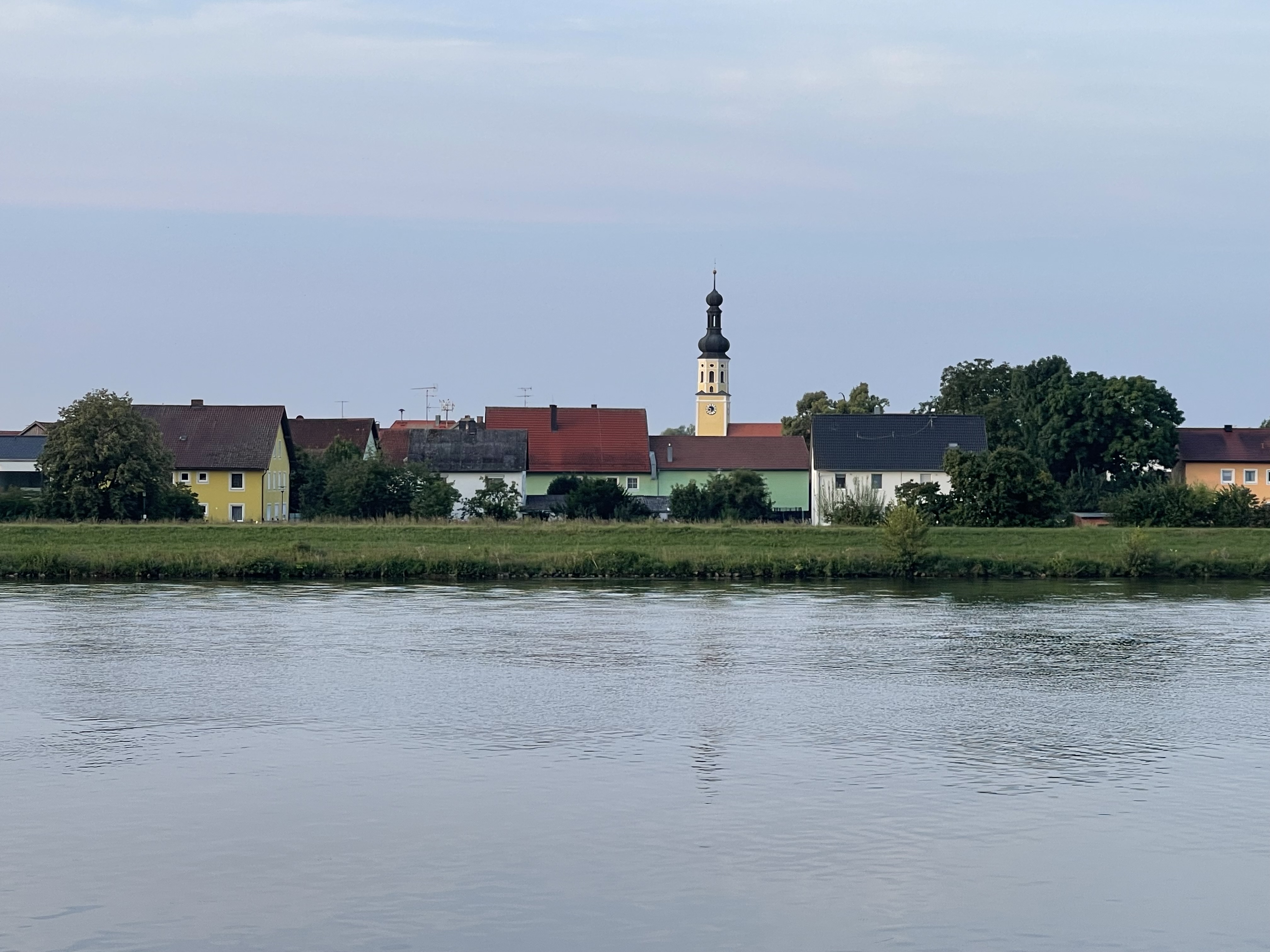
And then suddenly there was a great view of the old village, seemingly within reach. It was just before 6:00 am and the village was sleeping. Our boat eased its way past and I had memories rush through my head as I sat there in the cool air, gliding past the places of my childhood. I have played in every one of these houses and barns.
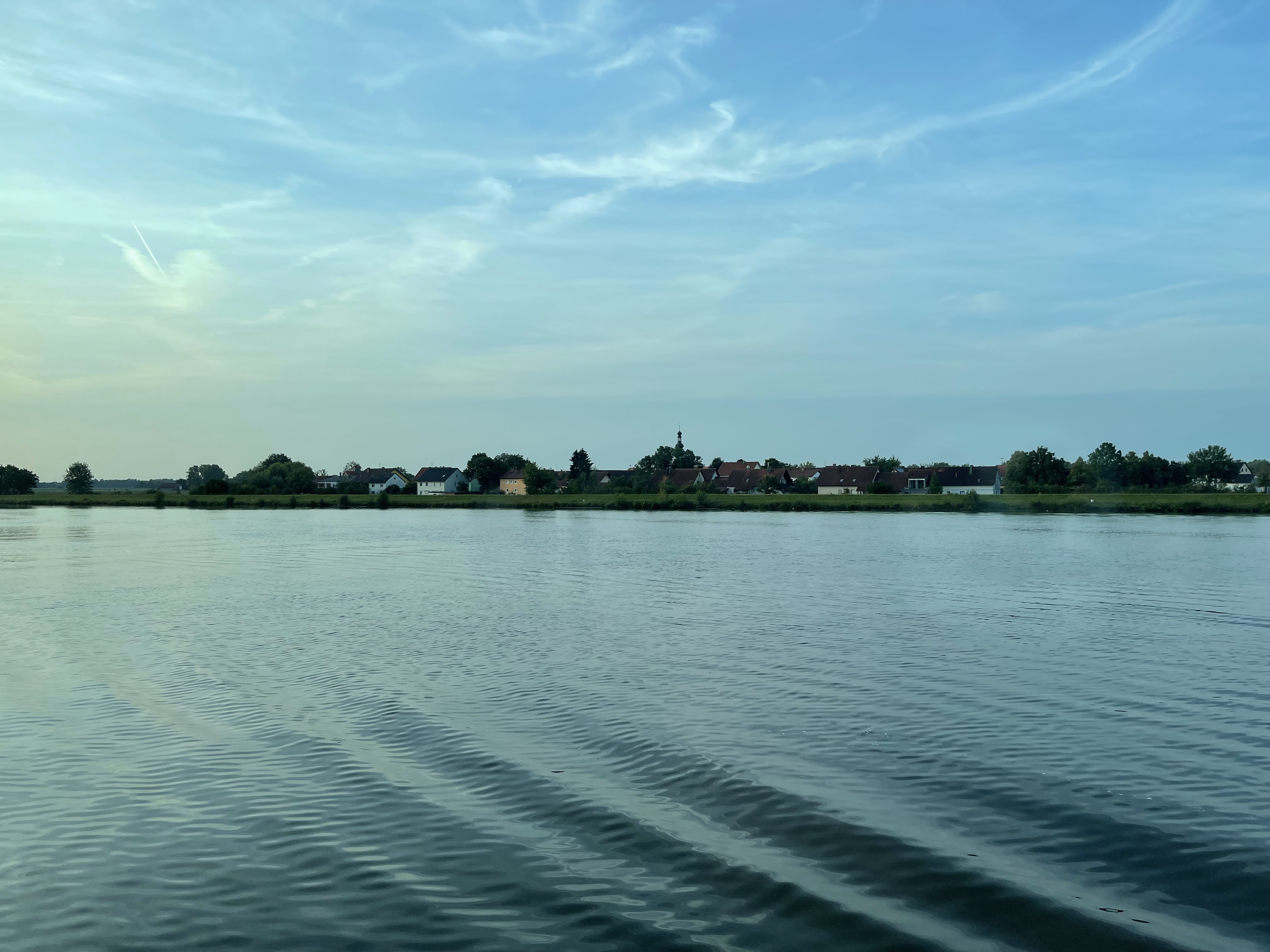
It went by very fast, and I quickly reminded myself to take a parting shot before we rounded the next bend and the village disappeared behind us.

It’s that kind of nostalgia that happens rarely in life, and it is always very private and hard to share in a public post.

You Always Remember Your First…

…Apartment

For most of the year 1977 I lived in Cologne. I was just 20 years old, and it was the very first place of my own. I was in the military, stationed at the Cologne/Bonn airport. I didn’t want to live in the barracks, so I found an apartment of my own at Taunusstraße 15. I moved out of there in November of 1977 and I have not been back to Cologne in the past 47 years, until today. For nostalgia’s sake, I just had to go back and check out the old neighborhood. Photocredit to Trisha who took all the pictures for me.

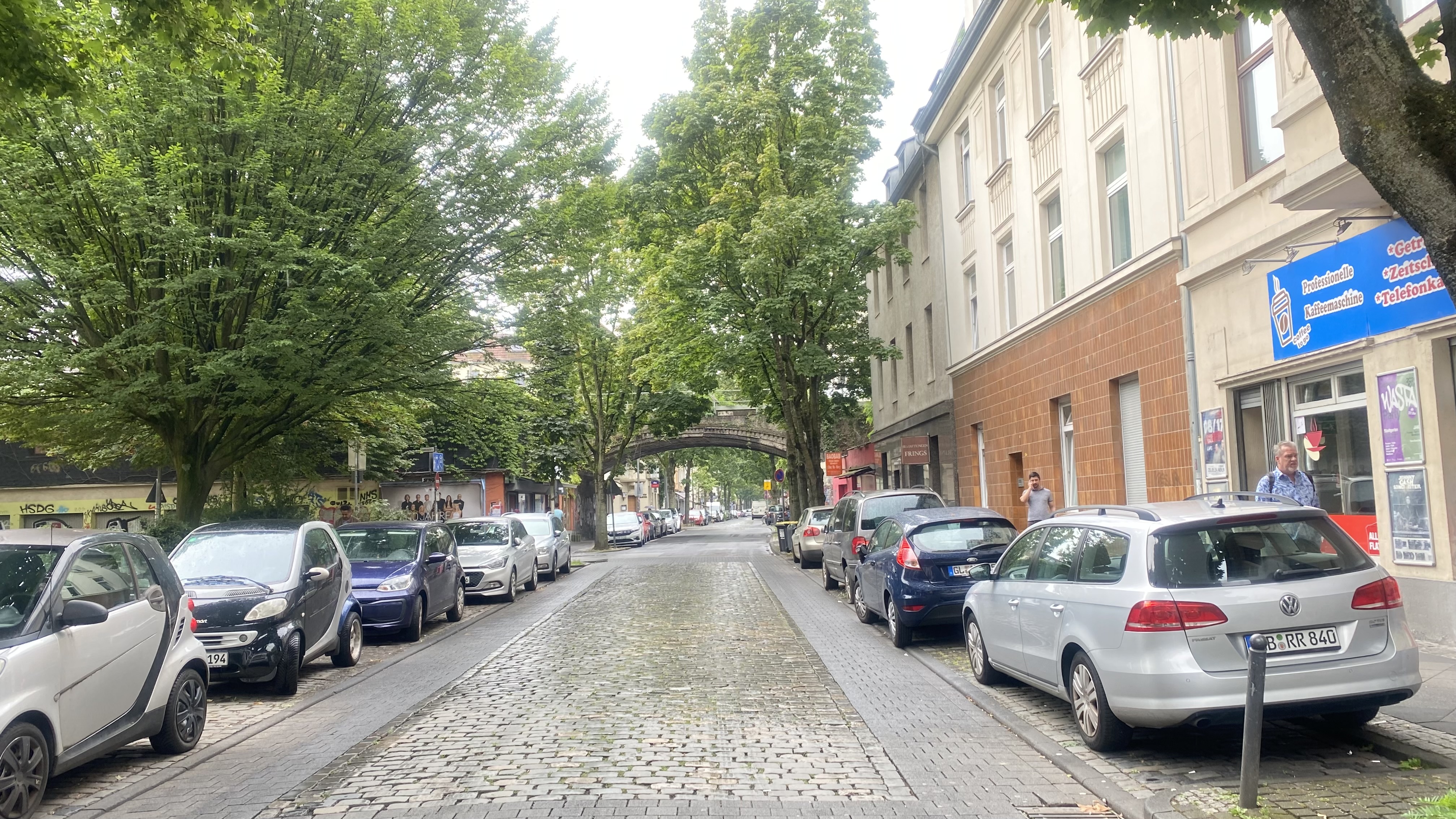
Here is a view from the Taunusplatz up the street a bit, a one-minute walk away.

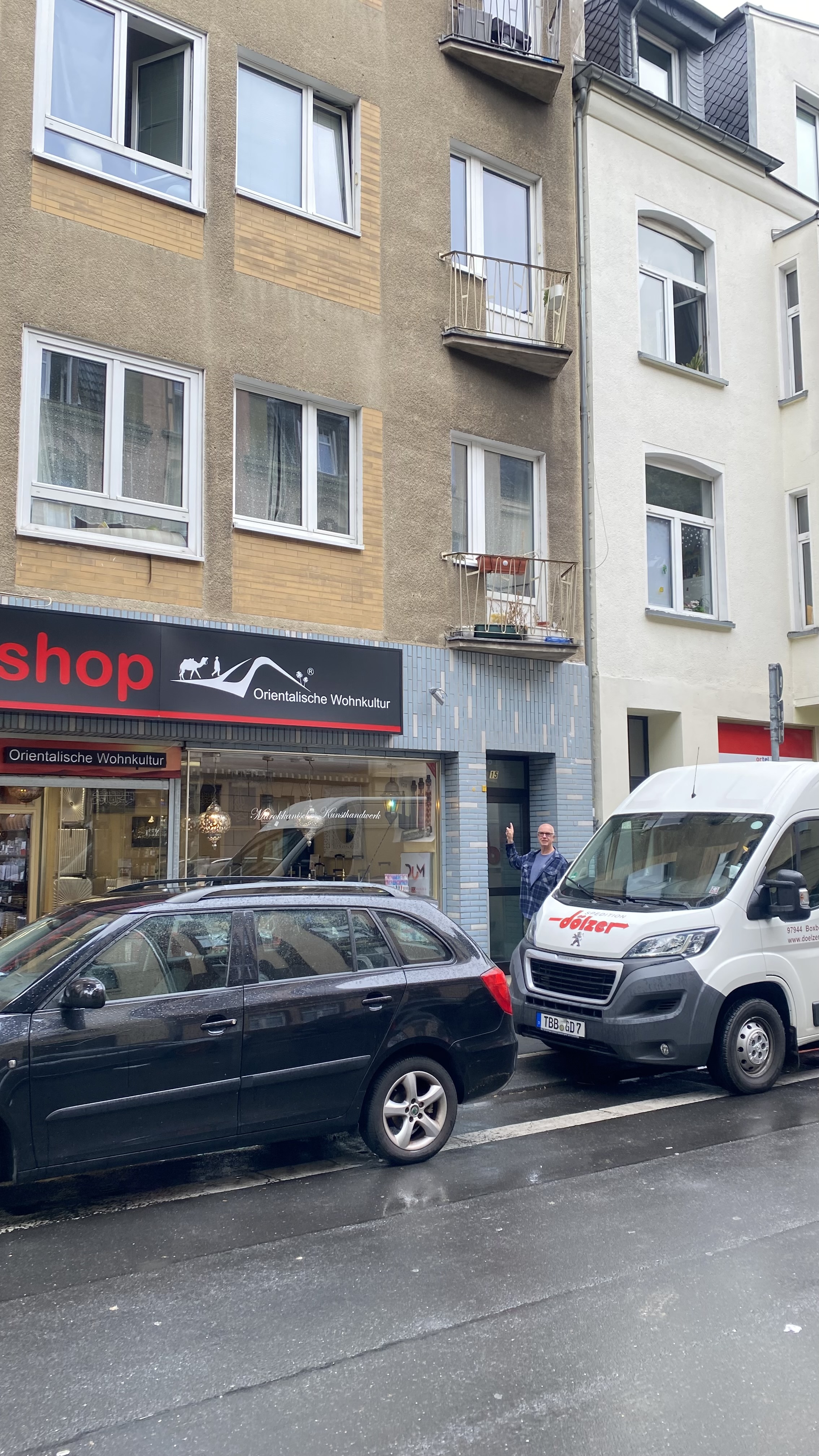
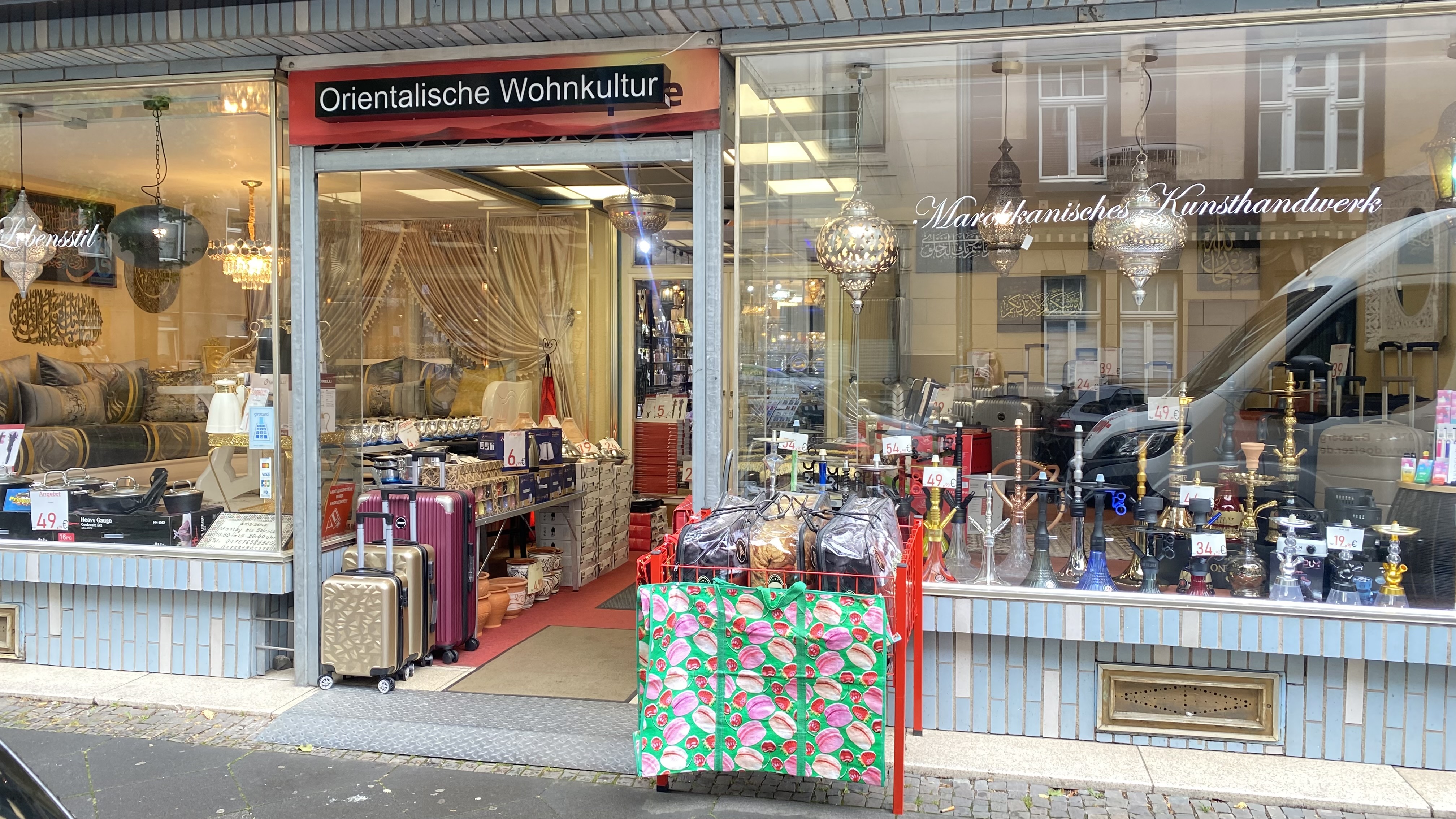
Here I am in front of the place. Unfortunately, there was a big van so we could not get any closer for a good photo of me at the door. I lived several stories up and in the back, overlooking the alley. But this was my entrance.

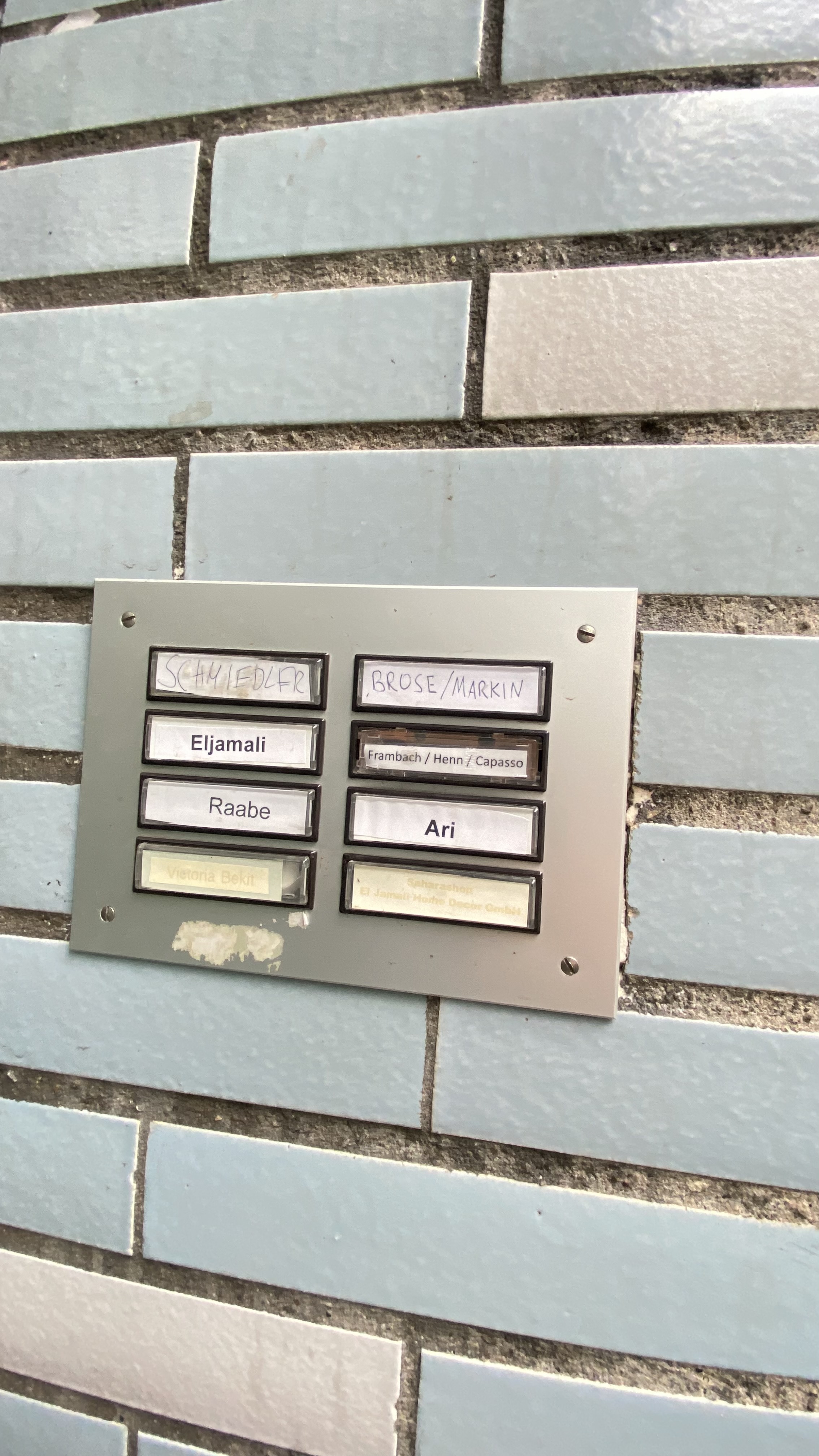
Here is the doorbell. My name was where Eljamali is now.

My landlord, Herr Wolf, lived on the second story, below me. He always let me borrow his vacuum cleaner.  He was in his late 60ies, about my age now, and he owned and operated the store below, which was a haberdashery at the time, selling upscale conservative male clothing, nothing a young soldier could afford.

The neighborhood has changed. Now the store is a Turkish shop with all kinds of baubles and, of course, hookah pipes.

The neighborhood is very different now. All the stores and businesses are distinct middle eastern, with Turkey being the major presence. It used to be a German white middle class area. Now nobody even speaks native German. We went to a little cafe in the neighborhood, had a nice breakfast, bought some fresh fruit and then took an Uber back to the city.

I am sure I’ll never come this way again, but I had a nostalgic fix walking along the old street corners and awakening long forgotten memories.


Knock Three Times Fifty Years Later

Recently my wife mentioned the song Knock Three Times by Tony Orlando & Dawn in the course of a benign conversation. That comment jarred me, because I remembered the song from 1970, and I realized I had not heard it ever again since those years. So I went to YouTube and found this link:

This song was a hit song in my youth in Germany. I was 14 years old in 1970 and I didn’t know any English yet. I had just started learning first year English in school at that age. It was my third language. A lot of popular songs on the radio in Germany in the 1960s and 1970s were English (Beatles, Rolling Stones, etc.) and American. So we heard the songs all the time, we liked them, but we didn’t understand the lyrics. Listen to a popular song in a language you don’t know (like some of Andrea Bocelli if you don’t know Italian) and you will understand what I mean. You can enjoy a song, you can like a song, you can hum the melody, without ever knowing what it says.

So it was with me and Knock Three Times. I just listened to it now, more than 50 years later, for the first time, and I magically understood the words. It now has a whole new meaning.

This happened to me over the years from time to time, when I’d hear an old hit for the first time. Another recent such experience was with Seasons in the Sun by Terry Jacks:

This came out in the summer of 1974. By then I was in my 4th year of school English and I probably knew some of the words, like “we had joy, we had fun” but I definitely, positively didn’t understand the part with the starfish on the beach.

We had joy, we had funWe had seasons in the sunBut the stars we could reachWere just starfish on the beach

I remember loving that song, it had such a good beat, and it really personified summer for me in my youth. But when I recently listened to the words for the first time, I was sad and melancholy due to its message, but I also chuckled because the starfish chorus seemed kind of hokey to me.

It is definitely a very unique experience to listen to a trusty old song from your youth and understand the words for the first time 50 years later.

Tribute to a Teacher

“I’m a success today because I

had a friend who believed in me 

and I didn’t have the heart

to let him down.”

— Abraham Lincoln


There are two teachers I remember who made a difference in my life early on. My parents were not able to provide guidance, leadership or direction. When I was in German elementary school in my little town, when I was 10 years old in 5th grade, there was one classroom for the first eight grades. The first row of six kids was the first grade. The second row was the second grade, and so on. In the morning, Herr Sicheneder started in the front and gave the “little ones” assignments and then he worked his way back. I was in 5th grade, and he usually combined grades 5 through 8 and taught them together, at least in subjects where it made sense, like history or geography. After 8th grade, you were done with school and everyone went to a trade school and start a three-year apprenticeship for a trade. I was a shy little boy who had no idea where he was going.

Herr Sicheneder pulled me aside one day and told me that I should apply for prep school. This was in 1966. In the German school system, in those years, maybe 5 to 10 percent of all kids got to go to Oberschule (high school), in German called Gymnasium, which was the only pathway to higher education and university. To get in, you had to pass an entrance exam. I had no idea what was involved, how you applied, and what the exam was like. Herr Sicheneder kept me in school after all the other kids went home for many months and tutored me. I still remember many of the drills today, almost 60 years later. Wegen, während, statt, kraft, oberhalb, unterhalb, diesseits, jehnseits are all German prepositions followed by the genitive case. Who knows stuff like that? I do, because Herr Sicheneder made sure I had them all memorized. He drilled me in German, mathematics, essay writing and whatever else was in the exam. I have no memory of taking it, but I passed, and in the fall of 1967 I started taking the bus to the city every day and went to Oberschule. Herr Sicheneder was the single most important influence on the direction of my life by a long shot. He put me on a course that resulted in what I am today, and without him, my life would have been very, very different.

Herr Sicheneder was in his late fifties then. As an adult, I never got the chance to go back and thank him for what he did for me. He passed away many decades ago.

I met the second teacher with similar impact on my life on my first day in Gymnasium at the end of August 1967. My professor of Latin and German, and my homeroom teacher, was a young man right out of university perhaps in his first year of teaching, by the name of Wolfgang Illauer. I had Professor Illauer in Latin and German for three years. Being a bit of a German literature snob, he taught us discipline in writing, grammar and spelling and made sure we appreciated German literature. Professor Illauer taught me how to write, imparted critical thinking, instilled values for beauty, art, literature and general culture. Being a professor of the classic languages of Greek and Latin, he had a strong classical background which rubbed off on me. Professor Illauer was my coach and teacher between ages 11 and 13, and he shaped my intellectual and cultural trajectory unlike any other teacher I remember. As I grew into the upper grades, I never saw him again.  Eventually I went on a scholarship foreign exchange program to the United States and got my entire college education here.

A number of years ago I googled Professor Illauer and being the academic he was, he had given some lectures as a guest professor in his retirement. I found his email address. We connected and established correspondence, mostly sharing our thoughts on literature, poetry, writing, education and all the things that academics of the classics are interested in.

Finally, a couple of weeks ago, we met in person for the first time after more than 50 years. I spent a night at the Hilton at the Munich Airport, and he drove in from Augsburg to have dinner with me. When I was a child, he was a god. Today, we’re almost equals, two old men interested in a common quest for language and education. We’re on a first name basis and use the German familiar form of address. We talked about Tolstoy. Wolfgang recently read War and Peace in the original Russian language. Go figure. He recommended that I read Somerset Maugham’s short stories, which he reads in English.

I spent a couple of hours over dinner with an “old friend” and one of the two teachers with immeasurable impact on my life.

Wolfgang reads this blog. This is my thank you.


Her Car is Parked in our Lot

Here is a picture of U.S. Marine Nicole Gee In Kabul just days before she was killed in the suicide attack.

Image and Article at Redditt [click image for article original article]
Her good friend and a fellow Marine wrote this for her:

Her car is parked in our lot.

It’s so mundane. Simple. But it’s there.

My very best friend, my person, my sister forever. My other half. We were boots together, Corporals together, & then Sergeants together. Roommates for over 3 years now, from the barracks at MOS school to our house here. We’ve been attached at the hip from the beginning. I can’t quite describe the feeling I get when I force myself to come back to reality & think about how I’m never going to see her again. How her last breath was taken doing what she loved—helping people—at HKIA in Afghanistan. Then there was an explosion. And just like that, she’s gone.

Our generation of Marines has been listening to the Iraq/Afghan vets tell their war stories for years. It’s easy to feel distant when you’re listening to those conversations, it’s easy for that war & those stories to sound like something so distant—something that you feel like you’re never going to experience since you joined the Marine Corps during peacetime. The stories are powerful and moving. Motivating. You know it can happen. And you train to be ready if/when it does. You’re ready. Gung-Ho. You raise your hand for all of the deployments, you put in the work. But it’s hard to truly relate to those stories when most of the deployments nowadays involve a trip to Oki or a boring 6 months on ship.

Then bad people do bad things, and all of a sudden, the peaceful float you were on turns into you going to Afghanistan & for some, never coming back. It turns into your friends never coming home.

Her car is parked in our lot.

For a month now, it’s been parked in our little lot on Camp Lejeune at the Comm Shop where I work. I used it while my car was getting fixed & I just haven’t gotten around to bringing it back to our house. I drove it around the parking lot every once in a while to make sure it would be good for when she came home. So many Marines have walked past it, most of them the newer generations of Marines, our generation of Marines. The same Marines who often feel so distant from the war stories their bosses tell them about. I’m sure they thought nothing of it—just a car parked in a parking spot. Some of them knew her. Some of them didn’t. But they all saw her car. They all walked past it. The war stories, the losses, the flag-draped coffins, the KIA bracelets & the heartbreak. It’s not so distant anymore.

Her car is still there, & she’s gone forever.

I love the first photo. We climbed to the top of sugar cookie in 29 one Saturday morning a few years ago to pay our respects. I snapped the picture on my camera. I never would’ve thought her name would be on a cross like those one day. There’s no way to adequately prepare for that feeling. No PowerPoint training, no class from the chaps, nothing. Nothing can prepare you.

My best friend. 23 years old. Gone. I find peace knowing that she left this world doing what she loved. She was a Marine’s Marine. She cared about people. She loved fiercely. She was a light in this dark world. She was my person.

Til Valhalla, Sergeant Nicole Gee. I can’t wait to see you & your Momma up there. I love you forever & ever.

The Artists in my Life

Bob Dylan turned 80 on May 24, 2021. I clearly remember Bob Dylan’s 40th birthday. I have been around almost as long as Dylan, I guess.

I am reading Life Magazine’s special edition for this 80th birthday. It’s a mini biography, of course with lots of photos as you expect from Life Magazine, and as I am reading about the old songs that had such an influence on my in the 1970ies, I remember Dylan and some of the other artists in my life.

One a musician, one a composer, one a writer and one a philosopher. I painted their portraits. Here they are in chronological order:

Ludwig van Beethoven – painted in 1979, 36 x 36 inches

08/79 Oil 36×36


Henry Miller – painted in 1979, 36 x 36 inches

06/79 Oil 36×36


Friedrich Nietzsche – painted in 1980, 24 x 18 inches

 5/80 Oil 24×18

Bob Dylan – painted in 2001, 28 x 22 inches

01/01 Oil 28×22

I lost track of the first three paintings early on. I have no idea if they even still exist somewhere in somebody’s attic. But the Dylan one is still with me, albeit in a stack in the garage with all the other paintings that never got framed or rated sufficiently to be taking up wall space in our house.

I painted Dylan the year he turned 60. It seems like yesterday.

Those are the four artists in my life that rated a painting.

Camping Then and Now

Just recently, we went camping for a weekend. Here I am before sunset, sitting by the fire pit, ready to light the campfire.

Here I am camping with Devin some 25 years ago. At the firepit, just after sunrise. It was cold, and the coffee and hot cereal felt great.

Notice the blue chairs. We still have those very same chairs now.

Good memories.

A Tale of Two Hammers

Among my earliest childhood memories is going into my grandfather’s garage/workshop/toolshed. In Germany in the 1950ies,  that was a wooden shed with a dirt floor. He had a few motorcycles with side cars stored there. There was a workbench full of tools, and tools were hung all over the walls. I remember being grossed out by all the spiderwebs everywhere. The tools all looked ancient. They were rusty and heavily used, or so they seemed to my 4-year-old eyes.

In the current edition of Popular Mechanics Magazine, on page 67, I found this unassuming article in the side bar. The Forever Hammer. Here it is, and it tells about the Estwing Rip. I will let you read the article now, since it sets the stage for the rest of my comments.

This is what makes Estwing more than a hammer. It’s a piece of expertise wrought in heat-treated steel. Use it for all it’s worth, and pass it down to the next generation of hammer swingers.

This article, benign as it is, written about something as prosaic as a hammer, touched me deeply and brought out a flood of emotions, from nostalgia, to joy, to a sense of history and belonging.

Back to my grandfather: Why do old guys hang on to their rusty tools? When we’re young, we can’t understand that. But I have become my grandfather now myself. And the article reminded me of my own set of hammers.

Yes, you guessed it, they are Estwing hammers.

One summer afternoon in 1981, literally 40 years ago just like in the article above, I went to a hardware store in Phoenix, Arizona and bought two hammers. One was a 28-ounce framing hammer, the other a mason hammer. This is what it looks like new:

My framing hammer spent years of work on my toolbelt when I was in my early twenties and built houses. It has framed a dozen houses. The mason hammer was my trusty tool to lay foundations with cinder blocks, or to build brick fireplaces. After the initial several years of heavy construction use, both hammers became relegated to the tool box in my garage, where the salty Pacific air of Southern California has put a good coat of rust on both hammers. They are now 40 years old, but solid as steel, and they could easily build another dozen houses.

I will never need another framing hammer. I have one. It’s not pretty, but like an old rock ‘n roll song that brings back the feelings of that special moment with that special girl, just looking at my old hammers brings back the hot Arizona wind in my hair, perched on a roof, pulling up trusses and toe-nailing them down on the top plates, the beginning of my adult life, the feeling of endless years ahead with no limits, and the vigor and passion that comes from building something that I know will outlast me.

I will never need another framing hammer. I have one. It’s in my garage in my tool box. It’s rusty. I understand my grandfather now.

It’s one of my most precious possessions.

Pandemic Desktop

I have been working from my home office now for over 7 months solid. I spend a lot of time at this desk, and I found that having some fresh flowers behind my laptop brightens up my mood.

On July 30th I posted about growing sunflowers from seeds. Here is that post. Now, the sunflower plants line our fence, some of them eight feet tall. Here are a few sunflower blossoms grown in our own yard, from those seeds.

It’s a bright spot in my day.

Our Response to the Michigan Would-Be Kidnappers

Here are the mugshots of 10 of the 13 would-be Michigan kidnappers.

People who are planning on kidnapping an American Governor and possibly executing her are called terrorists. Since we usually associate terrorism with foreigners, we have narrowed the term down to “domestic terrorists.”

Here are pictures of domestic terrorists. They are all white. I don’t know these 10 men, but I do know our media calls them “white supremacists.” I am actually curious about what goes on in the head of somebody who plans to kidnap and possibly execute a governor. I would like to have a conversation, maybe over a beer in the backyard. What would be their persuasive argument?

But this post is not about the would-be kidnappers. It’s about how our president responded to their story.

If these 10 people where Muslims, with dark beards and Arab head dress, our president would have responded with a further escalation of the ban of all Muslims in this country, and every Muslim American would have had to pay for it with abuse, discrimination, assault in public and pure fear for their safety.

If these 10 people were Hispanic, our president would have told us the Mexicans are murderers, rapists, criminals and needed to be deported, and – by the way – we need to build that wall. All Hispanics would have been further injured and damaged.

If these 10 people were Black, all black people would have been denigrated and the entire black-lives-matter movement would have been attacked as anarchist. The president would have blamed the black community for their crimes.

But these men are all white.

So the president attacked their victim, the Governor of Michigan. Apparently she had it coming.