Confused about Security Images on Websites

Verizon Login

Do you get confused with security images on “secure” websites?

Above is my Verizon account. After I give it my account number, and before I type my password, it gives me this picture of a windmill. It tells me not to proceed if I don’t recognize the windmill as the picture I chose.

Does it not realize that every bank, every account, that also uses these silly pictures has different pictures. Windmills, mountains, sunsets, flowers, what have you. I can’t remember what picture I chose with dozens of sites.

Therefore – these security images are completely useless.

American Airlines’ Website Sucks

More than I year ago I wrote this post complaining about American Airlines needing to fix its website. Well, they have made some changes to it, but I still is mired with fundamental problems, so this post might be almost déjà vu.

aa1

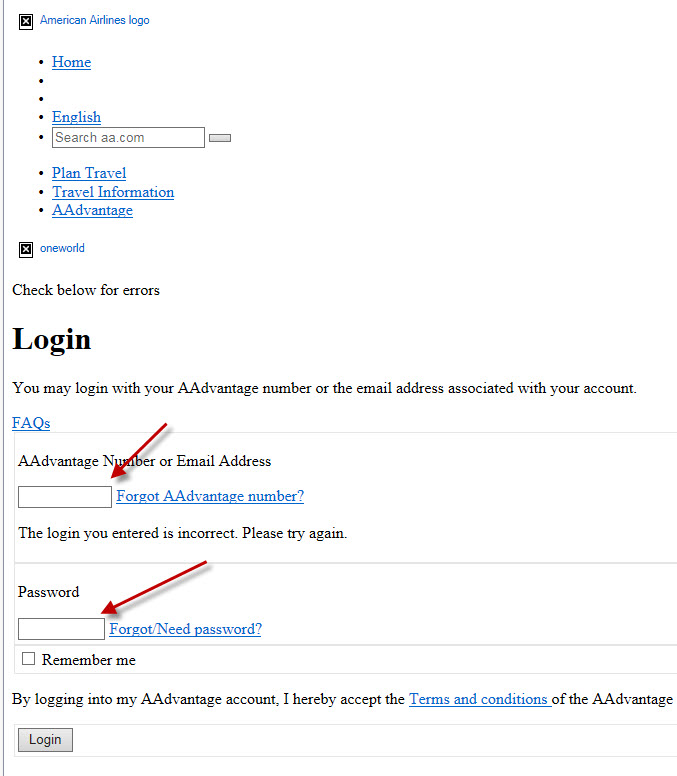
The picture above shows the front page and its login section (red arrow). When I put in my account, name and password, it accepts it, but then it can’t resolve it for some reason, and it jumps to the error screen below.

aa2

There is no good way to get back, so the only way to move forward is to enter the account number again, and my password (red arrows above).


aa3

However, since they changed the requirement recently to add a name, the second screen fails, and it goes to the screen above, where I have to log in a 3rd time. This time I’ll be successful.

Summary: to get into aa.com,  I have to log in three times every time. I can’t figure out what the shortcut might be, and I am a software executive. How does my grandma buy a ticket at American Airlines?

Finally, when I was in, I had to purchase tickets for three separate reservations I had on file. After I had paid for the first one successfully, I didn’t know where to go. The screen below shows what’s there after the payment transaction is done. The only solution I could find was click on “My Trips” (red arrow below).

AA4

Unfortunately, that made it forget who I was and it came back with the login screen once more (below).

AA5

So, in order to purchase tickets for three reservations, I had to log into the site six times. Three times to get in before I got to the link “My Trips” and then three times to get to the payment screens to purchase.

This has been like this for more than a year.

American Airlines’ website really sucks.

The Dumbest Skeuomorph – Our Coffee Machine Timer

Skeuomorph

A derivative object that retains ornamental design cues to a structure that was necessary in the original, even when not functionally necessary.

Many common skeuomorphs were introduced by Apple due to a propensity by Steve Jobs for those mechanisms. For instance, the shutter-click sound emitted by many camera phones when taking a picture is an auditory skeuomorph. There really isn’t anything clicking, it’s just a sound it makes to make you feel like there is.

Another example in our house are the plastic Adirondack chairs in the back yard. The chairs imitate the design of the wooden Adirondack construction, but for no reason other than look like those.

The last coffee machine we bought employs a skeuomorph for the timer, but is has a number of annoying features of what I would call Crappy Design.

Coffee Machine

For instance, the knob labeled “Warmer Temp.” Why does it say Temp. only? Could they have not written Temperature? Then there is the knob itself. It’s a bidirectional knob. You can’t tell where the indicator is, and to make it worse, it turns round and round. There is no stop. So how exactly do you make it warmer or cooler?

Then on the left side there is the icon for a Sound, I guess. Where everything else is labeled with words, apparently here they could not write Beep or Sound, they had to apply this icon. Above it is a switch to turn the sound off, which does not work. The thing beeps no matter which side this switch is on, and it has done so out of the box.

Finally there is the skeuomorph – the clock. It’s a bright digital screen that shines a beacon through the kitchen in the dark, brighter than a nightlight. There is no way to turn it off. It shows a clock, with all three clock hands moving like an analog clock would. But the display is small enough that I really can’t see the time very well. We already have a clock in the kitchen, so I don’t really need another one provided by my coffee machine.

Then, to set the timer, you have to use the Min., Hr. and Set Delay buttons on the left. These are so unintuitive, I can never figure out how to use them, and so I don’t. When you hit the Min. (why not call it Minute?) button, the minute hand on the clock jumps a minute. When you hit the Hr. (why not call it Hour?) button, the hour hand jumps an hour. They obviously want to be cute with the clock, but skeuomorphism is supposed to make things intuitive. But what analog clock does this when you hit forward buttons? Those buttons were introduced when digital alarm clocks first came into being, to forward the displays.

Just like a writer should not mix metaphors, a designer should not mix skeuomorphs.

So there you have it. I introduced the word skeuomorph (didn’t you need to know that?), and I gave you an example of truly Crappy Design by Mr. Coffee.


Conventional Utilities Don’t Like Rooftop Solar

Time Solar
[Time Magazine: May 18, 2015, Page 16]

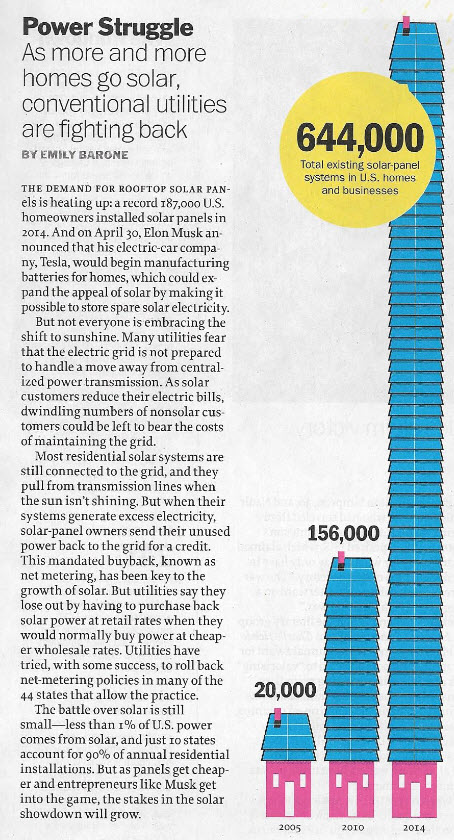
As more homes add solar panels to their roofs and make themselves more and more independent of the power grid, the conventional utility companies don’t like it. They argue that as less customers are relying on them, it becomes more and more expensive per customer to maintain the infrastructure, the grid, and they must charge their customers more.

The utility companies are simply facing the realities of a new world and new industry trends, like so many other companies before them. They will whine for a while, until somebody else comes in and builds a completely new business model and disrupts the entire stodgy utility industry. Welcome to the new reality.

Remember when local video stores where you could rent VHS videos for a day were in every strip mall? Then Blockbuster took over. And then Netflix wiped them all out.

The taxi industry is suffering from the likes of Uber and Lyft.

Remember when you still needed travel agents to book flights? Where have all the travel agents gone?

Remember DEC, the second largest computer company in the world in 1980? Bought by Compaq, which was bought by HP. DEC is only a distant memory.

Remember when Kodak was a giant? Then Kodak didn’t figure out that digital photography was disrupting their market until it was too late.

In the next few years, the power utility industry is going to experience some disruption. There is a fortune to be made for the right player.

Let me guess: the right player will not be one of the current utility companies. They are too busy whining and not busy enough thinking.

Facebook and the Crappiest Websites Ever

Crappiest Websites
[click to enlarge]
I don’t use Facebook much. I publish my blog posts there, let them linger for a few days, before I delete those posts again. I check what some of my friends, those whose threads I have not turned off, are up to.

On the first page of the timeline, there is usually some teaser with a picture and some fact that I might be interested in. When I click on those teasers, they bring me to an aggregator site like “odometer” above that shows the picture that was featured, usually one of multiple pages, followed by some text and a Previous and Next button.

Often these buttons are hard to find amongst the other buttons that litter the page, arrows that are simply advertisement hooks. The site is so sluggish that it hardly works, because it is packed with crappy advertisements that nobody is interested in, and the advertisements, should I click on one of them, lead to more such crappy pages full of ads.

Check out the above example. I was interested in the series about fun facts associated with the SR-71 airplane. But it teases me on the right with “Watch What Happens when you have Big Accessories.” Good thing I resisted to find out what the big accessories were. I am sure they were not what the picture suggested. I could not help noticing the Zero G boobs of Hot Kate Upton, and even there I resisted.

There are many such sites that are full of bad, annoying ads that make the sites virtually unusable. I have learned to detect them on Facebook and avoid them.

Is this how Facebook makes its money? Is this why Facebook is worth several hundred billion dollars? Because it provides a free site that bombards us with  useless, annoying advertisements? What happened to good old honest work in America to make money?

Time to hit Publish on this post and slave it over to Facebook.

Glyphosate (Roundup) is Not Harmful to Humans

… or so this Monsanto Lobbyist says:

He says you could drink it. The interviewer counters, and offers him a glass. “I am not an idiot,” he says.

The hypocrisy of this guy is appalling. Then he calls the interviewer a “complete jerk” as he walks off the set in panic.

The Accidental Polluter

I am a polluter, and I need to correct my ways.

Recently I read the book The World Without Us, where I learned that basically every piece of plastic we have created since about the 1960s ends up either in a landfill, or in the ocean. Much of the plastic floats. Some of it looks like it disintegrates, but it really doesn’t. It just turns into ever smaller globules of plastic that live practically forever.

Sometimes, when I know I will be home alone after work, and I know there is nothing at home to eat, and I don’t want to bother preparing anything, I may stop at Kentucky Fried Chicken for some takeout. I’ll order a two-piece meal, original style, breast and wing, with potato wedges and coleslaw for about $6.75. The attendant hands me a plastic bag that contains my order.

When I get home and when I am done eating, I am left with:

  • One, sometimes two, sometimes even more than two sporks. Those are the plastic spoon/fork combinations they give out. Each of the sporks is wrapped by itself in a little clear plastic sheath along with a napkin.
  • One or several containers of honey in plastic restaurant packets which I don’t use because I eat my biscuits dry.
  • A mini Tupperware-like container with a lid in which my coleslaw came.
  • Five to fifteen extra napkins that the attendant threw into the bag just to be sure I had enough – which I’ll  save in our napkin holder for the future.
  • A cardboard box that contained the food.
  • A cardboard container that held the potato wedges.
  • The big plastic bag the whole thing came in.

Once when I bought a meal for two, I got 17 sporks in the bag:

17 forks

I know I can save the sporks, but for what? I didn’t need them in the first place, and we will never have enough picnics to ever need them. Unless I want to start a KFC spork collection, which I don’t. So they go into the trash, along with the cardboard boxes, the bag, the container, and even the honey packets.

Never to be used again. Never to have been used. In a landfill. A million years from how, some archeologist will dig out a layer of rock and find these 17 sporks, along with my coleslaw container and its lid, in the plastic bag.

If I eat in a fast-food place once every week of my life, and if I become 80 years old, and if I use only one plastic utensil for that meal that gets thrown out, I use up 4160 of them. That’s how many weeks there are in 80 years. Not a lot, huh? If 7 billion people in the world were to use up one plastic utensil a week, that would be 28 trillion of them in the environment. 28 trillion plastic utensils, maybe used once. 28 million million of them.

So now I think about that every time I take a plastic utensil to use for one meal, one piece of cake, one small container of coleslaw, or just to stir my coffee.

What a phenomenal waste!

I am an accidental polluter.

[Edit: the term “trash” here means “recycled trash” in California. However, I am not sure I fully trust the recycling system – I wonder if they give tours so we can follow the sporks through the process….]

Michigan Bans Tesla Stores

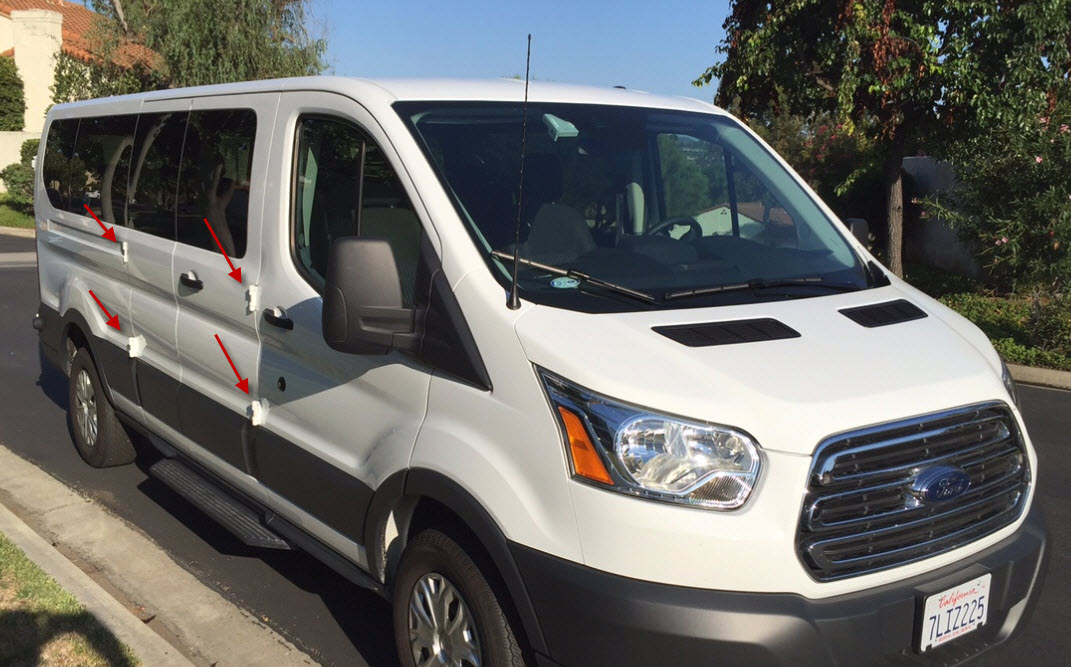
Michigan Gov. Rick Snyder signed a law effectively banning Tesla Motors  from selling its cars in the state. After Texas, Arizona, New Jersey and Maryland, Michigan is the fifth state to do so.

I cannot figure out what problem all these laws are trying to solve. I can go into an Apple store and buy an iPad directly from the manufacturer. I can go into my local gallery and buy a painting from the artist. Why can’t I buy a car from the manufacturer, if there’s a store right there?

They are arguing that it is good for consumers by protecting them.

From What? From Tesla?

I see this as protectionist laws. Our lawmakers, obviously “purchased” by the car dealer lobby, are trying to make sure that the middleman get his cut, it’s as simple as that.

If you have to have laws keeping others out of your market, if you have nothing more to offer in your business model that gives consumers some value in the process of “dealing” with you – pun intended, then you truly have a business model that sucks and you’re on your way out.

Check typewriter manufacturers, travel agents, video rental stores, water-bed stores and Kodak.

Fortunately, the free market doesn’t put up with that very long, and it finds a way around that.

Just wait and watch.


Fashion Confusion – Why Would Somebody Buy this Shirt?

anal

This shirt is listed for $4.13. I cannot figure out why anyone would buy – and then wear – this shirt.

Is this just bought by non-English-literate Chinese and Japanese women?

Go! No! Don’t Go!

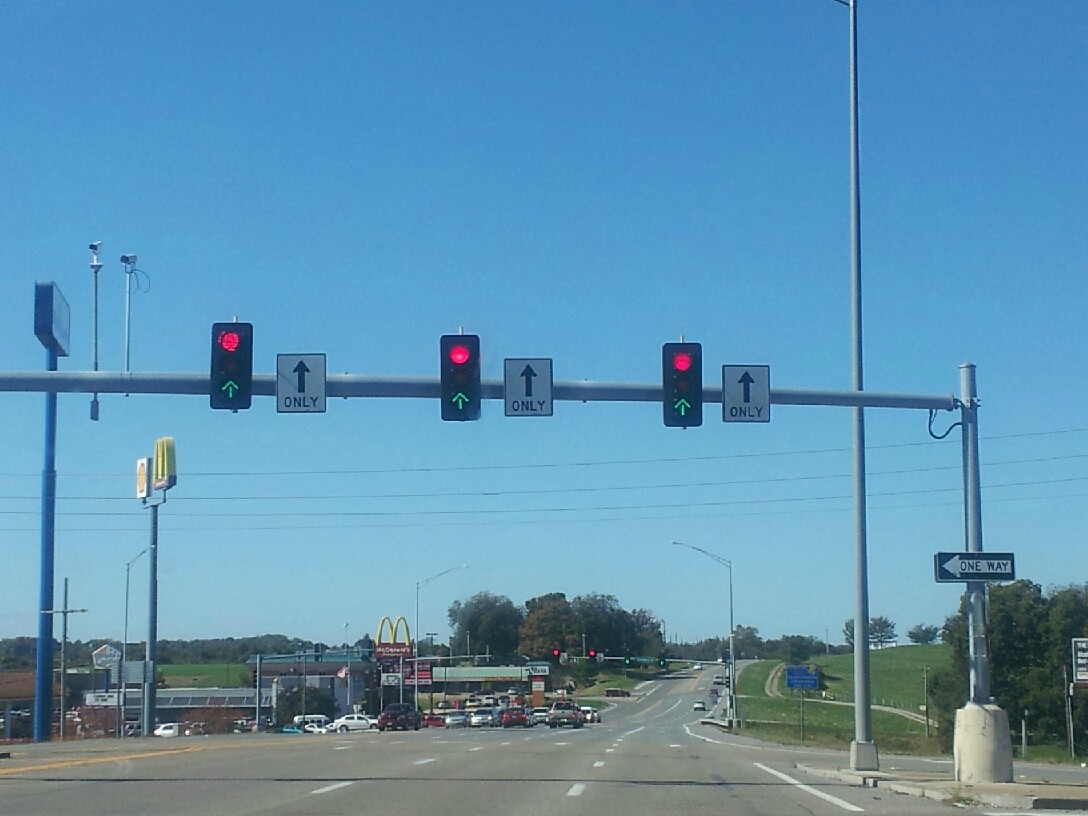
I don’t remember this from driver’s education. Well, one thing I am sure about, it’s One Way to the left, but I wouldn’t dare turn. Left on red?

Go - No - don'
[click for picture credit]

Southwest Airlines is Cheeky with its Credits

Let me start right out stating that I love Southwest Airlines. I respect the company and the employees, their innovative business model and their great customer service. The website works great. There is only one minor thing wrong, and I don’t think it’s an accident. It think it’s cheeky.

When you have purchased a ticket and need to cancel the trip, Southwest gives your “credit.” The money is available when you buy the next ticket. But it’s not tracked anywhere on the website. The website has a way to look up everything you might want to know about your trips, your account, your payment data, everything, except your credits.

When paying for a new ticket, you can use the credit you have from a previous ticket to pay for it, in full, or partial. But to invoke the credit, you need to type in the reservation number of the trip that was cancelled. The reservation number is the 6-digit code you get when you book a ticket, like MAQFFA. Once you type this in, it applies the credit from that ticket to the current purchase. But who remembers such a weird number? You would never think so, until it’s time to pay for the next ticket, weeks or months later, too late.

Recently I had credit from a large purchase and I needed to make a purchase of a much cheaper ticket. So I didn’t even use up all the credit. I just sort of remembered that I still had “some” money left over. As much as I fly, I don’t always remember all this from one trip to the next and I rely on the system. So I vaguely knew that I still had money left over.

When I tried to find it, and how much, it simply was not possible. I had to actually call Southwest and get an agent to help me. I still had a whopping $178 left, but no idea what the ticket code was. The agent told me that this was not anywhere on the site.

Why in the world not?

The only reason I can think of: Southwest profits when people can’t remember they have credits, and if they do, they can’t remember how to invoke them. Money in the bank.

It’s like a gift certificate that is never cashed. Pure profit.

I am disappointed. I thought Southwest Airlines was better than that.


The Cost of War – Take Nine

Planes

The Defense Department bought 20 Italian G222 transport aircraft for $486 million for the Afghan Air Force. The manufacturer was a North American affiliate of Alenia Aermacchi, an Italian aerospace company.

The planes were plagued with technical problems that kept them grounded. Eventually the military gave up. Instead of holding the manufacturer accountable, they decided to scrap 16 of the planes for $32,000 in scrap metal. Four of the planes remain in Ramstein, Germany.

This is just one example of a half billion dollars down the drain. It didn’t help the warfighters in Afghanistan. It didn’t help the Afghan people. It didn’t help U.S. veterans returning from the war. It didn’t pave roads in Los Angeles. It didn’t build mass transportation systems in the United States. It didn’t feed the poor in New York City. It didn’t repair our bridges in the U.S. It didn’t build any new schools.

It put money into the pockets of the shareholders of Alenia Aermacchi and the military industrial complex that feeds off it.

This is an example of the use of our defense budget. This $486 million had NOTHING to do with defense.


NFL Player McCoy Leaves 20 Cent Tip

LeSean McCoy of the Philadelphia Eagles leaves a 20 cent tip to his waiters in a Philadelphia burger joint on a $60 bill. Our sponsorship of the NFL funds millionaires enjoying their game and reinforces their boorish behavior.

Read the full story here.