Koch Industries and Renewable Energies

The American Legislative Exchange Council (ALEC) is a Koch-backed conservative group that drafts bills, many of which are designed to repeal and weaken renewable energy laws and standards state-by-state. Republican politicians, who are funded by the Kochs, push these laws in their respective state legislatures.

— Ring of Fire

The Koch brothers built the world’s largest fortune based on oil, coal and the distribution, transportation, processing and sale of those commodities. In the last 30 years, Koch Industries expanded into many other areas, buying up hundreds of large and small failing companies and turning them around. One of the largest acquisitions was Georgia Pacific, that makes products like paper towels and such.

The Kochs have an uncanny formula for making companies work. Much of their business philosophy is based on libertarian principles, teachings and values. No government. Since the libertarian movement in this country had its peak around 1980 and have never flourished since, the Kochs have backed the Republican Party and its candidates as the closest fit.

The less government, the better. No government would be best. Let the free market take care of things. Supply and demand should be the only guiding principles.

With renewable energies, versus fossil fuels, the supply and demand principles didn’t work so well over the last 40 years. There were many government subsidies for oil, coal and gas, and Koch Industries has benefited from those. It stands to reason that they will try to squash efforts by the government against support of renewable energies.

When you start seeing massive lobbying efforts backed by fossil fuel interests, or conservative think tanks, or the Koch brothers pushing for new laws to roll back renewable energy standards or prevent new clean energy businesses from succeeding – that’s a problem.  That’s not the American way.  That’s not progress.  That’s not innovation.  That’s rent-seeking and trying to protect old ways of doing business and standing in the way of the future.

— President Obama

Fortunately, the tide has turned, and there are more and more people in the country who are genuinely interested in renewable energies. There are still forces that try to squash renewables, calling them job-killers, but they are consistently proven wrong. Here are some facts:

  1. No matter what we say about fossil fuels, they are limited. Perhaps we have a few decades’ worth left in the ground, perhaps a few centuries. But they will run out. Not planning for that time would be negligent.
  2. Renewable energies do not leave greenhouse gases. Whether greenhouse gases cause global warming or not, it is still better not to pump CO2 into the atmosphere.
  3. Renewable energies will return energy independence to countries. There will be less reliance on trade and therefore dependence on other countries. OPEC countries will suffer, but now is the time for them to retool, if they have the wisdom.
  4. As renewable energy becomes more used and cheaper, it will drop below the tipping point and it will become a massive local job creator. Preventing or delaying that for today’s profits, as the referenced article suggests, would be obstructionist and unacceptable.

Koch Industries knows how to make money and they are not shy about pushing their agenda. We need to take them very seriously. They are one of the most powerful forces in our government today.

But I do believe the tide has turned. Now how long will it take China to figure this out?

Child Hunger and Banquet Food Waste

In the last several days I attended APHSA-ISM, a conference of human services administrators from all over the U.S. and the IT industry at the Philadelphia Convention Center. One of the beneficiaries we raised funds for was Philabundance, a local food bank.

A few hours  after we saw the heartbreaking marketing video of Philabundance, we attended the first conference luncheon. The ballroom had round tables for over 1,000 attendees, each table with nine chairs. Many tables were not full. There were only six people at ours.

The meal was family style. The waiters brought dishes of food and we served ourselves. Our table had large bowls of green salad and a pasta/ham salad, a basket of bread, a plate of chicken breasts, a plate of beef, and a large platter of some type of rice cake. Our table had food for at least 20 people. The beef dish wasn’t even touched. One of us took a single slice just for a taste. Then there was a plate of cupcakes for dessert of which we didn’t consume half.

I could not help but take a picture as I left:

banquet food waste
[click to enlarge]
None of the dishes were even half empty as we all walked out of the room. This was only our table.  There were over a hundred more in the room.

I do not know what the hotel did with the food that got removed from the tables. It was enough to feed an army.

I do not have the solution;  none of us in the room did, even though these were the people from around the country who have to administer food stamp programs, whose job it is to worry about the most vulnerable members of our society – hungry children.

This was a drastic reminder of the inequality in our country. Why do I get to eat in abundance in an air-conditioned ballroom, while 16 million kids in America aren’t getting the food they need?

If you would like to learn more about world hunger, key facts and statistics, here is a valuable link.

Just a Cup of Coffee

In Europe:

Porcelain saucer and cup. Pour in coffee. Pour in sugar and cream from container. Metal spoon. Pay 3 Euros. No litter or waste.

In America:

Cardboard cup. Cardboard sleeve. Pour in coffee. Plastic lid. Plastic spill guard. Paper sugar packet. Plastic cream packet. Wooden stir. Pay 2 Dollars.  Every item a piece of litter and waste.


Mammoth Ivory and the Ivory Carving Industry

mammoth

I just found out through this article that mammoth tusks are being dug out of the thawing permafrost in the arctic by the thousands. They are sold to the ivory carving industry in China at $1,900 per kilogram. The growing Chinese middle class has a voracious appetite for ivory jewelry. Paleontologists are suggesting that this perfectly legal practice should become illegal to protect the not yet extinct elephant.

There are several statements of fact in this article that I found alarming:

  1. I didn’t know there was such a thing as an “ivory carving industry.” Of course, now that I think about it, it makes sense, but it had never crossed my mind before.
  2. The elephant is doomed. The Chinese are just starting to get wealthy, and there are many of them. The ivory carving industry isn’t going to back off as long as a single tusk remains. The country where reportedly 4,000 people die every day because of air pollution isn’t going to care about regulating its consumption of a commodity that is harvested in another continent on the other side of the globe. As long as there are Chinese with money, elephants will be hunted – more than ever, as they become more rare and therefore more expensive.
  3. Global warming is thawing the permafrost. A few decades ago it was difficult to find any mammoths. Now, it seems, you can go out there with a shovel and dig for tusks and sell them for a fortune. There is a significant movement still in the United States and the rest of the world that is “denying” global warming. They say that just because glaciers are melting at unprecedented rates, and permafrost is melting in the arctic, it does not mean that the warming is man-made. It’s just a natural occurrence, like it has happened many times in history. The fact that it’s been 800,000 years since we had 400 ppm of CO2 in the atmosphere, as we do now, is not enough evidence. Since it’s not man-made, why worry about it. Keep burning that oil!

I am at a loss for suggestions on how to save the elephant, other than save some DNA so we can clone them later, along with the mammoth.

Musings about Vilifying Billionaires

Bernie1

Bernie Sanders has been getting headlines and filling up stadiums of people with his message:

Let us wage a moral and political war against the billionaires and corporate leaders, on Wall Street and elsewhere, whose policies and greed are destroying the middle class of America.

Here is another quote:

Sanders, an independent, is seeking the Democratic nomination for president. On Saturday, the second day of a three-day Iowa swing, pointed out how FDR called the wealthy protectors of the status quo “economic royalists.”

“He said, ‘They hate my guts. Never have they hated someone as much as they hate me. And I welcome their hatred,’” Sanders said.

“And let me echo that today: If the Koch Brothers and the billionaire class hate my guts, I welcome their hatred. Because I am going to stand with working families.”

In a 1936 speech at Madison Square Garden, just days before his reelection, Roosevelt described his opposition as “the old enemies of peace: business and financial monopoly, speculation, reckless banking, class antagonism, sectionalism, war profiteering.”

“They are unanimous in their hate for me — and I welcome their hatred.”

— Des Moines Register

He is basically saying that billionaires are bad people, criminals, and financial and moral rapists of the middle class.

I call this whole line of thinking bullshit. Bernie may have some good ideas. I admire his zeal and energy, but he needs to drop this silly line of thinking because it makes no sense.

I am not a billionaire. I am not a millionaire. But I have been a business owner and job creator all my life. For the vast majority of my career, I was responsible for meeting payroll. I know a thing or two about business.

There are very few billionaires in the country. Forbes lists about 400 or so. The exact number does not matter. The fact is, they would all pretty much fit into one Boeing 747. It’s not a lot of people.

I have read the biographies of a number of billionaires, including several of Bill Gates, several of  Steve Jobs ( – by Isaacson), and one of Elon Musk ( – by Vance).  I have learned a thing or two about billionaires in the process.

I actually talked with Ted Waitt, the founder of Gateway 2000, at a CEO round table in San Diego. There were about 10 to 15 of us CEOs of local companies who invited business personalities on a monthly basis, and one time our guest was Ted Waitt. At the time he was worth about $1.4 billion. Ted talked about the days when he started Gateway in his family barn in Sioux City, South Dakota. He started the company on September 5, 1985 with a $10,000 loan secured by his grandmother.

On September 5, 1985, I was a computer programmer in San Diego, making $26,000 a year. I could have started a computer company in my garage. But I didn’t. Ted did. He talked about the early years trying to keep the company going. “Every morning we’d go to the mailbox and see what checks we received, and then the accountant and I would decide which bills to pay that day,” he said, and to every one of us CEOs in the room, that rang home loud and clear. Everyone who ever had to meet payroll has run out of money and has had to figure out how to make it past that. All too often, the solution came in form of a personal credit card in the owner’s wallet – or worse.

Ted Waitt didn’t become a billionaire because he ripped off people, stole from the middle class, or was greedy. He was successful because he provided a product (computers) at a time when the personal computer business was booming, and supplied that product at a fair price, with high quality, and with little overhead, since he pioneered the concept of mail-order computers (along with his rival Michael Dell at the time). He was eventually successful because we worked 18 hour days, 7 days a week, for years and years, and took enormous risks. He shipped millions of good computers. Our company bought all Gateway machines in the early years. He created thousands of high-paying jobs in – of all places – South Dakota, until he couldn’t fill the positions anymore, having pretty much employed everyone available within commuting distance. That’s when he moved the company to San Diego. Ted Waitt, through his sheer tenacity, brutally hard work, long hours, his creativity, vision, and leadership built a billion-dollar company, made himself fabulously wealthy (billionaire), made many of his partners and investors very wealthy, employed thousands of people, became a major industrial factor in Sioux City, South Dakota, and supplied good, solid computers, made in the USA, to millions of people for many years.

We don’t want to strike down people like Ted Waitt! We need more of them, many more of them, if the USA is to ever again be an industrial nation that creates and ships products all over the world.

I don’t need to talk much about Bill Gates, who has been the wealthiest person in America for some 25 years or more now. Gates, of course, heads off the billionaire class, and in my estimation he is one of the most brilliant business men of our entire generation. He has created an entire industry. He employed many thousands of people, now for more than 40 years. Many thousands of ex-Microsoft workers are millionaires now in their retirement. Microsoft still fuels our US economy. It’s one of the companies that still makes stuff right here and exports it all over the world. Microsoft is a major job creator.

Apple is the most valuable company on the planet, with today’s market cap at $661 billion. Steve Jobs became a billionaire many times over, not because he raped the middle class, but because he reinvented an entire host of industries single-handedly, including computers, movies (Pixar), music distribution (iTunes), cell phones (iPhone), and modern computing (iPad). It is reported that Apple is now working on a car. I guess it’ll be called the iCar?

Steve Jobs was a billionaire when he died too early. He, too, created good American jobs and industries that will fuel our national economy for decades to come. Apple is one of the most recognized brands on the planet. He founded the company on April 1, 1976. I remember that day, because on that very day I reported to military boot camp. Every soldier remembers that day vividly. Jobs built his company through relentless hard work, vision, persistence when everyone around him told him it could not be done. He ran several companies in parallel for years (Pixar, Apple). Apple would not exist without Jobs. There would be no Apple stores everywhere. We would not be using iPhones. Smart phones might look different entirely today if it hadn’t been for Apple’s creativity and leadership. Jobs was a billionaire, and he produced more value for the US than thousands of average workers combined.

Then there is Elon Musk, an immigrant from South Africa who arrived first in Canada as a teenager in the late 1980s with a few hundred dollars in his pocket. Eventually, he cofounded PayPal, and after it was sold, started Tesla, the electric car company, SpaceX, the rocket company, and he was heavily involved in SolarCity, the solar energy leasing company. With Tesla worth over $40 billion, and SpaceX still private, but estimated at more than $12 billion, Musk is a multi-billionaire and he got there by taking huge risks, working extremely hard for decades and having an outsized vision of what can be done.

Did you ever think it would be possible to start a brand-new car company? Or how about a rocket company that will compete with Russia and NASA? That’s exactly what Musk did, from scratch, in his garage, with his own money, that he made from writing code for PayPal – while the rest of us went to work every day at our jobs. Now he too employs thousands of people in several companies. Those companies are still growing and creating jobs in America, every day, every week, every month.

We need more people like Waitt, Gates, Jobs and Musk in this country, not less. Bernie Sanders does not know what he is talking about when he vilifies billionaires.

Granted, I just listed a few prominent ones here, but I could go on and on. Go and study up on the biographies of the wealthiest people in this country, and you’ll find that for the most part, they are the ones that have created opportunity, wealth and welfare by providing superior products for the US and the rest of the world.

So when I quote Sanders again from the top of this post:

Let us wage a moral and political war against the billionaires and corporate leaders, on Wall Street and elsewhere, whose policies and greed are destroying the middle class of America.

I can only say: what an idiotic statement!

Got Our First “Water Saver” Star

Just last week I bragged about our water saving, while I published a picture of our greenest lawn ever.

Drought Grass in Southern California

Today I got the documentation in the mail.

Water Saver

It’s funny how our California water companies send us these “been good stars” in the mail, as if we were first-graders. And it’s also funny how I turn right around and post it right here. I guess I am a first-grader at heart.

I got a kick out of being a “water saver” at 147 gallons per day (GPD). Being the numbers guy, I could also not avoid instantly recognizing that we consume exactly, to the gallon, one third as much as the “Average Neighbor” at 441 GPD (147 times 3 = 441). What are the odds.

Now, the race is on. Can we widen that gap?

I Don’t Understand Clothes and Accessories

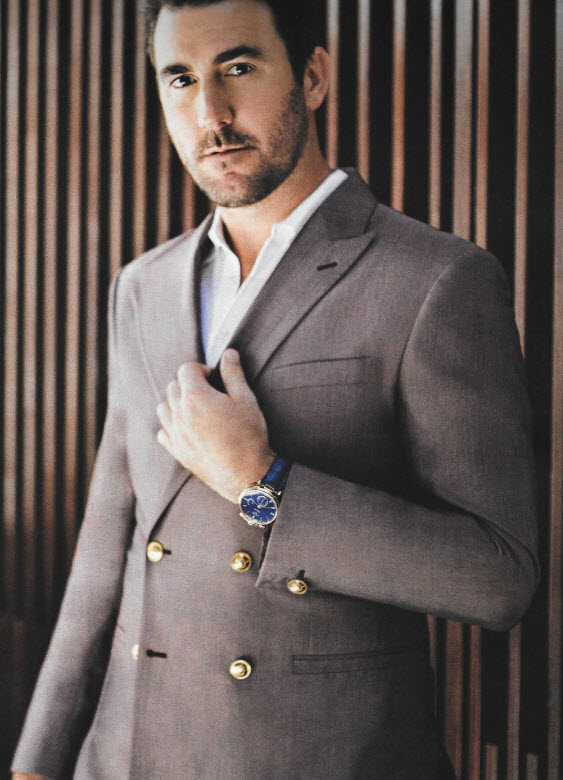
Forbes Suit
Source: Forbes Life – Summer 2015, page 87

Double-breasted wool-cotton-silk suit by Versace ($2,975), cotton polo by Kiton ($900), Amadeo Fleurier 43 watch by Bovet ($48,000)

Compared to what I wear to work every day:

T-shirt from Sears ($12.50), Levi’s 501 – five years old ($50). And I don’t own a watch and haven’t owned one since high school. What the heck would I do with a watch, and why would I spend a literal fortune on one?

Who spends $900 on a polo shirt? My entire “wardrobe” didn’t cost $900 combined!

I don’t understand clothes and accessories.

At all.

A Stroll on the High Line

Where would you guess I was when I took this picture? Does it not look like some lush park somewhere, possibly in a wetlands, hence the planked walkway?

highline1

What if I told you I was in the heart of Manhattan. Here is a view from the same point in the opposite direction:

highline2

The park is high above the streets. The street noise still reaches up, but it is drowned out by sound of birds, people chatting on park benches and picnic tables, and the wind blowing through the trees. The serenity of nature is all around, and the city rests — below.

Designed and opened in 1934, the High Line was a train system, running over Manhattan blocks several stories above the street level, to allow trains to go to and from Manhattan’s largest industrial areas. After 1980, when trucking took over the traffic, the line was abandoned. Later, a group of local activists decided to turn it into an innovative park system. It goes right through Chelsea and the Meatpacking District of Manhattan. You can learn all about it on the High Line’s Website.

highline3

Five Elephants Slain in Kenya Yesterday

While the world went abuzz with yesterday with outrage over American dentist James Palmer’s killing of a lion out of a national park, five elephants were slain in Tsavo West National Park in Kenya last night.

Elephants are far more endangered than lions, since ivory sells for as much as $1000 per pound in Asia. I can blame the poachers, but I know that the market, mostly in Asia, provides the incentive. China’s wealth makes this worse. Elephants are facing extinction. The supply of ivory will one day stop dead – when there are no more wild elephants.

That will be a sad day.

Test-driving a Traditional Gas-powered Car

Assume we didn’t have cars. To go to the store, you would have to go to the barn, bring out your horse, put on the harness, attach the harness to the wagon, then get on the wagon and “drive” the horse to town. Just getting ready to leave is a major production and takes a lot of time. Keeping a horse is very expensive. When you are used to cars, going back to a horse would indeed be challenging and frustrating.

Now imagine for a moment that electric cars are now the standard. What would it be like to go back to a traditional car?

Traditional or hybrid cars have anywhere from hundreds to thousands of moving parts. There is no engine with coils, cylinders, valves, spark plugs, distributors, alternators, belts, crank shafts, water pumps, gas pumps, carburetors, transmissions, fans and exhaust systems. An electric car, according to Tesla, has about a dozen moving parts. There really are only the wheels, the steering mechanism, brakes, and an electric engine the size of a watermelon between the rear wheels.

Here is a hilarious story of someone doing just that: looking at a traditional car from the standpoint of the customary electric one.

Enjoy!

High Speed Rail in the United States

California is in the process of building the most expensive and slowest high speed rail line in the world. Politicians love to make fun of this project. Yet, we need high speed rail – efficient and effective high speed rail – so badly in this country.

There is a rail line planned from Victorville, California to Las Vegas, Nevada. For those of you that are not from Southern California, Victorville is a community in the high desert.

Victorville

Victorville is a bedroom community about 40 minutes north of San Bernardino, over the mountains, in the Mojave desert. People commute from there into the San Bernardino valley for work. It’s also a stop on the way to Las Vegas, or up Highway 395 into the Sierras.

I cannot imagine driving to Victorville, which would be about two hours from Los Angeles or San Diego, then park my car and get on a high speed train to complete my drive to Las Vegas. By the time I am in Victorville I am through the hard driving, and the remaining two to three hours are easy.

I imagine the line won’t be completed to Los Angeles or San Diego because of land constraints and expenses of building a train line in the middle of urban areas. But that’s where we need them the most. If I could get on a high speed train in San Diego to Las Vegas, and be there in a couple of hours, I definitely would use the train.

The Victorville to Las Vegas line is definitely a boondoggle that makes no sense to me.

Then there is the planned connection between Los Angeles and the Bay Area, which also gets terrible press by many politicians.

Here is a summary of the high speed rail initiatives in the United States.

Now let’s compare our initiatives with those of the rest of the world, particularly in China. Here is a map showing high speed rail lines in the United States, superimposed over all our rail lines.

America's High Speed Rail System

[source language=”Wikipedia”][/source]


This admittedly looks pretty anemic for a large, industrialized country. Here is China’s map, in comparison:

China's High Speed Rail Lines

China is approximately the same land size of the United States. Yet, it has more high speed rail than the entire rest of the world combined. And it’s still building more. Here is a chart that illustrates this:


High Speed Rail

My take-away from this:

China has more high speed rail than the entire rest of the world combined. China is currently building almost twice as much high speed rail as the entire rest of the world combined. The United States is ranked along with tiny countries like Belgium, Austria, Taiwan and Uzbekistan in its installed base. Greece, yes, Greece is building more high speed rail right now than the United States.

High speed rail, the way we think of it, is apparently not practical in the United States. China knows something about infrastructure that we’re not paying attention to, and our children and grandchildren will pay that price. China will be able to move military equipment and troops all over their country with rapid speed. We cannot match this, and even if we started now, we’d be decades behind.

China just started building all this infrastructure within the last 15 years or so. Yes, China is a very polluted country with disregard for human rights, individual freedom, and the environment. Nevertheless, they are building infrastructure like mad, and we are not.

I think the United States is on a dangerous path of rapidly losing its competitiveness in the world by disregarding its infrastructure, and high speed rail capacity is one aspect that illustrates this.


Commuting in Japan, Bangladesh and India

I am glad I don’t have to go through this every day on the way to work. It’s a good thing pickpocketing is not very common in Japan. To me, there is something entirely wrong with our society when this is necessary.

Here is another view of the same problem from another side of the world.

I get a kick out of the clusters of people hanging onto the doors.

An then, of course, there is this “Train Market” where I would love to by my vegetables every day:


Pork Chops Anyone for Today’s BBQ?

Pigs are highly intelligent animals, rumored to be smarter than dogs or cats. The novel Animal Farm by Orwell takes advantage of that fact for its plot. Pigs in “factory farms” spend their entire lives in small cages. Mother sows can’t even turn around. Their waste is flushed into open cesspools and when they fill up, the farmers spray the waste into the air so the globules drift away with the wind – onto the neighbors.

This is what it takes to provide cheap pork at Costco. Real farms would be way more expensive. Our hunger for inexpensive meat overrules our sense of responsibility for the lives and welfare of animals and the pollution of our environment.

Check out the video above and then go enjoy your BBQ.

My Battery Tester is Worth its Weight in Alkaline

Battery Tester

A few years ago I bought this little battery tester at Amazon for about 12 dollars. It takes AA batteries, like shown here, AAA, and 6 Volt. It must have saved me hundreds of dollars in battery cost by now.

Every time, before I am about to discard a battery, I test it first.

When the wall clock falls behind, it must be the battery. Before I go hiking, I replace my AAA batteries in the headlamp so I don’t run out. When my wireless keyboard or mouse act up, the first thing I do is replace the AA battery.

I have found that about half of the time, the battery that I was about to put into the recycle container was perfectly good, sometimes at 80% or better. I have started to save batteries at 60% or better in a little box from which I take my “new” batteries when I need them. I believe I buy half the batteries now compared to what I used to before I had this tester.

The battery in the tester in this picture shows 100% full, since all 5 LEDs are lit. This is a perfect, fully charged battery, that I was going to throw out.

This tester is great value for the money.

Electric Vehicle Parking at San Diego Airport

Recently, when picking someone up at the San Diego Airport, I noticed that the entire front row of parking spaces, nearest the terminal, were Electric Vehicle Parking only.

Electric Parking
You can drive up in your electric car, plug in, and go into the terminal. It made me want to have an electric car.