Book Review: The World Without Us – by Alan Weisman

World Without Us

Imagine all the people in the world disappeared today. Gone. I recognize this is a hypothetical scenario, one that has a low likelihood of happening, but — it could happen. An Ebola-like plague could sweep the world and eradicate the human race in a matter of a few weeks. There have been doomsday books, like Stephen King’s The Stand that were based on just that premise. My favorite book about this subject is Earth Abides by George Stewart. Both novels start out with just about all people dead, and one single survivor eventually finding another one, starting the long process of building a new world from scratch and from the ruins of the old world.

The World Without Us is not a novel. It is a speculative work taking on many of the controversies of our society, including overpopulation, climate change and runaway pollution. Every chapter explores, from its own viewpoint, what it would be like if humans simply were no longer here.

Here is an example. What would happen in New York City if humans disappeared. Surprisingly, the city would come to pieces very quickly, must faster than other places out west.

Schuber peers down into a square pit beneath the Van Siclen Avenue station in Brooklyn, where each minute 650 gallons of natural groundwater gush from the bedrock. Gesturing over the roaring cascade, he indicates four submersible cast-iron pumps that take turns laboring against gravity to stay ahead. Such pumps run on electricity. When the power fails, things can get difficult very fast. Following the World Trade Center attack, an emergency pump train bearing a jumbo portable diesel generator pumped out 27 times the volume of Shea Stadium. Had the Hudson River actually burst through the PATH train tunnels that connect New York’s subways to New Jersey, as was greatly feared, the pump train— and possibly much of the city— would simply have been overwhelmed.

Weisman, Alan (2007-07-10). The World Without Us (p. 25). St. Martin’s Press. Kindle Edition.

650 gallons of natural groundwater run into that one subway station every minute, and pumps must keep running 24 hours a day to keep it try. When the power runs out (and that’s another chapter), in a half hour the water would be high enough to flood the tracks and trains could no longer pass. In 36 hours the entire subways system would fill up. Weisman goes on:

Even if it weren’t raining, with subway pumps stilled, that would take no more than a couple of days, they estimate. At that point, water would start sluicing away soil under the pavement. Before long, streets start to crater. With no one unclogging sewers, some new watercourses form on the surface. Others appear suddenly as waterlogged subway ceilings collapse. Within 20 years, the water-soaked steel columns that support the street above the East Side’s 4, 5, and 6 trains corrode and buckle. As Lexington Avenue caves in, it becomes a river.

Weisman, Alan (2007-07-10). The World Without Us (pp. 25-26). St. Martin’s Press. Kindle Edition.

This is just about one of our great cities.

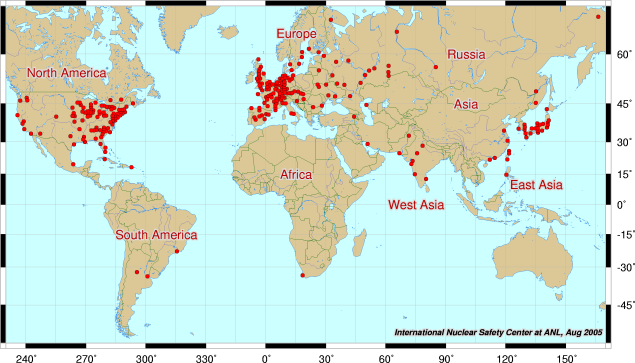
There are 441 operating nuclear power plants in the world. Without the regulating eye of humans, many of these plants would go through some form of catastrophic failure and eventual meltdown. Imagine 441 Chernobyls around the world. Check out this map and find how close you live to one? Hey Australia! Safest place on Earth in case of a meltdown.
world_map_nuclear
Source: International Nuclear Safety Center at Argonne National Laboratory.

This map is from 2005, I could not find a newer one, but given how long it takes to build such a plant, and considering that they are not building many more, it’s pretty close.

The World Without Us was published in 2007. Given today’s pace of development, and pollution in China (check out this link and be shocked), and runaway fossil-fuel-burning, things are much worse than described by Weisman in 2007, when there were only 6.5 billion people on the planet, rather than seven.

We’re adding one million people to the planet every four days.

The World Without Us reads like a fast-paced thriller, where the bad guys are out the make the world go away. As I read the book, I realized that I was in it, and it wasn’t a thriller, it wasn’t a novel, it was a giant reality show, and my life, and the life of my children, and their children, was on the line.

Don’t you understand what I’m tryin’ to say
Can’t you feel the fears I’m feelin’ today?
If the button is pushed, there’s no runnin’ away
There’ll be no one to save with the world in a grave
Take a look around you boy, it’s bound to scare you boy

— Barry McGuire, Eve of Destruction

Choose not to read this book at your own peril.

Rating - Four Stars

The World’s Tallest Tree

Over six years ago I wrote this book review of The Wild Trees by Richard Preston. It is a wonderful story about tall trees and the nature lovers who study them. The foremost expert is Steve Sillett. Just recently I saw this video link by a friend on Facebook about Sillett measuring the tallest tree in the world, named Hyperion. It gives some perspective. In The Wild Trees, I learned about the art of tall tree climbing that Sillett and his friends and coworkers essentially invented as they went.


When it Rains in Southern California

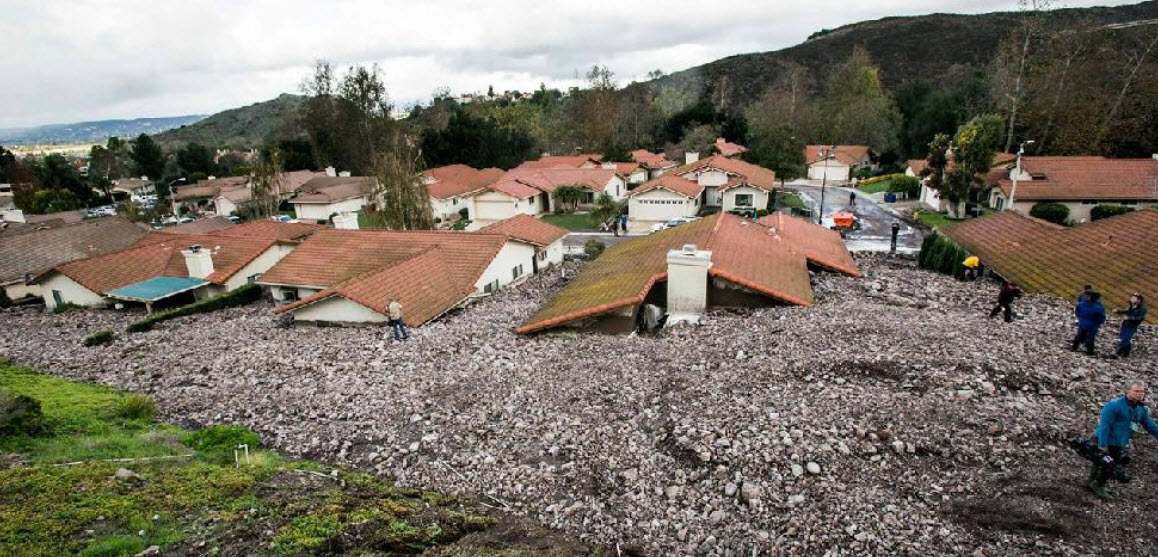
This is what happens when we get heavy rains in Southern California.

Debris Slide
Debris Slide in Camarillo Springs, California. AP Photo.

Click here for hundreds more pictures.

The Brutality of Nature

Not just humans experience stress. Animals, by just existing, are exposed to predators, or dangerous situations. Watch this sheep and her lamb.

Planet Formation

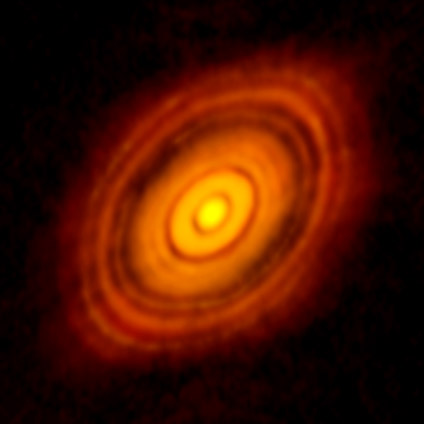
HLTau
Image of Planet Forming Disk Credit: ALMA (NRAO/ESO/NAOJ); C. Brogan, B. Saxton (NRAO/AUI/NSF)

Here is an amazing image of a new star surrounded by a disk of gas that already is forming clumps that will eventually condense into planets. Read more details at the article here.

Our own solar system is 4.6 billion years old, so we floated around and looked like this then. And in another few billion years, when the gases of that disk will have condensed, and  planets will have formed, perhaps one of those planets will be just warm enough for liquid water to exist and not too hot for the greenhouse effect to go crazy, just maybe some life may develop.

And if by chance that life were to gaze up into the sky at our own sun, it will be a red giant close to the end of its life. It will be bigger than the orbit of Venus. Earth is expected to be able to support life for only another billion years. By then it will long have been turned into a dead ball of cinder.

And they – should they exist – would look at our sun and never know we were ever here.


Featured Artist: Mark Gee – Full Moon Rising

This was photographed by Mark Gee in New Zealand in real-time. There was no editing done whatsoever in this video. Make sure you read the description below the YouTube video:

This is my “Full Moon Silhouettes” short, as seen originally on Vimeo. It is a real time video of the moon rising over the Mount Victoria Lookout in Wellington, New Zealand. People had gathered up there this night to get the best view possible of the moon rising. I captured the video from 2.1km away on the other side of the city. It’s something that I’ve been wanting to photograph for a long time now, and a lot of planning and failed attempts had taken place. Finally, during moon rise on the 28th January 2013, everything fell into place and I got my footage.

The video is as it came off the memory card and there has been no manipulation whatsoever. Technically it was quite a challenge to get the final result. I shot it on a Canon ID MkIV in video mode with a Canon EF 500mm f/4L and a Canon 2x extender II, giving me the equivalent focal length of 1300mm.

— Mark Gee

And here is a link to his site and how he did it.


When I first saw this I didn’t realize it was in the Southern Hemisphere. I noticed that the moon rose to the left, rather than to the right, and I thought that the video was simply side-reversed. Then I saw that the moon looked different too. I have never been to the Southern Hemisphere, so I never could experience this live.

This experience reminded me of my own painting titled “Supermoon over Swiss Alps” modeled after photograph one of my friends took while in Switzerland, of the rising moon behind a mountain.

Supermoon in Swiss Alps

A Rock from Mars

image_2153_1-Nakhla-meteorite
[image credit: NASA]
A rock formed on Mars 1.38 billion years ago. About 11 million years ago, an impact event on Mars ejected this rock from the Martian surface. It then circled the sun along with Mars and Earth for 11 million years. On June 28, 1911, it “rained” down to Earth along with a number of other meteorites near El-Nakhla in Egypt. The meteorites are now called the Nakhla meteorites.

I was born some 45 years after it crashed and was collected, and I now get to marvel about it. The simple fact that we even know this, and can establish this much detail about the history of this one rock is fascinating.

Dust in the wind, we are.


Multiple fragments of the Nakhla meteorite fell to Earth on June 28, 1911 near the village of El-Nakhla in Egypt. Its crystallization age has been determined to be 1.38 billion years.

About 11 million years ago, an impact event ejected this rock from the Martian surface, after which it traveled through space and crashed into our planet in 1911.

Obama Declares: San Gabriel Mountains National Monument

Clouds over Mojave
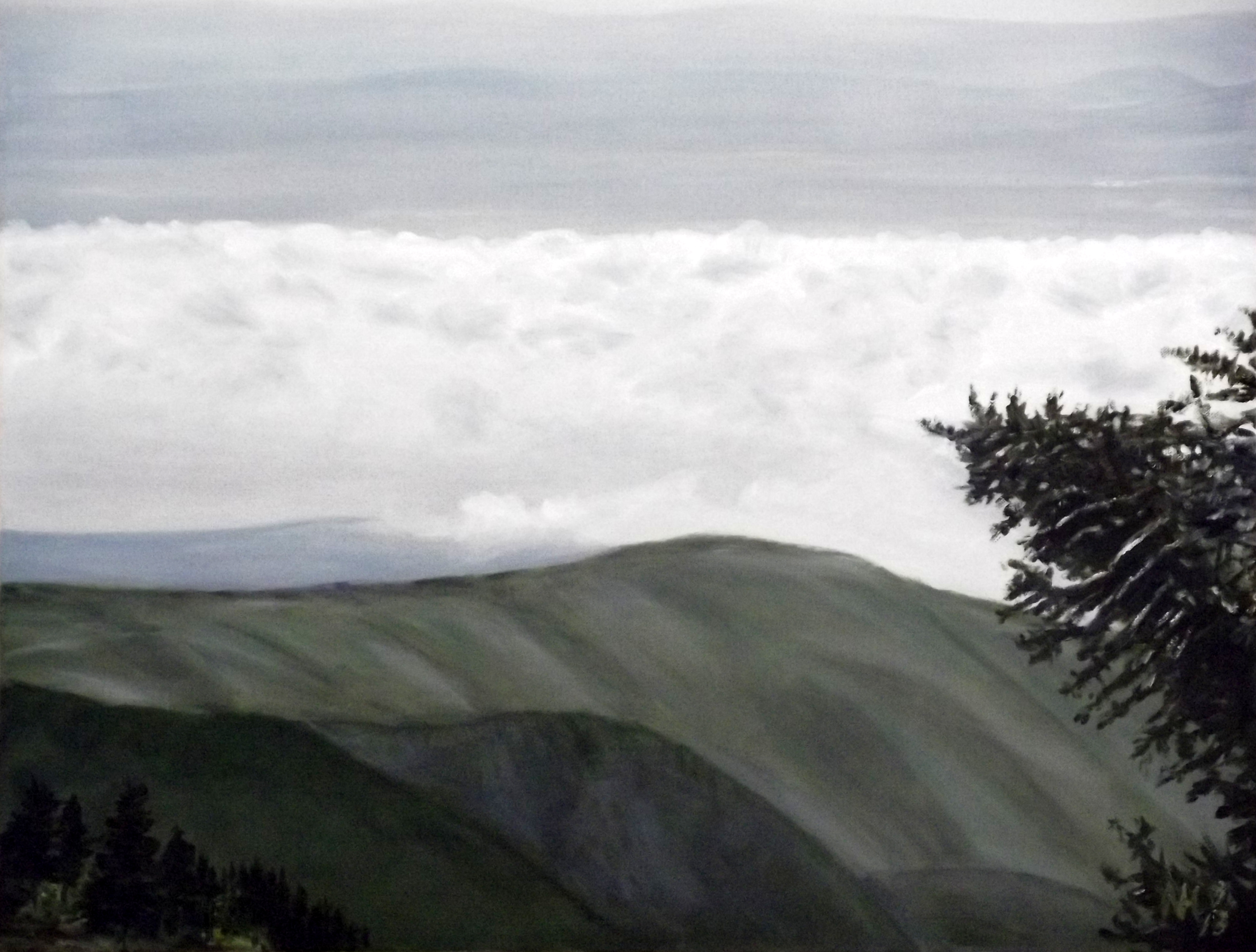
Painting: Clouds over Mojave fashioned after view from Devil’s Backbone on the hike to Mt. Baldy

The San Gabriel Mountains are one of my favorite hiking destinations. I made the painting above after a trip in May 2013. One of the most beautiful places in the world.

After a long time planning, President Obama yesterday declared the Angeles National Forest the San Gabriel Mountains National Monument.

Of course, there was fierce opposition.

Assemblyman Tim Donnelly, who was protesting the “Federal land grab” of the Monument (the land is already Federally owned), and an unidentified woman who said she “feared the UN would seize control of the San Gabriel Mountains if Obama were to declare them a national monument (no comment).

Modern Hiker

Protesters from groups like Public Lands for Public People, the owner of the Mt. Baldy Lodge and the California Off-Road Vehicle Association (CORVA). They were led on by a number of public officials from the San Gabriel area.

I am grateful to President Roosevelt the First for his conservation efforts and the creation of the National Park system. This is one of the fundamentally “good” functions of the federal government. If the government didn’t make such efforts, there’d be coal, gold and silver mines in all our mountains, there’d be McDonalds restaurants on top of our peaks, there’d be roads to ski resorts everywhere in our wildernesses – there would be no wilderness left.

Some articles:

Modern Hiker (where the above quote comes from)

Hiking Angeles Forest (blog by my friend Kyle Kuns)

I feel strongly that wilderness and natural beauty in our country is much more important than gross national product. The generations that follow us will be grateful.

I would be glad to have more of my taxes allocated to conservation. Sign me up!


Scare Owl

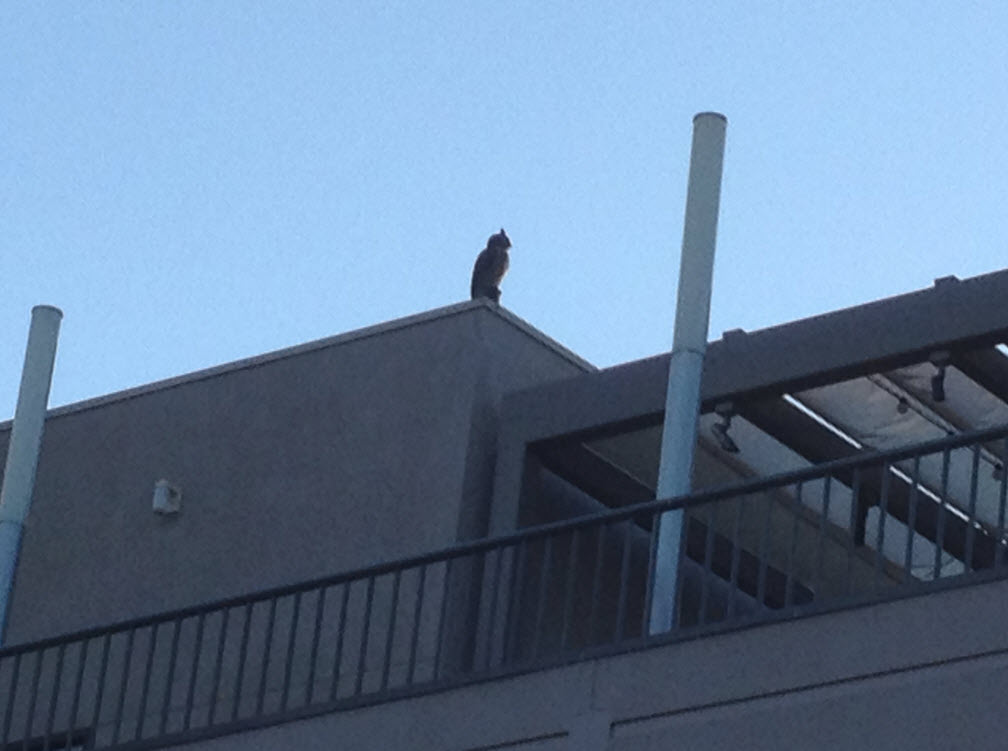
On top of our mall, on the walls near the food court, which has an outdoor patio, you can see a prominent owl.

Owlcrow

It is mechanical and solar-powered. Occasionally it moves its head quickly from side to side, to give it a real appearance.

There are several on the roof of the mall. They keep the birds away, all kinds of birds, large birds like seagulls, and smart birds like crows. We have a lot of both in our neighborhood. Owls are known by birds to be fierce, fearless predators, and when birds see one of them, they stay away.

Apparently the birds figure out they are dummies if they stay in one place too long. So once a month a man comes around to service and move them.

That’s the scare-owl-man. I had a chat with him today.

Once There Were Billions

Passenger-Pigeon-300x208This week we had a very sad anniversary: Exactly one hundred years ago, on September 1, 1914, the last passenger pigeon in the world, named Martha, died in the Cincinnati Zoo.

Scientists estimate that there were three to five billion passenger pigeons in North America when the Europeans first arrived. It was the most abundant bird on the continent.  More than a quarter of all birds were passenger pigeons.

Relentless hunting by humans was the cause for their demise. Pigeons served as cheap food for slaves and the poor. After a slow decline through the beginning of the 19th century, the collapse became catastrophic between 1870 and 1890. The populations never recovered, and the last pigeon died in 1914.

Pretty much nobody alive today has ever seen this bird.

We are doing the same today to elephants. There are only about 600,000 African elephants and 30,000 to 50,000 Asian elephants alive today. Already 20% of all elephants are in captivity. It is estimated that there were 1.3 million elephants in the world in 1979. So in 35 years, we have cut the population in half.

Conservationists estimate that in the last three years 100,000 elephants were killed by poachers. This is up sharply from about 20,000 a year only a few years ago.

To put this into perspective:

Poachers are killing about four elephants an hour right now, 24 hours a day, every day, every year.

And it’s all about the ivory. In most parts of the industrialized world, ivory is tightly controlled or even banned now. However, in China, ivory carving is deeply rooted in tradition and massive amounts of ivory are still being consumed for that purpose. Newly rich Chinese love to shower each other with gifts of elaborately carved pieces of ivory.

But even in the United States, we don’t all agree. Obama has recently faced opposition from, believe it or not, the National Rifle Association. If ivory can’t be sold, then guns or rifles with ivory inlays in the handles, could also not be sold. So the NRA opposes the initiative.

The insanity of it all is mind-numbing. If the killing goes on at “only” the current rate, there won’t be any elephants left in 20 years. Like any population, once it is small enough, it can no longer sustain itself and it will collapse. We may be the last generation that can still witness live wild elephants.

Then what are the Chinese going to carve? Then what are we going to inlay into our rifle butts?

Unlike the burning of fossil fuels, which we can’t just stop overnight, we could easily just stop buying ivory. Cold turkey. The killing would stop overnight.

But it doesn’t. And just like there are no more passenger pigeons, there will soon be no more elephants.

Vultures Killed by Poachers

Vulture
African Whjte-Backed Vulture

According to an article in The Scotsman, poison attacks kill vultures in mass.

The sight of vultures congregating high above the African bush is a sure sign of a recent kill. But the scavengers are hated by poachers because they alert rangers to their presence. Poachers lace the carcasses of elephants and other game with ­cyanide or pesticides such as temik so the birds die before they can take to the skies again.

Despite ever more conservationist measures all over the world, hundreds of thousands of elephants are slaughtered by poachers every year for their ivory. 65% of all elephant deaths are now attributable to poaching, up from 25% only ten years ago.

Similar statistics apply to poaching of tigers. There are only a few thousand left alive in the world.

We are witnessing a mass extinction of wildlife unlike anything seen in the history of the world right now, with the possible exception of the Chicxulub asteroid hit 65 million years ago.

It is incredible sad to think that humans think nothing of killing off entire species of animals for short term gain. Poachers are African poor people who just want to feed their families. Income inequality strikes in its own strange way in other countries.

One day, not too far in the future, there won’t be any wild elephants, wild tigers, and – what I would not have expected – wild vultures.

Mystery of the Sailing Stones Finally Solved

Sailing Stones

According to this blog post in Discover Magazine:

The Racetrack Playa — a barren lakebed in Death Valley National Park — is home to one of the world’s natural wonders: “sailing stones” that mysteriously meander across the dried mud, leaving tracks in their wake. Since the 1940s, these rocks have fueled wonder and speculation because no one had seen them in action — until now.

Octopus Disappearing and Escape Artist

We have all heard about how smart octopuses are. They are among the most intelligent of all invertebrates. The exact extent of their intelligence and learning capability is much debated. Some people even try to keep them as pets, but it is difficult, since they can escape out of “secure” tanks due to their problem-solving skills.

Here is a video of an octopus getting off the deck of a ship through a very unlikely opening. I thought this was amazing to watch.


Humanity’s Elephants in the Room

Korean Concentration Camps

The Committee for Human Rights in North Korea estimates that North Korea holds as many as 120,000 people in its system of concentration and detention camps, and that 400,000 people have died in these camps from torture, starvation, disease, and execution.

Some reports indicate that they also practice generational imprisonment:

Many prisoners of the camp were born there under North Korea’s “three generations of punishment”. This means anyone found guilty of committing a crime, which could be as simple as trying to escape North Korea, would be sent to the camp along with that person’s entire family. The subsequent two generations of family members would be born in the camp and must also live their entire lives and die there.

Source Wikipidia

See this Wikipedia article for more details and links.

If you are unlucky enough to be born the grandchild of a person who tried to escape the country, you will serve slave labor for your entire life. Imagine the world-view you would have under those circumstances?

And we, in 2014, allow this to go on, while the baby face dictator gets media coverage.

Bees are Dying

In North America alone, the National Agriculture Statistics Service reported that there were 2.44 million honey-producing hives in the United States in February 2008, down from 4.5 million in 1980, and 5.9 million in 1947. This is also happening in similar proportions in Europe and the rest of the world. We don’t exactly know what is causing it, but we suspect pesticides. Our agriculture depends on bees to a large degree, and entire crops are in peril without sufficient numbers of bees available.

Overfishing the Oceans

Faced with the collapse of large-fish populations, commercial fleets are going deeper in the ocean and father down the food chain for viable catches. This so-called “fishing down” is triggering a chain reaction that is upsetting the ancient and delicate balance of the sea’s biologic system.

A study of catch data published in 2006 in the journal Science grimly predicted that if fishing rates continue apace, all the world’s fisheries will have collapsed by the year 2048.

National Geographic

Anthropogenic Climate Change

97% of climate scientists agree that human activity is causing climate change.  We are pumping CO2 into the atmosphere at rates that will result in global warming to a degree that the ice caps in Greenland and Antarctica will melt, causing a rise of sea levels and overall changed in weather, resulting in droughts and many other climate related disasters, all within the next 100 years.

Most of the educated world agrees with this assessment. In the United States, however, there is a strong movement of “climate deniers” particularly in the conservative population that is well-funded by the oil and coal industries, putting the general consensus in question. Since the U.S. is by far the largest polluter in the world, this strong anti-climate-change sentiment has global implications. One of the arguments of deniers is that since China and India are just starting to pump pollution into the air, whatever we do will not offset that, so we might as well not even try. A significant percentage of the U.S. population seems to have bought into this philosophy.

We didn’t want to face that smoking was dangerous to our health, until the first generations of smokers started dying early in the millions in the 1960s and 1970, so the inevitable evidence eventually came and changed our attitude. This will happen with climate change, but the nature of the problem is much more calamitous in the event that climate scientists are right. We could ruin the planet for centuries or millennia – before it can recover again.

We are playing a big-stakes game of dice. Our conservatives are not even willing to hedge their bets – they’re betting the planet in exchange of jobs and profits.

Mass Extinction

Human beings are currently causing the greatest mass extinction of species since the extinction of the dinosaurs 65 million years ago. If present trends continue, one half of all species of life on earth will be extinct in less than 100 years, as a result of habitat destruction, pollution, invasive species,
and climate change.

Source Link Here

Depletion of Fossil Fuels

Oil companies are making record profits, and did so during the hard years of 2007, 2008 and 2009. Right now, the United States has surpassed Saudi Arabia as the largest oil producer in the world. Oil companies are raking it in while they can, because they know the gravy train is coming to an end. The International Energy Agency announced in 2006 that the world had hit “Peak Oil” meaning that oil production worldwide had hit the maximum. Going forward from Peak Oil, it will be harder and more expensive to extract and deliver oil, and new supplies will lag behind new demand.

The evidence for is, of course, is the price we are now paying at the pump, which is more than twice what it was just five years ago. The free market speaks the ultimate truth here. Oil is in more demand than can be fulfilled.

There is a lot of controversy about the Peak Oil theory. People argue that the Peak Oil crowd does not know what they are talking about. So, for a moment, let’s put aside all studies and all science, and especially all American politics.

It took about 450 million years to make all the oil in the world. Oil is basically the end-result of millions of years of sunshine (solar energy) being trapped in organic material, mostly plants. The earth is not making any more of the stuff at an appreciable rate. About a hundred years ago we started using it up by burning it and as ingredients for manufacturing, and we have made a measurable dent in our supply. If you trust the doom-sayers, we have about 20 years of oil left at the current consumption. Some say 20 to 50 years. Wild and crazy optimists say 100 years. But it’s limited, very limited, and we will run out.

The question is not if Peak Oil is real. The only question we may ask is if it really happened in 2006, or if it’s still off in the future, perhaps in 2016 or 2026.

I once calculated [see formula here] that roughly every day we are using up as much fuel as it took nature 5,000 years to create.

We. Will. Run. Out. Of. Oil.

When the time finally comes, perhaps centuries hence, our descendants will have figured out how to make do without it. But there are legitimate uses of fossil fuels in reasonable amounts, and they will wish we had not squandered it to make plastic grocery bags or plastic forks for one time use; or for teenagers to drive to the mall. Fossil fuels are a limited resource, and when they are all gone, we’ll have to wait another 450 million years to get more, and haul them here from another planet with life on it.

Our strategy is pretty weird, isn’t it?

Slavery

There are more people in slavery today than any time in previous history. Slavery has many faces. Keeping people trapped in sweatshops in Bangladesh so we can buy cheap shirts at the mall in the United States is a form of slavery. Holding young girls as sex objects is a form of slavery. Bringing laborers from Pakistan to work in construction in Dubai and taking away their passports is a form of slavery.

We are making it possible and we let it happen by our willingness to consume the products of the various forms of slavery – at Wal-Mart and all the other retail stores in our neighborhoods. Go to the mall and try to find a shirt made in the United States, and you will recognize what I mean.

Wars over Religion

It’s 2014 and we are still bickering and shooting each other over whose god is right and whose is wrong. It’s been going on for thousands of years, and we’re still willing to die for stuff written in books in the bronze age or in medieval times. I know people in and from Israel, Iraq, Iran and Afghanistan. They are all good human beings, people who only want to make their lives and the lives of their children better. That’s what everybody wants. If we just stopped bringing gods into the picture, we’d all get along just fine.

The gods are propped up by those that get fat off of them. The religious leaders wearing Rolexes and driving Bentleys. The politicians who build palaces. The kings who tax the rest of their countrymen. And the whole religious food chain below them, all the way down to the basket that’s passed down the rows of pews on Sunday morning.

I say we just abolish religion and save humanity in the process. But I am naïve.