Trump Quotes

trump-quote-2

There is a “make your own pizza” restaurant chain in California called Pieology. As you go through the line, you pick your ingredients. The wall is filled with notable quotes. Long before Trump ran for president, there was his quote that says:

As long as you’re going to be thinking anyway, think big.

— Donald Trump

This quote was attributed to Trump in Forbes Magazine as early as 2013, as far as I can tell. I actually thought it was an old Napoleon Hill quote, but I cannot find any reference to that now. I read The Art of the Deal many years ago, and I must have misattributed it then. The quote is on the wall of Pieology along with Ronald Reagan, Napoleon Hill, Thomas Jefferson and dozens of other luminaries.

There are a lot of Trump quotes circulating and now magnified by his own tweets. Here is one from May 2, 2015 that is ominous:

trump-quote-1

Anyone who thinks my story is anywhere near over is sadly mistaken.

— Donald Trump

You have to give Trump credit. He thinks big, he thinks against all odds, and he has bombastic confidence. And then he pulls it off and becomes president of the United States.

Now let’s see how he governs.

The Big Lie

Make your lie big, and bold, and repeat it often, and people will believe it, because they can’t fathom that you might just make it all up.

The above is my paraphrasing of “Die Große Lüge” in Mein Kampf by Adolph Hitler. Read more about it here.

Die Große Lüge -The Big Lie

Hitler is often credited with the saying that if you say a big enough lie, and you repeat it frequently, it will be believed.

Die Große Lüge ist eine Propagandatechnik, die in der Propagierung einer Lüge besteht, die aufgrund ihrer Größe und Unverschämtheit von vielen geglaubt wird, da „an die Möglichkeit einer so ungeheuren Frechheit der infamsten Verdrehung“[ nicht geglaubt werden kann.

— Metapedia

Here is the original source of this statement from Mein Kampf. For those of you that can’t read German, it’s rambling and convoluted.

„[…] daß in der Größe der Lüge immer ein gewisser Faktor des Geglaubtwerdens liegt, da die breite Masse eines Volkes im tiefsten Grunde ihres Herzens leichter verdorben als bewußt und absichtlich schlecht sein wird, mithin bei der primitiven Einfalt ihres Gemütes einer großen Lüge leichter zum Opfer fällt als einer kleinen, da sie selber ja wohl manchmal im kleinen lügt, jedoch vor zu großen Lügen sich doch zu sehr schämen würde. Eine solche Unwahrheit wird ihr gar nicht in den Kopf kommen, und sie wird an die Möglichkeit einer so ungeheuren Frechheit der infamsten Verdrehung auch bei anderen nicht glauben können, ja selbst bei Aufklärung darüber noch lange zweifeln und schwanken und wenigstens irgendeine Ursache doch noch als wahr annehmen; daher denn auch von der frechsten Lüge immer noch etwas übrig und hängen bleiben wird – eine Tatsache, die alle großen Lügenkünstler und Lügenvereine dieser Welt nur zu genau kennen und deshalb auch niederträchtig zur Anwendung bringen.“

— Metapedia

It says: Make your lie big, and bold, and repeat it often, and people will believe it, because they can’t fathom that you might just make it all up.

How Russians Thought of Germans – Bigotry and Xenophobia

To a Russian soldier the Austrians, as well as all non-Russian speakers, were all “Germans.” The word German (Немецкий – pron. nimietzki) in Russian means a “dumb man” — one who cannot speak so that we can understand him.

— translation note by Aylmer Maude in Tolstoy’s War and Peace

War and Peace takes place in Europe in 1805 through 1810. Much has changed in the years since then in Europe. But it makes me think of what so many Americans, xenophobic as we often are, think of foreigners that don’t speak “our language.” The bigotry of people who view those who speak other languages as “dumb” and inferior goes back through the centuries, the times when imperial Russia was a superpower during the Napoleonic wars, and of course far back into the distant reaches of history to the ancient Egyptians.

It reminds me of the quote often attributed to Miriam Ferguson, the first governor of Texas:

“If English was good enough for Jesus Christ, it ought to be good enough for the children of Texas.”

Book Review: Napoleon – by Andrew Roberts

Napoleon3

I knew very little about Napoleon. I had never read about that period of European history. Yet, now, after reading this masterful biography of over 800 pages, I feel truly enriched.

Napoleon was born in Corsica in 1769 to an average family. His father died when he was very young. He was interested in history and was a voracious reader, even as a boy. His heroes were Alexander the Great and Julius Caesar. As a teenager, he enrolled in a military school and eventually received a commission as a lieutenant in the French artillery. Through extremely hard work, relentless ambition, charm and charisma, he worked through the ranks and became a general at age 27. Soon he was the most popular general in the French military. Due to the power vacuum and incompetence of the government after the French Revolution, he managed a military coup before we was 30 years old, ending up as the head of government as a First Consul. A few years later he crowned himself Emperor.

Now, that was a self-made man if there has ever been one.

There may be more books written about Napoleon than any other figure in history. Roberts’ book presents new material based on the 33,000 letters Napoleon wrote over the course of his life, sometimes as many as 30 a day. But I am not a historian, so to me, this biography was a first introduction to a great man of history.

Well – great in some measures – and frightening in others. Napoleon was a killing machine. During the 15 years he was in power, he conscripted millions of young French men away from their farms, shops, factories and schools into the military, just to lead them into endless battles to be brutally killed. Many battles “only” had 4,000 killed or wounded. Others 30,000 or more. Of the 600,000 men he took into Russia, eventually reaching Moscow, less than 50,000 or so came back home. Most of the men died of Typhus and other diseases, fatigue, starvation, and on the way home in the winter, the brutal, relentless cold of the Russian winter.

We know about “great battles” in history, names like Austerlitz and Waterloo. What actually is “great” about battles, places where tens of thousands of men lost their lives because of the megalomania of their leaders, all monarchs with grandiose egos and destiny on their minds? Was the greatness in the interest of the people?

Reading about one of the greatest statesmen and leaders in history, I found that there are many lessons to be learned for success and leadership, even now, almost 200 years after his death. Whether I agree with Napoleon’s tactics or not, he was definitely a remarkable man, and one worth reading a huge and long book about. Napoleon set out to be listed among the greats, and nobody will doubt that he achieved just that. Alexander the Great, Julius Caesar, George Washington, Napoleon, they go together.

Roberts did a great job telling the story of Napoleon, the man, and his life, from the beginning to his last days.

As I worked through this biography, I realized that War and Peace by Leo Tolstoy, widely acclaimed as the greatest novel of all time, actually plays during the Napoleonic Wars from 1805 to 1810. So I picked up War and Peace, and I am ready to embark now on this huge novel, with keen interest kindled by Napoleon: a Life.

Rating - Four Stars

Queen Maria Carolina of Austria – A Woman Prolific

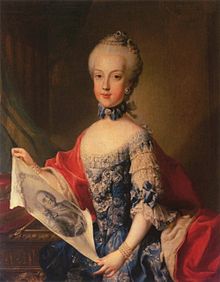
Maria CarolinaMaria Carolina (13 August 1752 – 8 September 1814) was queen of Naples and Sicily as the wife of King Ferdinand.

She was the sister of Marie Antoinette, the French Queen who was later assassinated in the course of the French Revolution.

Maria Carolina was apparently a very remarkable woman, effectively running the kingdoms of her husband. She also bore 18 children, most of which died of smallpox. But seven of them survived.

After bearing 18 children, she found time to have an affair with her favorite diplomat, the Englishman John Acton, whom she elevated to Prime Minister of Naples.

A woman prolific.


Book Review: The Richest Man Who Ever Lived – by Greg Steinmetz

Fugger

Jacob Fugger was born in 1459 in Augsburg, Germany and died 1525, at the age of 66. He single-handedly created a banking and trade empire that reached to all ends of the globe. His company was the largest commercial concern the world had ever seen. He was essentially the father of modern banking and finance, and the methods that he applied still are used in business today, including double-entry bookkeeping.

Most Americans have never heard of Jacob Fugger. He was a contemporary of Albrecht Dürer (1471 – 1528), Martin Luther (1483 – 1546), and Leonardo da Vinci (1452 – 1519). He was most active at the time when Magellan circumnavigated the globe, and when Columbus first arrived in America. I, too, had never heard of Jacob Fugger.

Fugger made his money initially as a trader of textiles. He then got into mining of copper, silver and mercury, and basically cornered the market on metals. He was a trader and a banker. And here is where it gets interesting: At a time when the Catholic Church forbid money lending for interest, calling the sin “usury,” he made a huge amount of his money by lending. Eventually he convinced the Pope to allow lending. He was also instrumental for funding the emperors of his day. The Habsburg emperor Maximilian I might never have been emperor without Fugger’s money. His grandson and successor, Charles V relied exclusively on Fugger to finance his election and then many of his wars. Charles was emperor (and king of Spain) during the time when gold from the Americas started flooding into Europe. Fugger had his hands on the gold by controlling the purses of the emperors.

Günter Ogger wrote a biography about Fugger titled Kauf dir einen Kaiser (buy yourself an emperor), which is part of Steinmetz’s bibliography in the book.

How does one compare very rich people to one another when they live in very different times? Some people compiled lists of assets, converted them to gold, and then valued them. Others compared the assets to the GNP of the times. This was the method Steinmetz used to measure Fugger and list him as the richest man who ever lived. When he died, supposedly his net worth was about 2 percent of the GNP of Europe, indeed a vast amount of money.

During Fugger’s time, he mostly traded in florins, the currency used by Florence, Italy, based on gold, and generally referred to as “pieces of gold” in literature. When the fairy tale writers the Brothers Grimm spoke of pieces of gold, they referred to florins. This book is full of references of florins. For instance, Fugger lent Charles V 544,000 florins to buy his election for emperor. So what is a florin?

I did a little research and found some rough numbers. A weaver (a skilled worker) in the year 1500 would earn one florin every 4 to 6 weeks. A mercenary might earn one or two florins a month. So let’s just average that and say that a florin is pay for a month for an average worker. That would make 12 florins a year an annual normal income. Let’s compare that to $50,000 in today’s America. That would make one florin worth $4166. Ok, let’s say $4000.

Given that, Fugger lent Charles V $2 billion – just to bribe the electors. This reminds me of what it costs to run for U.S. president today. Obviously, Fugger was Charles’ SuperPAC. Incidentally, it took Fugger years to get his money back from the Emperor. It’s pretty tricky when you loan money to a guy who is above the law and can just kill you if he so chooses. The only thing protecting Fugger from demise, over and over again, was that the royals knew quite well that they’d need his money in the future.

So maybe he was not the richest man who ever lived, but he was one of them. Here are a few lists that I found for comparison:

He is number 6 on this list.

He is not at all on this list.

He is number 6 on this list.

He is number 7 on this list.

He is number 4 on this list.

I am glad I didn’t read the negative Amazon reviews of this book before I read it myself. Some reviewers blasted the author for bad and clumsy writing. I usually don’t like clumsy writing, but I noticed none of it. The writing is simple, succinct, informative and easy to read. The stories are not chronological, but rather topical, so there are overlaps in the way the chapters flow through history. It worked fine for me.

I was delighted by how much I learned about the Renaissance. The period came alive in front of my eyes. How do you do international business without telephones, fax machines, the Internet, and travel other than walking or by coach. How do you survive when the church can just accuse you of heresy and burn you at the stake if they so choose? How do you trade when the roads are infested with highway robbers?

I found The Richest Man Who Ever Lived a highly readable and informative book that inspired me to find more material about history during that time.

Rating - Four Stars

Obama Makes History with Eulogy for Clementa Pinckney

Four score and seven years ago….

– Gettysburg Address, Abraham Lincoln


Ask not what your country can do for you, ask what you can do for your country.

– Inauguration of John F. Kennedy


I have dream…

– Martin Luther King


Amazing grace…

– Barack Obama, June 26, 2015

In my opinion, President Obama made history yesterday with this eulogy for pastor Clementa Pinckney and his fellow clergy in Charleston, South Carolina, on June 26, 2015. It will be called the “Amazing Grace Speech,” and school children fifty years and a hundred years hence will listen to it as one of the great speeches that shaped our country. It’s one of the events that Obama will be remembered for.

Amazing Grace.

Note that the video starts at 29 minutes, but you can choose to start at the beginning by rewinding.

Book Review: Canvas under the Sky – by Robin Binckes

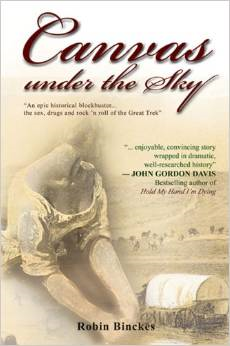
CanvasBoar is the Dutch and Afrikaans word for farmer, which came to denote the descendants of the Dutch-speaking settlers of the eastern Cape frontier in Southern Africa during the 18th century. They were originally Dutch farmers that eventually escaped British rule in South Africa by trekking north into the unknown North, the frontier.

Canvas under the Sky is a historical novel that plays in the 1830s in South Africa. Rauch Beukes is a young Boer of 17. As the story opens, he travels with his father to Cape Town to purchase supplies for the homestead. The trip takes several weeks each way by horseback and wagon. When they come home, they find the farm plundered and burned by the Xhosa natives. Rauch’s mother and sisters are dead. His brothers and their servants and slaves had found refuge with a neighbor. The family starts rebuilding.

Eventually, the Boars decide to leave the English colony and trek north. The migration is eventually known as the Great Trek. Rauch narrates the story of the trek, the hardships the settlers go through, and the many battles they fight against hostile natives of the Xhosa, Zulu and many other tribes that outnumber them fifty to one. The leaders of the trekkers are Potgieter, Retief, Maritz, Trichardt and Cilliers, among others, and reading Canvas under the Sky, some of those leaders come to life for the reader.

Reminiscent of the conquest of the American western frontier around the same period, the treks of the Boars in South Africa are not as well-known or documented, at least not to the average American reader, like me. While I knew there was a violent and bloody period, reaching all the way to modern times and Apartheid, I had never had the opportunity to familiarize myself with South African history and the details of the colonization. This book opened my eyes.

But not sufficiently.

I got a sense of what the hardships of the settlers were, and how difficult it was to survive on the frontier. In America, we had the Indians. In South Africa, they had the Xhosa and Zulus, who didn’t appreciate the Europeans invading their lands and upsetting their customs. The book illustrates many bloody battles, where thousands of natives were mowed down by western guns and cannons, with casualties for the whites only in the dozens, if any. But I never really got the sense of where the wars were going. The whites are constantly portrayed as those with God on their side. They thank the Lord for the battles that they won, with thousands of black corpses surrounding them. No credit is given to the natives, who are portrayed as nothing but bloodthirsty wild animals that wanted to harm innocent God-fearing settlers.

The author loves to show battle after battle. The battles are always the same.  They do not really portray the underlying conflict. A naïve reader will put the book down and hate the blacks, who were really the ones that were violated in that period of history.

The author most also have been given bad advice about how to make a history book interesting. Rather than spending time and effort on painting an accurate and realistic historical background and environment, he decided to make the narrator a horny teenage boy who does most of his thinking with this genitals, and thus Canvas under the Sky is part historical novel, part soft porn for teenage audiences. The two just don’t work together.

In Rauch’s life there are three women: Amelia is the daughter of an English settler, who is fifteen when he and his father, at the beginning of the book, come home from Capetown to find the homestead devastated. Rauch falls in love with her, but inexplicably, she loves his father, who is around 40 years old at the time, and she marries him instead. Amelia’s character never really makes sense, all the way through the story.

Then there is Katrina, the mulatto former slave come prostitute, who likes to service Rauch and eventually bears him a son. She is actually the woman that is most thoroughly developed in this book, whose motivations make sense and who cares about Rauch. But for some reason we don’t understand, he casts her away.

Finally, there is the beautiful Marietjie who loves him – why I can’t figure out – but who is married to an abusive English officer named Roddy. She also gets pregnant by Rauch.

Rauch’s Pa is also an old lecher who cheats on his wife (when she is still alive) and then steals the girl of his son. Pa comes across as a 40-year-old teenager who is interested in nothing but getting laid.

The sex scenes are plentiful, explicit and unfortunately also awkward and repetitive. Rauch always “kisses tenderly.” There is no normal kiss, just a tender kiss. Whenever a woman looks at him “he feels himself getting aroused.” When he orgasms, it’s always “indescribable.”

The sex scenes do the book a disservice. The motivations of Rauch and his women don’t make any sense. They seem to be contrived and appear to exist only to make a historically shallow book spiced up so it would appeal to high school kids.

If I want soft porn, I read Fanny Hill. If I want to read historical novels, I read Jeff Shaara books. It’s a pity, because the author really does seem to have a passion for the history of his country. More history, more detail, perhaps a map or a chart, would have helped the book much more than the side plot of Rauch and his adolescent urges.


Rating - Two Stars

First Phone Call from Los Angeles to Albany, New York

Frist Phone Call
Source: New York Tribune, Feb 20, 1915

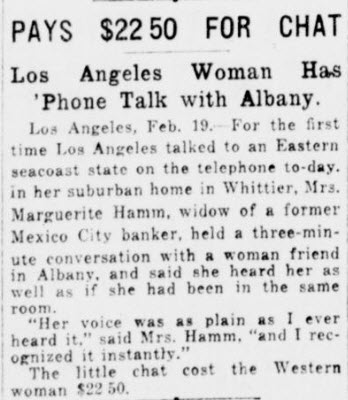
Exactly 100 years ago today, a woman in Whittier, California made a three-minute telephone call with a friend in Albany, New York. The call cost $2,250. It must have seemed like magic.

Book Review: River God – by Wilbur Smith

War is the game played by old men with the lives of the young.

RiverGodRiver God is set in Ancient Egypt, some time during the speculative 13th or 14th dynasty, or roughly between 1700 to 1500 BC. Egyptologists call the era the Second Intermediate Period which followed the Middle Kingdom. Even though that time is about 3700 years ago for us, the Egyptians of the time already thought of themselves as an ancient people. Note that the Great Pyramid of Cheops in Giza was already almost 1000 years old then. To them, that was ancient, ancient antiquity.

The story is told in the first person by a slave and eunuch. Taita, the slave, happens to be brilliant and talented. He knows medicine, architecture, writing, city planning, engineering and many other skills. Such a slave is worth his weight in gold many times over, literally, and rich people will do anything to possess and retain such a slave for themselves.

Taita, therefore, has access to the most powerful people in the empire, and through his eyes we get a first-hand view of the machinations of power in ancient Egypt. The politics, the intrigues, and the sheer struggle for survival, not just for the working class, but also for royalty, comes to life in brilliant colors.

The story is well conceived and plays against a historical background, even though the actual players and their names and individual stories are fictional, yet entirely credible and plausible.

Written in 1994 and filling 662 pages, the story is loosely historically accurate. I am sure it’s not enough for an Egyptologist, but for a novice in ancient history, it serves as a great introduction to a mysterious world far, far away from us, yet, one that lasted many thousands of years longer and our own modern American civilization thus far.

Incredible!

Rating - Four Stars


U.S. Signed United Nations Against Torture Convention in 1984

In 1984, the U.S., along with most nations in the world, signed and ratified the convention against torture.

Article 1.1 defines torture:

Any act by which severe pain or suffering, whether physical or mental, is intentionally inflicted on a person for such purposes as obtaining from him or a third person, information or a confession, punishing him for an act he or a third person has committed or is suspected of having committed, or intimidating or coercing him or a third person, or for any reason based on discrimination of any kind, when such pain or suffering is inflicted by or at the instigation of or with the consent or acquiescence of a public official or other person acting in an official capacity. It does not include pain or suffering arising only from, inherent in or incidental to lawful sanctions.

— Convention Against Torture, Article 1.1

Check out this Wikipedia Article for background information.


Book Review: Edge of Eternity – by Ken Follett

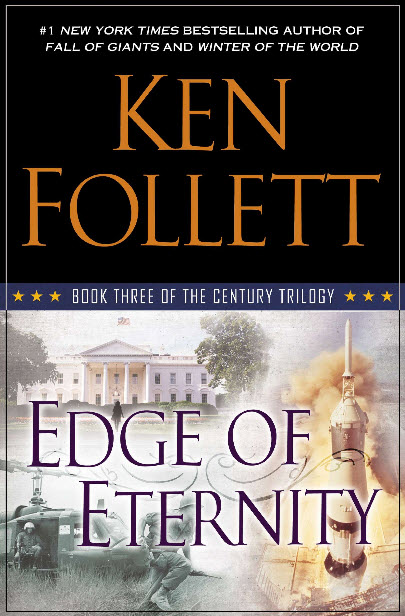
Edge of Eternity

Edge of Eternity is another giant work by a giant writer, a thousand-page book that I could not put down. It is the third book of the Century Trilogy by Follett. There is only one thing wrong with the Century Trilogy: the way he named the books:

  • Fall of Giants
  • Winter of the World
  • Edge of Eternity
  • I could never remember these titles, and I still won’t now that I have read all three. They are epic-sounding, big and vague, and in my opinion impossible to remember. But that’s ok. I think of them as book 1, 2 and 3 of the Century Trilogy.

In Edge of Eternity, we still follow the main families that were introduced in the first two books, but now we are with the grandchildren. The story spans from 1961, the Kennedy presidency and the beginning of the civil rights movement, all the way to 1989 and the fall of the Berlin Wall.

In Germany, our characters are the Franck family, with Werner and Carla being the grandparents. The main characters are Walli, who becomes a pop musician, and the various characters around him.

In Russia, the patriarchs Grigori and Katherine are still alive, but the action surrounds their grandchildren, the twins Tanya and Dimka.

In the United States, Lev Peshkov is still a dandy, but George, his black grandson is the main character.

In England, Ethel still is the leader of the Williams family. Her grandson Dave, a musician, is the protagonist in this story.

Finally, the Dewars are also around, Cam and Beep, the grandchildren, being the leading characters.

Since it has been too long since I read the first two books, I had to pause occasionally to make sure I connected the story all the way to the present in this book, but as I kept reading, things kept coming together.

I love epics, and this trilogy is as epic as it gets.

Through the main characters, I got to be in the room with Krushchev in the Kremlin and Kennedy in the White House during the Cuban missile crisis. I was able to follow the civil rights movement and the thinking of its leaders like Martin Luther King. The pop music culture that dominated the sixties in England and the United States came alive through the band that Walli and Dave formed, called Plum Nellie. How did communism sustain itself through the leaderships of Krushchev, Breshnev and Gorbachev? Why did the East Germans build a wall to imprison its own people for decades, and how did they get away with it? And why did the Berlin wall eventually come down?

Following the main characters in this story, I felt I had a front-row seat with the major figures in the history of the 20th century and its huge movements. History came alive in front of my eyes, through all three of these works, unlike any other that I can remember reading.

Edge of Eternity is an extremely well written book and part of a powerful trilogy about the history of the 20th century.

Rating: **** (out of 4)

Ruminations on the Pledge of Allegiance

I pledge allegiance to the Flag of the United States of America, and to the Republic for which it stands, one Nation under God, indivisible, with liberty and justice for all.

The Pledge of Allegiance is a truly American phenomenon. I do not know of any other nations that have such a thing. Most Americans, should you ask them, think that it was deeply ingrained into the structure of our country and created by the founding fathers.

Far from it. It was first composed by Francis Bellamy, a Christian Socialist (and Baptist minister) in 1892 in an effort to promote the U.S. Flag, at a time when the distribution of the flag was promoted by companies for commercial reasons. They wanted to sell something. Bellamy wrote the pledge to be used in schools. It wasn’t formally adopted by Congress until 1942, and the words “under God” were added only in 1954.

Foreigners that come to America and hear the pledge usually are astounded. They equate it to brainwashing. They compare it to something one would expect in North Korea, but not in the country of “the free.”

I was such a foreigner once, and I clearly remember how it took me some time to get used to it. Pledging allegiance to an object, even if that object is a flag and that flag represents a nation, seemed like a strange thing to do, and trickling this daily into the brains of little school children struck me like a delusion at best.

I have been a U.S. citizen for many decades now, and I participate in the pledge, when I am in an appropriate situation, like a public meeting, but I must admit I don’t do it because I have some allegiance to this object of fabric that represents our nation, but because I don’t want to be different lest I offend someone. I participate with those who grew up with the pledge all their lives – at least since 1946, who don’t know it any other way.

Americans often are prickly about this ritual. “You don’t have to participate, you can remain seated if you want.” But nobody dares. Being “unpatriotic” is not looked upon favorably at this “free” country.

They often say that people died protecting the freedoms we all enjoy today and we should show proper respect for the flag for that reason.

This, of course, is nonsensical. The pledge has nothing at all to do with the fact that people died. Many Americans today do not believe that those people that died in the wars of Vietnam, Afghanistan and Iraq died for our freedoms. I personally do not believe that the 50,000 Americans that died in Vietnam made any difference in the freedom of our country and what it is today. If the Vietnam war had not happened, and nobody had died, we would be no less free today.

People willing to die for something does not automatically make that something good. People died by the millions defending Nazi Germany. What a terrible waste! Should Germans now show respect to the Swastika because their grandfathers died for it?

So making school children pledge their allegiance to a flag to show respect is a dubious practice. It would be much more practical and effective to educate them about the real reasons we are free now, the enormous risks the revolutionary generation took in the fight against England, the fact that the French (a people we often ridicule now as cowards) came to the aid of the colonials, the fact that the founding fathers separated church and state, and many, many others.

Peanut butter and jelly sandwiches are an acquired taste that we Americans grew up with an cherish. Foreigners don’t get it.

It’s the same with the Pledge of Allegiance.