Starring Amelia Shankley as Alice
Ian Holm as Lewis Carroll
Special Effects by Jim Henson
The film Dreamchild is an ambitious surreal drama, adapted from a play of the same name. On a lake near Oxford University in Victorian England, a random boat-ride forges a surprising camaraderie between a witty storyteller and a spirited young girl. The storyteller is an Oxford mathematician, Charles Dodgson; the young girl is Alice Liddell, daughter of the Dean at the same university. Their serendipitous encounter will inspire the classic novel, Alice’s Adventures in Wonderland, a fantasy yarn which continues to enchant children worldwide. Dodgson published his famous work under the familiar pseudonym, Lewis Carroll. The enthusiastic reception of the book (translated into 174 languages) would propel Alice Liddell into celebrity status beyond her native England.
The plot of Dreamchild unfolds through a series of flashbacks from Alice in her old age. During a visit to Columbia University in 1932 (to commemorate the centenary of the birth of Lewis Carroll), the octogenarian Alice re-imagines her various encounters with Carroll. Her memories fuse reality with fantasy, as the camera alternates between events from the life of the real Alice and iconic scenes from Wonderland. The talented British actor, Ian Holm, plays Charles Dodgson. The vivacious Amelia Shankley would garner the Best Actress Award (1986) for her nimble performance in a double role as Alice (not only as Alice Liddell but also as the heroine of the novel which immortalized her name).
1974 was during the height of the religious unrest in Northern Ireland. A World War II veteran, Finbar Murphy (Liam Neeson) leads a quiet life in a small Irish village. He lives by himself, he goes target shooting cans on a fence in the countryside with his friend, the local policeman, and his widowed neighbor would like him to be more interested in her than he is. But he leads a double life. He is also a hitman working for the underworld, murdering his targets in cold blood after he has them dig their own graves.
Doiraenn McCann (Kerry Cordon) is the gang leader of a group of IRA rebels who set car bombs in front of restaurants to target their ideological enemies. When Finbar notices that a young girl in town is being controlled and abused by a thug, he helps her out and in the process ends up killing him. The guy turns out to be Doiraenn’s brother, and she wants revenge.
This sets off the opening of a small war between Finbar and the IRA terrorists that quickly escalates.
There are no good guys in this story, only victims. In the Land of Saints and Sinners highlights the absurdity of the Northern Ireland conflict of the 1970ies without lecturing about religion or politics. Small lives, small towns and everyday people suffer at the hands of those who think they have justice or righteousness on their side. Lives are shattered, lives are lost, and after it’s all done, dreariness and hopelessness continues on.
He entered it with a bang with the movie A Star is Born, alongside Barbra Streisand, which remains one of my favorite. The soundtrack still haunts me and catapults me back to the early years of my adulthood. The last time I saw him was at a concert right here in Poway, California. It was a very small venue, we sat quite close. It was an unimposing, empty stage. There was a microphone, a chair and a stand with a bottle of water. He was a thin and humble man, apologizing for his cold. He had to blow his nose on stage between songs. The only instrument was his guitar. That may have been some eight years ago.
When we were in Maui recently he had just played at a hall there, and we were sorry we had missed the date.
Kristofferson was an amazing and talented person. In San Mateo High School he wrote award-winning essays that were published in magazines. When he went to Pomona College, his achievements in rugby, American football and track and field got him to appear in Sports Illustrated on March 31, 1958. He graduated with a B.A. summa cum laude, in literature. Then he was awarded a Rhodes Scholarship and went to the University of Oxford. There he won awards for boxing (of all things), he played rugby for the college, and started writing songs. Soon he recorded records.
Under pressure from his family, he joined the U.S. Army, eventually became a captain and a helicopter pilot. He also completed Ranger School. When he was stationed in West Germany in the early 1960s, he resumed his music career and started a band. He was offered an assignment to teach literature at West Point, but turned it down.
He tried to get Johnny Cash to record a tape of his, but he didn’t get his attention. So he flew a helicopter and landed it on Cash’s lawn. With a beer in one hand and recordings in an other, he finally got his attention and his music career took off.
But that was not enough. He started acting and was quite successful in a number of films.
Finally, one of my readers just commented that he discovered John Prine and Steve Goodman. At this time in the late 60s, early 70s, Goodman and Prine were playing in small local clubs in Chicago. Not only did he have talent himself, he recognized it when he saw it.
In January 2021, Kristofferson announced his retirement. His final concert was held in Fort Pierce, Florida, at the Sunrise Theatre on February 5, 2020, accompanied by the Strangers.
This man was good at everything he touched!
It’s an astounding and intimidating resume. Per his Wikipedia page, he is said he would like the first three lines of Leonard Cohen’s “Bird on the Wire” on his tombstone:
Like a bird on the wire
Like a drunk in a midnight choir
I have tried in my way to be free
Kris Kristofferson died yesterday at his home in Maui. I will miss him.
I must be on a Nazi grand tour. After reading Slaughterhouse Five and then Woman at 1,000 Degrees, both of which deal with Nazi atrocities and how they affected the individual lives of innocent contemporaries, I now watched Lee, a biopic about the war correspondent Lee Miller, starring Kate Winslet.
Lee Miller was an American fashion model who eventually became a photographer. Before World War II she was in France working for Vogue magazine. As Germany occupied France and Paris, she asked to be sent to the front lines as a war correspondent. As she followed the action, she came in contact with the local populations, including the innocent women and children. What she saw compelled her to tell the story in pictures, and she quickly made a name for herself. Eventually she ended up at the Dachau concentration camp at the time of the liberation by the Americans and there she witnessed the full impact of the Holocaust. Ravaged by post traumatic stress syndrome for pretty much the rest of her life, she was not a very happy or successful mother to her only son, Antony. She said she did the best she could.
Antony never knew his mother’s past and legacy. He only discovered her documents, her photographs and mementos after she had died in July 1977. He documented her life and wrote her biography, which became the basis for the movie.
Lee is not a feel-good movie. It’s hard to follow at times, especially in the beginning. But it builds, and without sensationalizing war, without explicit battle scenes, it tells a story of great suffering and immense evil. And in these times, where dictatorships seem to be in vogue again – pun intended – Lee is a good movie to watch to remind yourself about what happens when one group of people suddenly decides to give one person the power to persecute and harm entire populations of others they don’t understand and therefore they don’t like.
After reading J.D. Vance’s book Hillbilly Elegy last month (review here) I decided to watch the Ron Howard movie of the same name. When I did, I realized right away that I had seen the movie before. After watching it again, I checked my records, and sure enough, I had already reviewed the movie on December 29, 2020. I had given it 4 stars, and I stand by that review now.
It turns out, the movie was made in 2020, long before Vance became a senator, but after 2018, when he first thought of running against Sherrod Brown but eventually decided not to. He started his senate career with funding from Protect Ohio Values, a Peter Thiel super PAC, in 2021.
Just like after reading and reviewing Vance’s book, upon watching the movie again, I am seriously puzzled. Vance pulled himself out of a severely disadvantaged childhood and youth, eventually became a senator and then vice-presidential candidate. That is frankly astonishing when you witness his struggles in early life and his youth. His resulting set of values and outlook on life could not be more opposed to those of Trump. The two just don’t reconcile. This explains that Vance had to retract and change his statements about Trump in years past. The only explanation I have is that he purposefully is using Trump to gain access to the highest levels of the United States government. He is only 40 years old and obviously has a career ahead of himself, no matter what eventually happens to Trump.
This is a movie review, not a statement about a political candidate, but somehow I can’t separate Vance, the public figure, and his book and the movie about the book. The two come as a package.
For a movie review – I recommend you watch Hillbilly Elegy, then read the book, and then come back here and tell me what you think is going on with J.D. Vance and the weird persona he is projecting in this campaign.
Thelma (June Squibb) is a 93-year-old woman who lives alone. Her grandson Daniel (Fred Hechinger) looks in on her from time to time, helps her with her computer, and has her back when she needs him. One night she gets a frantic call from Daniel, telling her he is in prison and needs $10,000 in cash right away to be sent to his lawyer. But it wasn’t Daniel. She falls for it.
When she realizes she has been scammed, she takes matters into her own hands. With her friend Ben (Richard Roundtree) she embarks on a journey around town to get her money back.
Thelma is lighthearted comedy with some feel-good elements and a lot of fairly demoralizing scenes. It casts a bright light on the plight of our seniors. They often live alone, even when they have a loving family, like Thelma, and watch their peers die away one by one. There are a number of scenes in an assisted-living home where we get to glance into lives of the tenants.
I am currently going through this with my own parents, who I always remembered as capable, independent, active and healthy. That is no longer the case, and they need care, lots of care in lots of situations. Our modern world does not offer good solutions for the elderly, and due to improved health care, the elderly are getting older.
Thelma was funny and light, but I walked out of the theater somber and almost depressed. It made me think of my own life, and the fact there there is a lot less sand in the top of my hourglass than there is in the bottom, and it made me wonder how much Thelma there is in me already.
If the objective of the movie was to make us think about our lives – I guess it met the objective.
A group of renegade operatives is sent by Churchill himself to Africa to sabotage the Nazi U-Boat supply line. This is supposedly based on a true story that changed the course of the Allied war in the Atlantic before the United States joined in.
Think Ocean’s Eleven in Britain during World War II, except that they are not breaking into a casino, they are putting their lives on the line for their country. Since it’s a black operation, there is almost no way to win. If they fail, they get killed by the Nazis. If they succeed, they get arrested by their own country for disobeying orders.
Ungentlemanly Warfare is definitely an action movie. There is a lot of shooting and slicing and stabbing going on, where five fighters take on an entire army, sort of like in the Rambo movies. The heroes somehow never get killed, but they put away Nazis like I’d be swatting mosquitoes.
While it’s unrealistic, it’s surprisingly entertaining. I found myself rooting for the underdog as they fought against impossible odds to pull off a crazy plan that no sensible person would ever sign up for.
Could this really have been based on a true story? It made me want to look it up in the history books.
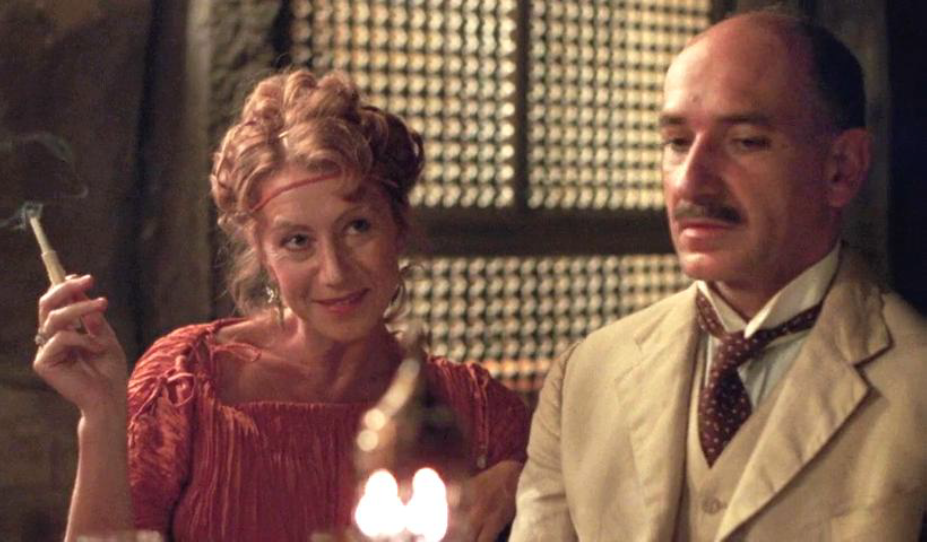
Many older films are largely forgotten. But a few are worth rescuing from oblivion. One much neglected film is Pascali’s Island, a suspenseful thriller, starring the matchless Ben Kingsley, co-starring with the dazzling Helen Mirren and the versatile Charles Dance. The setting is an exotic Greek island in the Aegean at the dawn of the 20th century. The plot interweaves the familiar themes of intrigue, deceit, and betrayal, all through the eyes of the protagonist, Pascali (played by Kingsley). Although the story is fiction, it unfolds against a historical backdrop: a Greek rebellion brewing against the occupying forces of the Ottoman Empire in decline. But the film does not dwell on war and politics. Rather, the spotlight stays on Pascali, a veteran Turkish spy who reports regularly to his superiors on Greek rebels and suspicious tourists.
Mirren plays an eccentric socialite, part of an elite circle of foreign residents and visitors. A mysterious stranger arrives one day, an Englishman professing to be an archaeologist. This surprise arrival at the island starts to complicate Pascali’s daily routine. We witness the melodrama unfold gradually through the lens of a tormented soul, as Pascali wrestles incessantly with a growing suspicion towards everyone in his inner circle. Can a nagging distrust of friends be suppressed? Or will his sense of patriotism — as a loyal servant of the Ottoman Empire — prevail?
The screenplay, by James Dearden, was adapted from a 1980 novel by Barry Unsworth. The lush music, seashore, and landscape, are all evocative of the islands of the Aegean. To viewers who are tired of murder mysteries: rest assured this film is not one of them. The film enjoyed a moment of artistic recognition at the 1988 Cannes Film Festival.
A recent release on DVD, digitally remastered by Lionsgate, can be rented or purchased from various websites, including YouTube and Prime Video.
It was Tuesday night, and it had been a long time since we had been out for a movie. My wife suggested Civil War, because it had gotten “pretty good reviews.” It seemed fine to me, so we both sat down in a movie theater for a movie neither of us knew anything about. I expected a movie about – well – the Civil War.
But we were wrong. It was not about the Civil War, but rather about a hypothetical civil war in modern times. We have all heard one of our presidential candidates proclaim that we’d have a civil war if he were not going to be elected. It’s about that kind of civil war.
I didn’t care for the movie much when it started. The acting wasn’t all that good, and the story didn’t make much sense to me.
Apparently two large western states, Texas and California, seceded from the union and formed the western alliance. Their flag is the United States flag, but with only two stars. The president of the United States of course is fighting a war to defeat the secessionists. That’s pretty much all we know. There is a war going on on American soil, of one American against another, some in uniform, some in vigilante pseudo uniforms, but everyone armed with military weapons. Nobody can be trusted, nobody is safe, anywhere. The country is a dystopian wasteland.
Four journalists, including one young girl who wants to be a journalist, make their way to DC in a press SUV to interview the president. The story is told pretty much from their point of view.
I said above that I didn’t care much for the movie when it started because it didn’t make any sense. The journalists were running in the line of fire completely unnecessarily, magically not getting shot, all just for some photographs? Perhaps the director wanted to glorify the noble profession of war journalism. But to me they didn’t look noble or brave, they looked stupid, took unnecessary risks, did impossible feats all movie long, for pictures that would likely never see publication anywhere.
As I always do when watching a movie, since I know I will review and rate it later, I made mental notes of what I’ll say, and how I’ll rate it. Something strange happened while watching Civil War. It started as a one-star movie, and it gained another star every half hour. I had never had that happen to me before.
When I walked out, I was stunned. I could not really talk about it. I was numb. The shock and the violence of a military operation is something most of us never experience. But it came through in the last 30 minutes of this film. I felt I was right there. I was wondering whether all the people that talk about needing a civil war because they don’t like how we treat gay people, or immigrants, or whom we give tax breaks to, or what overseas allies we support or don’t support, or what god we pray to, whether all these people realize what it would mean to have a civil war in this day and age in this country?
And there you have it. The acting of this movie is mediocre. The story obscure. The plot outright silly. But the dystopian scenes are brutal and they hit you in the face with a fist. Go ahead, have your civil war, see how that helps you, your country, your loved ones, and your grandchildren.
You have to watch Civil War, just to get that slap in the face, if you can stand it.
A French gourmet, Dodin Bouffant (Benoît Magimel) has developed a romantic relationship with his live-in cook of 20 years, Eugénie (Juliette Binoche). He has proposed marriage to her numerous times, and she has apparently rejected him as often. Eventually he starts cooking for her to convince her. This is the story line of the film.
It plays in the French countryside sometime in the 19th century, based on the fact that lighting in the manor is solely by candles and the hearth is wood-fired. It is not clear what Dodin’s profession is other than chef, because we never see him working other than in his own kitchen, serving a handful of his friends in the village. He obviously has a reputation as a superb chef, since he is even invited for dinner by a prince traveling through the area.
The Taste of Things is a French film with English subtitles. I enjoyed listening to the French in an effort to practice my 40-years-rusty French. The photography is exquisite. It made me feel like I was walking around in a Renoir painting.
There was no music, no soundtrack of any type, other than the constant French dialog, which is somewhat musical on its own. The only music I remember was when the final credits rolled.
The movie is two-and-a-half hours long and nothing really happens. They cook. They cook a lot. There are extensive scenes of nothing but cooking complex French recipes, meats, baked goods and lots of sauces. The entire movie is about cooking, more cooking, more cooking, and eating, and cooking, and eating, and cooking. If you are a foodie, or a cook, you might enjoy this. I am not a foodie or a cook, and I don’t remember what I had for dinner yesterday, so all this was meaningless to me. After a while, it got really boring, and I had a hard time staying awake, not that I would have missed anything had I actually fallen asleep.
Apparently when you watch more than two full hours of nothing but cooking and eating without any other action or even music, sprinkled in with 30 minutes of slow action, you get full.
There is a set of trivia I picked up on IMDb: The two main actors who play Dodin and his cook, Eugénie, were once married in real life (1998 – 2003).
Maestro tells the story of the life of Leonard Bernstein (Bradley Cooper), the conductor, composer and pianist, who is considered to be one of the most important conductors of his time. He was also the first American-born conductor to receive international acclaim. The story mostly focuses on his love and tumultuous marriage to Felicia (Carey Mulligan), a Chile-born actress with considerable fame of her own.
Produced by Stephen Spielberg and Martin Scorsese, directed and written by Bradley Cooper himself, the movie was nominated for seven Oscars and many other awards.
I knew very little about Bernstein’s life and acclaim, other than that I used to buy his records of the symphonies of Mozart and Beethoven in my early twenties, when I listened to a lot of classical music. Bernstein were the records I went for when given a choice.
I didn’t know he was bi-sexual, and maintained affairs with women and men throughout his life. You might imagine that that complicated his marriage and added endless drama to his life. And that’s what you feel and experience when watching Maestro.
Then there was the endless, constant smoking. Bernstein was a heavy smoker all his life. I could almost smell the smoke coming out of the movie, it was so present in every scene.
But in the end, I didn’t think I really learned much about Bernstein through the movie itself. The first half was slow and in black and white – for some reason they thought it would make sense to show black and white when there were only black and white movies in the 1940s and 1950s. It was slow enough that I picked up my phone and checked Wikipedia for Bernstein’s life, biography and highlights, and I think I learned more about the man from what I read in the Wiki article while the movie was rolling, than I learned from the movie itself.
The story focuses on Bernstein’s sexuality and it skips quickly between the phases of his life without much substance to the story or noticeable transitions. We know he pined for his wife and mourned her death, but the jump from suffering while his wife was ill to his teaching performance some ten years later was abrupt, as if they wanted to get the movie over with.
My favorite scene was the conducting of the London Symphony Orchestra at the Ely Cathedral in 1976. I really showed Bernstein’s passion for the music and his talent. For those of us like myself, who do not know much about orchestral music and particularly conducting, the whole thing looks more like magic than craft. I trust it is craft. The scene was amazing, and that scene is worth watching the entire movie for.
When I checked IMDb afterwards, I found out that Cooper actually did this live himself and he said the following about it:
That scene I was so worried about because we did it live… I was recorded live. I had to conduct them. And I spent six years learning how to conduct six minutes and 21 seconds of music. I was able to get the raw take where I just watched Leonard Bernstein [conduct] at Ely Cathedral… And so I had that to study.
Maestro is a mediocre film with moments of genius and passion sprinkled around in it.
I knew very little about rowing. The son of one of my colleagues was on the UCLA rowing team during his four years in college. I knew it was a strenuous sport, and somehow I associated it with New England, particularly Boston. During visits to Boston and Cambridge I remember seeing rowing teams practice on the river there. I didn’t know it was an Olympic sport.
A friend recommended the book by Daniel James Brown, and when he stated that the movie was out, I thought I’d skip the book and go right to the movie, directed by George Clooney.
The story is a fairly predictable sports drama set in 1936 in Seattle, Washington, during the height of the Great Depression. A few underprivileged but ambitious boys applied for the junior rowing team at the University of Washington, not because they thought of themselves as champions, but because the were desperately trying to somehow pay their way through college. Getting on the team came with room, board and tuition.
The sport is brutally hard, not only on the physical level, but also emotionally. It is truly a team sport. Eight rowers and and one coxswain must be completely coordinated as one machine. There is no room for any ego or heroes on the boat. It’s all about the boat.
The Washington team is the underdog. It shows their training by a very competent coach and it follows them through local and national tournaments all the way to Hitler’s 1936 Olympics.
I found myself in the edge of the seat, as it is expected in a sports movie (remember Rocky, Chariots of Fire, Ford v. Ferrari, and a hundred others). At the end I walked out of the theater very satisfied. The underdogs won. I learned a lot about a sport that I had not paid much attention to. I gained respect for rowing.
I very much recommend you go see The Boys in the Boat.
Oppenheimer is a biography about the physicist J. Robert Oppenheimer and the effort of the United States to build the world’s first atomic bomb.
Oppenheimer (Cillian Murphy) is America’s foremost theoretical physicist with nobody of his stature challenging him. Driven by the military with relentless pressure, led by Major General Leslie Groves (Matt Damon), Oppenheimer almost singlehandedly assembles a team of world-class scientists, builds a town from scratch in the New Mexico desert, and creates a terrifying technology that nobody, including himself, fully understands. At one point he states that he does not know for certain whether setting off the bomb would not create a nuclear chain reaction that could destroy the world.
Along with the tremendous work and achievements of the scientists, the politicians of the time are paranoid about leaks, spies and Nazi infiltration. Communism looms large as the enemy, and anyone with communist connections is automatically suspicious. It does not help that Oppenheimer brings his brother into the project, who joins the Communist Party against Oppenheimer’s warnings. His wife (Emily Blunt) and his mistress are both former Communists. Interleaved with the storyline of the development of the bomb is always the congressional investigation into Oppenheimer and the scientists around him.
The story is huge, and its participants include Einstein and Truman. And with a running time of three hours it is of epic length. I found it overwhelming at times, slow and repetitious at other times, but exciting nonetheless. When I walked out I was quiet and dumbfounded about the stupidity and arrogance of humanity.
I am giving this movie “only” 3 stars, but something is nagging me: I think this is the kind of movie I need to watch more than once. The first time is just to get familiar with the story and the characters. It won too many awards, it is too highly lauded, for me to give it a down-graded score. I will take another opportunity and watch it again – and I may write another review at that time.
Amanda Sanford (Julia Roberts) is an advertising executive in New York City. Her husband Clay (Ethan Hawke) is a college professor. One morning, Amanda wakes up and decides she needs to get out of the city in a hurry just to get away for a few days. With their two teenage kids, they drive out to Long Island where they rented a luxury house for the weekend.
As soon as they get there, things start going wrong. No Internet, which drives the kids crazy. No television, no cell phone signal. Apparently some unprecedented blackout has befallen the city – but for some strange reason the lights are still on.
Just as they settle down for the night, somebody knocks on the door. The owner of the home (Mahersala Ali) and his daughter are asking to spend the night. They can’t make it back to the city with the outage going on, and it’s their house, after all.
Quickly, strange things start happening. An oil tanker beaches itself, planes crash, apparent sonic booms break windows, wild deer start hanging around the house, flamingos swim in the pool and Tesla cars without drivers crash themselves into each other.
Leave the World Behind is a wanna-be doomsday movie that does not convince. The plot holes are huge, the acting is terrible and amateurish, even though there are some big name actors, like Julia Roberts, Ethan Hawke and Kevin Bacon.
At the end, when the movie was over, I had literally forgotten the title within minutes, and I had to look it up again just to put together this review.
You can definitely pass on this one. You’re not missing anything at all.
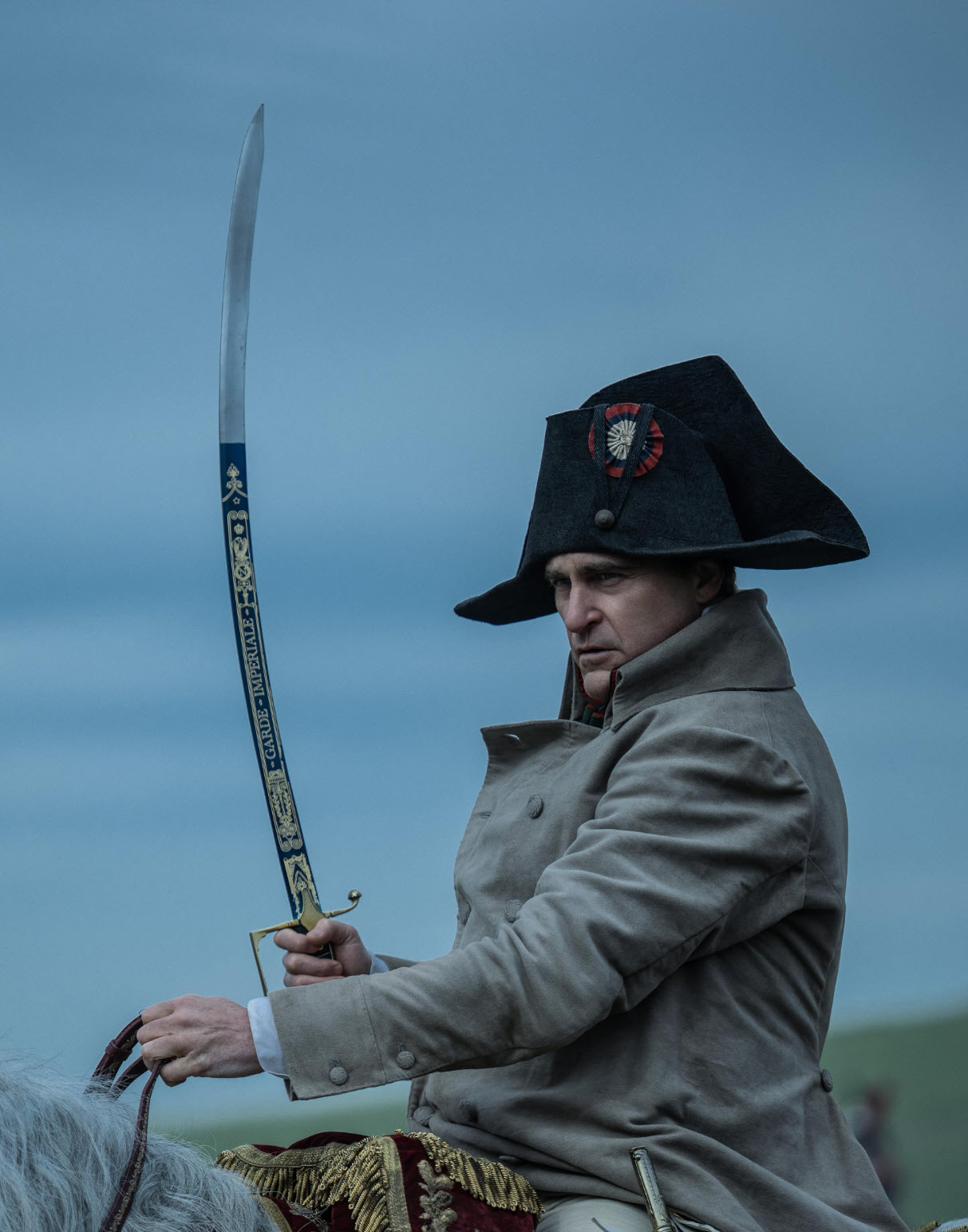
When I saw the advertisement for Napoleon by Ridley Scott, I knew I would want to see it. It’s an epic movie about an epic life. Since I am familiar with the life of Napoleon, the movie helped me associate visual images with my knowledge of this life. As it usually goes, the film glossed over many, many details. The steps in his rise in the movie were enormous. He went from captain to brigadier general in just a few minutes. He jumped from Egypt to Austerlitz in another few minutes, his return from Elba was one scene, and then we were at Waterloo.
That’s not how it went.
I read the biography Napoleon, a life by Andrew Roberts in 2015. There may be more books written about Napoleon than any other figure in history. Roberts’ book presents new material based on the 33,000 letters Napoleon wrote over the course of his life, sometimes as many as 30 a day. His letter-writing is also highlighted in this movie, particularly in letters to Josephine, but also to his brothers and mother. That’s how the man communicated.
Napoleon was idolized by his soldiers. That came through in the movie. But he was also a killing machine. During the 15 years he was in power, he conscripted millions of young French men away from their farms, shops, factories and schools into the military, just to lead them into endless battles to be brutally killed. Many battles “only” had 4,000 killed or wounded. Others 30,000 or more. Of the 600,000 men he took into Russia, eventually reaching Moscow, only about 40,000 came back home. Most of the men did not die in battle, they died of Typhus and other diseases, fatigue, starvation, and on the way home in the winter, the brutal, relentless cold of the Russian winter. During his reign, he led 61 battles and was basically responsible for the deaths of three million people!
Reading about the movie, I picked up a bit of trivia from IMDb: While never directly addressed, the black French general who appears in several scenes, played by actor Abubakar Salim, is credited as General Dumas. This was the real figure of Thomas-Alexandre Dumas, a Haitian-born general who commanded troops during the Napoleonic Wars, and was the father of writer Alexandre Dumas. A brilliant tactician in his own right, he was nicknamed “The Black Devil” by contemporary revolutionaries.
Joaquin Phoenix does a great job portraying Napoleon, in a movie of large-scale scenes, stunning visuals and backdrops and dynamic battle sequences. As with all war movies, I walked out stunned, wondering what sense it made for people to march into battles in the 18th century that were certain slaughters.