Painting: Trees on Mt. Baldy

Trees on Mt. Baldy
Trees on Mt. Baldy, oil on canvas, 24″ x 36″

Near the very top of Mt. Baldy in California, at over 10,000 feet elevation, rugged trees battle hard winds and blistering sun every day. In the winter, it’s bitter cold and icy. I took a photograph in the summer and made a painting, trying my hand at a loose brush.

It turned out so-so, but I am done with it.

Congratulations Bob Dylan for 2016 Nobel Prize for Literature

Much deserved by my favorite poet.

bob-dylan-1

See CNN article here.

Simple Twist of Fate – by Bob Dylan

They sat together in the park
As the evening sky grew dark
She looked at him and he felt a spark
Tingle to his bones
‘Twas then he felt alone
And wished that he’d gone straight
And watched out for a simple twist of fate

They walked along by the old canal
A little confused, I remember well
And stopped into a strange hotel
With a neon burnin’ bright
He felt the heat of the night
Hit him like a freight train
Moving with a simple twist of fate

A saxophone someplace far off played
As she was walkin’ by the arcade
As the light bust through a beat-up shade
Where he was wakin’ up
She dropped a coin into the cup
Of a blind man at the gate
And forgot about a simple twist of fate

He woke up, the room was bare
He didn’t see her anywhere
He told himself he didn’t care
Pushed the window open wide
Felt an emptiness inside
To which he just could not relate
Brought on by a simple twist of fate

He woke up, the room was bare
He didn’t see her anywhere
He told himself he didn’t care
Pushed the window open wide
Felt an emptiness inside
To which he just could not relate
Brought on by a simple twist of fate

He hears the ticking of the clocks
And walks along with a parrot that talks
Hunts her down by the waterfront docks
Where the sailers all come in
Maybe she’ll pick him out again
How long must he wait?
One more time for a simple twist of fate

People tell me it’s a sin
To know and feel too much within
I still believe she was my twin
But I lost the ring
She was born in spring
But I was born too late
Blame it on a simple twist of fate

The Incredible Customer Service of American Art Collector Magazine


American Art Collector

After I recently moved, my subscription to American Art Collector Magazine stopped coming. When something no longer happens, you often don’t notice it right away. One day I looked at my last issue and noticed that it was months out of date.

American Art Collector is my favorite magazine. When I get it in the mail, I immediately open the plastic cover and start thumbing through it. It always makes my day, and it always inspires me to paint. Always.

So when I noticed the magazines were no longer coming, I tried to contact them through  the website. To get access, I needed to have my subscription number or ID, and since those are on the plastic mailing cover, I never retain those.

So I emailed them and told them what had happened. A week later the five most recent issues of the magazine came in the mail. It was like Christmas.

I commend American Art Collector Magazine for their awesome customer service.

Movie Review – Art Bastard

Today The Woman treated me to a surprise movie at the Angelika Theater – Art Bastard.

Art Bastard 1

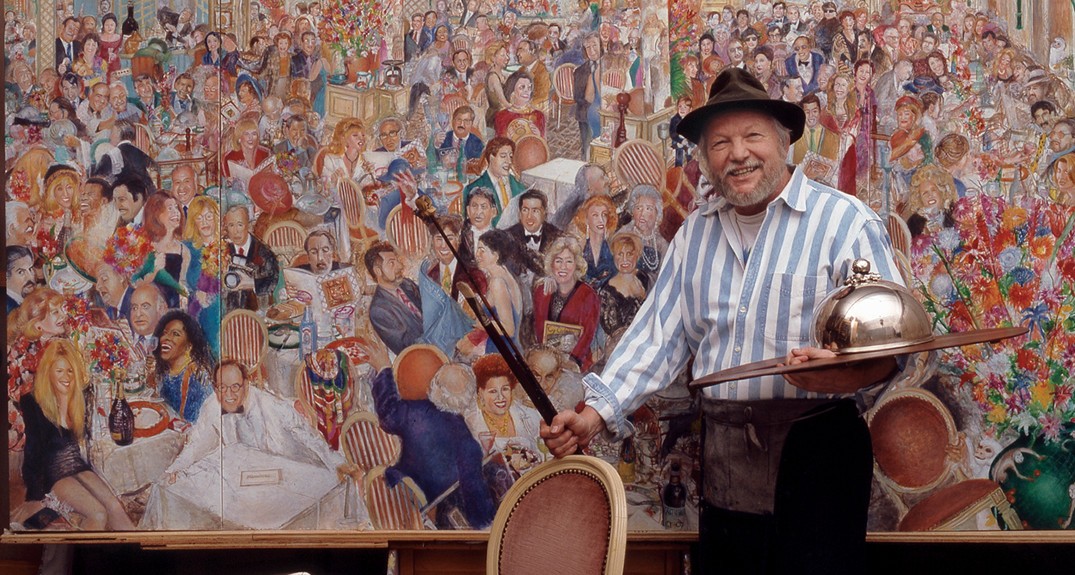
Art Bastard is a portrait of New York artist Bob Cenedella.

I had never heard of Cenedella before. 76 years old now, he grew up always knowing that he’d be an artist. He suffered from a less than happy child hood and family life. Fiercely independent, not bending to censors and critics, he spent the decades on painting controversial and often social critical or political scenes. His pictures are always full of people. He portrays the world like he sees it, and he sees it differently than you and I.

Art Bastard

This movie tells the artist’s story, through his own words, and those of friends, critics, curators, and journalists who know him. Accompanied by an excellent classical sound track, we are treated to a feast of color and inspiration, and we literally feel the passion of the artist ooze out of him and his work.

When the credits rolled I sat there in reverie, and then I said:

I gotta go home and paint something!

Rating - Three Stars

Painting: Jar Jar

JarJar

Our friend Brad asked in an innocuous Facebook post to “Bring Back Jar Jar Binks.” So I did. Little did he know that he would be in the picture with Jar Jar. I thought a retro movie poster would do the trick. I transposed the first and last names of the characters. Petra is his wife. Tonight I gave him the finished and framed painting. Now it’s no longer a secret and I can publish it here.

Painting: California Poppies

California Poppies
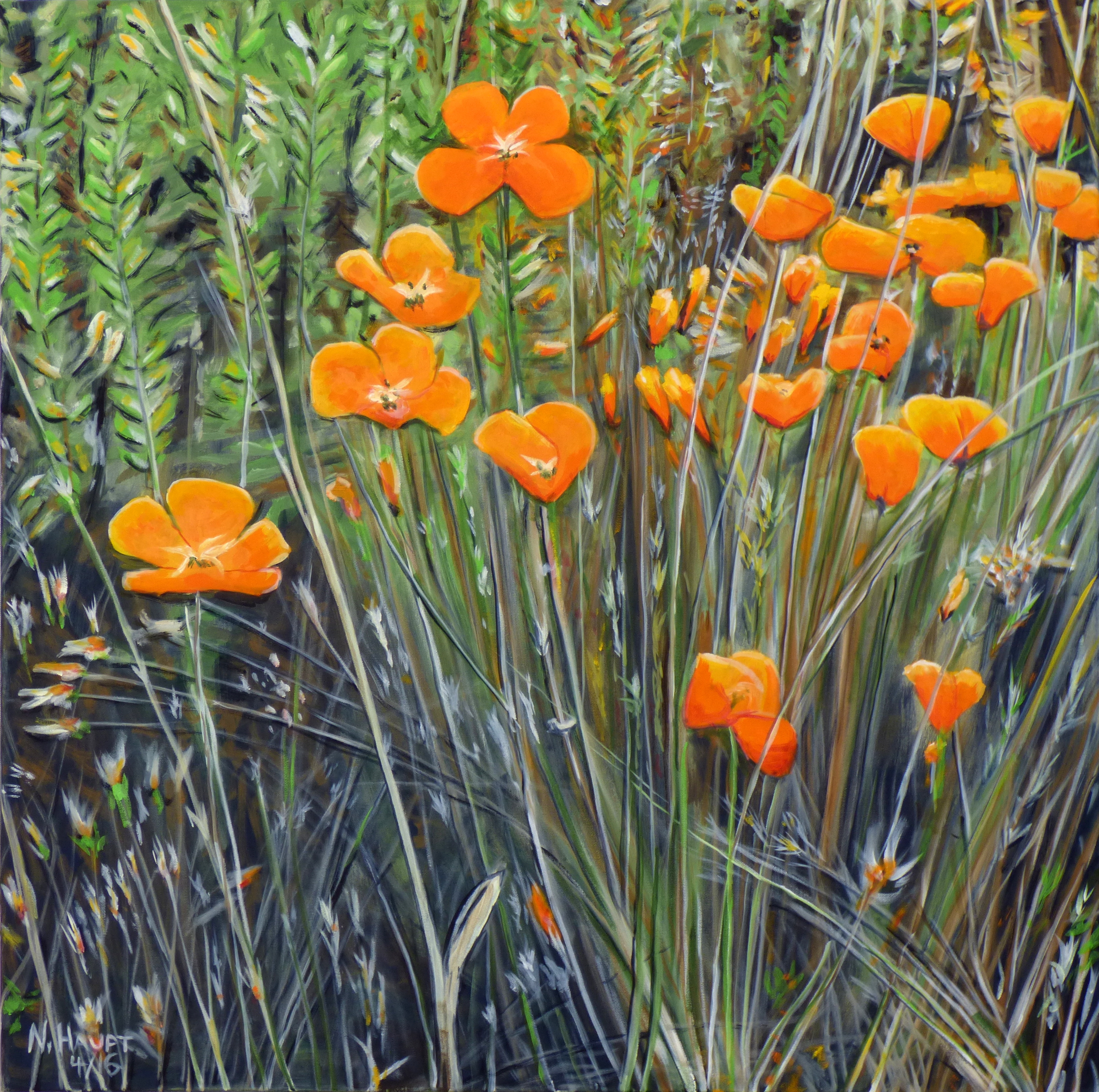
California Poppies, 36″ x 36″

California Poppies are the state flower of California. They are protected. When I hike pretty much anywhere in California in the spring, they grow like weeds.

Photo Cal Poppies

Here is a little stand right next to I-15 to the left of the fence, a freeway with 6 lanes in each direction.

I did the painting above to be a diptych to go with the previous painting of daisies. Both these paintings are quite large, three by three feet each, so they’ll fill a large wall when they are next to each other.

Daisies

Paintings: Devin 2005 and Chelsea 2008

Devin 2006Devin in 2003, 36″ x 36″

Chelsea

Chelsea in 2008, 36″ x 36″

Both of these large paintings with identical frames are hanging in my office.

SoundViz Featured on Inc.com

Featured on Inc
Oddly, to get to the article, there is no direct link. You click on the image then you have to flip to the right 13 times to get to the picture. But the SoundViz has a link below.

Chelsea (my daughter) and Tyler’s business was featured today on Inc.com. So proud of them!

Their site SoundViz is a great place to find a unique present for that hard-to-give-to loved-one. Check out SoundViz for a gift idea. It’s not too late for Christmas, since you can download the product directly on PDF.

Window into Safari in Botswana

Safari Frame

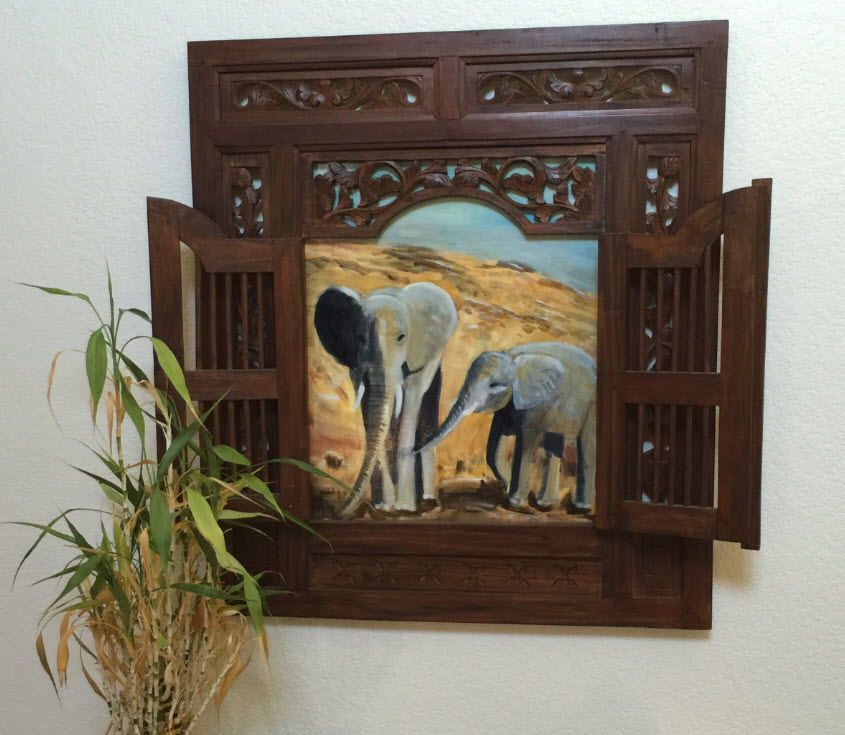
I painted a safari picture on a piece of plywood, based on a photograph Trisha brought back from Botswana last year. Then I mounted it in an old mirror frame with doors that was languishing around the house. This is the finished product in our entry way. Frame repurposed. Window to Africa established. Here is a larger version of the painting itself.

Discovering Hobo Nickels

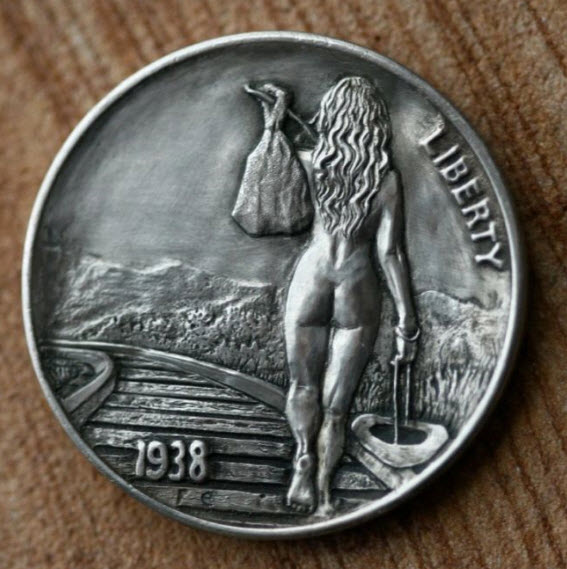
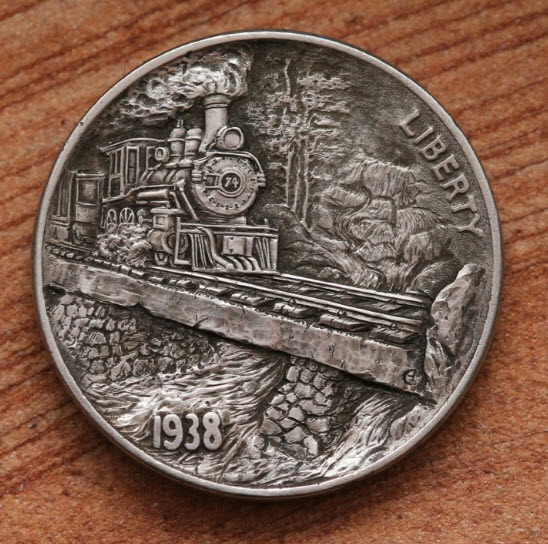
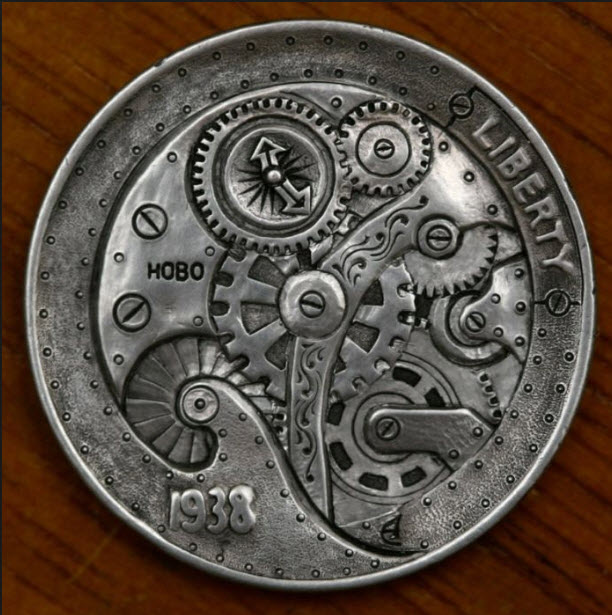
Until a few days ago, I had never heard of Hobo Nickels before. Here are a few examples:

hn1

hn2

hn3

hn4

hn5

hn6

hn7

You can google them and find thousands. Here is a description of the tradition:

There is actually an interesting story behind this tradition.

Coin engraving gained a strong following in the United States after the introduction of the buffalo nickel in 1913. This new nickel had a thick profile which allowed greater detail when carving the coins. The emergent popularity of this new art-form combined with an industrializing west coast created a unique art market that hadn’t been seen before in the United States. With California rapidly becoming an industrial center in the western US, there was a large amount of wealth being generated. Additionally, there was very little in the way of luxury goods out west for much of the early 20th century. The booming Californian economy combined with a severe lack of luxury goods created a demand for some unorthodox forms of art.

The most prominent new art form in the western US was the hobo-nickle. Largely worthless before the 1920’s, the hobo-nickel quickly became a fashionable collector’s item that the wealthy fawned over. Demand skyrocketed seemingly over night, and by 1924 an in demand hobo-nickel commanded as much as $1000.00 dollars at auction. This led to a booming cottage industry where people would buy, sell, trade, and appraise these previously worthless pieces of currency. Demand became so great that one famous artist, John Buckley, went from homelessness to fabulous wealth, solely from the sale of hobo-nickles.

The fervor for hobo-nickles intensified, and eventually wealthy collectors began chartering trains to bring the homeless from the Midwest in order to carve nickles full time. Art houses dedicated to hobo-nickles became commonplace, and by 1927 hobo-nickles comprised roughly half of the Los Angeles fine art market.

However, like many unsustainable businesses, the foundation of the hobo-nickel market started to show cracks. In 1929 the supply of hobo-nickles began to far outpace demand. This, combined with the emergence of real artists starting to emigrate to the west coast, caused demand to plummet. Within six months most of the hobo-nickles were so devalued that people began trying to deposit them in banks. Several stubborn collectors held onto their hobo-nickles waiting for the market to rebound; however, many wealthy families lost fortunes before they realized that hobo-nickles had no real value. The hobo-nickel bubble had finally burst.

— Jefferson, T. (1973) Art Oddities: A History of Art on the West Coast. Los Angeles, CA: Penguin Books.

And we thought fads are something new. Pet rocks, “Baby on Board” signs, hula hoops, cabbage patch kids anyone? Long before any of those, there were hobo nickels.

I would like one though. I’d probably pay good money for one.


Crappy Design: Package for Dammar Varnish

Recently I ran out of Dammar Varnish. This is the stuff oil painters use to varnish and protect their finished paintings. I had bought a seemingly lifetime supply many years ago in a few glass liter bottles. But finally that ran out and I had to buy a new batch.

This stuff is hard to find in any quantities. It’s about $50 for a liter, which is what is in this can.
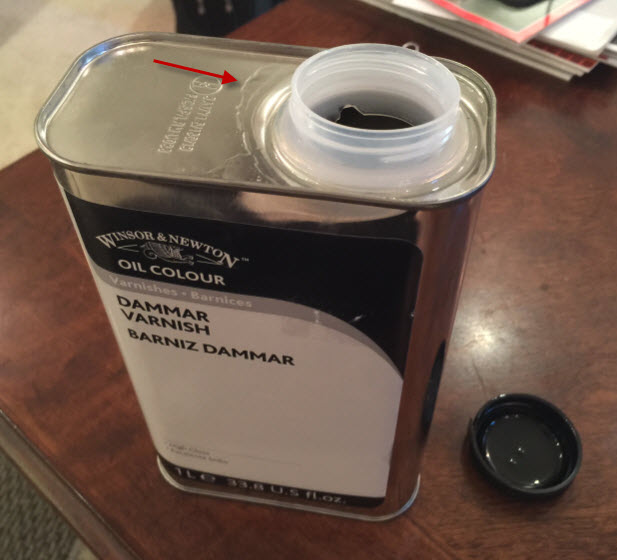
Dammar Varnish

I opened it to use for the first time today, and I was completely baffled when it was open. As you can see, it has a wide mouth and not much height. It seemed impossible to pour from this into the small saucer-like dishes (kind of like the soy-sauce dishes in sushi restaurants) artists use for varnishing. It was not possible without spilling all over it.

Here I must explain that Dammar Varnish is an absolutely nasty material. It sticks to everything and can never be removed. Obviously, it is designed to protect paintings for centuries. Once it gets on something, that something is pretty much ruined. It’s like pouring superglue over things. So you don’t want to spill a drop, for reasons of avoiding destruction of what’s underneath, and because it’s so expensive.

Eventually I found a larger dish and a plastic funnel I was willing to ruin forever just to get the varnish out of the can. Even then, it spilled all over the rim and I poured way more than I needed, it just came out too fast. It also dripped down into the top rim of the can (see red arrow) and all over the plastic spout. I am pretty sure that in a day or so, the spout and the top will have fused and I’ll never get the can open again.

What were the designers of this package thinking? Clearly, not one of them ever tried to use it for varnish and actually dispense the stuff from that can.

I wish I had saved the old glass bottle. Then I could use the funnel now relegated forever to varnish and pour the whole thing into that bottle. I guess I have to go to a container store and find a suitable bottle I can transfer the stuff into.

Oh, the problems I have.