Book Review: The Ruining Heaven – by J. Hardy Carroll

I usually do not review books twice, let alone change my rating, but I am making an exception here with The Ruining Heaven. To explain, I have to backtrack to September 2015, when I first reviewed Hawser, by J Hardy Carroll. I stand by my review at that that time, so I won’t repeat it here, but I am upgrading my rating to four out of four stars.

I came across my review of Hawser by accident, following some comments in my blog, and I found myself in a memory block. While I had read the book, and reviewed it, and corresponded with the author directly about it, I oddly had no memory of  the details of the book. Granted, it’s been ten years, but you’d think I’d remember.

Nothing.

So I went to Amazon and tried to find it – but it did not appear to exist. Now I was really puzzled. How is it possible that I read a book, reviewed it, rated it highly, wrote a blog entry, and remembered nothing? And then the book does not seem to exist?

I then searched my emails for the author’s name and wrote to him. He responded within minutes, advised that he had edited the book and republished it under a new name, The Ruining Heaven. Oddly, the book is only available in paperback on Amazon, and since I am not reading hardcopy books anymore, I didn’t want to buy it in that format. Because by now I had decided that I’d have to reread this to figure out how I could possibly forget all about it. The author was kind enough to send me the Kindle version directly, along with two sequels (which I have not read yet).

Why did I forget all about it? It’s a very poignant story, particularly as some of the action takes place in wartime Germany, namely Silesia, where my own father was a child refugee during that exact time. The emotional damage inflicted on him from those experiences are still haunting him today, at age 89, and he keeps retelling the horrors he lived through. Ironically, I finished reading The Ruining Heaven while in a hotel room in Germany just a few days ago, right after having just talked to my father about just those times.

Why did I forget all about it? Two thoughts:

First, when you read as many books as I do, of as many different genres, it’s apparently possible to move on to the next one and erase the previous one. Sometimes, once I write the review, it frees me up to move on. There are only  that many grey cells available as I get older, and I need to clear the slate.

Second, the subject matter in the book is highly disturbing. War stories are never pleasant, and this one is crushing on many levels. Just like we tend to forget the hard periods in our lives, the embarrassing moments, the challenging episodes, as a natural block for our sanity, I may have blocked out most of this book just to protect myself and move on to better things.

Either way, The Ruining Heaven is a powerful war story. I thank the author for sending me the book and I highly recommend it, paperback and all.

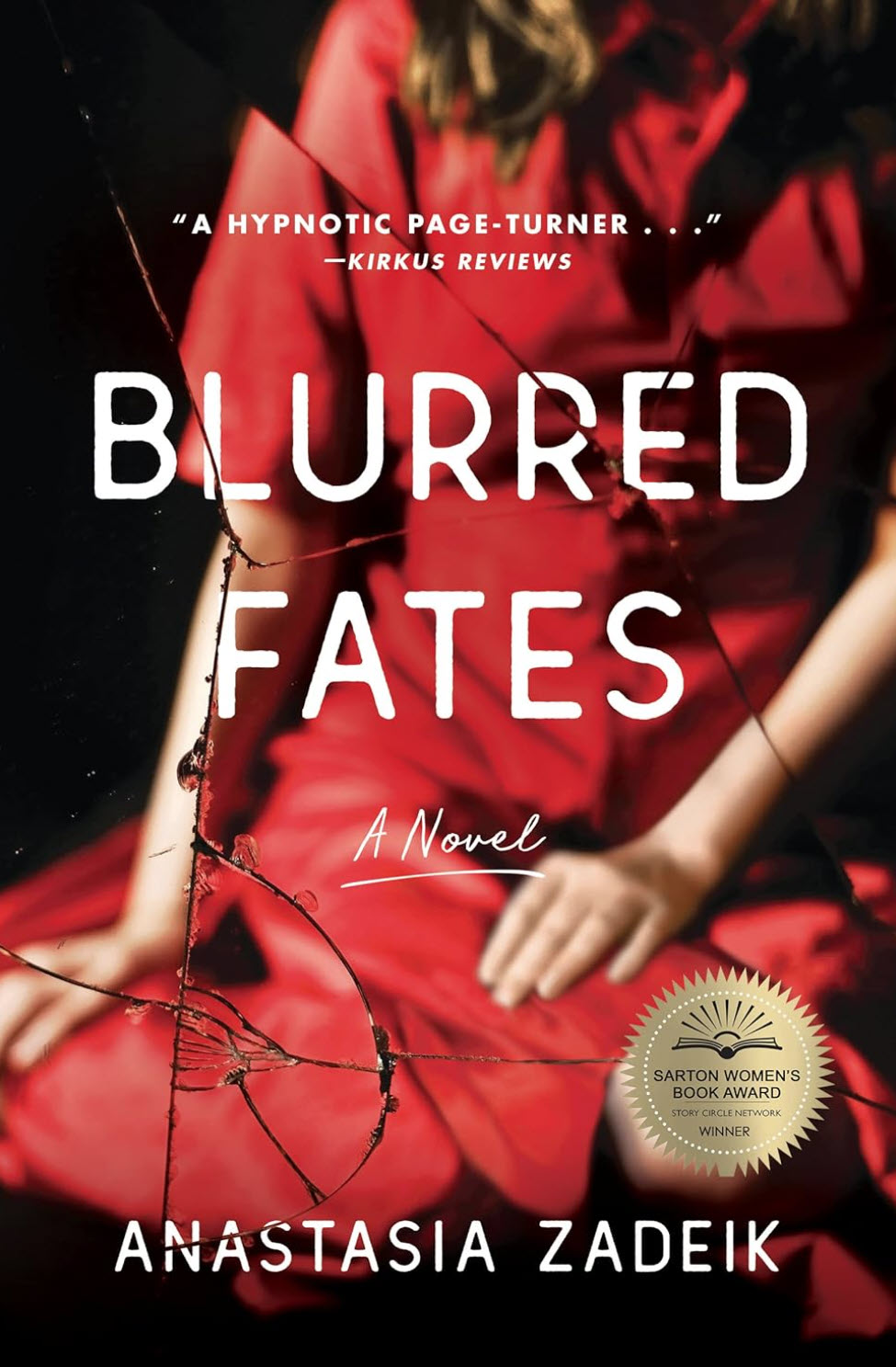
Book Review: Blurred Fates – by Anastasia Zadeik

From the outside it would look as if Kate Whittier was living a dream life in Southern California. Her husband is a successful businessman from an old-money New England family. They have two well-adjusted kids in elementary and middle school. She lives in a gorgeous home in a gated community north of San Diego. Her life revolves around her family and their friends. Taking the kids to soccer practice and games, attending family parties, taking walks along the San Diego beaches.

But Kate feels like an impostor in her own life. She comes from a broken family, and there are enough nightmares in her past that she has hidden her childhood and youth from all her friends and her husband. She thinks they don’t know who she is, the believes she is living a lie, and has been doing that for decades.

When her husband suddenly confesses to a sexual indiscretion, her life comes crashing down, and the lies and deceptions no longer hold up. In a matter of days, her peaceful and successful life unravels into a maelstrom of emotional chaos, confusion and even amnesia. While she is vulnerable and exposed, the demons of her past come knocking, and suddenly there seems to be no way out.

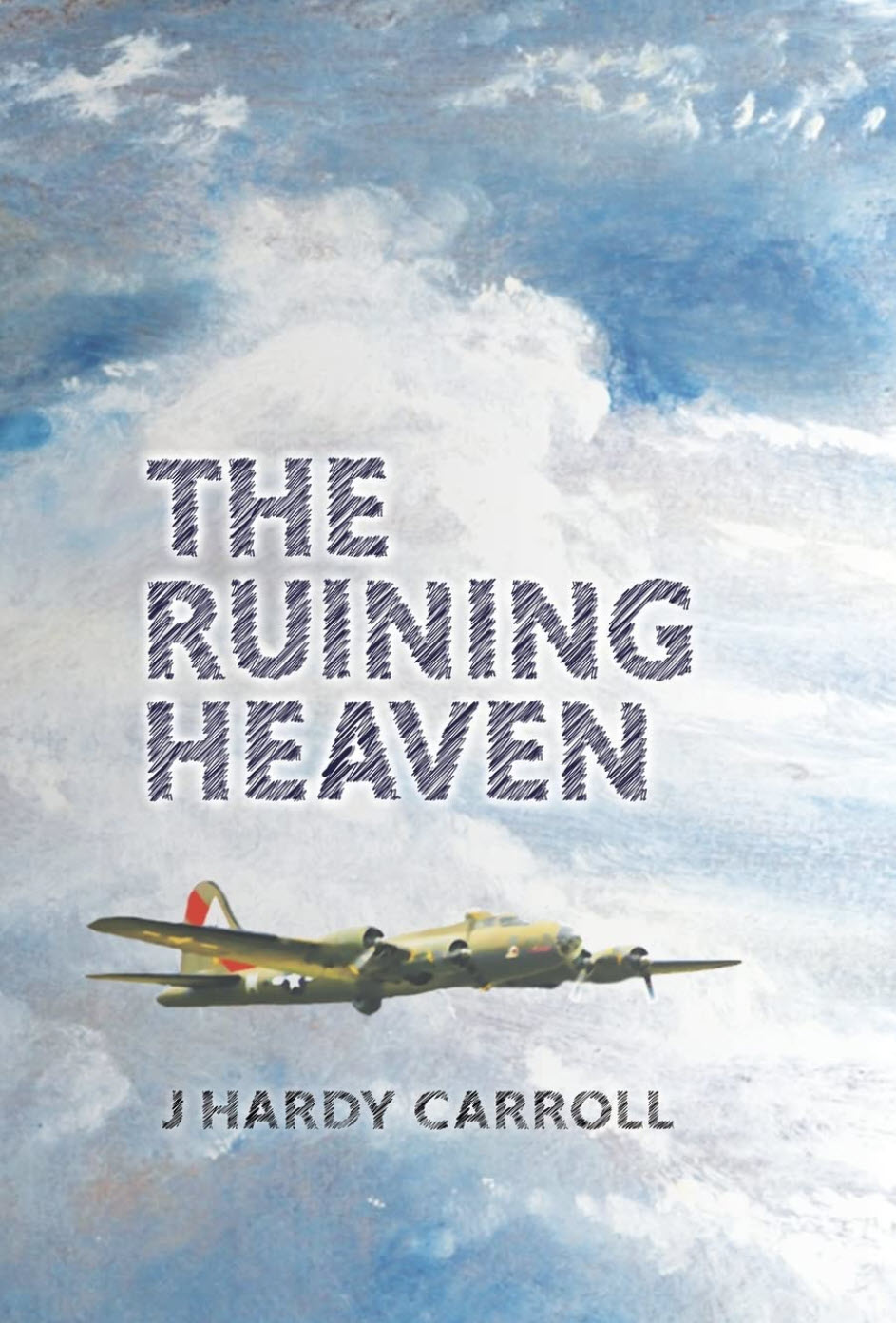
I would not normally pick up this book to read. The cover does not talk to me, and the description on the back is not about a subject I would choose read a novel about. But the paths of books into my life are sometimes mysterious, and I definitely  like to pick up material at random just to open my horizon.

My wife is in a book club of about a dozen women.  They read a book a month, and then meet and discuss it over dinner at one of their homes. Sometimes I read their book, if it’s the kind that interests me. Last month, they read Anastasia Zadeik’s second book,  The Other Side of Nothing. It turns out that one of the members knew the author and invited her to the book club meeting discussing that book. She came, and apparently they had a great meeting, the author posted about it in her Instagram page later, and left some hardcopies of her first novel with them, autographed. When my wife brought one of the copies home, I picked it up and started reading that night on the couch, and — could not put it down.
Blurred Fates is Zadeik’s first novel. I have read and reviewed the first works of other authors, sometimes by their personal invitations. (If you review as many books as I do, sometimes authors send you their books and ask for reviews. I have had a few of those). Blurred Fates stands out among first novels for a number of reasons:

It is impeccably edited. There isn’t a typo, there aren’t any grammatical errors that I noticed.

It is written in the first person present tense, which is unusual. But it also creates a sense of pace and urgency. Everything is happening right in front of the reader. It it hard to write that way, but Zadeik pulls it off effortlessly. I was right there with her all along, inside Kate’s head.

Being in someone’s head, in their thoughts, can be exhausting for the reader. I believe it’s also hard to write that way. But even with those challenges, Kate’s emotional and psychological turmoil never seems unreal. As a reader, you become Kate, and you feel her anguish and terror.

The author did a remarkable job with this novel. I am sure her second one, The Other Side of Nothing, is just as good.

Blurred Fates is a well-structured story about a subject of our times, namely rape, sexual abuse, domestic violence and child abandonment, and the permanent, lifelong psychological trauma that victims have to live with. With that, the author takes on a challenging subject and handles it well.

I also enjoyed her description of Kate’s life in San Diego. I live here, and I felt like I have been at her house and her community. I have driven by the soccer practices that she went to. I have shopped at the Vons and gone to the same Starbucks she is describing. And I have been to the same beaches. Those images and feelings brought it home even more vivid and clear than otherwise. This story played in my neighborhood.

I finished the book last night – I cranked through the last third of the book, and when I closed it and looked up, it was 1:25am. Need I point out: It’s a page turner.


Trump Taking Credit for the Stock Market – or NOT

In January 2024, Donald Trump posted on Truth Social, attributing the stock market’s record highs to his favorable polling against President Joe Biden. He claimed that investors were optimistic about his potential return to the White House, stating:

THIS IS THE TRUMP STOCK MARKET BECAUSE MY POLLS AGAINST BIDEN ARE SO GOOD THAT INVESTORS ARE PROJECTING THAT I WILL WIN, AND THAT WILL DRIVE THE MARKET UP.

Trump also remarked that “everything else is terrible,” referencing inflation and geopolitical concerns. He suggested that the market’s performance was driven by expectations of his victory, despite not providing evidence to support this claim.

During a Fox News town hall on January 10, 2024, Trump asserted that the stock market was rising due to his lead in the polls and warning of a potential crash if he did not win the upcoming election.

Now, in April 2025, following a significant stock market downturn attributed to his administration’s aggressive tariff policies, Donald Trump shifted responsibility again to Joe Biden.  Trump now referred to the declining market as the result of a “Biden Overhang,” suggesting that the economic challenges were inherited from the previous administration.

What a bunch of nonsense coming out of our president’s mouth. Let me get this straight. When the market was great, it was his win, even though Biden had been president for over 3 years then. When the market is terrible now, it’s Biden’s fault, even though Trump has been president for more than 3 months, and the DJIA was at 43,487 on January 20, 2025, when Biden’s term ended.

Joe Biden built a great economy. He brought us out of the Covid pandemic, lowered the Trump inflation, his policies brought manufacturing back to America, brought unemployment to historic lows, increased GDP every quarter, created 17 million new jobs and had the stock market at record highs. It took Donald Trump just three months to destroy all of that. And he has the gall to blame Biden for it.

Remember when Trump kept complaining that the economic disaster of 2020, following the Covid-19 pandemic outbreak, was Biden’s fault, even though he was president then?

How stupid does he think we are?

Throwing Away Our Cell Phones – Take Three

It just occurred to me that I have posted in this blog for almost 18 years. For nostalgia reasons, I thought I should check the very first entry. Here it is:

Throwing Away Our Cell Phones

On June 29, 2007, Apple released its first iPhone. The phone I described in the first post of this blog was a flip phone by Motorola. I didn’t pick up the iPhone until some years later. I went through the Droid phone first which came out in November 2009. It had a hard keyboard under the screen.

I just checked,  and ​as of April 2025, it’s estimated that approximately 400,000 smartphones are retired daily in the United States. This figure is derived from annual estimates suggesting that around 151 million smartphones are discarded each year, equating to roughly 400,000 per day. So the numbers really haven’t changed much. 

Smartphones are larger, but more flat. So I’d say they pretty much still would fill up a school bus … every day.

Idiots in Federal Government

The idiocy in our current federal government is staggering. Here is our Secretary of Health and Human Services, talking about autistic children:

And these are kids who will never pay taxes, they’ll never hold a job, they’ll never play baseball, they’ll never write a poem. They’ll never go out on a date. Many of them will never use a toilet unassisted.

He has obviously never met an autistic person.

What is he going to suggest next? Maybe the best thing to do is to send them all to a camp? Let’s call it a concentration camp. Maybe we should open one in El Salvador, “the Savior,” where they’ll be well taken care of?

This is wisdom from the “Pro-Life” faction of our political landscape.

The Lady Buddha Statue in Da Nang

Outside of Na Nang, in Vietnam, visible across the bay, is the giant and magnificent statue of the Lady Buddha, tượng phật bà quan âm in Vietnamese. You can see the statue in a picture my wife took from the rooftop bar in our hotel on the right side of the image. You can click on the photo to zoom in.

The statue is 67 meters (220 feet) tall, which is about the height of a 22-story building, or something along the height of the neighboring hotels on the left of the photo. It is the tallest Buddha statue in Vietnam. For comparison, Christ the Redeemer, the famous statue in Rio, is 38 meters tall, including the pedestal, which is 8 meters by itself.  At 67 meters, the Lady Buddha is almost twice that tall.

It towers on top of a hill on the Sơn Trà Peninsula in the Monkey Mountains of Da Nang. As we were walking up to it, suddenly it came into view from behind some trees and it’s truly awe inspiring.

Then, finally, after a short walk, we were in front of it.

There is a little shrine underneath inside of it, and there are 17 floors inside of it. Access is restricted or only open during certain ceremonies or with permission. Each floor is dedicated to a different Buddha or Bodhisattva, with small altars and statues. These floors are like small shrines or prayer rooms stacked vertically within the statue. Of course, there are no windows, so it’s probably pretty claustrophobic in there. I didn’t get to go up.

I read one travel blogger claim that the statue is carved from a single block of marble. That is wrong. It would not be possible to carve something this big on site, or transport, let alone make it hollow. It is primarily constructed from reinforced concrete, combining traditional Vietnamese Buddhist architecture with modern design elements.  However, skilled artisans from the nearby Non Nuoc Marble Village were involved in its creation, contributing their craftsmanship to the intricate details of the statue.

We went to Non Nuoc. It is amazing by itself. There are many nearby quarries with excellent marble, and the artisans are very prolific. There are scores of shops, entire warehouses, full of art. Here is a snapshot from one such shop. The yellow building is their showroom.

At the Lady Buddha, here is one more shot with me in it.

The area is called the monkey mountains, and indeed, the trees surrounding the park are inhabited by monkeys.

Finally, before leaving, I looked out over the bay, and here is a parting shot back to the city of Da Nang, with its characteristic high rise hotels, one of which was ours, lining the beach. From there is where we took the first picture in  this post, pointed here.

Movie Review: The Ballad of Wallis Island (2025)

I review every movie I watch, and the reviews are all here. But when you scan for movies, you’ll notice that I don’t have too many reviews lately. That means I am not doing much watching these days. I am also not checking on what’s playing, most of the time.

Last weekend, my wife decided she wanted to take me to the movies. She picked one, didn’t tell me what it was, and I walked into the theater not having any idea about what I was going to see.

There is a remote island somewhere in the U.K. that can be reached only by small boats with outboard motors. There isn’t even a dock, so visitors have to get off the boat while the surf is rocking it, stepping knee deep, or worse, into the ocean.  That’s how remote Wallis Island is. There is a little general store, and a lone phone booth, and a villa on top of the bluff. Charles lives alone in the villa. His wife died some years ago. He can afford the villa because he won the lottery.

His favorite musicians are the folk duo McGwyer Mortimer. Herb McGwyer is a songwriter, singer and performer. He is still active as a musician, with an agent and a career, but slightly past his prime. Nell Mortimer was his partner, a singer and piano player. They recorded many albums together in their day, and they were lovers. Something caused them to split up years ago, and they went their separate ways.

Charles hires them for one private gig on the island. Herb is going there to perform to a party of “less than a hundred people” but he does not know Nell is also coming. Over a few days of acclimating, Herb realizes that the gig has exactly one – and only one – person in the audience: Charles. When Nell shows up, the boundaries between making music and romance quickly blur, and emotions run wild.

The Ballad of Wallis Island is a delightful story about artists on the other side of their prime, about lost love and nostalgic longing, about the quirkiness of life on a lonely island, about human emotions and passion. There is humor, but it’s quirky humor, and there are songs that resonate with the soul.

I loved every minute of it. I want my wife take me on more “blind movie” dates.

Monarch, Milkweed and Sunflowers

It’s spring, and things are happening in our yard.

A few years ago, I planted a few milkweed bushes. Those are the ones – the only ones – that the caterpillars of Monarch butterflies eat. The bushes would get thick and healthy, and in early summer, when the caterpillars are done with their work, they are down to sticks. Miraculously, the come back for another season, although I have discovered that after two or three seasons, they seem to be spent and die. So last year I planted another dozen or so around the yard.

Today, for the first time ever, I saw an actual Monarch visit one of the plants.

It let me come close while it was busy. Then it jumped away, bumbled around the place, checked a few other plants and gave them a sniff, and eventually came back to another milkweed.

Speaking of planting:

I am growing a crop of sunflowers from seeds. They should all be ready to be put in the earth in about a week. Here they are on our potting bench:


Banana for scale.

I will post a picture of some sunflowers in bloom in a few months, and I’ll show this to remind us where they came from.

Thinking about the Powerball Lottery

I found a little article in Scientific American of April 2025: Is the Lottery Ever a Good Bet? – by Jack Murtagh.

It starts with this:

Here is a thought challenge for you: Let’s say I have chosen a particular moment in time from the past nine years. I am thinking of a specific (and totally random) year, month, day, hour, minute and second between April of 2016 and today. Could you guess it? No chance? You have a better chance of guessing a specific second from a nine-year span than you have of winning Powerball.

I thought that short quote was a very powerful visualization of the odds of the lottery.

Clearly, playing the lottery is never a good bet, but it’s not about winning. I know too many people in Germany who have spent their entire lives, since I was a child, buying that Lotto ticket every week, and they still do it now, even in their eighties. “One day I might win!”

The lottery is not about winning, it’s about dreaming. The dream of possibly winning gives people hope and encouragement, and a will to move forward, even in adversity.

It’s about the hope.

Buddha Offering Ruminations

While traveling as a tourist in Vietnam, it is virtually impossible not to visit pagodas and temples dedicated to Buddhism. While we were there, I am sure we saw dozens. I noticed that every statue or altar is filled with offerings. Here are some random photos I made of such offerings:

Notice the grapefruits stacked in the front. There are also some banknotes visible. On the left, in the red box, there is some processed food. I found this to be a repeating theme: Grapefruit, other citrus fruit, money, and processed food in cardboard boxes, often stacked up in little pyramids.

The grapefruits were so prevalent, almost every altar or shrine had many of them. Researching  this, I learned that grapefruits are not traditionally offered to Buddha statues in Buddhist practices, but Buddhist offerings often include food and fruit to symbolize respect and reverence, as well as the desire to achieve the nectar of Dharma. The specific fruit offered can vary depending on the local culture and tradition. Therefore, it must have been grapefruit season in Vietnam in February. 

I am also assuming that they are very durable. Some of those grapefruits looked dusty and I had the feeling that they’d been there a long time.

After the first few days of visiting Buddha pagodas, I started joking that my eyes were full of grapefruit and I didn’t need any more, meaning that I was done visiting Buddhas. But you can’t get away from them.

See the yellow boxes on both sides on top of the vases? That’s some processed food bought at the grocery store and placed there.

I must admit that first, I am not a Buddhist, and second, that I am not religious, so I know know much about Buddhism. I learned that offerings placed in front of Buddha statues represent various aspects of reverence, gratitude, and spiritual practice. They are not intended for the Buddha himself, but rather for the practitioner’s own benefit, demonstrating selfless dedication and fostering positive qualities. I also found out that the goods were periodically removed and consumed by the monks, provided there are monks at the location. 

Here is a varied offering altar. You have food in cartons, some shrink-wrapped stuff, fruit other than grapefruit, thank you very much, and banknotes. Check out a close-up of the banknote on the right upper side:

It’s a U.S. two-dollar bill! I saw a surprisingly large number of two-dollar bills on altars, in Vietnam, no less. I found that strange!

When you enter a pagoda, usually you have to follow a bunch of rules:

  • No shoes – you take your shoes off outside before you step over the raised threshold into the pagoda. No wheelchair access here.
  • No shorts – that is strange in a hot country. You are not supposed to show your knees. So women can’t have shorts or short skirts.
  • No bare shoulders – I can see why that is.
  • No photography – but as you can see from my pictures, I took plenty of them. In the more high-end temples, the famous ones, there are actually monks walking around that “guard” the premises, and things are stricter.

We saw some very massive temples and massive Buddhas:

The photo above is from one of those very famous places – and forgive me but I didn’t record the name or the place, as they all blended together after while. I do remember that photographs were strictly forbidden in  this place. There were many people on their knees praying to the Buddha here outside of the left frame of the picture. I snuck this photo against the rules. I remember this being a very large statue, bronze and gold plated. The statue weighs over 60 tons.

Don’t overlook the grapefruit pile clipped on the right side of the photo!

The practice of offering in Buddhism is not simply a ritual, but a way of cultivating positive qualities, expressing gratitude, and progressing on the path to enlightenment. 

I must say that besides cheating and taking some pictures, I followed the rules and observed the followers, and I am sure I am a little closer to enlightenment in my own path.

But I’ll never see grapefruit the same way again.


Old Poems by Corey Taft

Tonight, while out to dinner with friends, we brought up slam poetry, and they had never heard the term before. Immediately Corey Taft came to mind. I got to know him over sixteen years ago, and I still remember him as one of the most remarkable slam poets I have heard. We had some email exchanges about poetry at the time. If you google him now, there were some postings by him during the pandemic.

I hope you’re doing well, Corey. Here are some of my favorites of Corey Taft’s work.

Say anything to me

She reads books while she walks

My Heart

U.S. Trade Deficit in Automobiles with Germany and Japan

Stephen Miller had a yelling match with a host on Fox News because we have a trade deficit with Japan in the automobile industry.

In 2024, the United States imported approximately $25.6 billion worth of motor cars and vehicles from Germany and $40.8 billion from Japan, with U.S. exports in cars to those two countries being significantly lower. Our deficit with Germany was $17 billion and Japan $39 billion.

Why is that?

It’s because German and Japanese drivers don’t want American cars. They are essentially not good enough, and too large. They don’t want to drive around in F-150 pickups and huge SUV’s or Chevy Impalas. And as of late, Germans don’t want to drive in Teslas anymore, but that is for a different reason.

And then there are the relative sizes of the countries. There are just way more American drivers that want to drive German and Japanese cars than there are total drivers in Germany and Japan. A trade deficit in this sector is inevitable.

If Miller thinks that tariffs will make any difference in these facts, he is dreaming. No tariffs are going to make Germans want to drive American cars. If you make German cars really expensive in the U.S., we won’t be driving as many German cars, I grant you that, and it may dampen the trade deficit a little.

But in the end, other countries are going to buy American stuff if it’s inexpensive, and if it’s good. It’s going to take a very, very long time before American cars will be attractive in Europe or Asia, no matter what our internal fiscal machinations will be.

No propaganda will fix reality.


“Nobody Knows the Impact of the Tariffs” – Bullshit

GOP Senator Kennedy said that nobody knows what the impact of these tariffs is going to be on the economy.

Several economic studies conducted by distinguished economists and prestigious institutions have analyzed the impact of tariffs on the economy, consistently finding that tariffs tend to have negative effects. Here is a list of 10 notable studies that ChatGPT pulled for me in 3 seconds:

  1. “Are Tariffs Bad for Growth? Yes, Say Five Decades of Data from 150 Countries”: Authored by Davide Furceri, Swarnali A. Hannan, Jonathan D. Ostry, and Andrew K. Rose, this study analyzed data from 151 countries over the period 1963–2014. The researchers found that increases in import tariffs are associated with significant and persistent declines in output growth. Specifically, a one standard deviation increase in the tariff rate (approximately 3.6 percentage points) leads to about a 0.4% decline in output five years later. The study attributes this decline to reduced labor efficiency, real exchange rate appreciation, and higher production costs due to increased prices of imported inputs.

  2. “Macroeconomic Consequences of Tariffs”: In this working paper, Davide Furceri, Swarnali A. Hannan, Jonathan D. Ostry, and Andrew K. Rose expanded on their previous research to explore the broader macroeconomic effects of tariffs. They found that higher tariffs lead to declines in output, productivity, and employment, as well as increases in inequality. The study underscores that the negative effects of tariffs are both economically and statistically significant.

  3. “International Trade, Distortions and Long-Run Economic Growth”: Jong-Wha Lee examined how trade distortions, such as tariffs, impact long-term economic growth. The study concluded that tariffs and exchange controls generate cross-country divergences in growth rates and per capita income over extended periods, highlighting the detrimental effects of trade barriers on economic development.IMF

  4. “The Effects of Tariffs and Trade Barriers in CBO’s Projections”: The Congressional Budget Office analyzed the impact of tariffs implemented since January 2018, finding that these trade barriers reduced the level of real U.S. GDP by roughly 0.3 percent by 2020. The study highlighted that tariffs raise domestic prices, thereby reducing consumers’ purchasing power and increasing business investment costs.Congressional Budget Office

  5. “The Macroeconomic Consequences of Import Tariffs and Trade Policy Uncertainty”: Lukas Boer and Malte Rieth estimated the macroeconomic effects of import tariffs and trade policy uncertainty in the United States. Their findings indicate that tariff shocks depress trade, investment, and output persistently, suggesting that protectionist measures have adverse economic consequences.IMF

  6. “Tariffs Do More Harm Than Good at Home”: Maurice Obstfeld discussed how tariffs, while intended to protect domestic industries, can be broadly contractionary, reducing output, investment, and employment in the economy. The study emphasized that such negative effects occur even if trade partners do not retaliate with tariffs of their own.IMF

  7. “Macroeconomic Consequences of Tariffs”: The Cato Institute reviewed empirical studies and found that tariff increases lead to declines in output and productivity in the medium term, as well as increases in unemployment and inequality. The study highlighted that tariffs do not improve the trade balance and often result in real exchange rate appreciation.IMF eLibrary+2Cato Institute+2IMF+2

  8. “The Return to Protectionism”: Economists Pablo D. Fajgelbaum, Pinelopi K. Goldberg, Patrick J. Kennedy, and Amit K. Khandelwal examined the effects of the 2018 trade war on the U.S. economy. Their analysis revealed that the tariffs led to higher import prices, resulting in increased costs for consumers and businesses. The study concluded that the tariffs imposed during this period caused substantial welfare losses for the U.S. economy.

  9. “The Impact of the 2018 Trade War on U.S. Prices and Welfare”: Researchers Mary Amiti, Stephen J. Redding, and David E. Weinstein analyzed the price effects of the 2018 tariffs. They found that the full incidence of the tariffs was passed on to U.S. importers and consumers, leading to higher prices and reduced welfare. The study emphasizes that the tariffs did not lead to a reduction in foreign export prices, meaning U.S. entities bore the entire cost.

  10. “Macroeconomic Consequences of Tariffs”: In this working paper, Davide Furceri, Swarnali A. Hannan, Jonathan D. Ostry, and Andrew K. Rose expanded on their previous research to explore the broader macroeconomic effects of tariffs. They found that higher tariffs lead to declines in output, productivity, and employment, as well as increases in inequality. The study underscores that the negative effects of tariffs are both economically and statistically significant.

These studies collectively provide robust evidence that tariffs tend to have adverse effects on economic growth, productivity, employment, and consumer welfare.

Do you want me to cite not 10 but 200? I can keep going. It’ll just take a few more seconds.

Senator Kennedy – are your staffers asleep?

Movie Review: Absolution (2024)

Liam Neeson plays an unnamed thug, a grizzled gangster and former boxer in Boston. He does thug jobs for a local small-time crime boss. He realizes that he is approaching the end of his “career” because he keeps forgetting basic stuff, like the names of his friends and places he was supposed to go. He has himself checked by a doctor and finds out he has Chronic Traumatic Encephalopathy (CTE), a progressive neurodegenerative disease caused by repetitive brain trauma, such as concussions from boxing. There is no cure and no treatment. The doctor tells him it will just get worse. He won’t live long.

As a result, he tries to get his affairs in order. He finds a girlfriend who has her own ghosts but somehow sees a kindred spirit in him. He has a daughter whom he abandoned in his younger years and she has a son. The daughter wants nothing to do with him, but he manages to get a connection with the grandson and he tries to redeem himself.

But the underworld has him solidly in its grip, and he can’t escape.

Absolution is not a Liam Neeson old hero action movie. It’s a slow study of an aging gangster with no place to go. As such, it is difficult to watch. There is not much of a story, or lesson, or feel-good spirit. The thug has a bad life, and it’s not getting better.

Absolution is boring and deeply depressing film.

Due Process in the United States

If you violated the law, you are not entitled to due process.
– Rep. Victoria Spartz, March 2024

An elected official, sworn to uphold the Constitution, said that people, in this case illegal aliens who violated asylum laws, are not entitled to due process.

This is wrong.

Due process exists specifically to protect those accused of violating the law. The Bill of Rights contains more provisions safeguarding the rights of the accused than on any other subject. The government can deprive you of liberty through due process, but it cannot deprive you of due process itself. In the United States, due process is not a revocable privilege. It is an irrevocable right.

Due process is the mechanism by which we determine whether someone did violate the law. It’s the protection we guarantee before we investigate and convict. That’s the whole point. We’re not supposed to arrest people, skip the trial, and make them disappear. Immigrants are detained indefinitely without hearings, or sent to overseas prisons. Protesters and students are punished based on accusations, not findings. Politicians, like Spartz in this case, make accusations without basis in fact.

What if you are wrongly arrested because somebody erroneously accused you, or because you had the wrong tattoo, or because you were at the wrong place at the wrong time? It happened recently to a few cases that attracted national attention. To how many people did it happen that we’ll never hear from again?

We will never know.

It could be you or me next. Think about that.

We can’t cherry-pick the Constitution based on who we like or what someone is accused of doing. I still remember a guy I worked with back in the 1990ies. Let’s call him Rick. He was a Second Amendment enthusiast. When I simply suggested, even back then, that we should ban assault weapons, that we should have universal background checks, he would be furious because, according to him: “You are trampling on our sacred document, the Constitution!”

At the time, I was trampling, just by suggesting common sense solutions.

Are we not trampling now?