Every Man Dies Alone – Jeder Stirbt für Sich Allein

In 2011 I reviewed the book by Hans Fallada – Jeder Stirbt für Sich Allein. Here is the review.

Below are two paragraphs from my review:

If you have ever wondered how an entire country of 60 million plus people could have turned evil, attacked all its neighbors, killed 6 million Jews, devastated all of Europe, you should read this book. It all becomes understandable and obvious. A criminal and nefarious leadership started instituting totalitarian practices, slowly at first, and deliberately and systematically as it went. Children were brainwashed to spy on their parents. Over time, every bad apple enlisted with the dark side, where brutality, sadism, corruption and murder were completely accepted, as long as they benefited the ruling elite. Every thug got a uniform, and that uniform, without any checks and balances, authorized him to brutalize the citizenry as he saw fit. The acts were done by the military,  who controlled everything, including the police, the court system, the business establishment and the social system.

Those that didn’t agree with what was going on could not only not publish their opinion, they could not even speak it to anyone, since they never knew who was a snitch. Your own family and “friends” could have been undercover spies. Fear permeated all of society. Pretty soon, half  the country was busy arresting and locking up, and often executing, the other half.

Oh, my. Did I know what was coming to the United States in 2011? These words ring more important than ever now.

Book Review: The Last Stop Video Shop – by Keith A. Pearson

Kevin Kershaw is a divorced man around 50 years old with a son from whom he drifted away and an ex-wife who needed to get away from him. He works joylessly in an insurance company office, accepting,  rejecting and challenging insurance claims by their policy holders. He does not have any real friends and he has lost his spunk to the point where he is considering ending it all.

One day, by pure coincidence, he finds a video shop in an out of  the way alley. Yes, in 2025, when we all stream Netflix, there is a shop full of VHS tapes. Kevin walks inside and gets to know the shopkeeper, an old and mysterious gentleman named Marty. He pulls out a VHS tape with Kevin’s name on it and gives it to him. There is a viewing room in the back of the shop with a small TV and an aging VHS player.

To his surprise, the short video is about Kevin himself when he was a child, showing him in scenes with his late mother. The shots were taken about his life where nobody was there to tape them at the time. It’s impossible, magical, but there it was. He soon finds out that there may be more tapes in future days, if he bothers to come back. And of course, he does.

The Last Stop Video Shop is a very slow moving story about a very boring life. For a while I found it hard to read, but it picked up the pace as it went along. There were eventually some uplifting experiences, as Kevin took the lessons from the videos seriously and made incremental improvements, which not only shaped his life, but those around him that the cared for.


2.5 stars

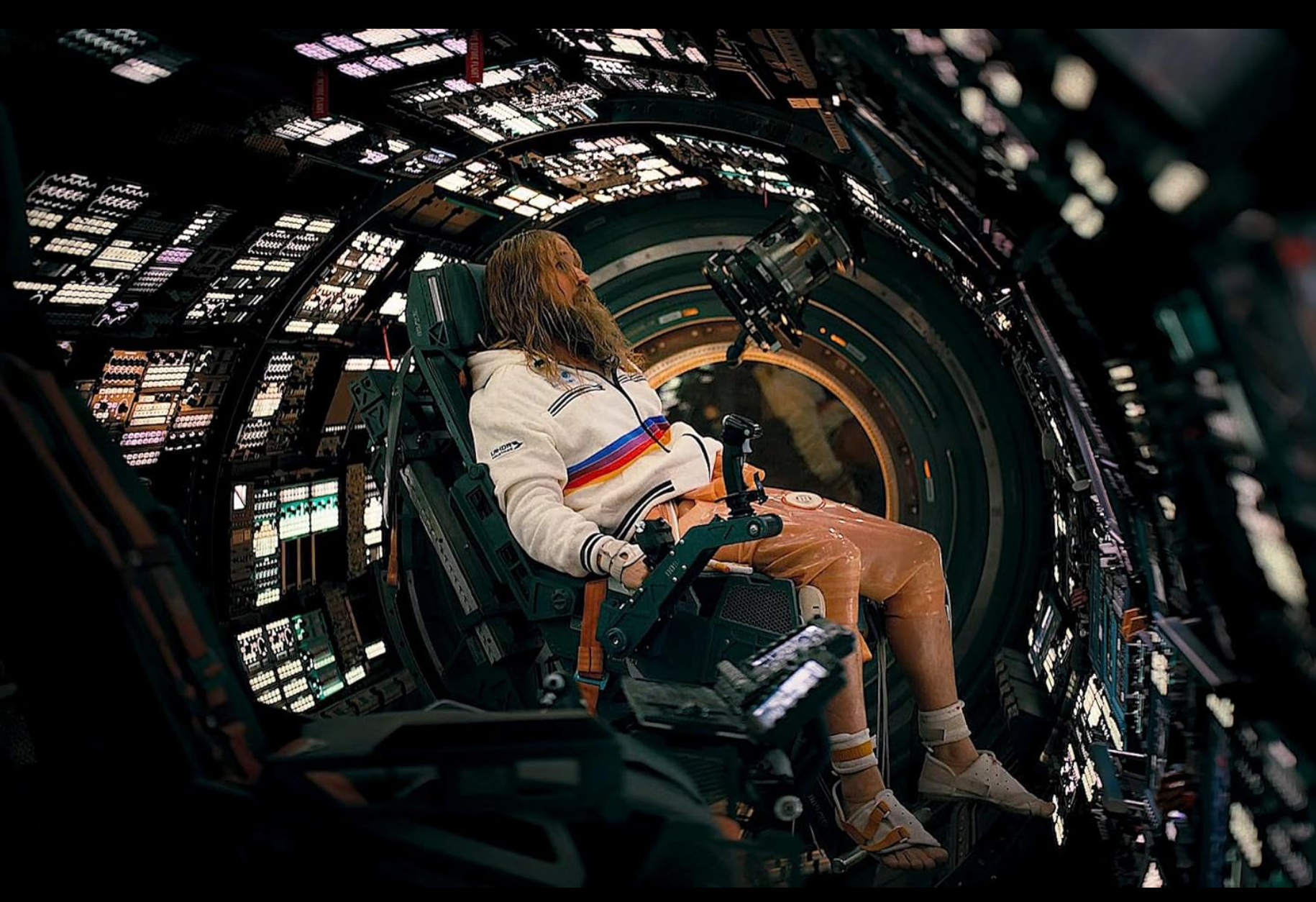
Movie Review: Project Hail Mary (2026)

Project Hail Mary is a perfect example of a movie made after a book where the movie does not even come close to do the story justice. I read the book about five years ago. Here is my book review. I gave the book a 4-star review and called it “one of the best and most satisfying science fiction stories I have ever read.”  I still stand by that.

The movie Project Hail Mary got great reviews from the critics and they are already talking about Oscars. I really don’t think so. It’s a fun movie, Ryan Gosling did a good job as the lead (and mostly only) actor, but most audiences will not be able to follow the story.

I think it is a solid 2-star movie. As a matter of fact, if you didn’t read the book, I don’t recommend watching the movie. It’s 2 hours and 36 minutes long, and my wife was fidgeting in her chair next to me. I knew she didn’t know what was going on. Many of plot twists didn’t really sink in. The environment of the Eridanis was just glossed over, and viewers probably didn’t even understand the last few minutes of the movie. There is a lot of science applied here, and that too did not take hold.

If you did read the book, and science fiction is your thing, you will enjoy the movie for what it is. It will put some images into your head that weren’t there before.

And you will enjoy the soundtrack. It might get some awards for that.


Book Review: Time Risk – by Elyse Douglas

Time Risk is a suspenseful time travel novel.

Andrew Whitlock’s father died during the Japanese attack on Pearl Harbor. He was one of the few pilots who made it off the ground, but he was shot down nonetheless. Andrew was an infant. His mother died soon after, and Andrew grew up in an orphanage. Despite his unfortunate early childhood, Andrew grew up to be a technology billionaire. He spent his life and career building a time travel machine.

Rachel Hunt is a former police homicide detective who is looking for work when Andrew’s men come knocking. They recruit her to travel back in time to Honolulu, arriving days before the Japanese attack. Her mission is to save Andrew’s father by keeping him from flying that morning.

When she arrives in Oahu, things immediately do not go according to plan, and soon Navel Intelligence and the local police are looking for her. She is hunted by the authorities as well as local thugs who are trying to make a few bucks. Things escalate quickly, and Rachel has to decide whether she is going to stick with her mission and save Andrew’s father, or whether she should just try to prevent the attack on Pearl Harbor altogether, and in the process change the history of the world.

The author’s name “Elyse Douglas” is the pen name for the married writing team Elyse Parmentier and Douglas Pennington. They specialize in time travel romance, women’s fiction and mystery. This is the first book of Elyse Douglas I have read.

Time Risk is a fast paced action thriller and a clever time travel story. I was ambivalent about it in the beginning, but it grew on me as it progressed, to the point where I am now considering reading some of the other books in the series, all time travel assignments of Rachel Hunt.

Hiking the Atalaya Mountain Trail in Santa Fe, New Mexico

On March 11 I hiked the Atalaya Mountain Trail outside of Santa Fe, New Mexico.

Actually, I started on the St. John’s College Trail, which later merged with the Atalaya Mountain trail. The trailhead is literally in the parking lot of St. John’s College.

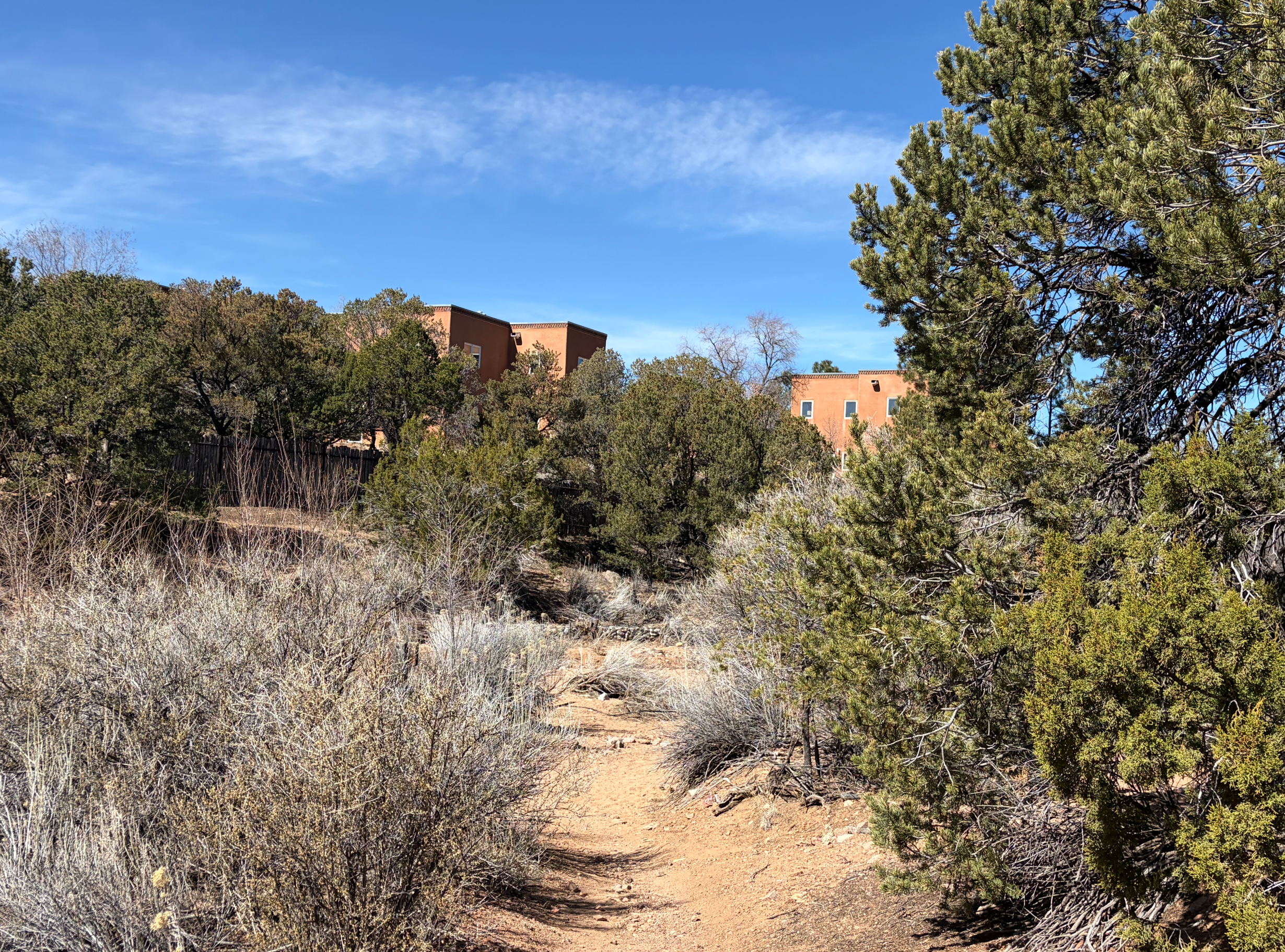
St. John’s is the third oldest college in the United States. It was founded in Annapolis, Maryland, in 1696 as King William’s School and chartered in 1784 as St. John’s College. The Santa Fe campus opened in 1964. The buildings are in the typical Santa Fe adobe architecture and fit very nicely into the landscape. Here are a few of the dorms visible from the trail.

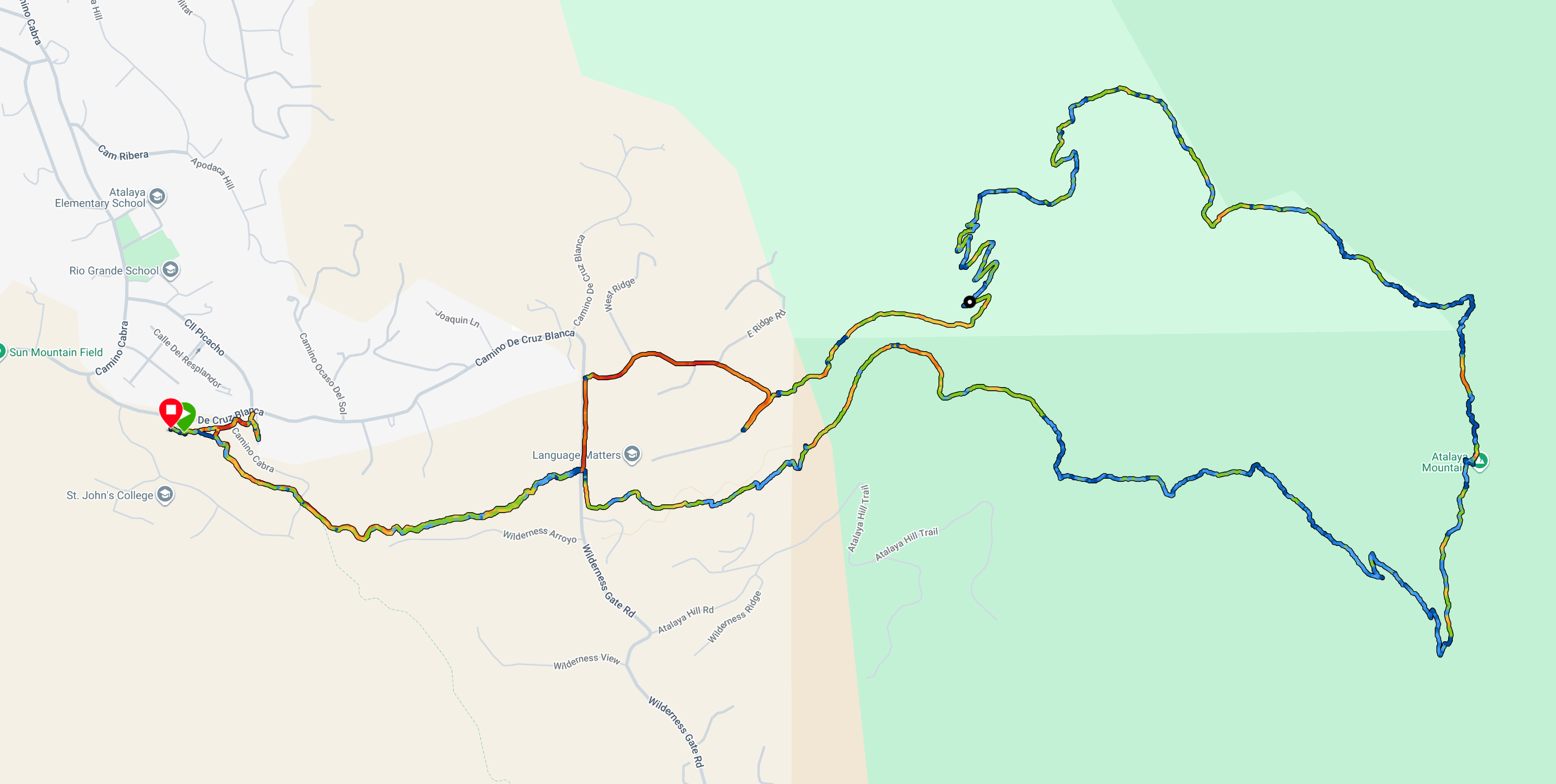
Below is the map of the trail I took. I went counterclockwise in the loop. I had only planned to go up and down to the peak on the same trail, but once at the peak, I decided to take an alternate route back, so I’d see different sections on the area.

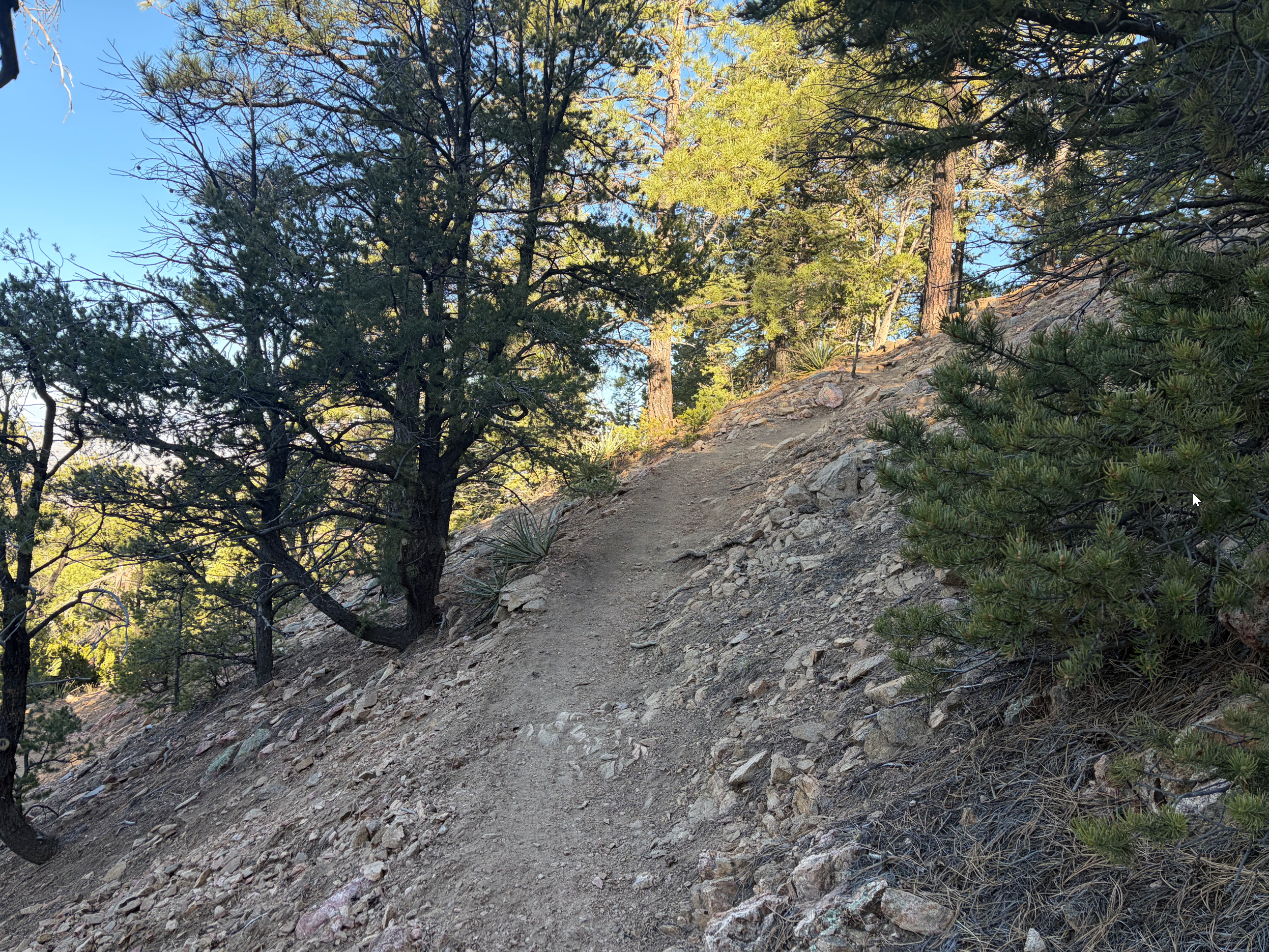
The trail starts at about 7,400 feet of elevation and the peak is at about 9,150 feet. It is listed as a moderate to strenuous hike. I would not call it strenuous. My loop was 7.5 miles long, it took me 3 hours and 45 minutes, including all stops for water, snacks and pictures, and the total elevation change, going up and down was 1,991 feet. This would normally be a moderate hike, but given its elevation, I can see how it can be challenging for some flatlanders. Here is a typical trail picture:

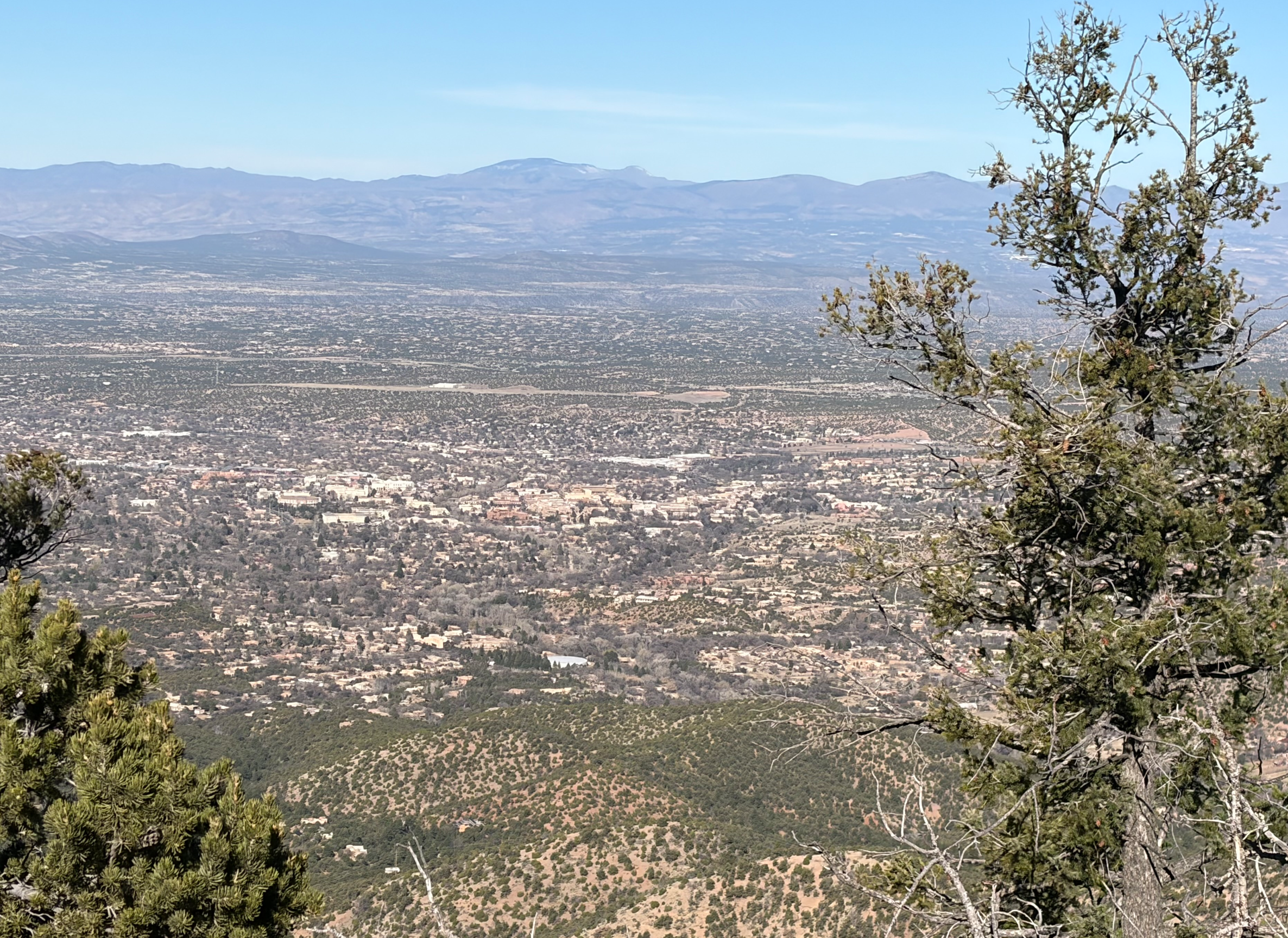
Here is a shot from the peak down to Santa Fe:

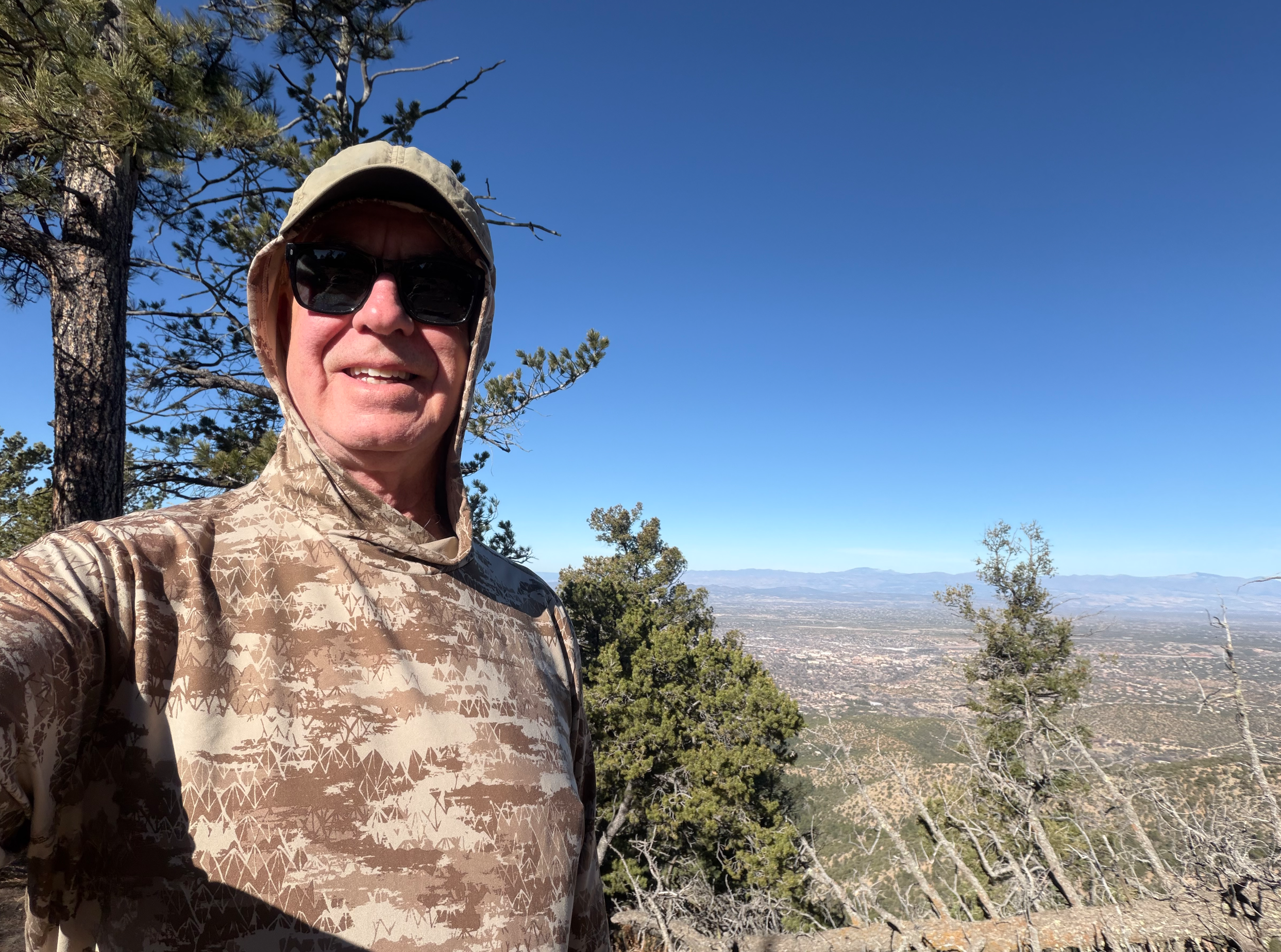
And finally, the obligatory selfie with Santa Fe in the background.

On the way down, I crossed over into the “Dale Ball Trails,” a network of trails of almost 25 miles. I saw a lot more people there than on the way up on the Atalaya Trail.

Dale Ball was instrumental in the conception, design and construction of the trails, mostly natural-surface trails for hikers and bicyclists in the foothills of the Sangre de Cristo Mountains.

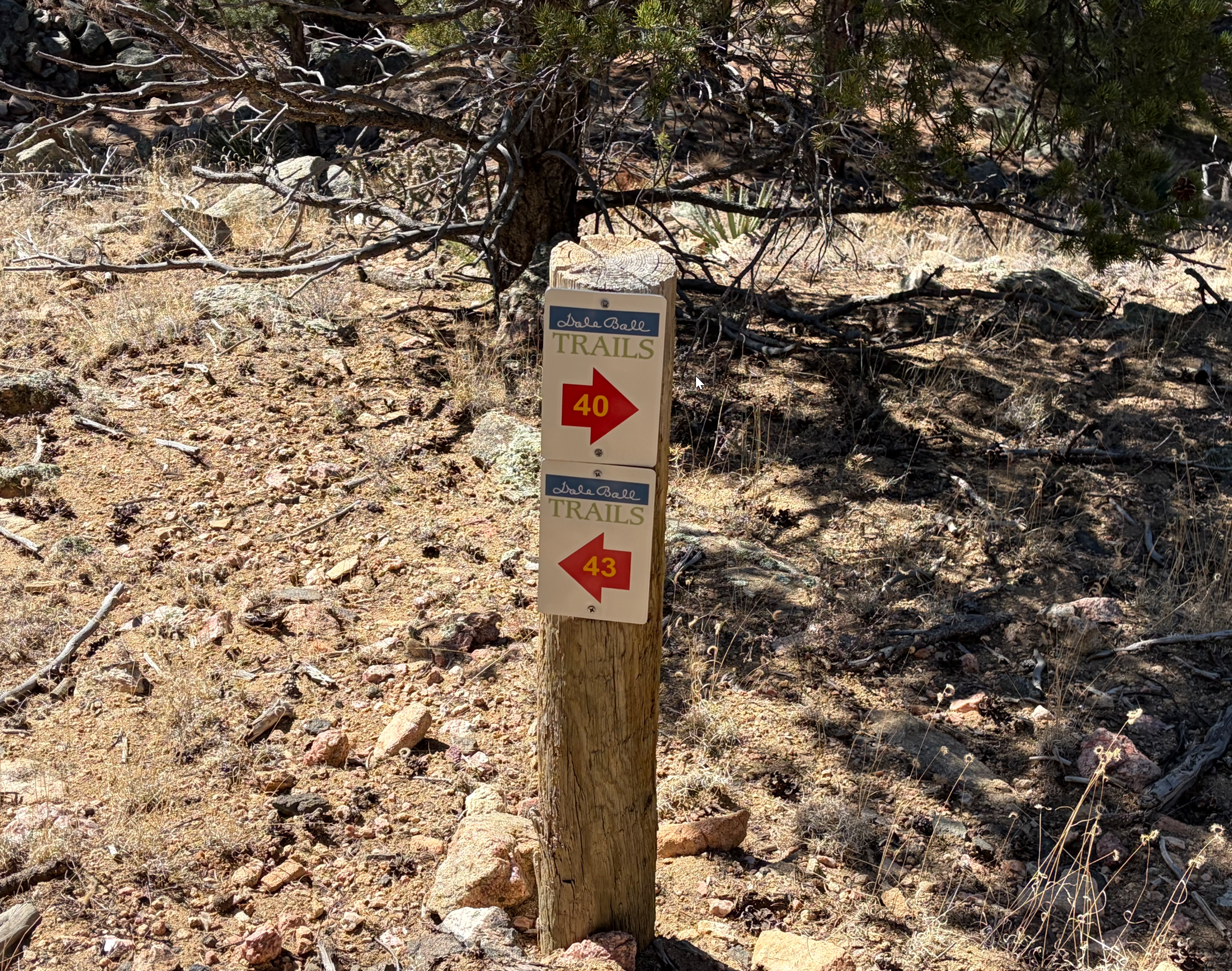
What I found most helpful and interesting was the navigation system used by the trails. On every junction, there is a overview map which also identifies the location where you are:

On the map above, I can see that I am at junction 42. Then I have several options or directions to go to. When I turn around, I can see the markers and the directions to go to next.

I can’t tell you how often I have been in areas of trail junctions, map in hand, without a clue of which way to go. Mostly I use my on-screen GPS and trail map and walk in one direction and another to see which way I should be heading. This system is genius. I think I’ll recommend it to my local Daley Ranch system, which probably has more miles and just as many junctions as the Dale Ball Trails.

I thoroughly enjoyed my little hike in Santa Fe.

Proud to be a Californian

Here is a world map showing in blue all countries with a GDP lower than that of the State of California:


To state it simply: California just surpassed Japan in 2025. There are only three countries with a larger economy than California. Those are the United States without California, China and Germany. And we only have to gain $500 billion to catch up with Germany. It won’t take us long.

New Mexico State Capitol

If you have been reading my blog, you may have noticed that I collect pictures of visits to state capitol buildings. Go to the Categories selection box and select “State Capitol Buildings” and you get quite a list over the last few years you can browse through. Not all of them have me in the picture, since often I was there alone and I didn’t have a convenient passer-by help me take my picture.

But today I had some colleagues with me.

Here I am in front of the building. I don’t have a picture of the whole building. This one is different from most capitol buildings I have seen. It does not have a dome, and it’s built in the typical Santa Fee “adobe style” architecture. If they hadn’t pointed the building out to me, I would not even have noticed it – from the outside.

However, I was inside, and I got a great tour of all four levels, with the senate offices, the house offices, the chambers, and the governor’s office.

I must say, of all the capitol buildings I have visited and toured, this is absolutely the most beautiful one. Aligned with the art history of Santa Fe and its hundreds of galleries, the capitol building is an art museum all in itself. Every hallway, every staircase, every office is adorned with world-class art. I could have taken hundreds of pictures, and I am not exaggerating here.

I regret now that I was not smiling on this picture. The buffalo head is made entirely of recycled materials, rags, chains, bottle caps, cans, plastic spoons, newspaper, I could go on. It is a very striking work of art.

Here is another example of modern art, this one right outside of the governor’s office.

Here I am at the door to the governor’s office. No, I didn’t get to meet the governor. However, we walked right in, and the receptionist at the desk welcomed us in and invited us to walk around and check out the artwork.

Visiting the New Mexico capitol building I had the distinct feeling that it was “the people’s house” and it was open to the people. After we went through a security checkpoint, we were free to walk around, all the way into to lobby of the governor’s office.


Book Review: The End Of The World As We Know It – edited by Christopher Golden and Brian Keene

Stephen King’s book The Stand is one of my all-time favorite novels. It first came out almost 50 years ago and I have read it several times. The book tells the story of a pandemic that wipes out over 99.9% of mankind. The world of The Stand plays in the aftermath of that pandemic. There are people who read this book once a year just for good measure. I believe it’s King’s grand opus and it’s 1,200 pages long.

I don’t usually like short stories or anthologies. When I came across The End Of The World As We Know It, I was skeptical. But once I started reading, I realized that the 34 stories by 34 different authors all play in the universe of The Stand. Some of them at the same time, as the disease ravages the world, others years later, and others yet decades and several generations later. They don’t all play in the United States either. Some are in other countries and continents. The anthology is over 800 pages long and it took me a while to read it – like about one story per session.

Stephen King has fully authorized this work about the harrowing world of The Stand. The stories are presented by award-winning authors and editors Christopher Golden and Brian Keene.

It features an introduction by Stephen King himself, followed by a foreword by Christopher Golden, and an afterword by Brian Keene. Contributors include Wayne Brady and Maurice Broaddus, Poppy Z. Brite, Somer Canon, C. Robert Cargill, Nat Cassidy, V. Castro, Richard Chizmar, S. A. Cosby, Tananarive Due and Steven Barnes, Meg Gardiner, Gabino Iglesias, Jonathan Janz, Alma Katsu, Caroline Kepnes, Michael Koryta, Sarah Langan, Joe R. Lansdale, Tim Lebbon, Josh Malerman, Ronald Malfi, Usman T. Malik, Premee Mohamed, Cynthia Pelayo, Hailey Piper, David J. Schow, Alex Segura, Bryan Smith, Paul Tremblay, Catherynne M. Valente, Bev Vincent, Catriona Ward, Chuck Wendig, Wrath James White, and Rio Youers.

I will go and find some of the works by these authors after reading their stories here.

Warning: If you have NOT yet read The Stand, this will not make sense to you. Read The Stand first, then this book. I highly recommend both.


Lunch at the Rainbow Room in Rockefeller Center

During a meeting today in New York City, our hosts took us for lunch to the Rainbow Room in Rockefeller Center.

The Rainbow Room is a private event space on the 65th floor of 30 Rockefeller Plaza in New York.  It opened in 1934 and was always a focal point for the city’s elite, as well as one of the United States’ highest restaurants above ground.

Here is a photograph of the building that I took in November, when they were just putting up the Christmas tree on the plaza. The building is iconic and a city landmark.

The first time I was there for lunch I was too embarrassed to take a photograph. I didn’t want to look like a tourist or country bumpkin. Today, however, I decided I didn’t care. I took a few pictures out the window. All of New York is visible in almost all directions. Here is a view south, showing the Empire State Building and in the distance to the right of it the World Trade Center tower.

Lunch was  excellent.