The Subjective Perception of “My Bed”

It seems like every time I come home from an overseas trip, I complain about the beds I was subjected to. Here is a post about a previous trip.

We just got back from a week in Germany, and again we constantly complained about the uncomfortable beds. When we got home and lay down in our own bed, it felt like heaven.

That got me thinking: It can’t be that 80 million Germans go to bed every night and think their beds are uncomfortable. They probably think they are like heaven.

What about the billions of people in developing nations whose beds are bags of straw and a blanket? If they are their beds, their own beds, they are probably heaven, nightly refuge from the bustle and the stresses of life.

Hikers look forward to their sleeping bags every night, laid down on a thin pad on the dirt in the woods, and they think of them as refuge and heaven.

The human body and mind create this cocoon of comfort called bed, no matter where it is, no matter how it is constructed.

When it is “mine” it is heaven.

Las 15 Fotografías Más Espectaculares De Fronteras Entre Países

The 15 most Spectacular Photographs of National Borders.

Borders

In this house, you can sleep in the Netherlands and eat in Belgium, every day.

Check out these 15 photographs and then answer these questions:

What’s wrong with India?

Should we be proud of the way our border with Mexico looks?

Elmore Leonard’s 10 Rules of Good Writing

  1.  Never open a book with weather.
  2.  Avoid prologues.
  3.  Never use a verb other than “said” to carry dialogue.
  4.  Never use an adverb to modify the verb “said”…he admonished gravely.
  5.  Keep your exclamation points under control. You are allowed no more than two or three per 100,000 words of prose.
  6.  Never use the words “suddenly” or “all hell broke loose.”
  7.  Use regional dialect, patois, sparingly.
  8.  Avoid detailed descriptions of characters.
  9.  Don’t go into great detail describing places and things.
  10.  Try to leave out the part that readers tend to skip.

Teach Your Children Well

Train up a child in the way he should go; even when he is old he will not depart from it.

— Proverbs 22:6

And there lies the rub: Teach him self-delusion, teach him bigotry, and teach him nothing much at all, and he will not depart from it either.

Teach your children well.

The Stories of Three Young Men that Changed the World

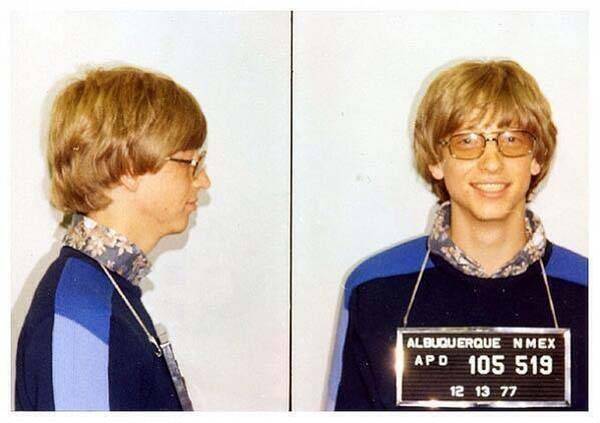
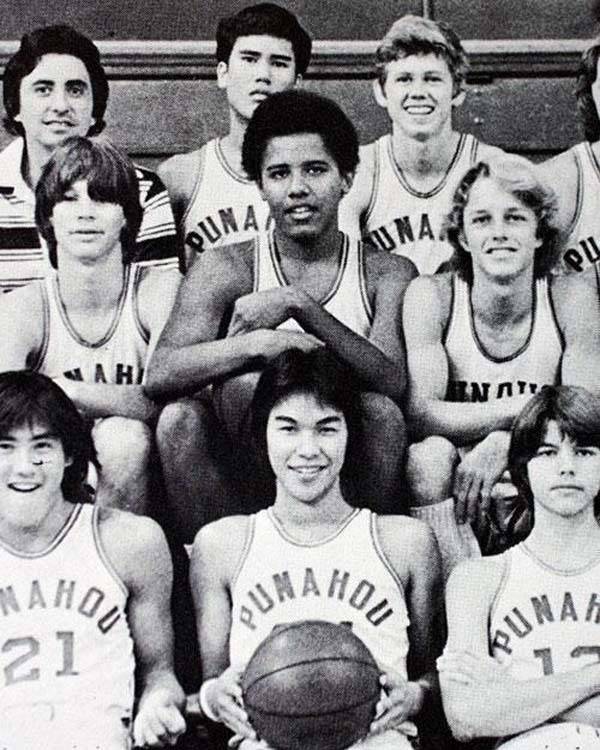
I remember 1977 and then the early 1980s very vividly. Those were the years when I came of age. There were other men that are close to me in age that grew up then, also. Each of them changed the world, and I am sure each of them, at the time when these pictures were taken, had no idea who they would become and certainly they would not have expected that every person in the world would eventually know them.

Three Humans - Gates
Bill Gates – December 1977

Above is Bill Gates in a mug shot after he was arrested for a driving violation in New Mexico on December 13, 1977. If somebody had told him then that he would be the richest man in the world for at least half his life I am sure he would not have believed it then. Microsoft was just a couple of years old, with less than 10 people in a small shop in Albuquerque.

Three Humans - bin Laden
Osama bin Laden – circa early 1980s

I am a martial artist, and so was bin Laden in the early 1980s, when he was in his mid twenties. Martial artists usually exhibit discipline, a strong sense of honor, and deep respect for their fellow man. That’s what martial arts is all about. If somebody had told the Black Belt on the right that he would end up being one of the most recognized and iconic terrorists of all time, I am sure he would not have possibly believed it  then.

Three Humans - Obama
Barack Obama – circa 1977

Barack Obama was a teenager when this picture was taken, I estimate around 1977. He was a black boy in a white basketball team. I am sure he was probably the most unlikely person to become President of the United States in his entire high school. He had no idea where he was going to go in his life.

All three of these men are contemporaries to each other and to me. The circle of life took them into very different directions. Looking at these photos, and thinking about my own journey in parallel to theirs, I cannot help but realize that life is not what we are born as, and who we are when we are young.

Life is what we do with our time. We become what we think about.

Let’s choose our thoughts well.


100th Anniversary of the Christmas Truce

Christmas Truce
Photo A.C. Michael


It was on Christmas Day of 1914, when the trench warfare of WW I was raging on the western front. The German and French soldiers, who hours before had shot at each other came out of the trenches and met, exchanged cigarettes, wine, whiskey and cakes. They sang carols to each other, exchanged addresses, and showed each other pictures of their families.

In the days after this event, they refused to shoot at each other.

Fraternization with the enemy is treated as treason in war. In subsequent years, officers immediately squashed any attempts at this, and it never happened again.

War is the game old men play with the lives of the young.

No wonder the old men don’t like it when the young men exchanges pictures of their families. They might realize that both sides are human, and both sides are actually the same. They might realize the insanity of the war. We can’t have that!

War must be taken seriously, the old men say.

Off to Prepare the Turkey

I say this all the time: Thanksgiving is pretty much the only holiday I respect and honor. Many will debate me about that as they see their holidays. But that’s very subjective. To them, theirs, to me, mine.

Holidays are about reflection, about honoring something or somebody, and about tradition. We all have our own traditions. We inherit many of them from our parents and general lineage.

I am grateful for the fact that I didn’t inherit any Thanksgiving tradition from my lineage, as I grew up in a different country where we didn’t have the kind of Thanksgiving we have here in the United States. Erntedankfest in Germany is the equivalent, and sometimes people equate the two, but they are not the same in the heart. And I certainly have no idea what day Erntedankfest falls on.

For Thanksgiving, having no inherited traditions, I have had to make my own. In the first few years of my adulthood, I was able to participate in the Thanksgiving festivities of others where I was invited.  I certainly remember my first one, as an AFS exchange student in high school.

As it turned out, making the turkey became my job. There must be homemade cranberry sauce. Then later the Waldorf salad became an added tradition.

Inviting friends became the norm. I always preferred staying at home for Thanksgiving and “hosting” rather than going to someone else’s house, but there were exceptions over the years. Thanksgiving to me is about reflection and hanging out, not travel, not stress, not getting everything right.

I have no deity to thank. Just the people that have been good to me all my life, children, family, lovers, and friends. And those, whether they are here right now or not, as I get ready to make the stuffing, are the ones I think about and am grateful for.

It’s been a good ride.


Ruminations on the Pledge of Allegiance

I pledge allegiance to the Flag of the United States of America, and to the Republic for which it stands, one Nation under God, indivisible, with liberty and justice for all.

The Pledge of Allegiance is a truly American phenomenon. I do not know of any other nations that have such a thing. Most Americans, should you ask them, think that it was deeply ingrained into the structure of our country and created by the founding fathers.

Far from it. It was first composed by Francis Bellamy, a Christian Socialist (and Baptist minister) in 1892 in an effort to promote the U.S. Flag, at a time when the distribution of the flag was promoted by companies for commercial reasons. They wanted to sell something. Bellamy wrote the pledge to be used in schools. It wasn’t formally adopted by Congress until 1942, and the words “under God” were added only in 1954.

Foreigners that come to America and hear the pledge usually are astounded. They equate it to brainwashing. They compare it to something one would expect in North Korea, but not in the country of “the free.”

I was such a foreigner once, and I clearly remember how it took me some time to get used to it. Pledging allegiance to an object, even if that object is a flag and that flag represents a nation, seemed like a strange thing to do, and trickling this daily into the brains of little school children struck me like a delusion at best.

I have been a U.S. citizen for many decades now, and I participate in the pledge, when I am in an appropriate situation, like a public meeting, but I must admit I don’t do it because I have some allegiance to this object of fabric that represents our nation, but because I don’t want to be different lest I offend someone. I participate with those who grew up with the pledge all their lives – at least since 1946, who don’t know it any other way.

Americans often are prickly about this ritual. “You don’t have to participate, you can remain seated if you want.” But nobody dares. Being “unpatriotic” is not looked upon favorably at this “free” country.

They often say that people died protecting the freedoms we all enjoy today and we should show proper respect for the flag for that reason.

This, of course, is nonsensical. The pledge has nothing at all to do with the fact that people died. Many Americans today do not believe that those people that died in the wars of Vietnam, Afghanistan and Iraq died for our freedoms. I personally do not believe that the 50,000 Americans that died in Vietnam made any difference in the freedom of our country and what it is today. If the Vietnam war had not happened, and nobody had died, we would be no less free today.

People willing to die for something does not automatically make that something good. People died by the millions defending Nazi Germany. What a terrible waste! Should Germans now show respect to the Swastika because their grandfathers died for it?

So making school children pledge their allegiance to a flag to show respect is a dubious practice. It would be much more practical and effective to educate them about the real reasons we are free now, the enormous risks the revolutionary generation took in the fight against England, the fact that the French (a people we often ridicule now as cowards) came to the aid of the colonials, the fact that the founding fathers separated church and state, and many, many others.

Peanut butter and jelly sandwiches are an acquired taste that we Americans grew up with an cherish. Foreigners don’t get it.

It’s the same with the Pledge of Allegiance.



Spending Time with our Children

Students were asked on the 100th day of school: If they could have 100 of anything, what would it be and why?

100 Years

After reading this heartbreaking plea from this little girl, all I could think is that she is apparently living in a healthy-looking middle class home, yet she is suffering so much emotional pain already!

This shows clearly what educators and engaged parents already know: We need to spend time with our children. We don’t need to buy them much. We just need to spend time with them. Take them with us. Read books to them.

We need to —

— teach our children well.

AFS – 40 Years After

[photo credit: Roya]
[photo credit: Roya]
It was exactly 40 years ago, to the day, that I first stepped into an airplane. I was 18, and I left Germany on a Pan Am 747 to embark on a journey to New York, where I would spend a year as a high school foreign exchange student with the AFS program.

I had a window seat in the rear left of the plane. The wing was in front of me. Since it was my first flight, I could not get over the views out the window. Endless covers of clouds as we departed Frankfurt only allowed occasional glimpses of the green summer hills of Germany below. I had headphones on and I remember listening to the soundtrack of the plane, since this was before mobile music devices existed. The two songs I vividly remember is Sunshine on my Shoulders by John Denver and Free Man in Paris by Joni Mitchell. Whenever I hear those songs now I remember sitting in that plane and looking out over the endless white carpet of clouds under a brilliant blue sky. We took off around 5:00pm and heading west to New York, the day just never ended until the sun slowly went down as we descended into Kennedy Airport nine hours later.

I had not left a radius of 200 miles around my home all my life until I took this trip. I had never flown before. I remember thinking of how small Germany was and how quickly we left it behind and pushed forward over the North Sea toward England. “Good bye, little Germany,” I thought.

AFS changed my life in so many ways, I cannot even fathom what it would have been like without this experience. It is now 40 years later, and I am still an AFSer, I still volunteer my time to make similar experiences possible for the young students of today. AFS’s mission is to create peace around the world, one person at a time. And for me, I must say, it has certainly done that. My entire worldview, the essence of who I am, is shaped directly by my AFS experience initially, and by the life choices I have made in the 39 years following it.

Then, a few days ago, I saw this Facebook post by my niece, Roya, who just started her own AFS experience as an exchange student in Colorado Springs. It was her who took the picture at the top of this post. I remember taking pictures out of the window, but I no longer have any of those photographs – they were all lost over the years. When I saw Roya’s photo, I realized that she must have sat at pretty much the same place on the plane, the left rear, as I did 40 years before. The picture reminded me of my own experience.

Then I read her caption: “Good bye, little Germany.”

Thanks for bringing this alive for me, Roya. The AFS experience carries on.


Blog Post Number 2000

2000This is the 2000th post on this blog. I have had daily critical thoughts for a while now. When I started writing this, I just wanted to experiment. I didn’t know how in the world I’d come up with something meaningful to say every day.

I have skipped days, sometimes several days in a row, but for the most part, things just keep flowing.

I think I’ll keep it going for another 1000 posts or so.

The Transience of Life

We all remember our first kiss. We usually remember our first kiss with a specific person. But nobody remembers the last kiss with that person.

Then I stumbled upon this anonymous picture collage of a girl, taken on the first day of Kindergarten and last day of medical school.

first and last day of school
[click for photo credit]
Check out this subreddit – it’s full of pictures like this.

I remember when I first had my daughter and I had to go to Vons to buy diapers. This was on the morning after she was born. The bag of diapers cost over $10, which was a fortune 28 years go for my little salary. I remember walking back to the car and doing the math, thinking how many years of diapers I’d be buying before “the baby” grew out of them. Ironically, while I remember those first diapers, I do not recall the last one. Suddenly that part of life was over.

It was the same when I first dropped the kids off at school. Facing 13 or 14 years of taking them to school seemed incomprehensibly long.  It was special to be taking them to school. I wish I had taken a first and last photograph, but I didn’t. Then, suddenly, that last day of school for my younger child happened – over 8 years ago, and now that whole phase is in the distant past.

Marking time segments highlights the transience of our lives. And we seldom know when the last of something occurs.

It just happens, and then it’s gone.

Blogging about Politics, Religion and Sex

Politics, Religion and Sex are the three subjects Toastmasters International suggests a speaker should stay away from. There is not much to be gained from speaking out on any of those topics. But you can get into huge trouble really quickly.

The same, it seems, is true for bloggers – at least meandering bloggers like myself, who don’t have a clear blog theme. My theme, Daily Thoughts of a (hopefully) Critical Thinker, suggests that I pick up controversial subjects and voice my opinion on them.

I should, however, be more conscious of the Toastmasters rule and stay away from the Politics, Religion and Sex. Today a friend sent me a private message saying she enjoyed my blog but frankly found my political posts somewhat offensive. She was therefore unsubscribing so she could visit from time to time and enjoy my non-political posts.

That comment gave me pause.

True, I had made some political statements, but as I read back through the last few weeks, none of them seemed very strong or very offensive to me. Perhaps I am simply hardened to my own view, and I suffer from the boiling frog syndrome and I don’t notice anymore that I am an extremist and therefore I offend people.

I found that my religious views could offend people, since my views are entirely void of any religion. If you search for the keyword “Mormon” on this blog you might see some examples of this. Since I know and care for many people who are religious, and since more than 80% of the general population belongs to or identifies with some religion, anti-religious rantings would therefore offend 80% or more of my readers. This prompted me to withdraw most of my religious musings from this post about a year ago and move those to a little blog called Reliphorism that gets a few lonely hits a week and therefore doesn’t do any damage.

Same with sex. I am not disinterested in sex, but I have no desire whatsoever to write about it. No damage there.

But politics, ah, there is a subject that’s more difficult to put away in a closet.

The friend that unsubscribed from my blog said that she wished I was a Republican. I wonder how she knows I am not a Republican? Actually, I confess, I am an independent. I have never in my life belonged to a political party, and I pledge that I will die that way. I vote for the candidate, not the party, every time. Since our country is divided down the middle between the two sides, and we independents get to slosh back and forth as we please, chances are that 50% of my posts will offend one reader or another. Since I have friends on both sides of that proverbial aisle, perhaps it would do me some good to hold back my political views and retain readership – and respect.

What’s left then? Time travel and art. Way to go!


My Life in Weeks

hourglass, sandglass, sand timer, sand clockThe weeks just slip by. I enjoy my work and I enjoy my leisure activities. Like most people, I start my work week on Monday and the days roll by. Since I have always enjoyed my work, I never succumbed to the “Thank God it’s Friday” attitude that seems so pervasive in our popular culture.

I sometimes marvel at the Facebook entries of young people and how they look forward to hump day (Wednesday) because it’s closer to Friday, which signals the start of a weekend that goes by too quickly.

As a business executive, I have noticed over the years that I have conflicting priorities regarding weeks and their passage.

Since there is always good news in the future, like the signing of a new contract, the meeting of a major milestone and the associated progress payment and resulting positive cash flow, I find myself waiting for next week, next month, and next quarter – so the good event can happen. It’s like waiting for my birthday or Christmas as a child, except it’s constant and ongoing. I am basically wishing my life away by looking forward to these future events.

On the other hand, as the weeks roll by, I am critically aware of how I am getting older, how the top of the hourglass now has much less sand in it than the bottom. I don’t want the weeks to pass. I want the days to last longer. I don’t want the end of the month to come because that’s when the rent and the other bills are due.

Today I came across this wonderful article that helped me visualize my life in weeks on the WaitButWhy blog:

If you multiply the volume of a .05 carat diamond by the number of weeks in 90 years (4,680), it adds up to just under a tablespoon.

This just blew me away, as did most of the charts of this wonderful article. It should be required reading for every young person. If you’re under 30 now,  and you are reading this, do yourself a favor and check out Your Life in Weeks. It will change the way you think and it may well change what you do when you get up after reading this post.

And if you’re older, like me, it will do the same.