Snow Hiking San Jacinto Mountain

I have hiked San Jacinto Mountain many times over the years. But it’s been a while that I have been on the peak, and I thought it would be nice to do it in winter. I took the Palm Springs Aerial Tram up to the mountain station at 8,600 feet and started hiking. It didn’t take long for the trail to be covered with snow.

At the ranger station they asked me where I was headed, and I told them “the Peak” unless I change my mind along the way. They gave me an overview of the condition and made sure I was equipped. Warm clothes, proper shoes, etc.

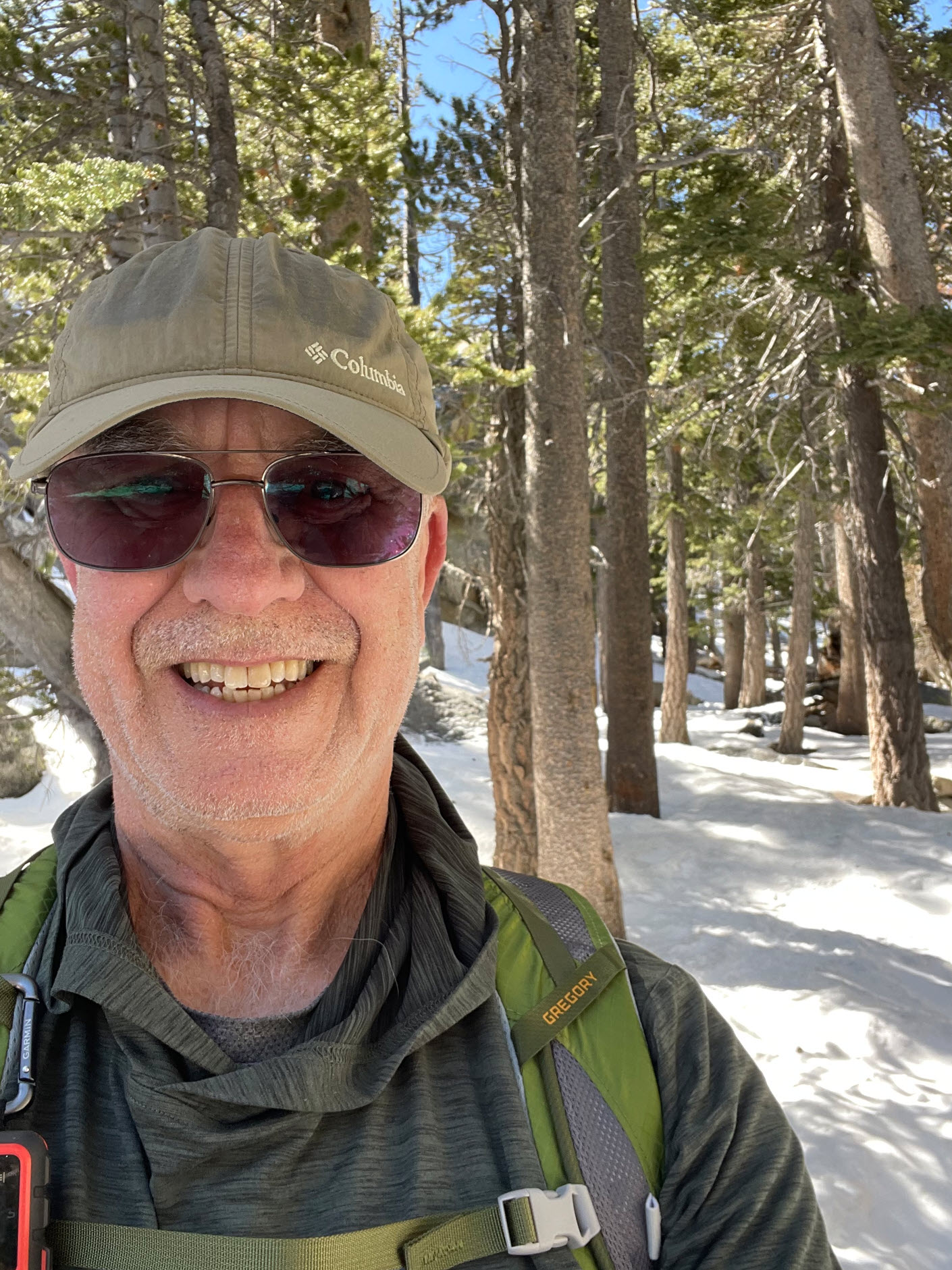
Here is a quick selfie just as the snow started not far after leaving the ranger station.
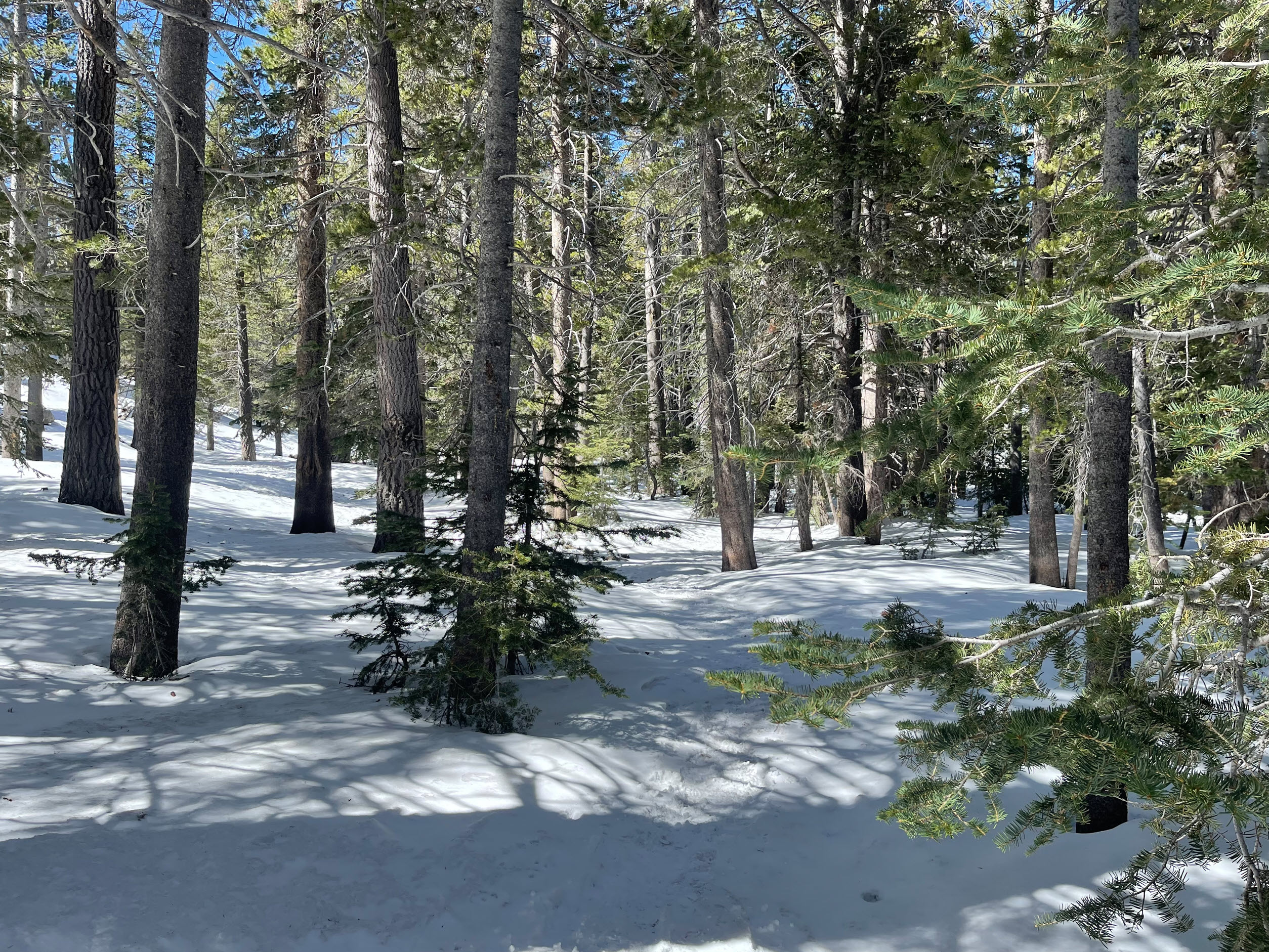
It is was a true winter wonderland. Only if you look carefully can you make out the trail, just by the footsteps that other hikers had left. Without them, I’d be lost in minutes.
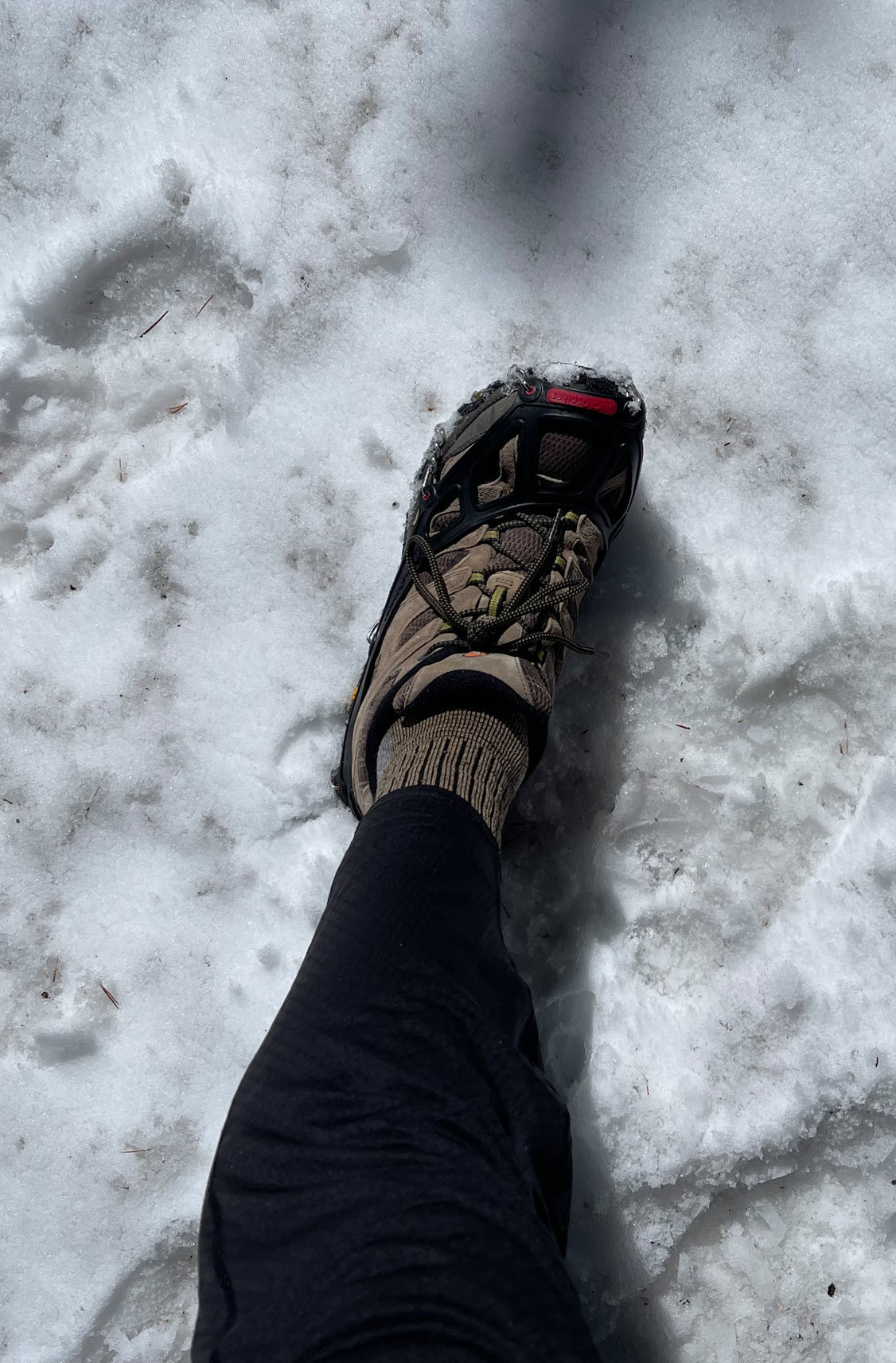
I knew I would need micro spikes. Here are my boots with them on. Note that I am not wearing high boots or gaiters. What you can’t see is that my boots are also not the waterproof kind. What would I need those for, right?
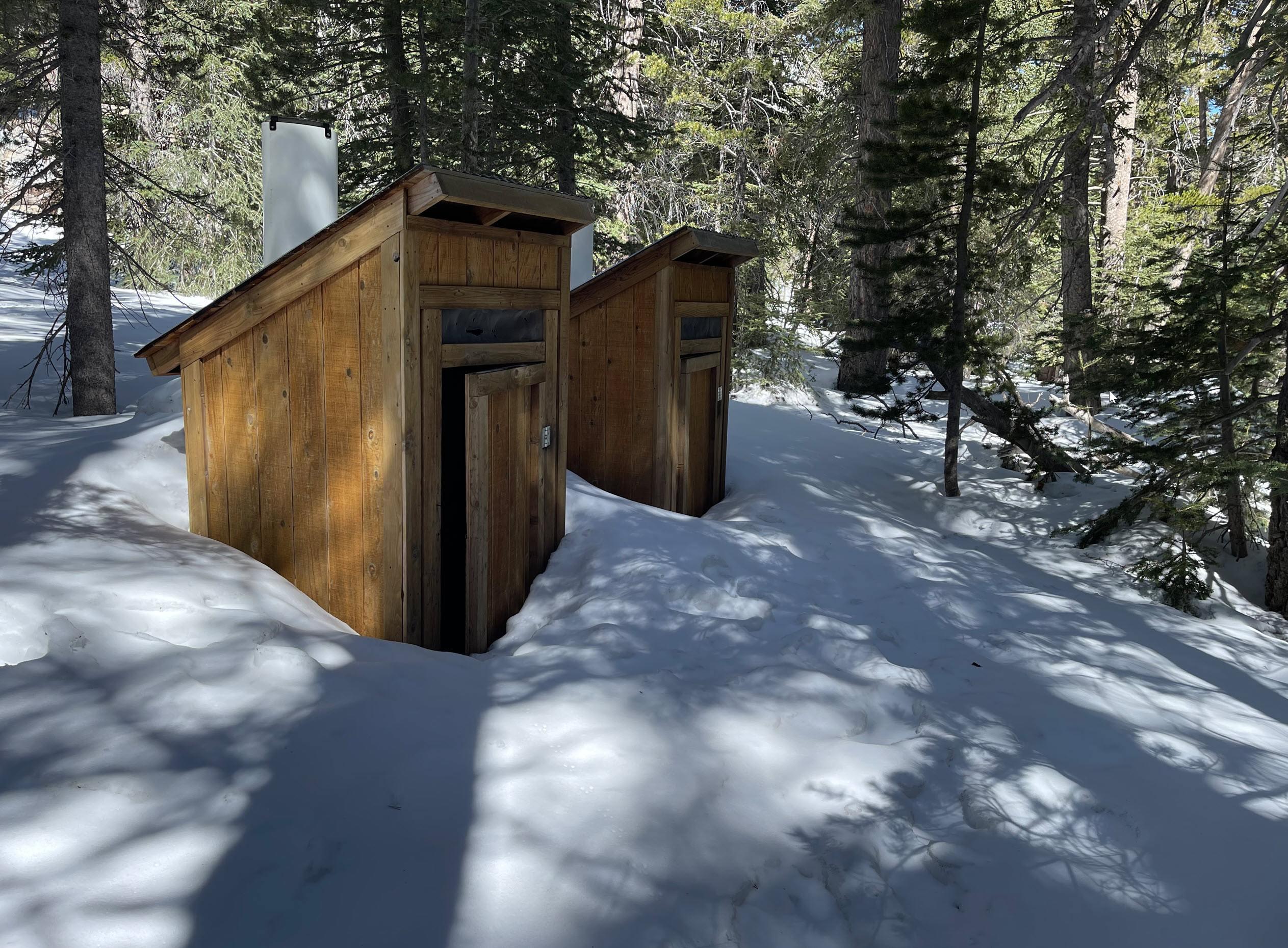
Along the way to Little Round Valley, there are a few toilets. You’d have to be pretty skinny to get into one of those. They give you a sense, however, how deep the snow is.
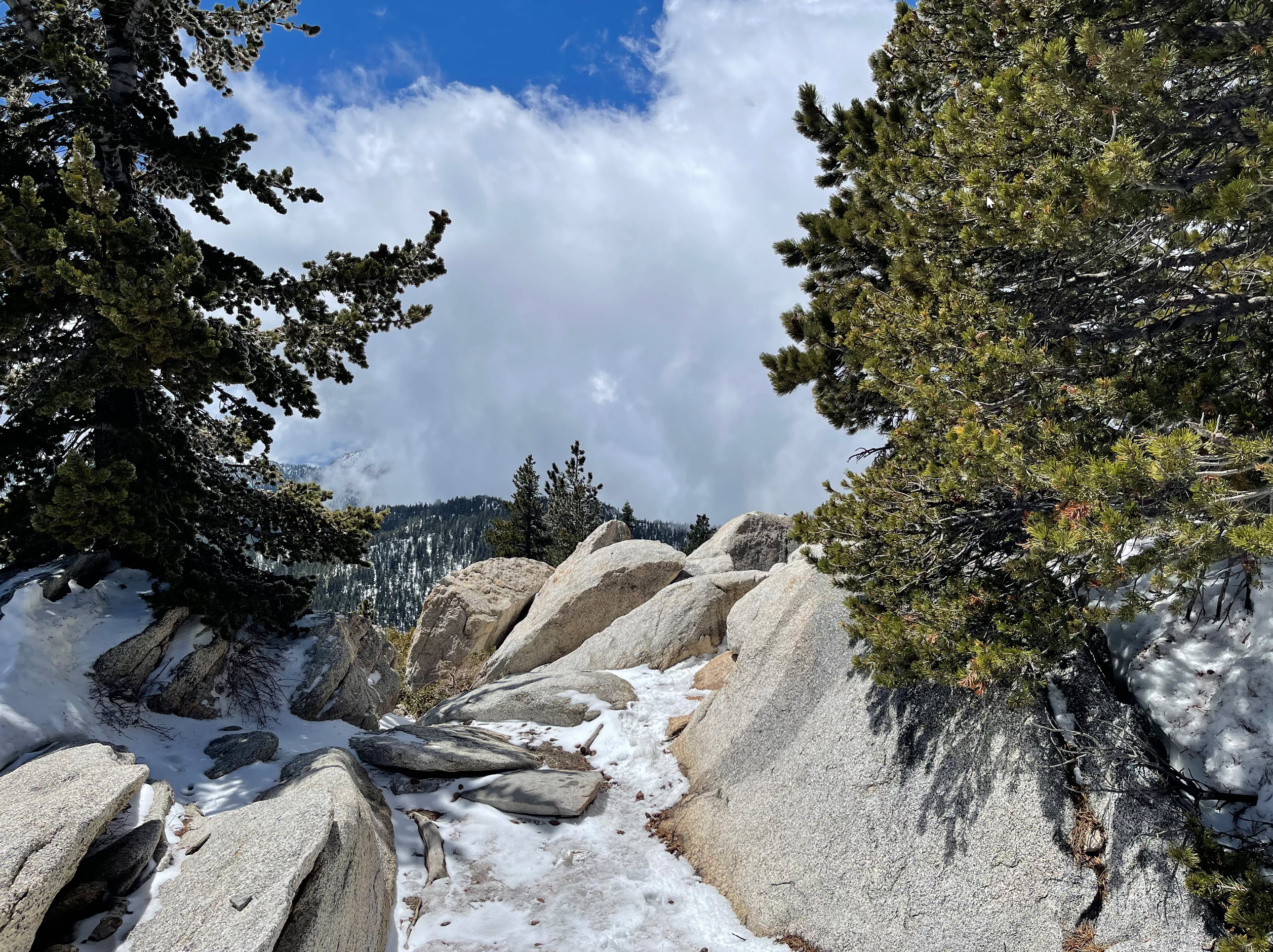
One of the landmarks along the trail is Wellman Divide. This is where the Pacific Crest Trail meets up with the other trails and there are dramatic views down into the valleys to the south, here behind me.

I took a shot down into the valley from Wellman Divide. It’s neat when the clouds are below you and you’re not in an airplane.
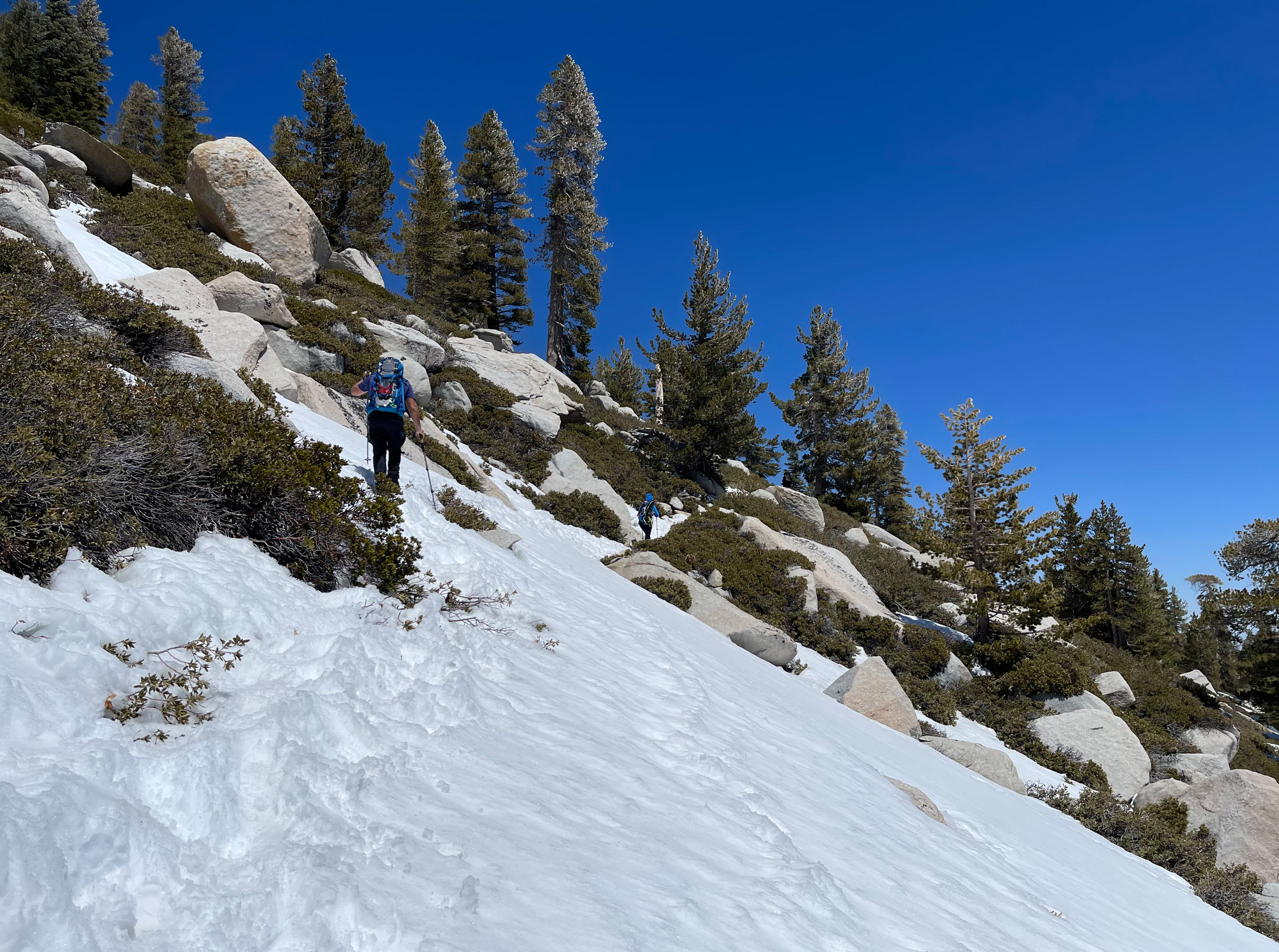
As I made my way up, I came upon a few other hardy hikers. Most had snowshoes with them. I of course did not.
Eventually, at about 10,000 foot altitude the now got to be very deep and my equipment started to fail. It was also time to turn around. I usually set a turn-around time for myself, particularly when hiking alone, to be safe. This was the view from that point:
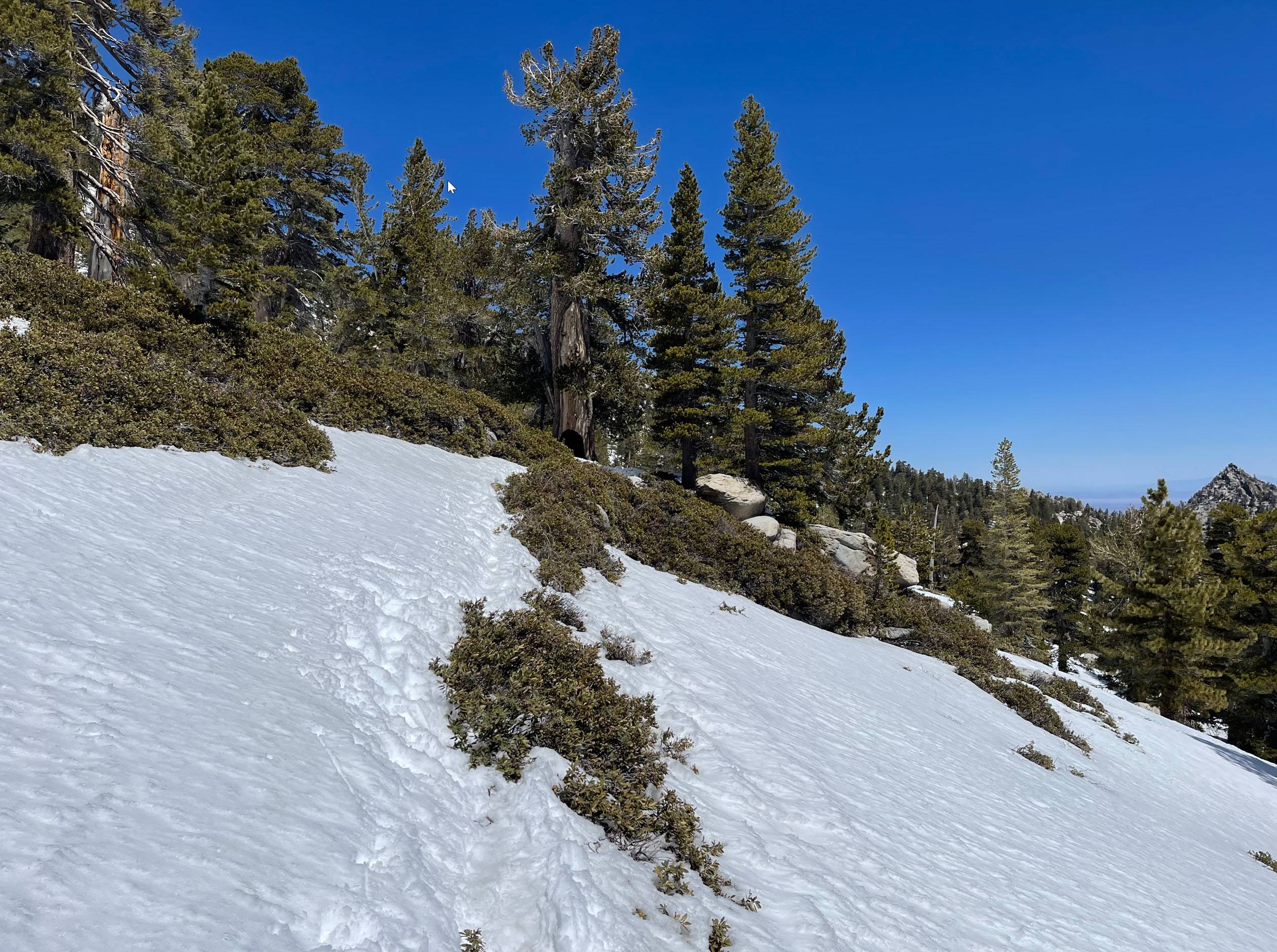
Several things, beyond running out of time, became apparent:

  1. I didn’t have snowshoes with me, so I started to sink deep into the snow, and the snow would get into my boots making my socks wet and feet cold quickly.
  2. Not wearing gaiters also contributed, of course.
  3. Not wearing high-top waterproof boots. My boots are great for fast trail hiking in fair weather and summer, but they are not suitable for snow.
  4. My poles didn’t have the little round stoppers that can be attached so they would not sink into the snow. I had left those in my garage at home. My poles literally sank all the way to the handles into the snow and I was effectively without the support of poles.
  5. I realized that going back down (for miles) under those conditions, I would sink deeply into the snow and it would not only be treacherous, but very slow.

For all those reasons, it was time to turn around. The one-way trip to the peak from the tram station is six miles and about 2,200 feet of elevation change. The peak is at approximately 10,800 feet. I turned around at 4.3 miles (about 1.7 miles short).

I took one shot down from where I stood:
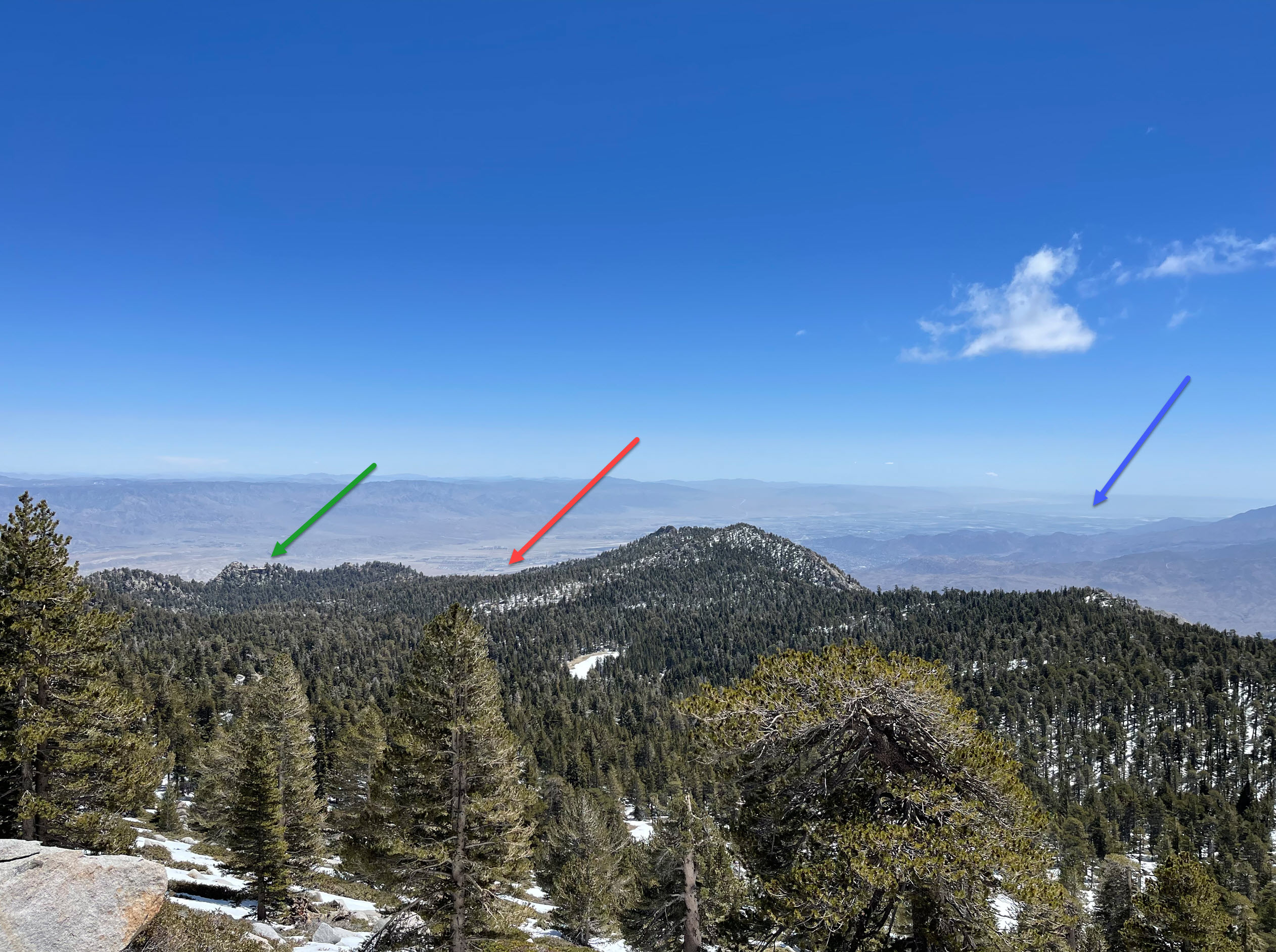
When you look carefully (click to zoom in) at the green arrow, you can see the faint outline of the mountain station from where I started my hike. The red arrow points to Palm Springs in the valley literally 10,000 feet below. The blue arrow points to the Salton Sea in the far distance.

The trail going back down was as challenging as I had anticipated. Going down requires harder steps and often my entire legs would crash through the snow and sink deep. It made for exhausting hiking.
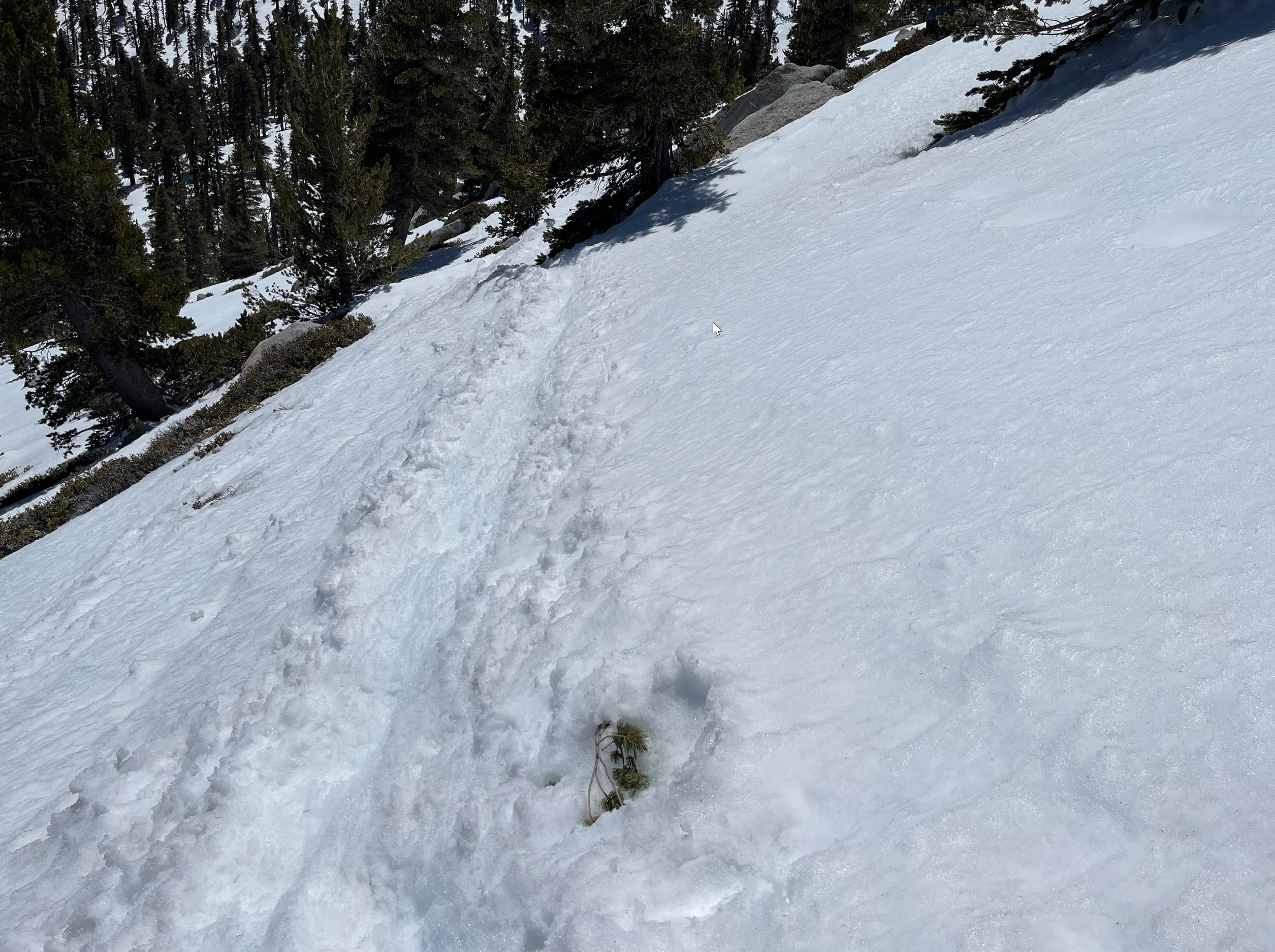
Sometimes there were harder ice spots with better traction, like here:
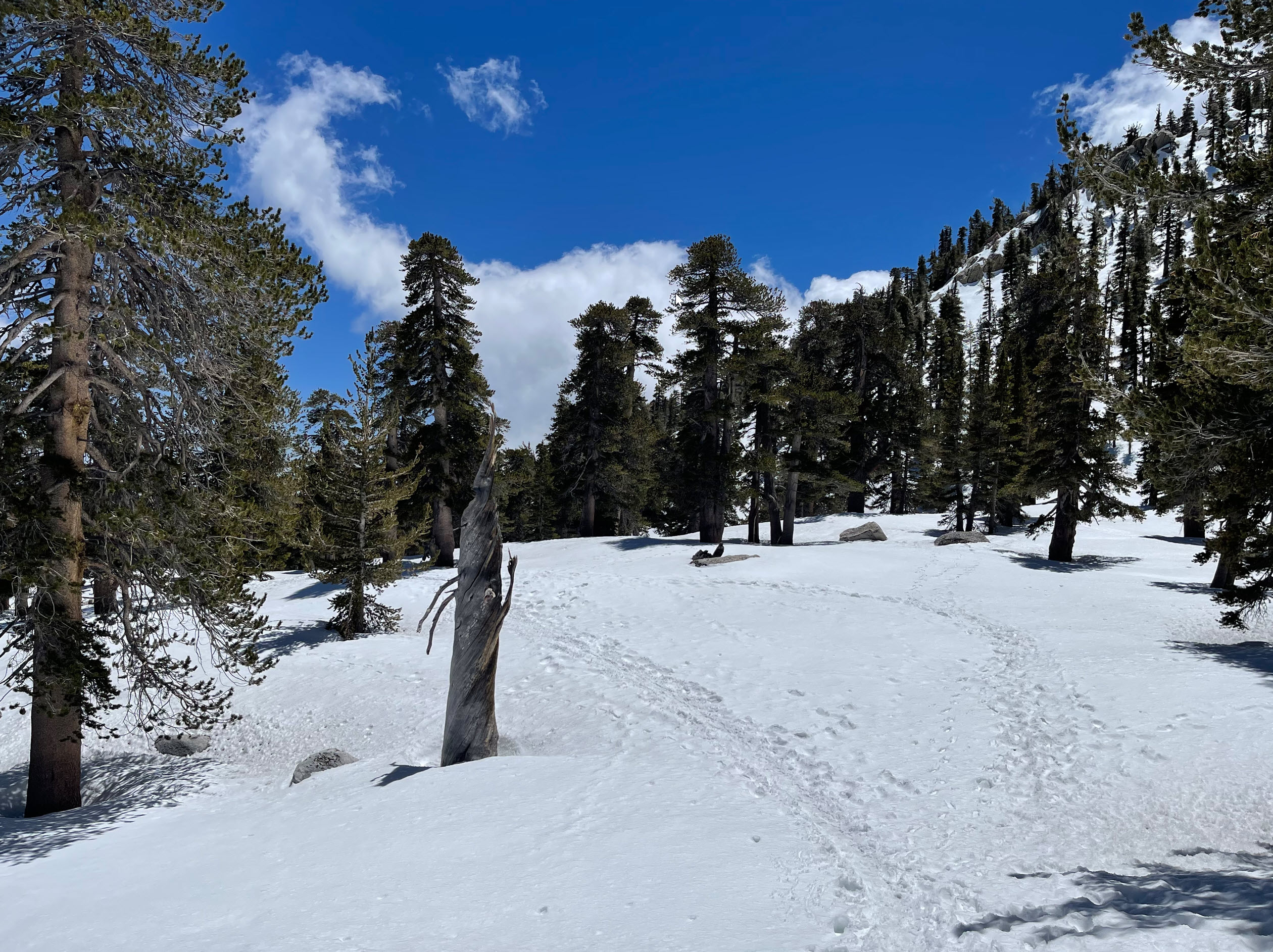
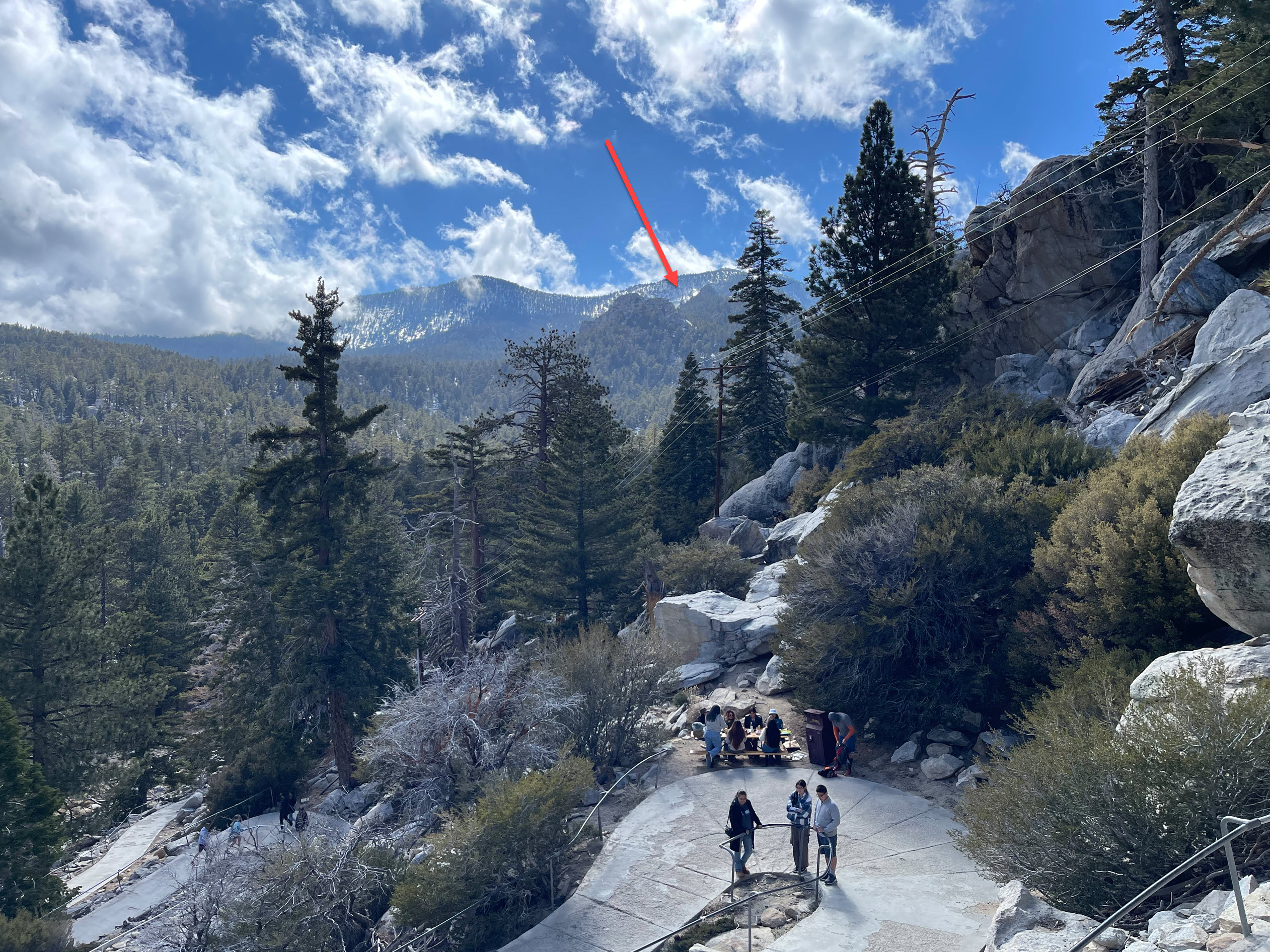
After hiking for 7 hours and a total of 8.3 miles, I arrived back at the mountain station. Here I am taking a shot back to where I was. The red arrow points to the approximate turn-around point from where I took the other photo above, pointing out the mountain station.
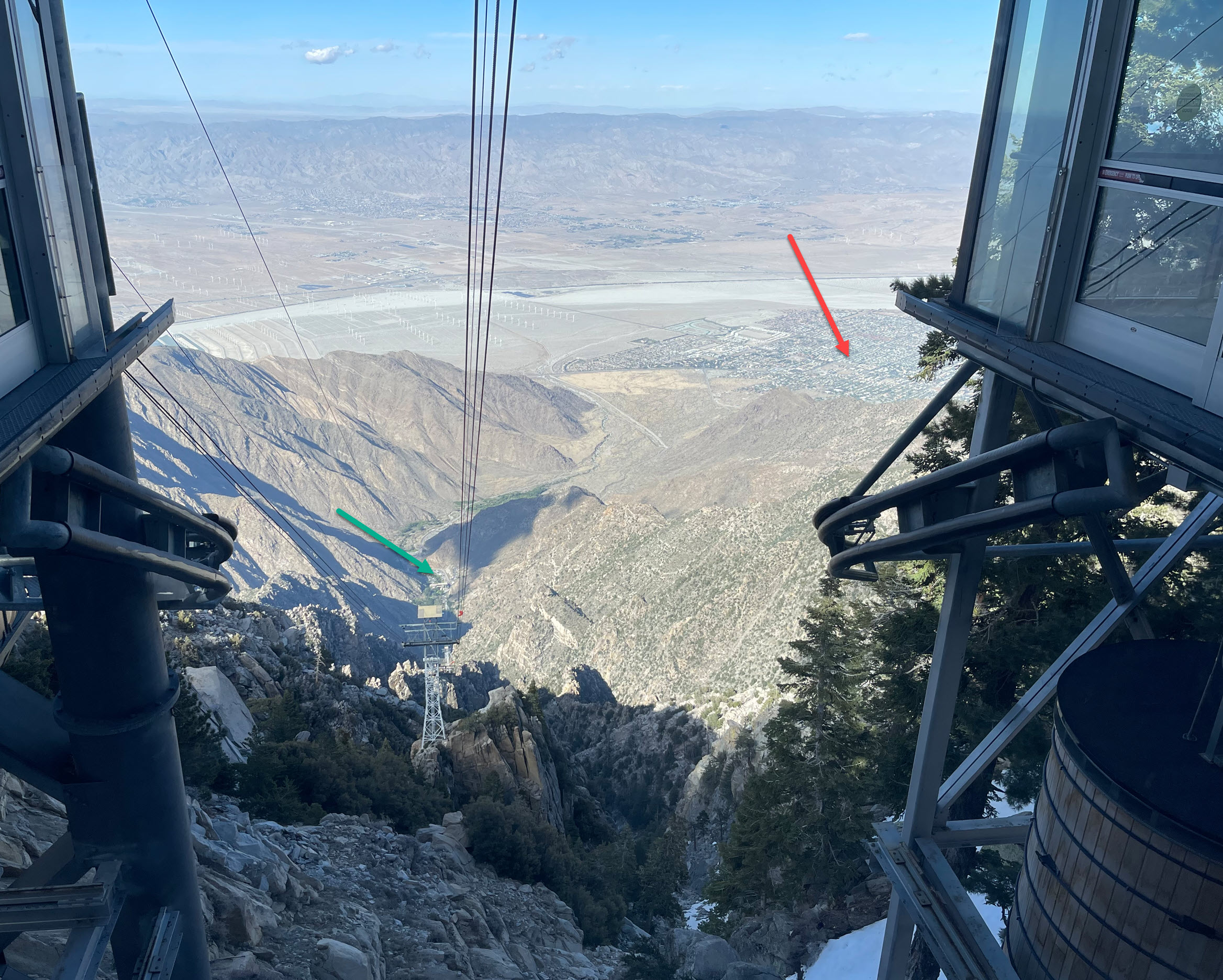
From the tram station, there is a good view into the valley. The green arrow points to the parking lot where I left my car, literally 6,000 feet lower than were I stand. The red arrow points to Palm Springs, 8,000 feet lower. The tram ride just takes about 10 minutes.
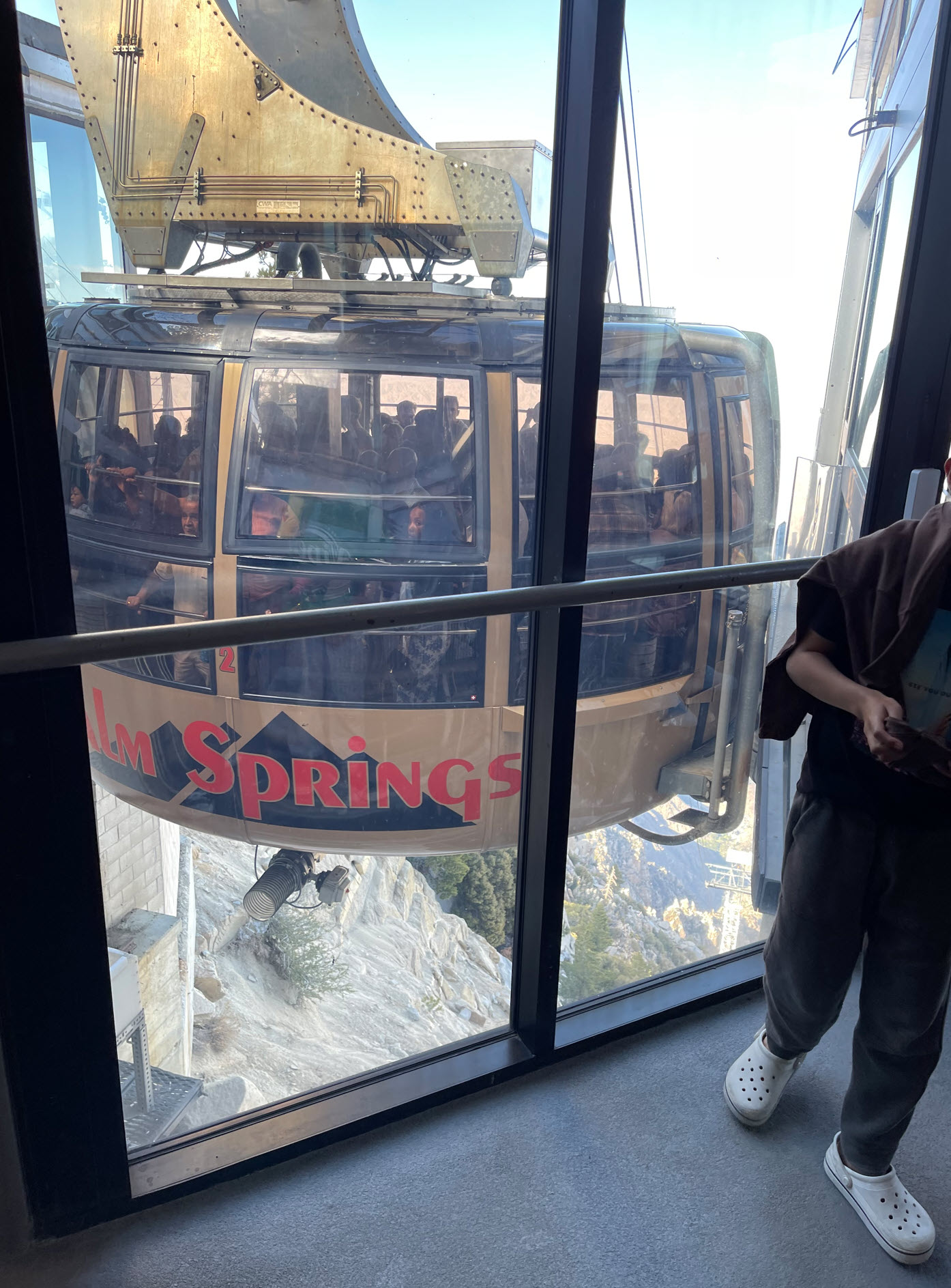
Here is a shot of the tram car coming up just before the passengers get out.

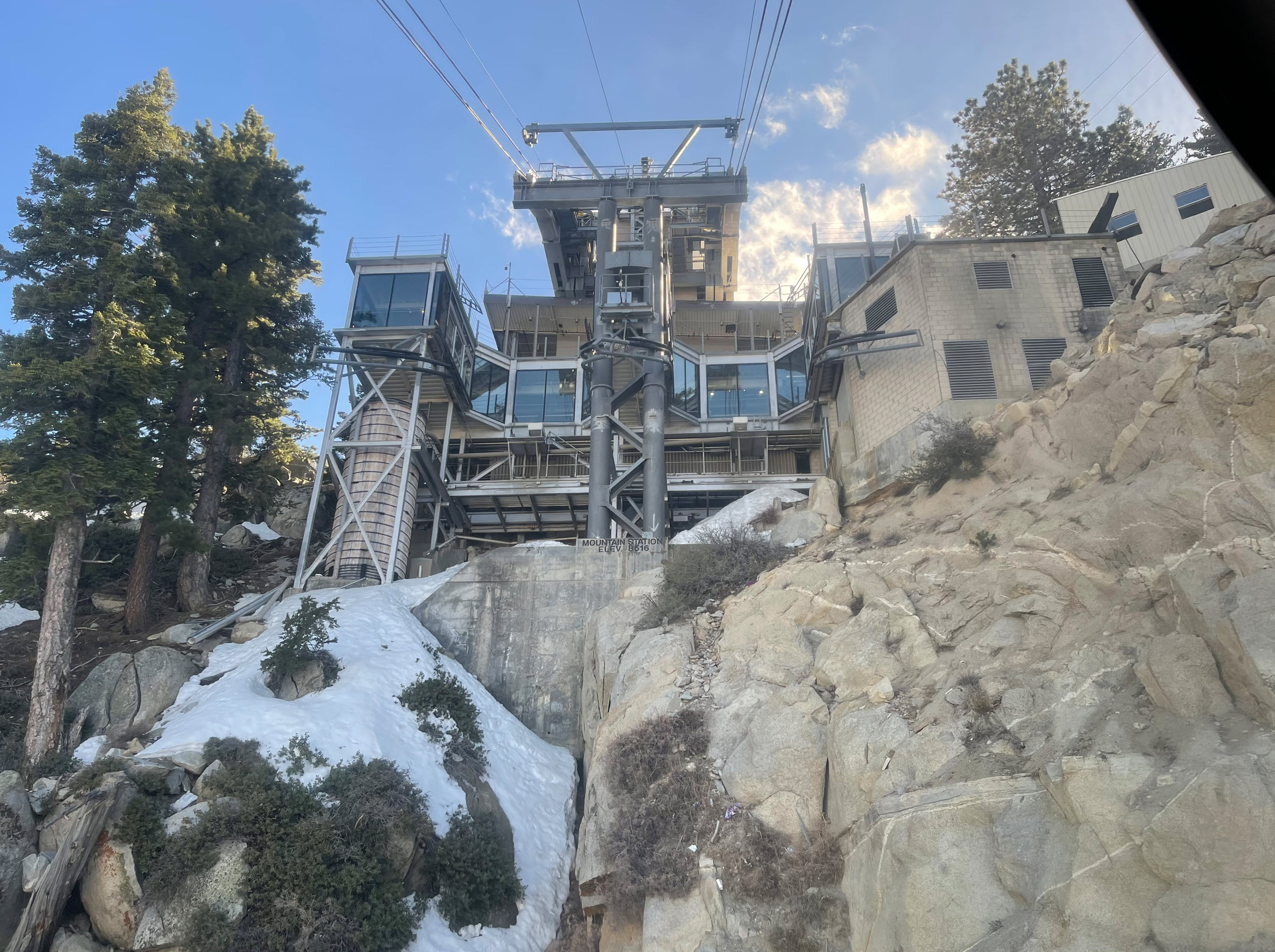
Looking back up from inside the tram I have a dramatic view of the mountain station.
On the way down, the scenery is dramatic, superimposing massive granite walls in front of  the endless desert below.

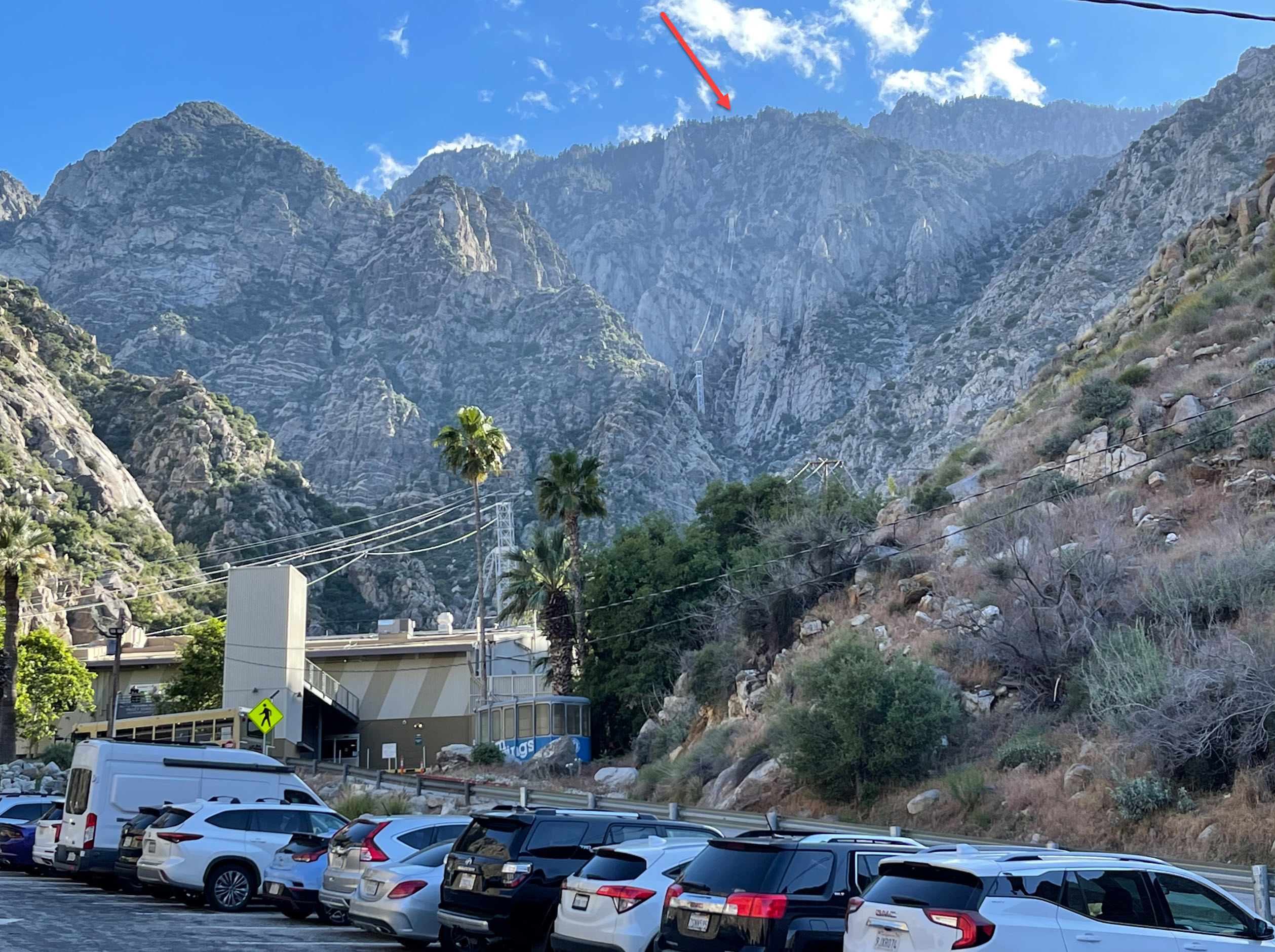
Finally, 15 minutes later, I am back at my car, stiff, exhausted, with a lingering altitude headache, looking back up from where I’d just come from. The red arrow points to the mountain station, which is not even discernible from this distance.
All in all, a great hike, and I have to go back soon. But I think I’ll wait for most of the snow to be gone.

Book Review: The Wager – by David Grann

The Wager is about a shipwreck in 1741, and the desperate conditions the castaways found themselves in on a desolate island in Patagonia. It is about what happens to humans when they are deprived of everything, comfort, security, purpose, water, food and most of all, hope.

An Armada of British ships sails for the Pacific around the southern tip of South America during the war with Spain, hunting for a treasure-filled Spanish galleon. All but one of the ships perish. The Wager is one of them. This book tells the story of the castaways and their quest for survival.

The life of a sailor was rough. If they reached their objective and conquered a ship, the rewards could be huge. A sailor’s share could be worth as much as 20 years of wages, and the captain would be set for life with a fortune to retire. However, it was hard to get men to sign up for the terrible risks, and for being away from wives, children, family and home for several years at a time. To solve the problem, the navy employed “press gangs” which were militarized units that simply captured hapless men who were at the wrong place at the wrong time, bound them, and hauled them onto ships. Drunken men might wake up miles from shore, never to return. Their families would simply know that they never came home one night. Those men, if they then stood up for themselves, were mutineers, and would be hanged for the offense. And thus was the glorious life of a sailor in His Majesty’s Navy.

The Wager is a non-fiction account of the journey, through the eyes of several of the key participants, mostly recovered from their journals. It is entertaining, captivating and shocking at the same time. In a world, where we can fly from Chile to London in 14 hours, it is difficult to imagine that in 1740, it took a year – if you succeeded to get around Cape Horn – and that was a big IF.


While talking about shipwrecks and sailing, I have read several books about sailing and shipwrecks over the years and reviewed them here:

Endurance – by Alfred Lansing – I read and reviewed this book in 2016; it tells the story of the Shackleton expedition to Antarctica in 1914.

Caliban’s Shore – by Stephen Taylor – Read in 2009, this is about a shipwreck in the 1780 timeframe on the east coast of South Africa.

More about sailing: Two Years Before the Mast – by Richard Henry Dana – Read in 2017, this tells the story of a two-year journey in the 1830s to California around Cape Horn from the point of view of a sailor.

And while we’re at it, you might be interested in Empire of Blue Water – by Stephan Talty – which I reviewed in 2008. It’s a book all about pirates.

Indiana State Capitol

This morning on my walk to a conference in Indianapolis, I was able to get this shot of the Indiana State Capitol.

Movie Review: Civil War (2024)

It was Tuesday night, and it had been a long time since we had been out for a movie. My wife suggested Civil War, because it had gotten “pretty good reviews.” It seemed fine to me, so we both sat down in a movie theater for a movie neither of us knew anything about. I expected a movie about – well – the Civil War.

But we were wrong. It was not about the Civil War, but rather about a hypothetical civil war in modern times. We have all heard one of our presidential candidates proclaim that we’d have a civil war if he were not going to be elected. It’s about that kind of civil war.

I didn’t care for the movie much when it started. The acting wasn’t all that good, and the story didn’t make much sense to me.

Apparently two large western states, Texas and California, seceded from the union and formed the western alliance. Their flag is the United States flag, but with only two stars. The president of the United States of course is fighting a war to defeat the secessionists. That’s pretty much all we know. There is a war going on on American soil, of one American against another, some in uniform, some in vigilante pseudo uniforms, but everyone armed with military weapons. Nobody can be trusted, nobody is safe, anywhere. The country is a dystopian wasteland.

Four journalists, including one young girl who wants to be a journalist, make their way to DC in a press SUV to interview the president. The story is told pretty much from their point of view.

I said above that I didn’t care much for the movie when it started because it didn’t make any sense. The journalists were running in the line of fire completely unnecessarily, magically not getting shot, all just for some photographs? Perhaps the director wanted to glorify the noble profession of war journalism. But to me they didn’t look noble or brave, they looked stupid, took unnecessary risks, did impossible feats all movie long, for pictures that would likely never see publication anywhere.

As I always do when watching a movie, since I know I will review and rate it later, I made mental notes of what I’ll say, and how I’ll rate it. Something strange happened while watching Civil War. It started as a one-star movie, and it gained another star every half hour. I had never had that happen to me before.

When I walked out, I was stunned. I could not really talk about it. I was numb. The shock and the violence of a military operation is something most of us never experience. But it came through in the last 30 minutes of this film. I felt I was right there. I was wondering whether all the people that talk about needing a civil war because they don’t like how we treat gay people, or immigrants, or whom we give tax breaks to, or what overseas allies we support or don’t support, or what god we pray to, whether all these people realize what it would mean to have a civil war in this day and age in this country?

And there you have it. The acting of this movie is mediocre. The story obscure. The plot outright silly. But the dystopian scenes are brutal and they hit you in the face with a fist. Go ahead, have your civil war, see how that helps you, your country, your loved ones, and your grandchildren.

You have to watch Civil War, just to get that slap in the face, if you can stand it.

Musings about the Eclipse on April 8, 2024

When I reported my experience with the solar eclipse in August 2017 in this post, I made this statement at the end:

But I was a different person. I had seen an eclipse. It was too short. I wanted another one. How dare they be so rare!

The next eclipse in the U.S. will be on April 8, 2024, and I will be there. There is no way I will miss that. It will arch up from Texas to Maine, and Chautauqua, one of my favorite places in New York, will be right in the path. And I will be there.

Then, the next coast to coast eclipse will be in 2045. I will be 89 years old. I will be there too.

I have seen a total eclipse, and things are different now.

We planned the trip for the 2024 eclipse for several years. We were going to go to central Texas, since I believed we’d have the best chance of clear skies at that time of the year. We were going to make it a road trip, so we bought our trailer last year. One other couple joined us, and our little caravan left San Diego on April 4th. We spent the first night in Picacho Peak, Arizona, the second in Deming, New Mexico, the third in Pecos, Texas and we finally arrived in the very tiny hamlet of Millersview, Texas on April 7th, where we camped in a funky campground literally “in the middle of nowhere.”

The plan was to camp there and then drive down a couple of hours into the path of totality. Our goal was Lampasas, Texas. However, when we researched the weather the night before, it predicted clouds and rain on April 8th in large swaths of central Texas. We settled on the town of Llano, Texas as our best chance.

It was a two-hour drive to Llano, and the skies were mostly cloudy with occasional holes for the sun to peek through. We had several hours to wait. Llano is a very idyllic Texas town, and it was full of visitors. There is a river, and a park, and hundreds of people decided to view the event there. It reminded me very much of our experience seven years ago in Idaho Falls. A small town, many visitors, a park by the river, and an eclipse.

As the partial eclipse started, we saw the sun sometimes, but often it was shrouded by clouds. It was disheartening to imagine that so many people had come so far just to experience the darkness and not see the sun and moon themselves. But we got very lucky. About five minutes before the scheduled totality, the sky opened up and was clear for the next 15 minutes. Llano, with 4 minutes and 20 seconds of totality, had one of the longest duration totalities in the country. We saw the whole event in all its glory, and it took my breath away again.

I am not a photographer, and there are thousands of photos on the Internet by much better photographers, so I spare you my very bad shots. Here we are waiting for it to happen:

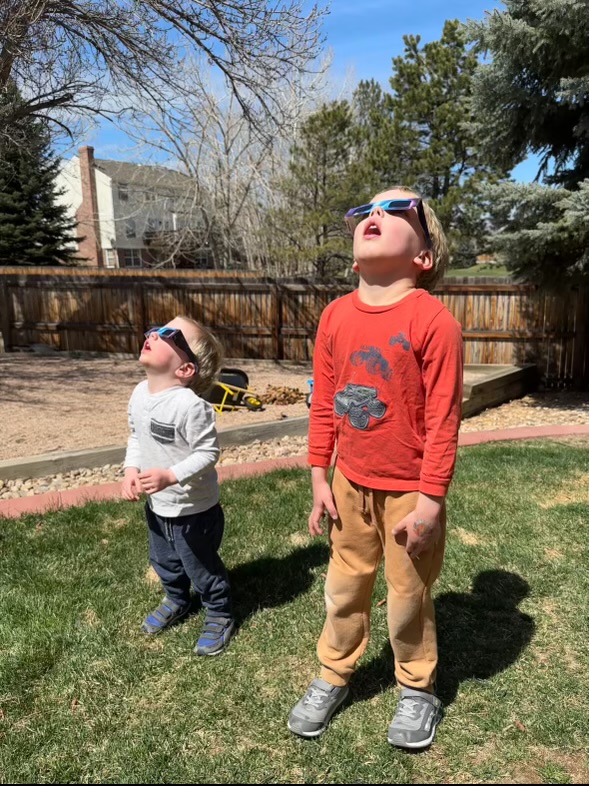
But here is the more important picture. Our grandsons saw the eclipse from their home in Denver, where it was obviously only partial. They were not with us, but in my heart they were: