Book Review: Replay – by Ken Grimwood

Here is a unique book in a number of respects:

  1. How I came to know about it, even though it was written in 1986.
  2. How it fits into my recent readings (time travel stories).
  3. How some of the effects in the book reminded me of effects in The Accidental Time Machine.
  4. How some of the passages remind me of my own life.

Over the holidays, my friend Brian and I talked about books, and he told me about Replay. I said I’d look for it, but as it goes with such conversations, I forgot the title and never ended up following through. One Monday morning I arrived at my desk and it was in my inbox. He must have come by my office and dropped it off for me while I was out of town.

I love reading stories with time travel or similar effects and this book fits the genre perfectly. If you search this blog for books, you will find The Fermata, Time Pressure, The Time Traveler’s Wife and The Accidental Time Machine, all out of that category. I’d love to write a book like this.

Now I have to talk about the effect. First, you must note that the author published the book in 1986, smack in the middle of the Reagan administration. The protagonist is Jeff Winston, a man born in 1945 who started going to college in 1963. He became a newspaper journalist, had a mediocre life, an unsatisfying marriage, mostly due to lack of resources. He died of a massive heart attack on October 18, 1988 at 1:06pm.

Much to his surprise and causing utter disorientation, he ‘wakes up’ in his college dorm room in 1963. After some serious confusion and bewilderment, he figures out that he is simply placed back in his old life, 25 years earlier, with all the characters of his old life still there, and they don’t have a clue. To them, this is just life. He, however, remembers everything. For instance, he remembers the outcome of a horse race with very long odds. So he scrapes up all the cash he can find, a few hundred dollars, bets it all on the horse, and wins $12,000. A few more bets on horses and the World Series, and he has a few million dollars. He does not have to try hard with the stock market before he is a very wealthy young man.

Eventually he makes his way to 1988 again, leading a totally different life this time around, only to die again and to wake up in 1963 a third time. There is a minor issue: there is ‘the skew.’ Every time he goes back in time he drops forward a little bit. So when he arrived in 1963 the first time, it was May 1963. The next time it was a few days later. Then it was months later, and so on. The replays kept getting shorter on a logarithmic scale. This is an interesting effect somewhat analogous to Haldeman’s Accidental Time Machine, where the jumps are on a linear multiple factor, both spatially as well as temporally.

I don’t want to tell you more about the story or the plot in case you want to read this, so I will leave it at this. But I do want to elaborate on how there are passages that remind me of my own life.

There is a subplot that involves dolphins and dolphin research, which was of particular interest to me in the 1988 time frame, when I was seriously considering going back to college for Cognitive Science. I wanted to use computer science (the field I was in), coupled with linguistics (having studied six languages myself) and alien intelligence (dolphins) to research human / dolphin communications. I never ended up in that field, partly due to lack of resolve on my part, and excuses that I had small children at the time that needed the attention, and economics – I couldn’t afford to take time off to start another career. During that time in my life, I read Dr. Lilly’s books on dolphin intelligence and studied up on his research of dolphin linguistics.

In Replay, one of the characters creates a major popular movie, named Starsea, that centers around dolphins, which in turn inspires a young student to study Lilly’s work, linguistics and computer science and work at U.C. San Diego in Marine Biology. Reading that was eerie, this could have been myself, and to think about Grimwood writing about that at the same time I was considering such a career, but finding out now, in 2009, had me marvel about synchronicity.

Incidentally, if you are interested in fascinating science fiction involving sentient dolphins, read David Brin’s uplift series, starting with Startide Rising.

Back to Replay: This was a hugely entertaining book, well written, an inspiring story with a good message to boot.


P.S. Ken Grimwood died of an apparent heart attack  at the age of 59 on June 6, 2003 at his home in Santa Barbara.

Book Review: The Accidental Time Machine – by Joe Haldeman

During my last evening in Tallahassee I stopped at the local Borders and picked up a few science fiction books from authors I had never considered or read before. Of course, I can never resist a time travel story, so when I saw The Accidental Time Machine, I was committed.

I needed a book for the trip back, so I started reading that night. I was planning on working during the next morning on the plane trip back. Usually I only read during takeoff and landing, when I can’t use the computer. But that never came about.  I read the book all the way through and I was done before I got home.

The story starts around 2050, when a graduate student at MIT, named Matt Fuller, builds a minor electronic device, a calibrator for something. But as luck would have it, there is a fault in one of the electronic components of the device, as we later learn, that is only manifested in the 5th dimension, which, of course, none of us have access to. The machine moves itself, and everything metal is connected to it,  and anything in that metal it’s connected to, in the first four dimensions, when the Reset button is pushed.

But there are enormous restrictions. The distance it moves forward in time and space is linear by a factor. So it jumps about 1 second the first time, which is when Matt notices that the box disappears and then reappears after a second. He does not trust his vision. The second time it’s gone for 12 seconds. He quickly figures out that the time distance increment is linear based on a factor of about 12, and if you do the math, it does not take long before a jump is 170 years, and then the next one 2000 years, and so on.

The second restriction is that the location, the first three dimensions, of the return is not identical to the one of departure either. It moves. During the one second jump, it was not noticeable, but during  the 12 second jump, it left the screws that attached it to the wooden base. Future jumps would eventually throw him into the  middle of traffic on a highway and much worse.

As Matt figures all this out, he tests the device first in the lab with a  turtle to make sure live creatures can survive the jump.  Then he takes his shoebox sized metal device, connects it with a cable and an alligator clip to the metal frame of a car, sits down in the car in his friend’s garage, pushes the button and disappears.

Being from MIT, his professor, whom he briefed with a note before departing, figured out where Matt would eventually land 15 years in the future. He’d spend the 15 years of waiting figuring out the exact location and point in time, and leaving nothing to chance, he has a stadium-type  reception structure built with a welcome committee, bands and other trappings of glory. Not to mention that he had secured the Nobel Prize in physics for himself in Matt’s absence.

I can’t tell you the whole story. You can imagine that Matt’s experiences get increasingly wild as he travels further and further out, and I enjoyed the ride tremendously. Unlike Spider Robinson’s Time Pressure, this does not fizzle for a minute, and you keep looking forward for the next push of the Reset button

Now I need to buy more Haldeman books.

Book Review: Time Pressure – by Spider Robinson

I first read this book in 1988 or 1989, just as it came out. I love time travel books, and I particularly liked this one. Spider Robinson (the creator of Callahan’s Tavern) is an excellent writer, who makes science fiction come to life in our world. So I found the book again on Amazon.com.

I remembered Time Pressure as such a book, and I enjoyed reading it again, for about the first third. Then it disintegrated into pseudo philosophical meanderings, hippie admiration and sexual musings. Robinson is one of the few science fiction authors who is not afraid to have sex in his stories. Heinlein is another, to a lesser degree.

I should have left the memories of Time Pressure alone. I had remembered the book as a great book, and I would have given it four stars without hesitation. Reading it again twenty years later, I realize I had forgotten most of the story, remembered only key snippets, and I have matured sufficiently that having sex with a telepathic time traveler, no matter how magnificent her breasts, is not sufficient to drive a story along and keep it meaningful.

It picks up again at the end, when it all comes to a conclusion we’re interested in.

I did enjoy the descriptions of hippie life in Nova Scotia in the 1970ies.

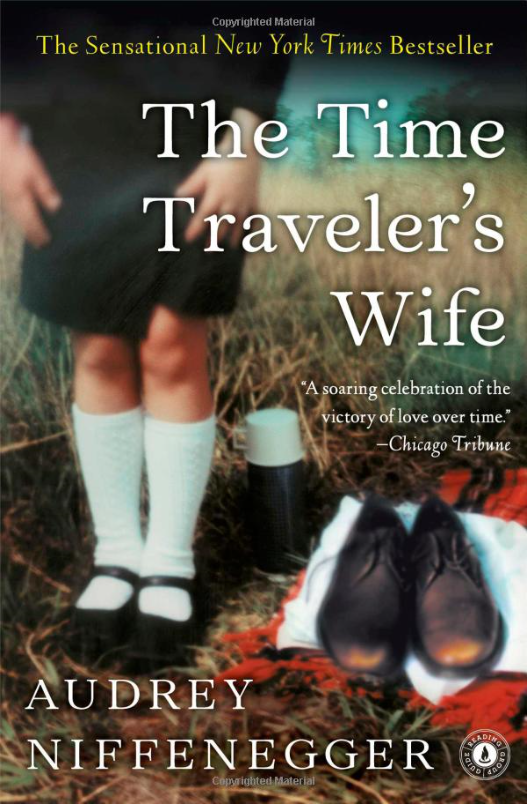
Book Review: The Time Traveler’s Wife – by Audrey Niffenegger

time-travelers-wifeThis book was the most delightful novel I have read in a long time. I give it four stars without hesitation. It is the kind of book where you are sad when it is over, because you miss the characters, the story and the world that it created for you. There aren’t many such books. Perhaps “The World According to Garp” was one of them; or “The Brothers Karamazov.”

It’s a true time traveling story, and I have an affinity for those. When I am in a bookstore and I pick up a book on time travel, whether it’s a science fiction novel or a non-fiction book about the subject, I usually do not have the strength to put it down. I buy it and I read it. Time travel has always fascinated me.

A few books of the genre I can recommend are Spider Robinson’s “Time Pressure” and Michael Crichton’s “Timeline.” Spider Robinson’s book inspired me to try my own pen at writing a book on the subject of time travel. For at least ten years I wrestled with the subject, searched for angles that would work for a novel, but never arrived at one I thought I could pull off. And here comes Niffenegger, with the perfect idea and flawless execution of the subject. Incidentally, Michael Crichton’s book is also a classic. Unfortunately, the popular movie with the same title, based on the book, did not turn out so successful, and if you saw it, it might color your perception of the book. Do not allow that to happen. Crichton did a wonderful job with Timeline. I highly recommend the novel.

But back to “The Time Traveler’s Wife.” There are two protagonists, Henry, the time traveler, and Clare, his wife. The story plays in the here and now, approximately the time of our lives, starting in the sixties, ending around 2007. The two main characters alternately narrate the story in the first person in the present tense. This is usually a difficult format for a novel to pull off successfully, but Niffenegger does it marvelously. When I think about it, the subject matter of time travel, where past, present and future are mixed, where it is difficult to maintain the chronology of a story line, if that is even possible, the present tense is about the only way to make it work.

Henry is seven years older than Clare. We know their year of birth. The narrative chapters always start out with the name of the narrator, the date and the respective ages of Henry and Clare. For instance, a chapter may start out as: Clare, November 15, 1995 (Clare is 25, Henry is 32). This shows us that they are living in their respective present times. Another chapter may start out as: Clare, July 1, 1985 (Clare is 15, Henry is 41). This shows that Henry is visiting Clare from 19 years in the future, since in the present he is only 22 when Clare is 15.

Through the book, we follow Clare through her life chronologically, but Henry shows up all over the place. He first appears in Clare’s life when she is a little girl of five years of age and he is a middle-aged man. This may all sound confusing, but Niffenegger does a wonderful job making it all plausible and within a very short time you get used to the strange perspective, time travel becomes commonplace and you follow the story for what it is, a neat extrapolation of the question: What would happen if time travel were possible?

There are some priceless concepts and scenes to elaborate on  them. I do not want to give away too many of them, but let me try one. Before I can explain, you need to understand that if a person can travel in time, there is nothing to stop him from visiting himself in the past or the future, for that matter. So he can be in one location two or more times. This happens quite frequently in this story.

When Henry is a teenager of age 16, he visits himself occasionally from just a few weeks or a few months in the future. So imagine two 16 year old Henrys with hormones raging. Since both Henrys are one and the same person, just a few weeks apart, they quickly figure out that they can partake in a unique form of masturbation by nonchalantly taking care of each other’s needs. Henry even states that this is quite convenient, and he is not homosexual in any way. It’s just a nice side benefit of time travel.

I could list many more such implausible situations that become completely acceptable once you start with the possibility of time travel, but I don’t want to spoil your reading experience. Niffenegger does a much better job in the book than I could ever do here.

So I recommend you buy this book and read it soon. It will also make a great present. A wonderful read, all the way from the first page to the last.

Rating - Four Stars

Book Review: The Fermata – by Nicholson Baker

I read The Time Traveler’s Wife in the beginning of 2005. After that, you would think I chose The Fermata because it is another story having to do with machinations with time. But it was just a coincidence. Just before then, I had read Nicholson Baker’s “Vox” again, and I enjoyed it enough to recommend it to a friend. Then I just happened to browse in a book store and I came across The Fermata. I wrote the review in 2005 and published it on my web site then.

Yesterday, when I was out browsing with Devin, he told me to go see the movie The Jumper. It’s about a boy that discovers he can perform teleportation. That concept reminded me of The Fermata, and  told Devin about it. The Fermata is a very unique book.

The book is about playing with time, and I do happen to love stories about time, usually science fiction stories. I have read many time travel stories and while this one is not a time travel story per se, it is a time bending story, and I will leave it at that.

Picture a man who figures out that he can stop the universe at will, freezing everyone and everything else, but allowing himself to walk about and take action. Now picture this man with a breast fetish. He can walk up to an strange woman on the sidewalk, open her blouse, unsnap her bra, fondle her breasts, look at them, luxuriate in them, while she is frozen in her step like a mannequin. After he has had his fill, the puts her bra back on, closes her blouse, walks back to where he started and turns the universe back on. She never knew what happened, because in her life all the transgressions against her happened within a single instance.

I know what you are thinking, and there are many perverse scenarios that can come out of this, and you might not want to read this book for that reason. Also, when you first realize this stopping of time, it seems so contrived, you have a hard time believing that you will be able to read an entire book based on this capability. But trust me, one you get started, and you get used to the concept, you take it for granted, and the rest of the story is just a story, nothing else.

I need to warn you here. This is by an order of magnitude the most sexually explicit book published by a major publisher (Random House) that I have ever read. But I would classify it as serious literature, not trash, and therefore I have a hard time putting it into a category. The sexuality is well done and not offending in any way. You just get used to it. I remember reading other sexually explicit books many years ago all the way back when I was a teenager. “Fanny Hill” comes to mind as such a book. This is entirely different.

There are two sections in the book which contain most of the seriously sexually explicit material, and those are sections where the protagonist, who is also a writer of sexual material, writes a story which then serves as the frame for the main story. I felt that those two sections were contrived, and that the author simply put them in to have an excuse to write explicit material, including some urination and even defecation, done surprisingly tastefully, if you can use the word tasteful in the same sentence as defecation. In my opinion, the book would have worked fine without the two stories of Marian. After you read it, you will know what I mean.

Nicholson Baker has added a lot of vocabulary to his repertoire since Vox. Perhaps he didn’t want to use all the fancy words then, and he does now, but I did find myself wondering why he tried to show off words.

He is an excellent writer, though, and I thought it was a delightful read and an intriguing story based on an outrageous concept.