
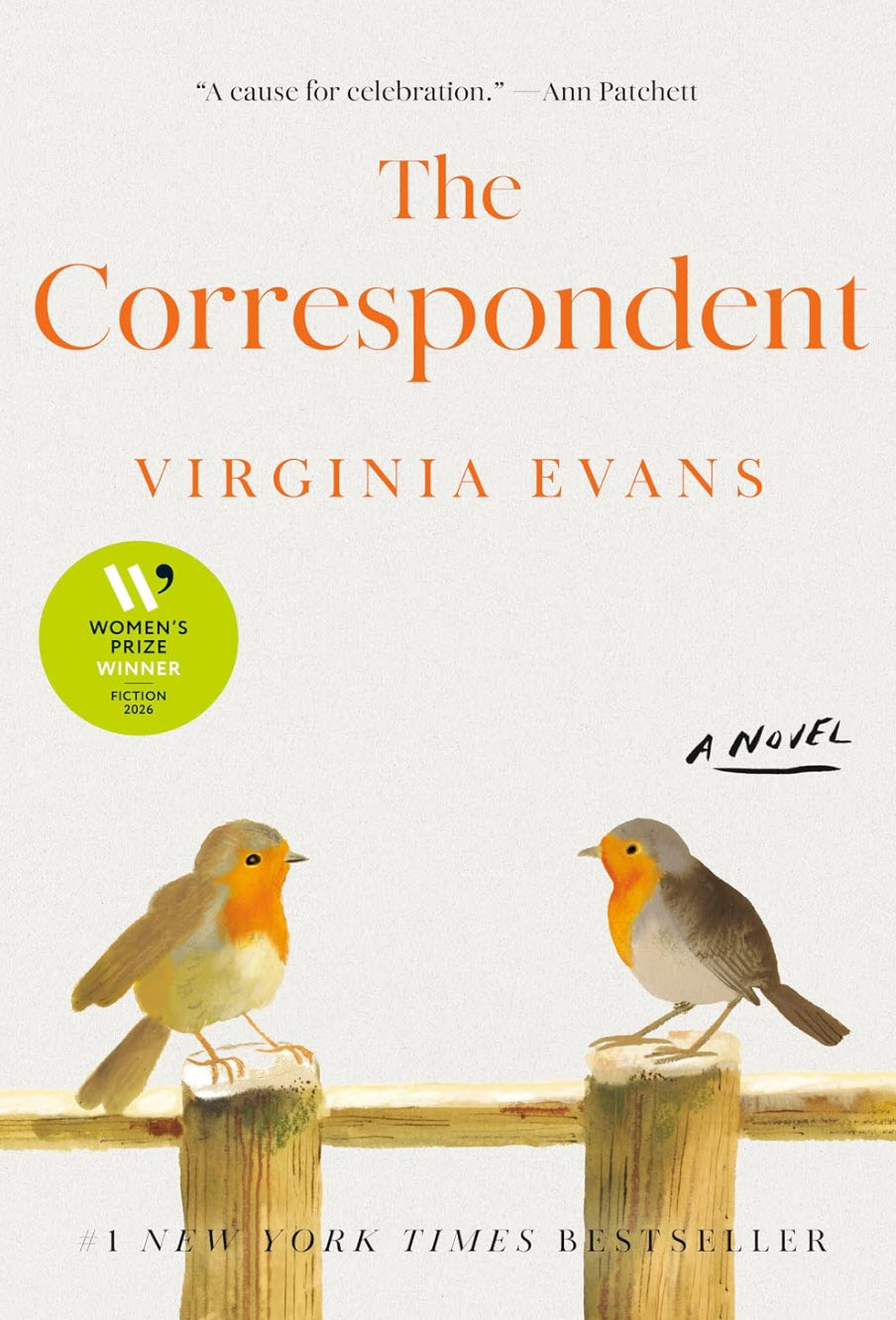
Sybil Van Antwerp is 73 years old in 2012 when the story starts. She is a retired distinguished lawyer who later clerked for a prominent judge. That was her career. She lived her entire life in the Washington, DC area. She had a husband, three children, and a lot of friends. Her favorite way to communicate was in writing. She started writing early as a young girl and kept it up all her life.
In the mornings, four days a week, she sits down at her writing desk and hand-writes letters on custom stationery with a fountain pen. Of course, there are also just notes and emails in the later years, but she always prefers the pen.
She makes sense of her life through writing correspondence and literature.
The entire book has no exposition and no dialog. It is all correspondence, spanning from 2012 all the way to 2022. Through letters and emails from her to a variety of recipients, family, friends, colleagues, suiters, writers of novels she reads, university professors, tech support agents, neighbors and even children in some cases, we learn about her life and her views. And of course we learn from the responses the receives through the various channels. It’s an entire book of correspondence.
She is an avid reader, and she discusses the books she reads with her friends. Often she would write “I am reading XXX by YYY, what are you reading?” Notably, she writes a long letter to Larry McMurtry about her feelings about his book Lonesome Dove and he writes back. I say notably because I myself just recently read and reviewed Lonesome Dove, so I could relate. The connection between my reading that book recently and the book being referenced here is purely coincidental.
However, there are many references to literature in The Correspondent, which provided me with a valuable reading list. I thought I’d extract and show it here. I will likely use this list for my own future reading.
Here it is. I have linked the books I either read with my rating, or I didn’t finish reading, for quick reference.
Books referenced in The Correspondent
- State of Wonder — Ann Patchett
- Bel Canto — Ann Patchett
- Cutting for Stone — Abraham Verghese
- Murder on the Orient Express — Agatha Christie
- Crossing to Safety — Wallace Stegner
- Blue Nights — Joan Didion
- The Year of Magical Thinking — Joan Didion
- The Satanic Verses — Salman Rushdie – not finished reading
- Never Let Me Go — Kazuo Ishiguro
- The Remains of the Day — Kazuo Ishiguro
- Ulysses — James Joyce – not finished reading
- The Orphan Master’s Son — Adam Johnson
- 84, Charing Cross Road — Helene Hanff
- Travels with Charley — John Steinbeck – 3 stars
- Mary Poppins — P. L. Travers
- The Space Trilogy — C. S. Lewis
- The Lord of the Rings — J. R. R. Tolkien
- The Chronicles of Narnia — C. S. Lewis
- The Emperor of All Maladies — Siddhartha Mukherjee
- Inferno — Dan Brown
- The Round House — Louise Erdrich
- Stoner — John Williams – 4 stars
- Outlander — Diana Gabaldon
- The World Below — Sue Miller
- To the Lighthouse — Virginia Woolf
- Wuthering Heights — Emily Brontë – not finished reading
- Amongst Women — John McGahern
- That They May Face the Rising Sun — John McGahern
- The Collected Stories of William Trevor — William Trevor
- Pride and Prejudice — Jane Austen – not finished reading
- Lonesome Dove — Larry McMurtry – 4 stars
- The White Album — Joan Didion
- Rebecca — Daphne du Maurier
Overall, The Correspondent is a delightful book, a very different book, almost an experiment, due to the unusual format, but it worked for me.
I used the audio version, and it was expertly narrated by a whole host of different readers, all with custom accents to match the writers.
