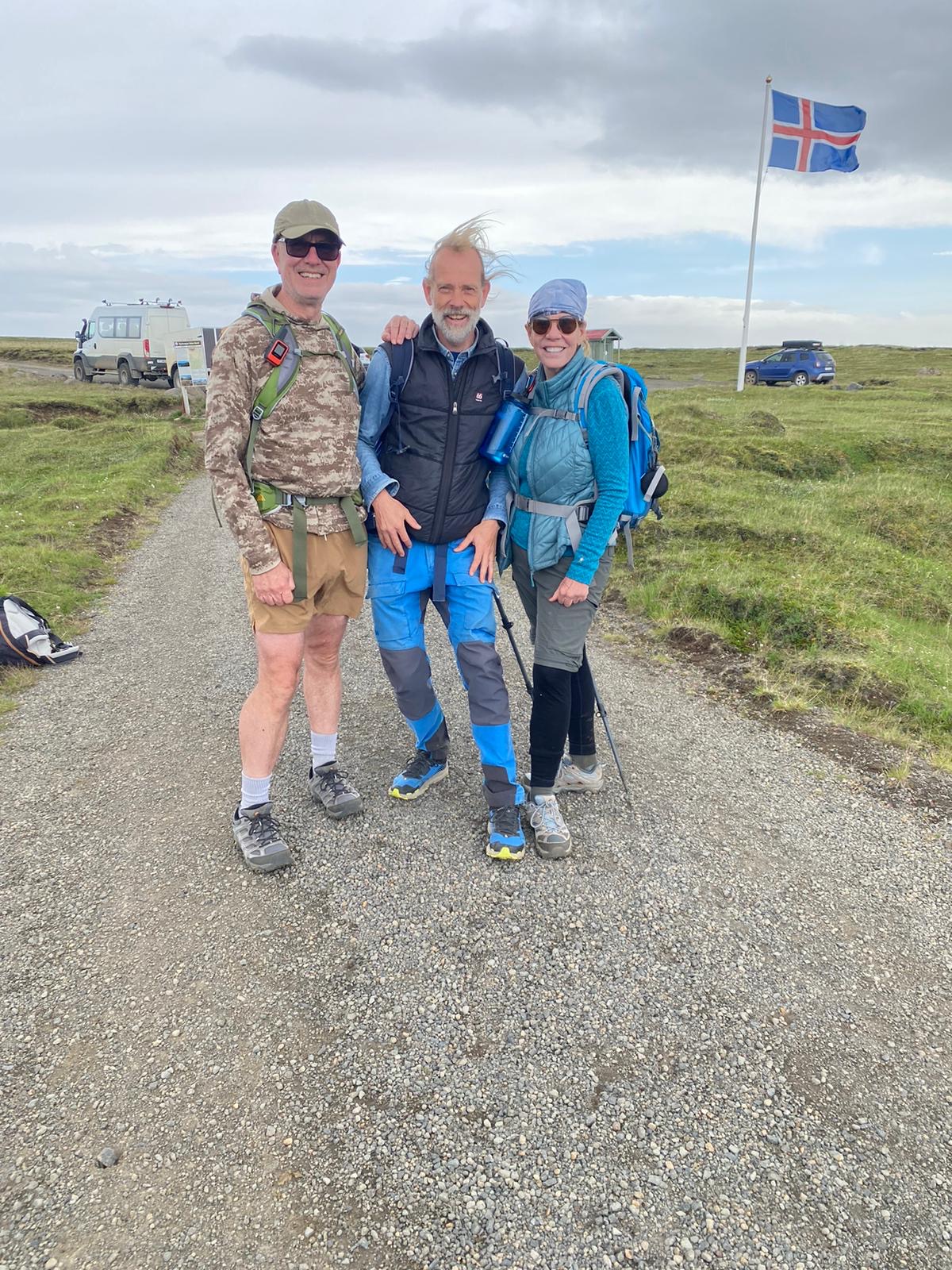
Iceland is a majestic place, with extremes, and a stark, striking beauty. After spending a week hiking the ancient trails on the highlands, I thought I’d show some pictures of fire and ice. Here are Trisha and I with our guide Jonas at the end of the last long hike, with the parking lot behind us.
Here is a picture of the main geyser at the Geysir Hot Spring Area along the Biskupstungnabraut (well, highway 35) on the way to the highlands.
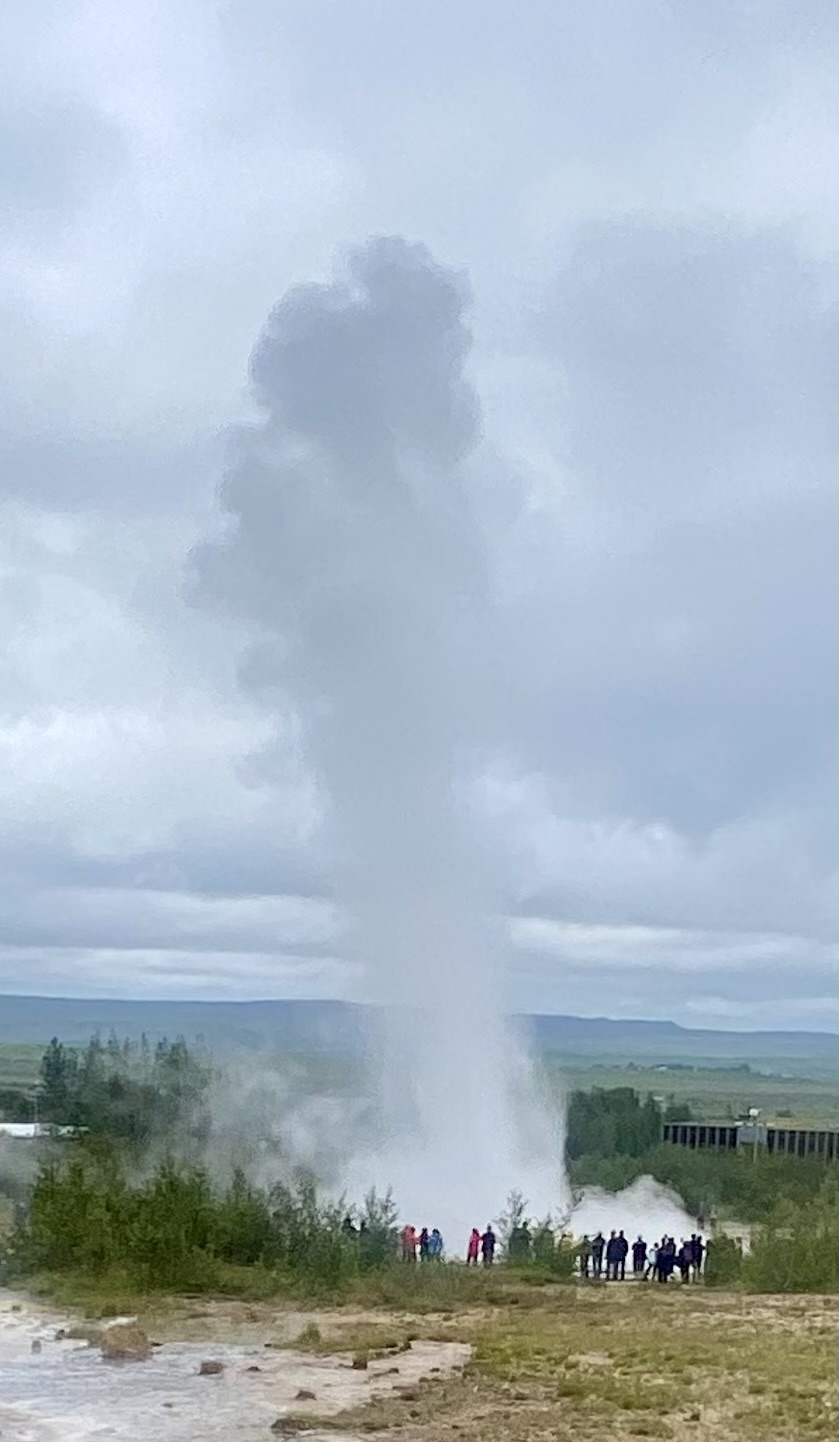
Here is a video of the same geyser, photo credit to Lou in our group:
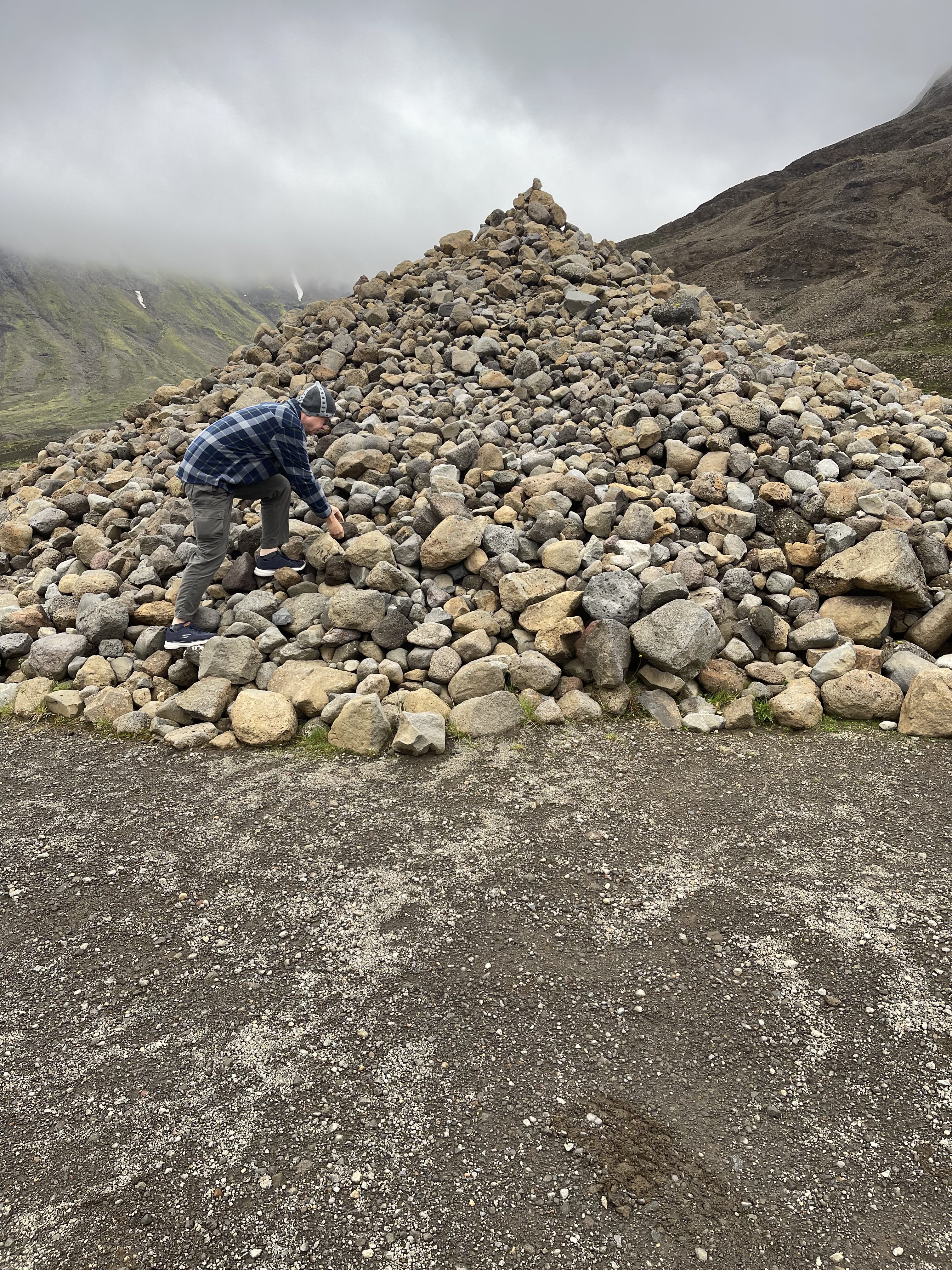
On our way out Jonas told us the story of his father, Valdimar, who in 1961 build a summer ski school way out in the mountains. He was one of the pioneers of developing sports in Iceland at the time. He had an old pair of rubber boots that apparently he didn’t need anymore. On his way out to the site where they were building a hut, he placed the boots on an open lot beside the road (a rough and rutted dirt road to this day) and put a rock into the boot for good luck while he was out there in the wilderness working. His sons, including Jonas, and friends started to take up the practice. They would stop by the boots on their way out and leave a rock for good luck and to fend off accidents and mishaps. This was kept up by the locals and recently the guides. Here you can see me, over 63 years after the practice started, laying down my rock for good luck. There is a pair of rubber boots somewhere under this pile. I came home unscathed from the land of fire and ice, which means that my rock worked.
Up in the Hveradalir Geothermal Area some of us hiked down a muddy ravine to a steaming hot spring. Sulfur was heavy in the air. My glasses immediately fogged up from the heavy steam and I had to take them off to see. And seeing was critical, since one little misstep and you can find yourself in a cauldron of boiling mud:
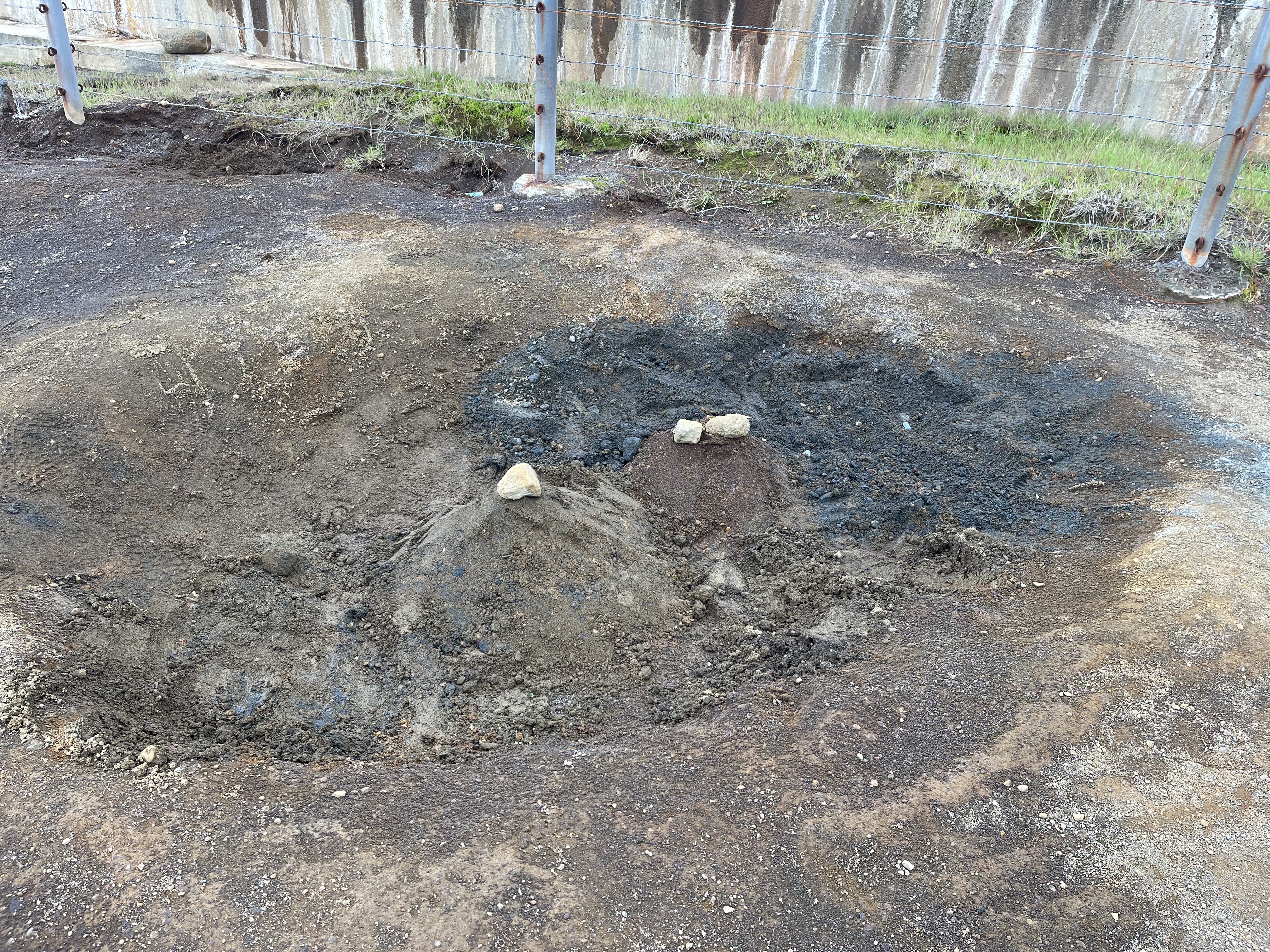
Speaking of boiling. There is an area where the locals bake their bread in boiling dirt. See the picture below with the little mounds with rocks on top of them? When I touched the dirt, it was hot. When I pushed my fingers into the dirt, is was very hot, boiling hot.
The locals bring shovels and special baking pots with their rye bread dough. They dig a hole in the hot dirt, put in the pot, cover the pot with a special cloth to keep the dirt out, and then cover the whole thing with dirt again making a mound. To mark it as an oven, they put a rock on top. You have to remember which one is your own rock and of course not disturb somebody else’s cooking mound. There are dozens of these mounds in this area. When you come back the next day, you dig up the pot, and your bread is done. I tasted their bread and loved it.
The cooking dirt is right next to a large lake which you can see in the video below. The lake water is normal cold temperature. I touched it to make sure. Just like any lake. But within just a few feet of the lake’s shore there are little hot spots with boiling water. You could boil an egg in this little spring.
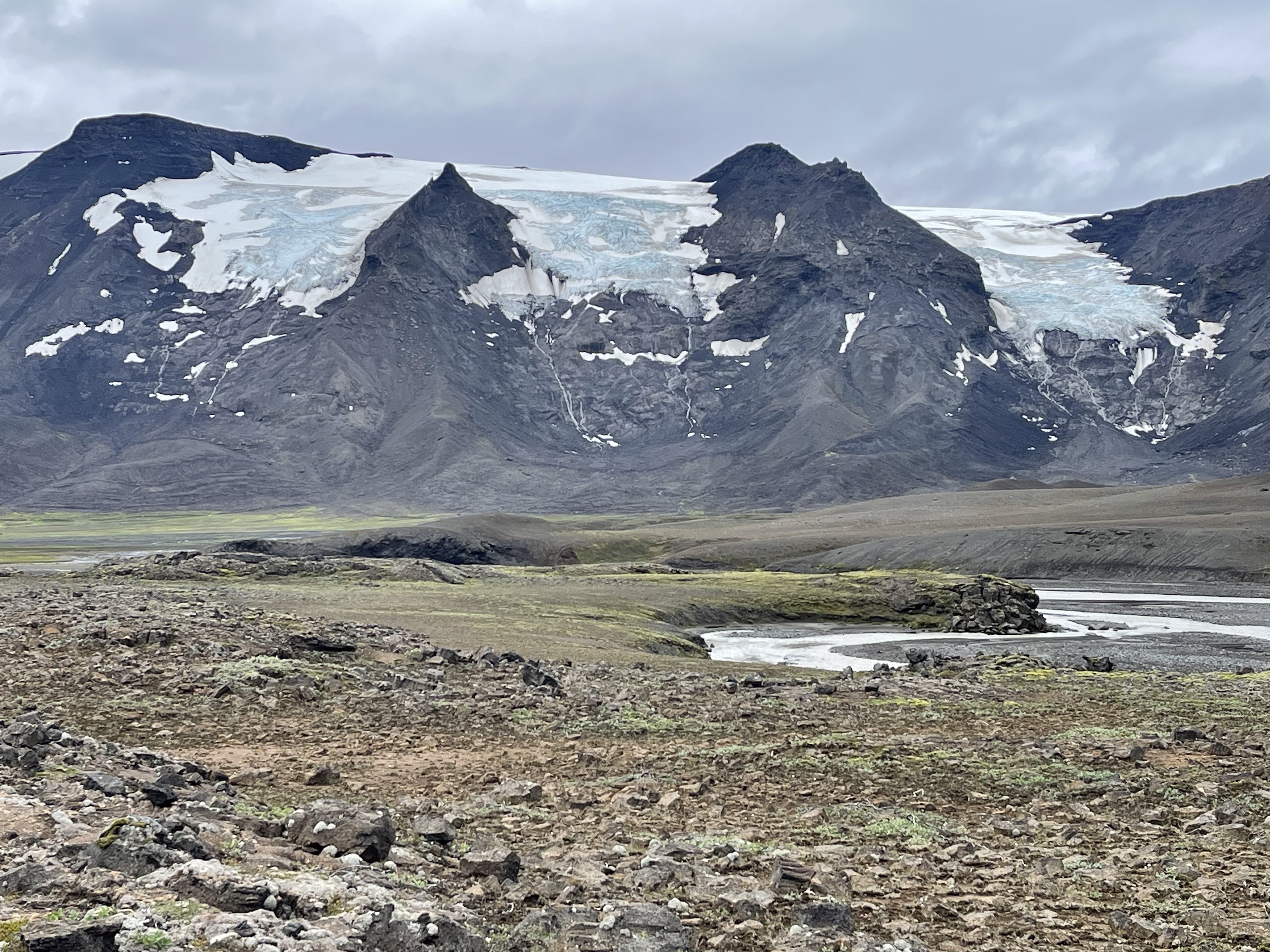
After fire, there is always ice. Here is a good view of the Langjökull glacier from our trail.
The Fagradalsfjall volcano, which had been dormant for 800 years, began erupting in March 2021. It had just just erupted again a few months ago, and we were warned that it was supposed to go off again within days of our visit. Fagradalsfjall is only about 10 miles from the Keflavik International Airport and close to the capital city Reykjavik. We did not have time to visit the volcano during our trip, but we did stop at the Lava Show in Reykjavik. In a theater-like setting, they are actually showing a live lava flow, and you can experience the intense heat of fresh hot lava and watch it cool off while a narrator describes what is going on. I highly recommend that show.
Iceland is a majestic, dramatic and extreme country with a hardy people and a glorious and very difficult language. I want to go back.