While traveling as a tourist in Vietnam, it is virtually impossible not to visit pagodas and temples dedicated to Buddhism. While we were there, I am sure we saw dozens. I noticed that every statue or altar is filled with offerings. Here are some random photos I made of such offerings:
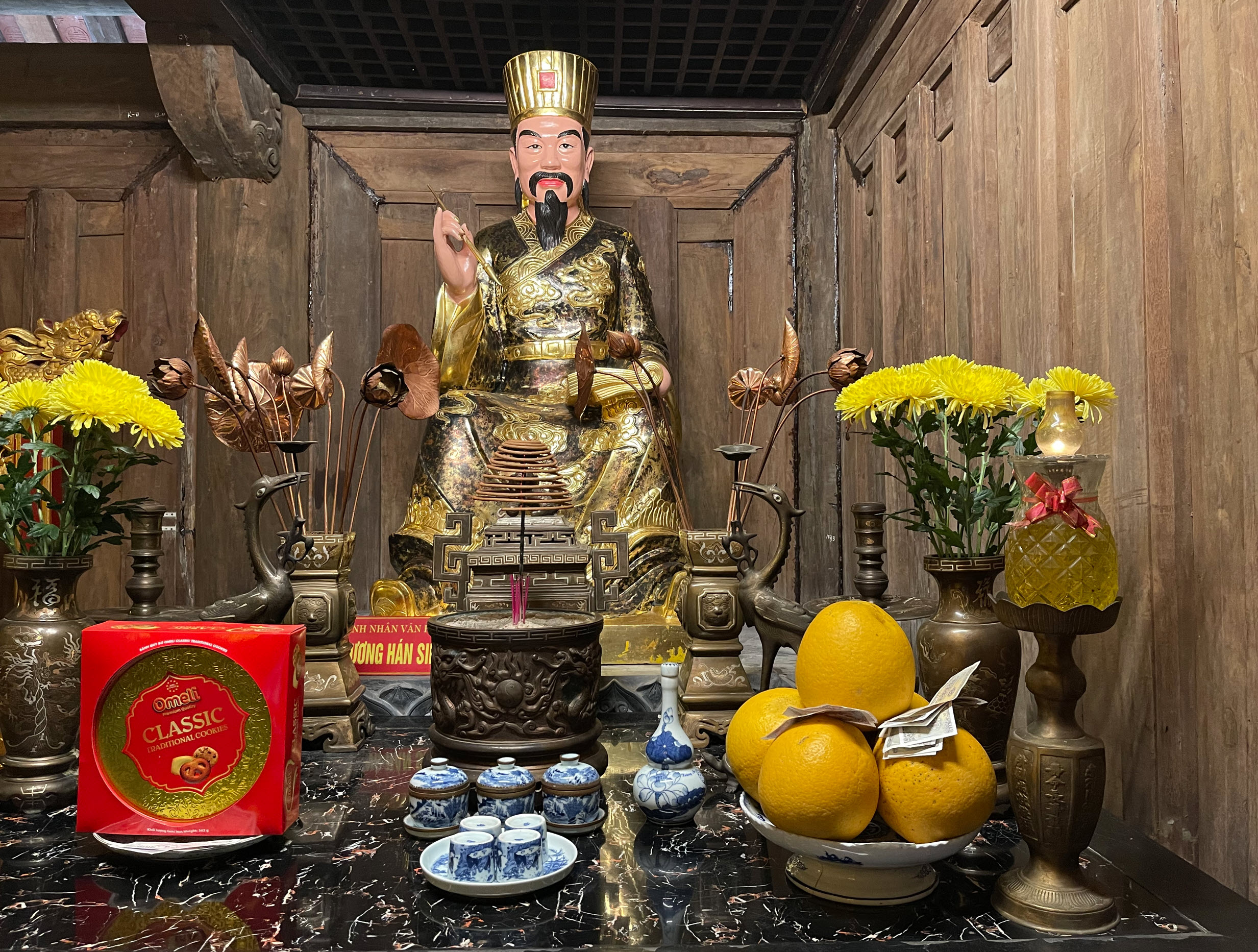
Notice the grapefruits stacked in the front. There are also some banknotes visible. On the left, in the red box, there is some processed food. I found this to be a repeating theme: Grapefruit, other citrus fruit, money, and processed food in cardboard boxes, often stacked up in little pyramids.
The grapefruits were so prevalent, almost every altar or shrine had many of them. Researching this, I learned that grapefruits are not traditionally offered to Buddha statues in Buddhist practices, but Buddhist offerings often include food and fruit to symbolize respect and reverence, as well as the desire to achieve the nectar of Dharma. The specific fruit offered can vary depending on the local culture and tradition. Therefore, it must have been grapefruit season in Vietnam in February.
I am also assuming that they are very durable. Some of those grapefruits looked dusty and I had the feeling that they’d been there a long time.
After the first few days of visiting Buddha pagodas, I started joking that my eyes were full of grapefruit and I didn’t need any more, meaning that I was done visiting Buddhas. But you can’t get away from them.
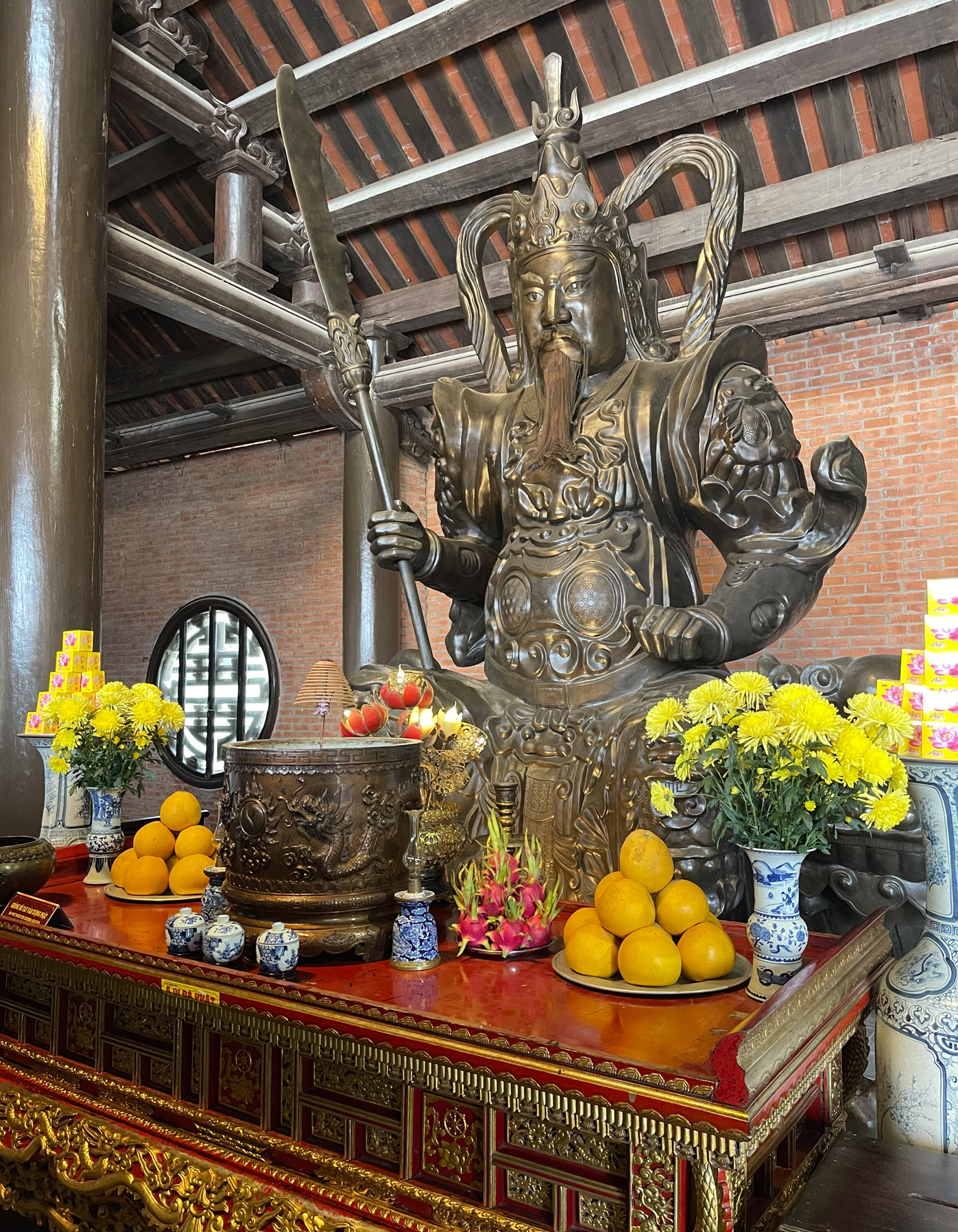
See the yellow boxes on both sides on top of the vases? That’s some processed food bought at the grocery store and placed there.
I must admit that first, I am not a Buddhist, and second, that I am not religious, so I know know much about Buddhism. I learned that offerings placed in front of Buddha statues represent various aspects of reverence, gratitude, and spiritual practice. They are not intended for the Buddha himself, but rather for the practitioner’s own benefit, demonstrating selfless dedication and fostering positive qualities. I also found out that the goods were periodically removed and consumed by the monks, provided there are monks at the location.
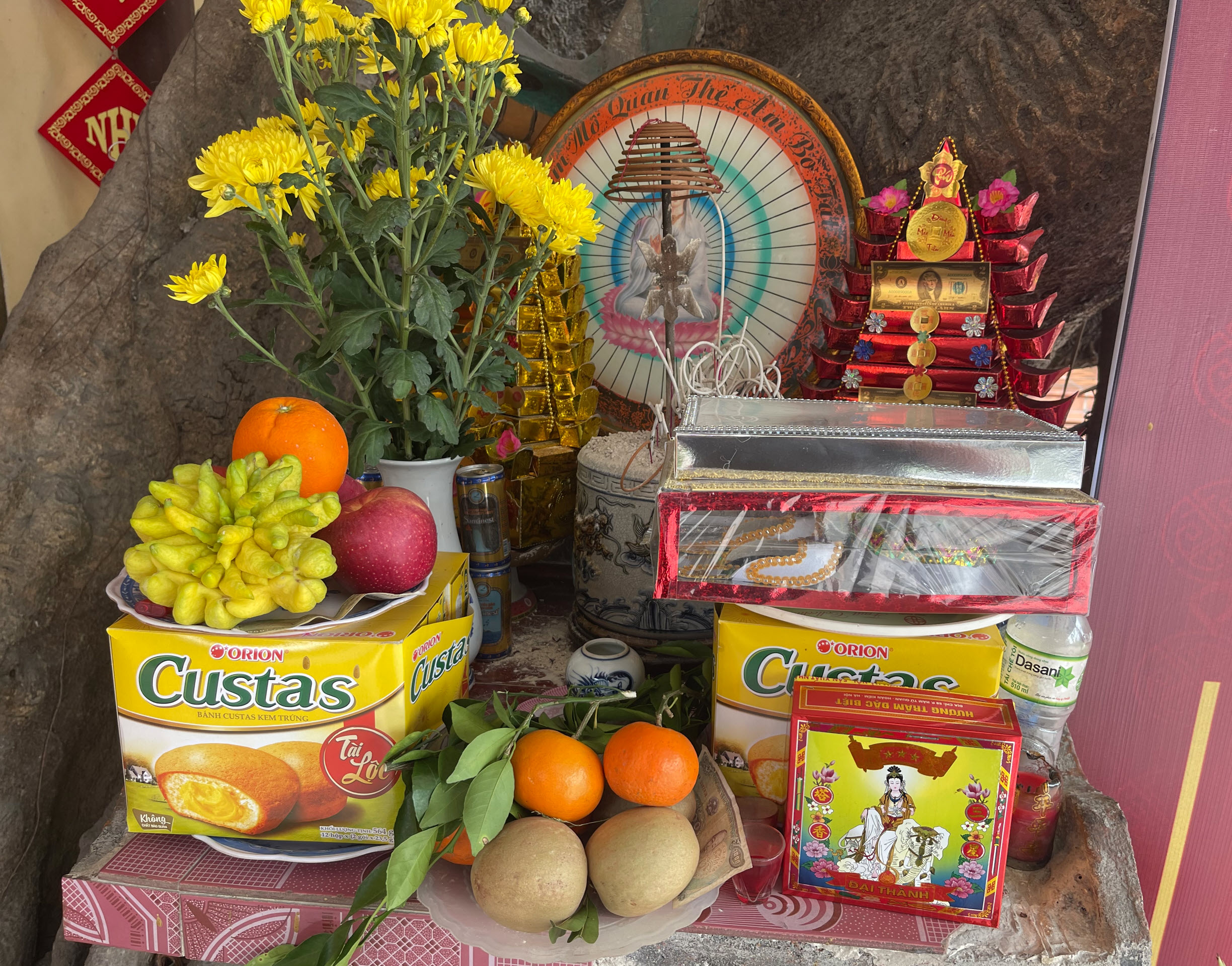
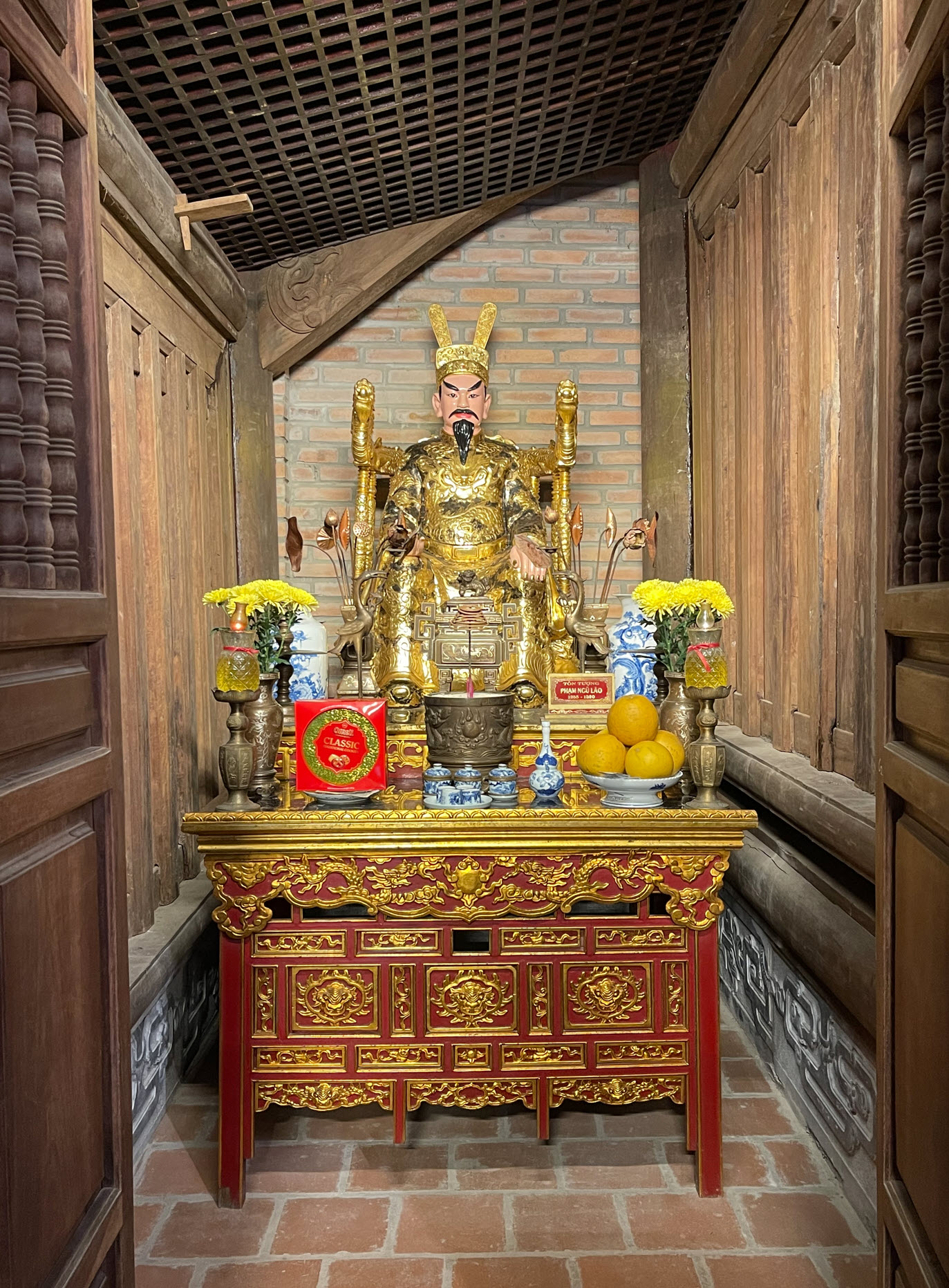
Here is a varied offering altar. You have food in cartons, some shrink-wrapped stuff, fruit other than grapefruit, thank you very much, and banknotes. Check out a close-up of the banknote on the right upper side:
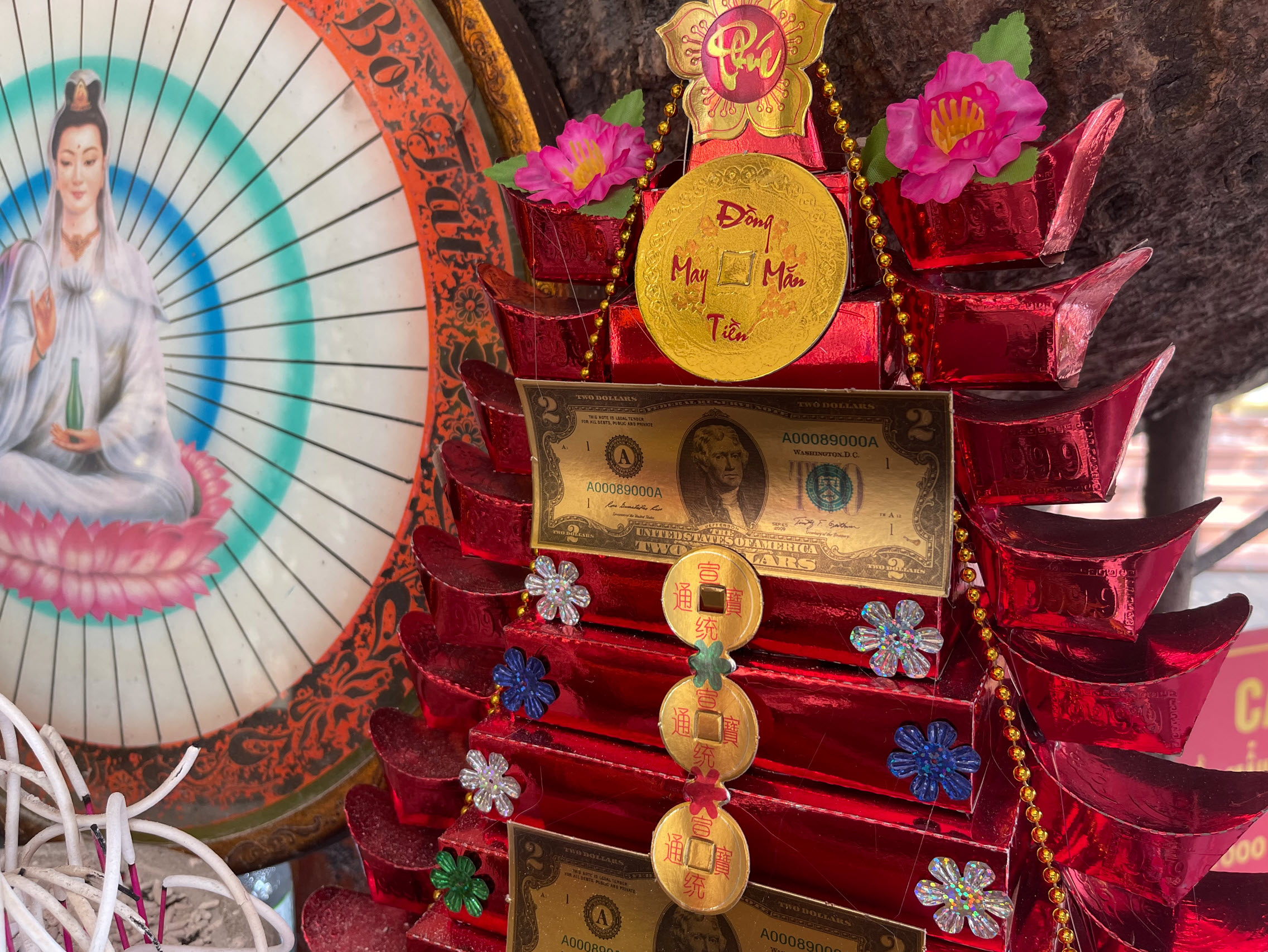
It’s a U.S. two-dollar bill! I saw a surprisingly large number of two-dollar bills on altars, in Vietnam, no less. I found that strange!
When you enter a pagoda, usually you have to follow a bunch of rules:
- No shoes – you take your shoes off outside before you step over the raised threshold into the pagoda. No wheelchair access here.
- No shorts – that is strange in a hot country. You are not supposed to show your knees. So women can’t have shorts or short skirts.
- No bare shoulders – I can see why that is.
- No photography – but as you can see from my pictures, I took plenty of them. In the more high-end temples, the famous ones, there are actually monks walking around that “guard” the premises, and things are stricter.
We saw some very massive temples and massive Buddhas:
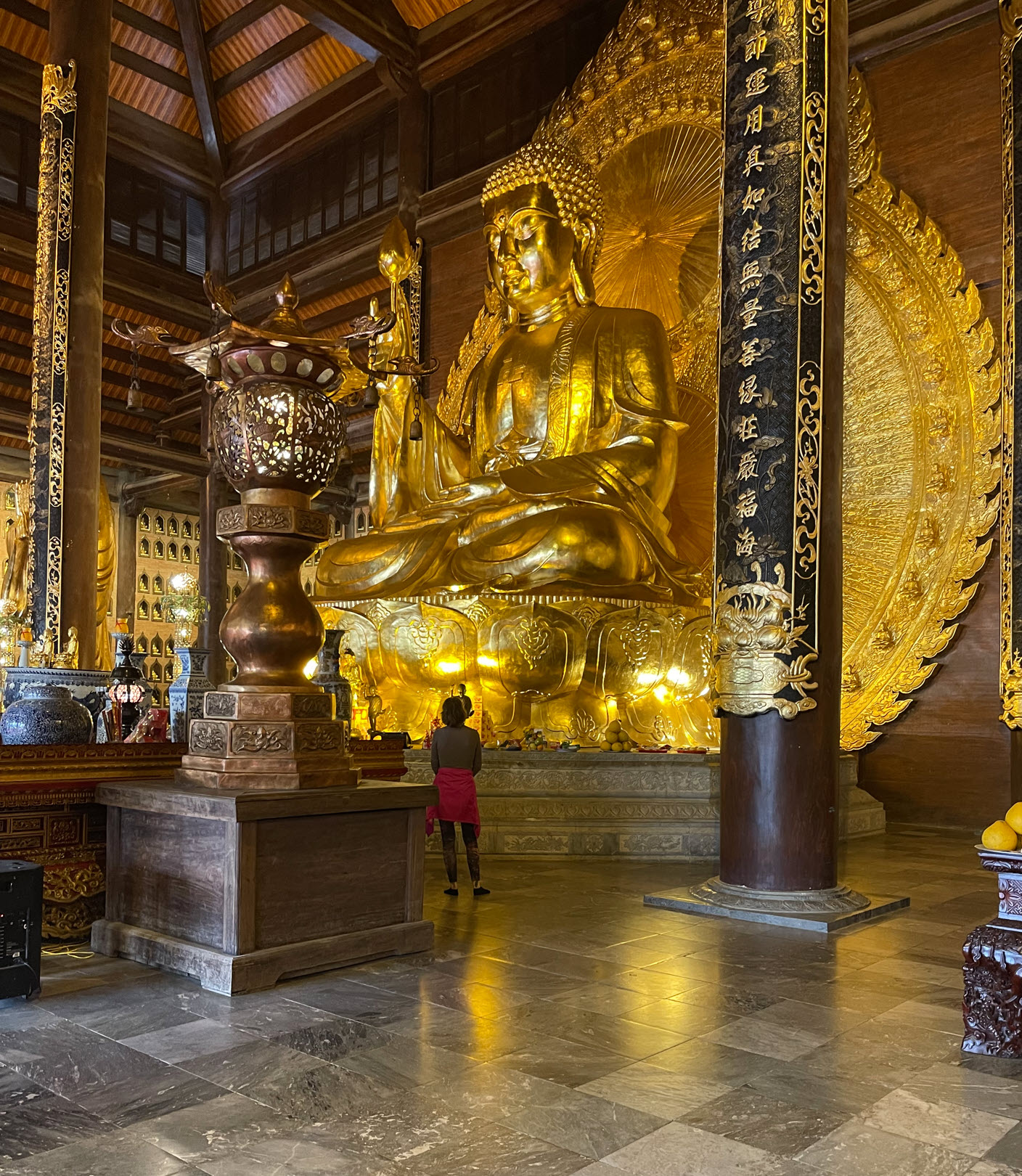
The photo above is from one of those very famous places – and forgive me but I didn’t record the name or the place, as they all blended together after while. I do remember that photographs were strictly forbidden in this place. There were many people on their knees praying to the Buddha here outside of the left frame of the picture. I snuck this photo against the rules. I remember this being a very large statue, bronze and gold plated. The statue weighs over 60 tons.
Don’t overlook the grapefruit pile clipped on the right side of the photo!
The practice of offering in Buddhism is not simply a ritual, but a way of cultivating positive qualities, expressing gratitude, and progressing on the path to enlightenment.
I must say that besides cheating and taking some pictures, I followed the rules and observed the followers, and I am sure I am a little closer to enlightenment in my own path.
But I’ll never see grapefruit the same way again.