
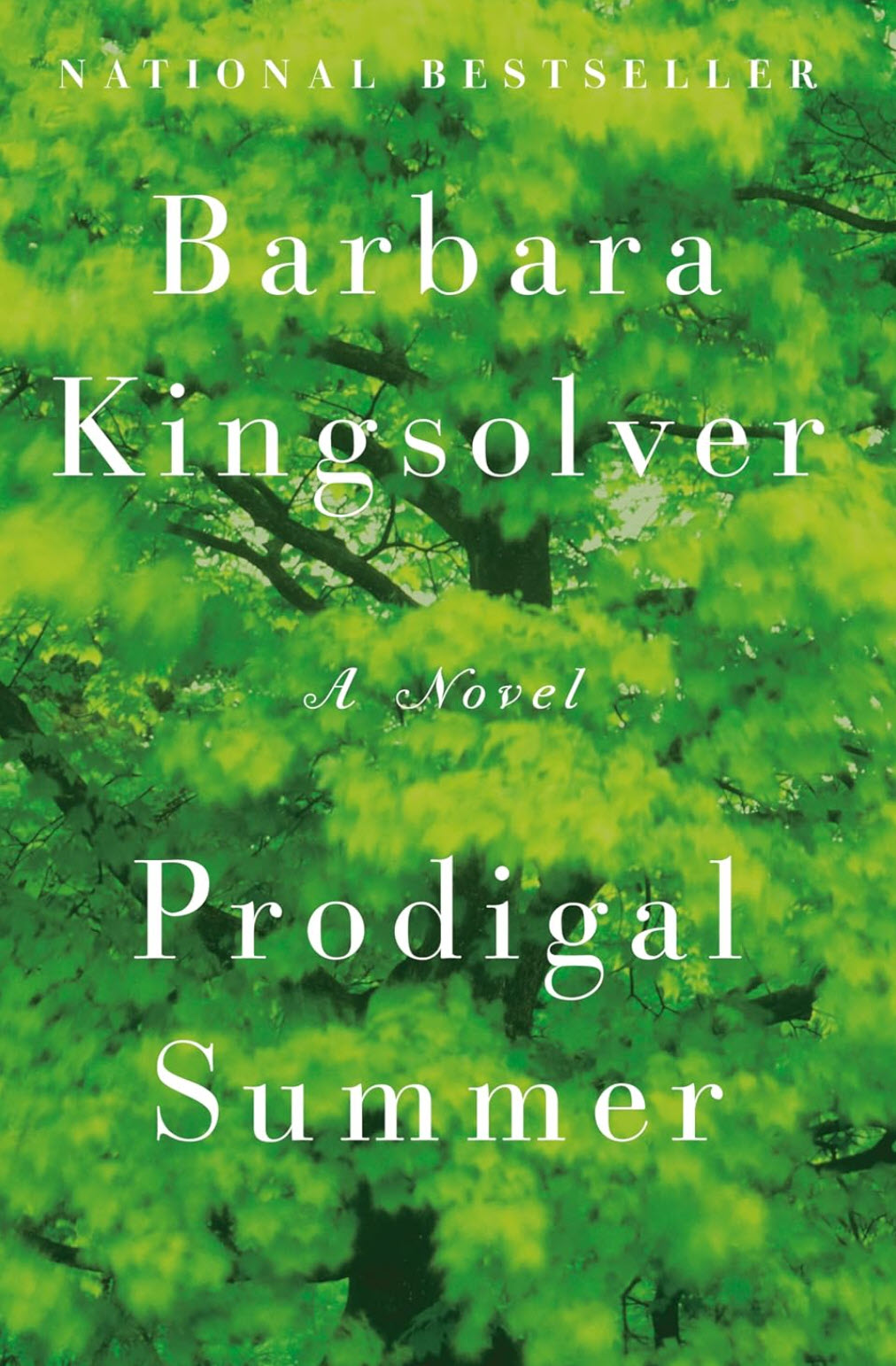
In Zebulon County in southern Appalachia (a fictional location) is near the border of Virginia, North Carolina and Tennessee.
Deanna is a reclusive park ranger in her late forties who lives in a log cabin on the mountain. Her job is to maintain order, including fixing trails, clearing downed trees and keeping the local farmers from poaching. One day a young hunter comes around and he arouses new yearnings she has long been suppressing.
Lusa has a masters degree in entomology and she spent her short career studying moths. She falls in love with one of her students at the university, Cole Widener, a young and struggling farmer, and she marries into a family that does not seem to accept her.
Garnett is an 80-year-old widower, retired vocational agriculture teacher, and fundamentalist Christian who has lived his entire life in the southern Appalachian valley of Zebulon County. He is living next door to Nanny, a 75-year-old woman who runs an organic apple orchard. He has spent the last few decades trying to crossbreed American and Chinese chestnuts to come up with a strain that can fight off the chestnut plight that wiped out the species in America.
All of these protagonists have one thing in common: their love of the land, of biology, evolution (well, not Garnett), and the natural order of wild things. The story brings forth the reality of small farms in America, the plight of displaced animal species, and the eradication of the American chestnut trees.
I finished the book feeling that everything is connected, the people, the animals, the plants, the land and the history.
A couple of years ago I read Demon Copperhead, which Kingsolver published in 2022 and which won the Pulitzer Prize. I gave it 4 stars. It prompted me to pick up other books by the author, specifically this one.
In contrast, Prodigal Summer was published much earlier, in 2000, and I don’t feel it is as refined. I enjoyed reading and learning about nature, the balance of flora and fauna, predator and prey, moths, coyotes, farmers, hunters and conservationists. But the story didn’t flow enough, and in particular, it didn’t have much of an ending. Things did not “come together” for me in the end.
