

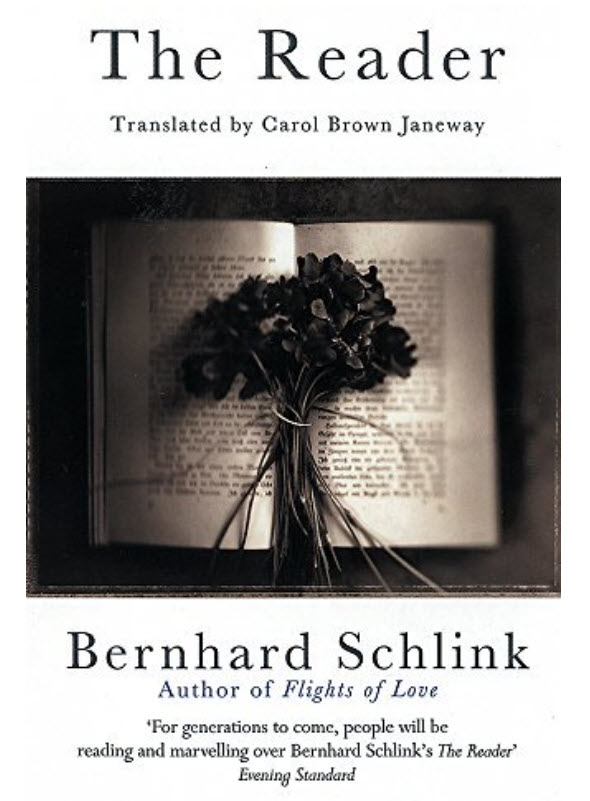
Hanna is a 37-year-old woman who lives alone in a German city after World War II. Michael is a 15-year-old school boy. Chance and fate brings the two together. Teenage hormones and puppy love drive the boy, and an erotic affair quickly evolves between the two. They spend a year or so meeting up at her apartment, after her work, and after his school. He reads classic novels out loud for her, then they shower, then they have sex, then they snooze, and then he goes home to his unsuspecting parents and siblings.
One day Hanna disappears without a trace. Michael at first has a difficult time dealing with that, but in time he gets over it. He goes on and eventually becomes a lawyer. Then, suddenly and unexpectedly, he sees Hanna as a defendant in a trial that he and his classmates are observing. The trial reveals to Michael that Hanna was a guard in a Nazi concentration camp during the war.
The Reader deals with the issue of government atrocities, and to me it was a very timely read. We are at a point in American history where the government seems to trample on its own Constitution, and for the sake of soundbites and news clips arrests its own citizens, apparently without due process, and sends them to offshore hellhole prisons. This situation remind me of what happened in Germany in the 1930 and through 1945. Germany killed over 6 million prisoners, mostly Jews, many of them were German citizens. I’d venture to say that Hitler himself didn’t kill a single person. Somehow he convinced an entire population to do his bidding, and his killing, and thousands of soldiers, guards, and SS troops thought it was okay to commit unspeakable atrocities against their own countrymen. I never understood how this was possible. Yet now, while we’re not killing people, we’re sending innocent people, children who are citizens of our country by birthright, and foreign students with legal visas, to prison camps. Is this a first step?
The Reader tackles this problem. What happens to the emotional life of a person who knows she has committed atrocities and has to live with it? It is a well-crafted novel, a love story of sorts, but difficult and emotional read.
