When I reported my experience with the solar eclipse in August 2017 in this post, I made this statement at the end:
But I was a different person. I had seen an eclipse. It was too short. I wanted another one. How dare they be so rare!
The next eclipse in the U.S. will be on April 8, 2024, and I will be there. There is no way I will miss that. It will arch up from Texas to Maine, and Chautauqua, one of my favorite places in New York, will be right in the path. And I will be there.
Then, the next coast to coast eclipse will be in 2045. I will be 89 years old. I will be there too.
I have seen a total eclipse, and things are different now.
We planned the trip for the 2024 eclipse for several years. We were going to go to central Texas, since I believed we’d have the best chance of clear skies at that time of the year. We were going to make it a road trip, so we bought our trailer last year. One other couple joined us, and our little caravan left San Diego on April 4th. We spent the first night in Picacho Peak, Arizona, the second in Deming, New Mexico, the third in Pecos, Texas and we finally arrived in the very tiny hamlet of Millersview, Texas on April 7th, where we camped in a funky campground literally “in the middle of nowhere.”
The plan was to camp there and then drive down a couple of hours into the path of totality. Our goal was Lampasas, Texas. However, when we researched the weather the night before, it predicted clouds and rain on April 8th in large swaths of central Texas. We settled on the town of Llano, Texas as our best chance.
It was a two-hour drive to Llano, and the skies were mostly cloudy with occasional holes for the sun to peek through. We had several hours to wait. Llano is a very idyllic Texas town, and it was full of visitors. There is a river, and a park, and hundreds of people decided to view the event there. It reminded me very much of our experience seven years ago in Idaho Falls. A small town, many visitors, a park by the river, and an eclipse.
As the partial eclipse started, we saw the sun sometimes, but often it was shrouded by clouds. It was disheartening to imagine that so many people had come so far just to experience the darkness and not see the sun and moon themselves. But we got very lucky. About five minutes before the scheduled totality, the sky opened up and was clear for the next 15 minutes. Llano, with 4 minutes and 20 seconds of totality, had one of the longest duration totalities in the country. We saw the whole event in all its glory, and it took my breath away again.
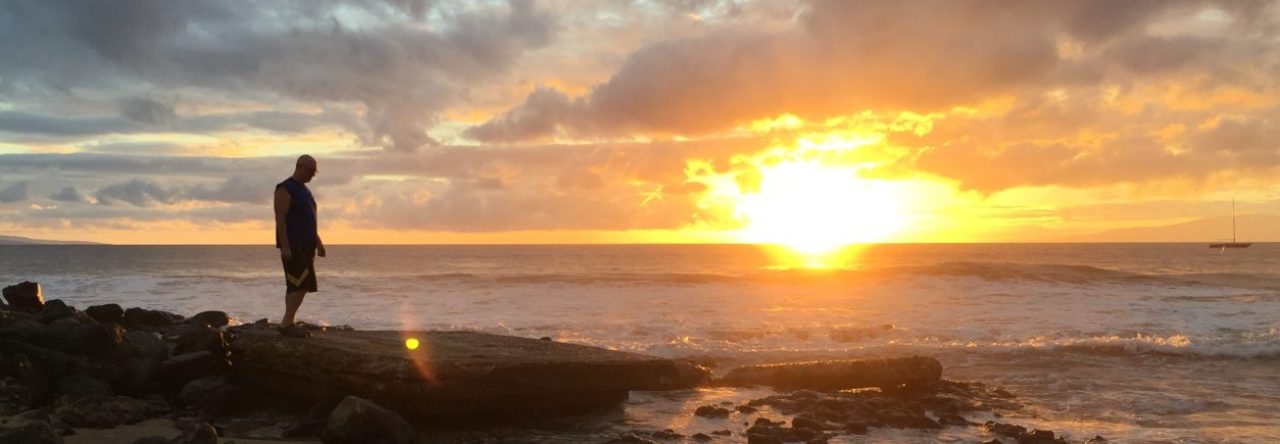
I am not a photographer, and there are thousands of photos on the Internet by much better photographers, so I spare you my very bad shots. Here we are waiting for it to happen:

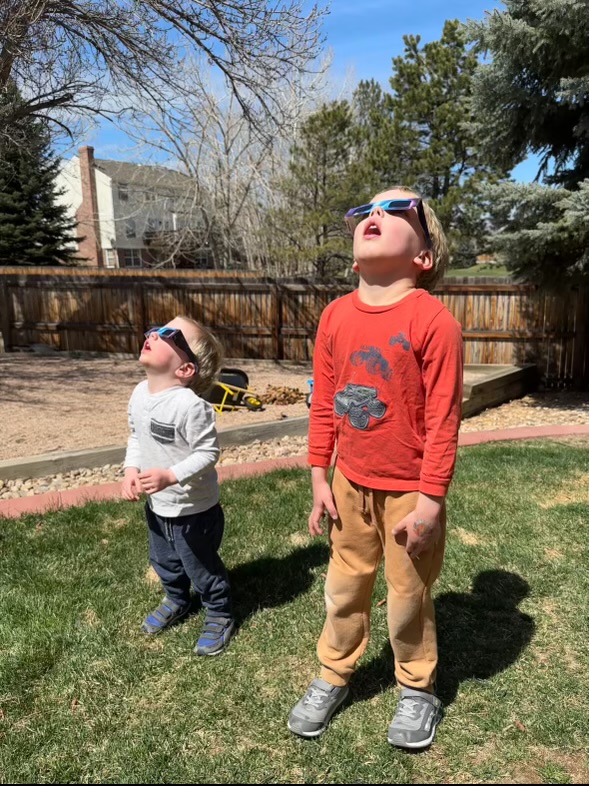
But here is the more important picture. Our grandsons saw the eclipse from their home in Denver, where it was obviously only partial. They were not with us, but in my heart they were: